





 Portuguese
  English
  Spanish
  6 min of reading
  50 comments





Without Specific Penalty, the Loophole in the Law and the Brazilian Traffic Code Allows Clandestine Giroflex to Spread Through the Streets, Deceiving Drivers in Traffic, Evading Official Priority and Following Without Clear Framing in the Penal Code, Keeping the Giroflex Impune.
In Brazilian cities, common cars circulating with giroflex and sirens have become part of the traffic landscape, clearing the way in queues and traffic jams as if they were official vehicles. The scene, increasingly frequent, reveals a loophole in the law that allows the use of the equipment without specific penalties for those who install it.
While Article 29 of the Brazilian Traffic Code restricts giroflex to security forces and emergency services, the regulation does not foresee a crime or direct fine for the driver who circumvents this priority. The result is a false sense of official urgency that now spreads through the streets and avenues of large centers like São Paulo and reinforces the impunity of those who defraud the right of way.
Loophole in the Traffic Code Leaves Giroflex User Without Fine or Crime

Current legislation clearly defines who can use giroflex and sirenes on public roads.
-
The Senate approves a bill that criminalizes misogyny, hatred, or aversion towards women, and includes the crime in the Racism Law with a penalty of up to 5 years.

-
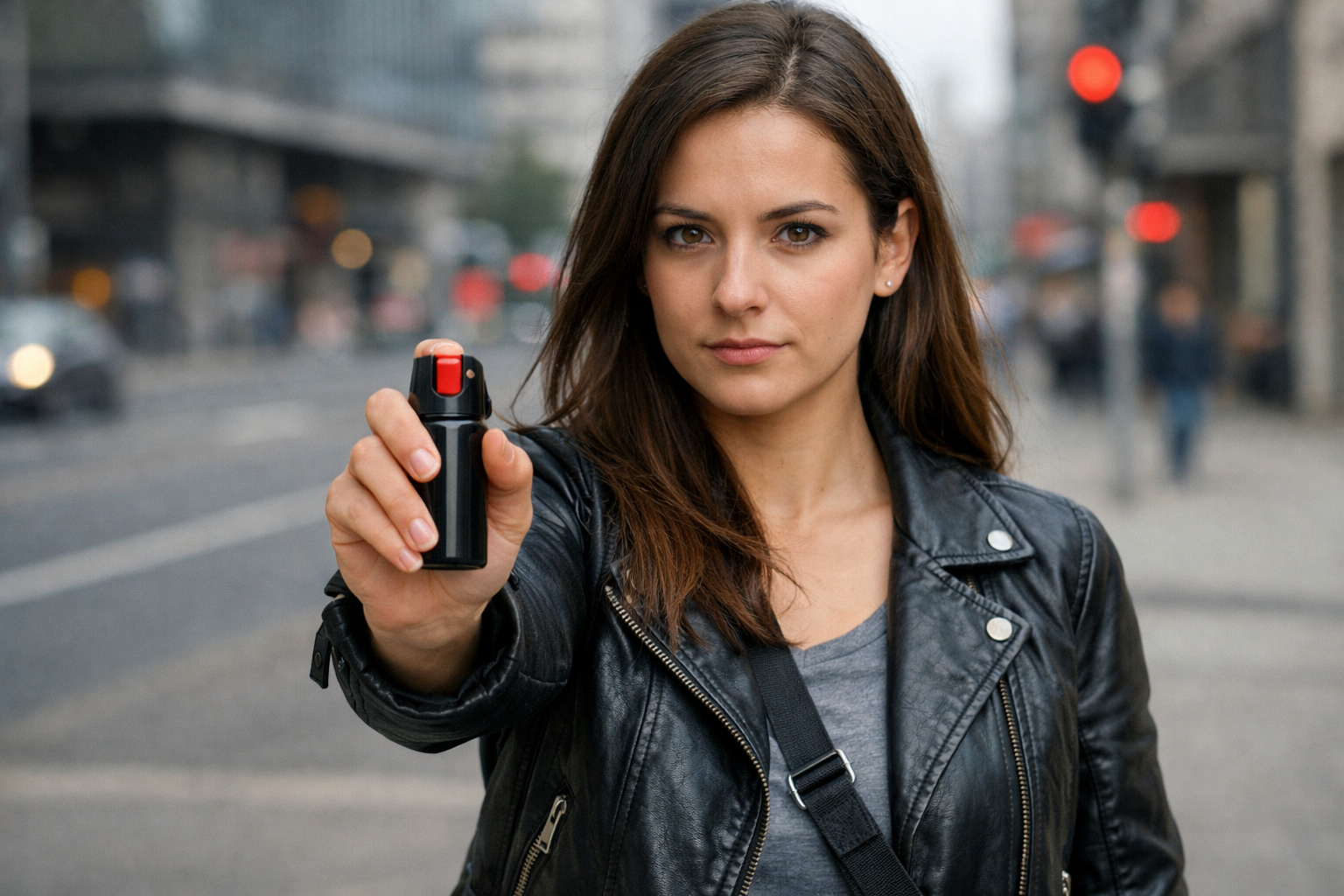
Chamber Approves Bill That Allows Pepper Spray for Women Over 16 and Imposes Strict Rules for Purchase, Possession, and Use as Self-Defense
-
Chamber Approves Law to Combat Leucaena, Fast-Growing Plant That Dominates Land and Threatens Native Species in Various Regions of the Country

-
Asset Division: Know What Cannot Be Divided in Case of Divorce


Article 29 of the Brazilian Traffic Code only authorizes vehicles from security forces, emergency vehicles, and rescue services to employ this type of light and sound signaling to obtain priority in traffic.
In practice, however, the driver who installs giroflex without fitting into these categories does not face a direct penalty.
Experts interpret that there is a legal loophole: the law delineates the use but does not criminalize nor specifically typify the conduct of one who, without authorization, presents themselves as if they were an official vehicle.
The mere fact of the vehicle circulating with giroflex does not generate an automatic fine or arrest.
When approached, traffic authorities can order the removal of the equipment and, in case of improper use, seize the car.
The penalties are restricted to traffic violations that may occur, such as running a red light, invading a bus corridor, or driving the wrong way, and not to the fraud of false priority itself.
Open Commerce of Giroflex Feeds Clandestine Market of Priority


If, on one hand, there is a lack of clear typification to punish the driver who uses clandestine giroflex, on the other hand, access to the equipment is facilitated.
Online, there is widespread availability of giroflex in different formats, colors, and sizes, aimed at both the windshield and the rear of vehicles.
The absence of legal restriction on commerce allows anyone to purchase the product with a few clicks.
In physical stores, the scenario repeats itself. In São Paulo, a report producer visited establishments where giroflex is sold openly.
Sellers offer models in blue and red or white and red combinations, with prices around 370 reais per pair, and explain how to install the lights on the vehicle.
In some cases, the commercial discourse suggests that giroflex helps to “cut through traffic” without drawing too much attention, reinforcing its nature as an improper shortcut in urban circulation.
According to experts consulted during the investigation, there is currently no specific device that restricts the sale of giroflex to the general public.
The legislation does not require proof of affiliation with security forces, emergency services, or authorized public utility activities for the purchase, making the equipment accessible to any driver who wants to appear as a priority of passage.
Enforcement Acts at the Limits of the Law Against the Folly of Giroflex
Without a defined criminal offense and no autonomous infraction in the Traffic Code, enforcement operates at the limits of what the law allows.
When a patrol identifies a common car with giroflex, the approach may result in the removal of the equipment and even the seizure of the vehicle for improper use.
The driver, however, is only fined if they commit traffic violations already foreseen, such as running a red light, driving in exclusive bus lanes, or driving the wrong way under the pretext of responding to an “urgency.”
The use of clandestine giroflex, by itself, does not generate a specific fine. This means the core of the fraud remains unaddressed by the sanctioning system.
In addition to deceiving drivers who, believing they are dealing with an official vehicle, yield right of way, the clandestine giroflex can delay real responses from ambulances, firefighters, and police, as it trivializes the use of emergency signals on the roads.
The population, subjected to successive false urgency situations, tends to react with distrust, which directly affects the effectiveness of public services that genuinely depend on priority in traffic.
Proposals for Control of Sale and Traceability of Giroflex
Traffic experts advocate that the first step to curb the folly of clandestine giroflex lies in controlling the commercial chain.
The suggestion is that the purchase of the equipment be conditioned to functional proof, either from police authority, emergency service professional, or provider of public utility service authorized to use special signaling.
Another proposal is the creation of a traceability system.
Each giroflex sold would have a code linked to the buyer, allowing enforcement agencies to quickly identify who purchased the equipment and in which vehicle it was installed.
This measure would expand the responsibility of retailers and online sales platforms, requiring them to maintain detailed transaction records for potential audits by authorities.
According to these experts, without restricting access to giroflex, any adjustment in the law is likely to be ineffective.
The widespread availability reduces the cost of fraud and maintains a continuous flow of clandestine equipment on the streets, perpetuating confusion in traffic and the undue advantage of those simulating to be official vehicles.
Typification as Fraud in the Penal Code Is Considered a Missing Piece
Beyond the Traffic Code, legal scholars point to the necessity of adjustments in the Penal Code to classify the improper use of giroflex as fraud.
The idea is to recognize that the driver using the equipment to gain free passage is deceiving other road users, appropriating a legal benefit exclusively intended for emergency situations and public safety.
By classifying this conduct as a crime, the system would begin to treat clandestine giroflex not only as an administrative irregularity but as an attack on collective trust in the traffic priority regime.
This would allow for harsher penalties, with the potential to discourage the practice and reduce the feeling of impunity for those today taking advantage of the legal loophole.
While changes are not approved, experts warn that social awareness is the only immediate barrier to the expansion of the problem.
Drivers who resort to clandestine giroflex to save time in traffic jams ignore the impact this behavior has on the safety of everyone and on the credibility of the true emergency vehicles.
Army Is Responsible for Control, But Does Not Respond to Questions
The São Paulo Public Security Secretariat informed that the agency responsible for controlling light signaling devices is the Army, a federal body with responsibilities over such materials.
When questioned, the Army did not respond to requests for clarification on the criteria for enforcement currently adopted or on any studies to tighten control over the circulation and commercialization of giroflex.
The lack of positioning reinforces, for experts, the perception that the normative vacuum regarding clandestine giroflex is accompanied by an institutional vacuum in coordinating responses.
Meanwhile, drivers continue to exploit the looseness of the law, stores keep selling the equipment freely, and the population remains subject to traffic decisions based on emergency signals that are not always real.
In light of this scenario, have you ever felt compelled to give way to a car with giroflex that seemed official, but might just be another driver taking advantage of this loophole in the law?










Este eh o País que permite inclusive a rebaixar a altura de veículos cujo padrão já foi estabelecido na fábrica e circulam pelas ruas atrapalhando o trânsito. De trânsito o Brasil eh exemplo de mortes, de motoristas imprudentes e de péssimo preparo em direção defensiva, onde a fiscalização eh ineficiente(objetivo eh arrecadar com os pardais), onde as maselas da politica partidária se sobrepõe a uma educação adequada pra o trânsito. E aqui nem se discute a qualidade das BRs nacionais, uma vergonha.
PERFEITO.
Então que se aplique a lei. Deveria ser muito mais gravíssimo. Pois coloca em risco os motoristas que tentam o máximo ajudar. Esses **** que usam isso deveriam pagar o tripo da mais cara multa. Já que não se aprende o veiculo