





 Portuguese
  English
  Spanish
  5 min of reading
  3 comments


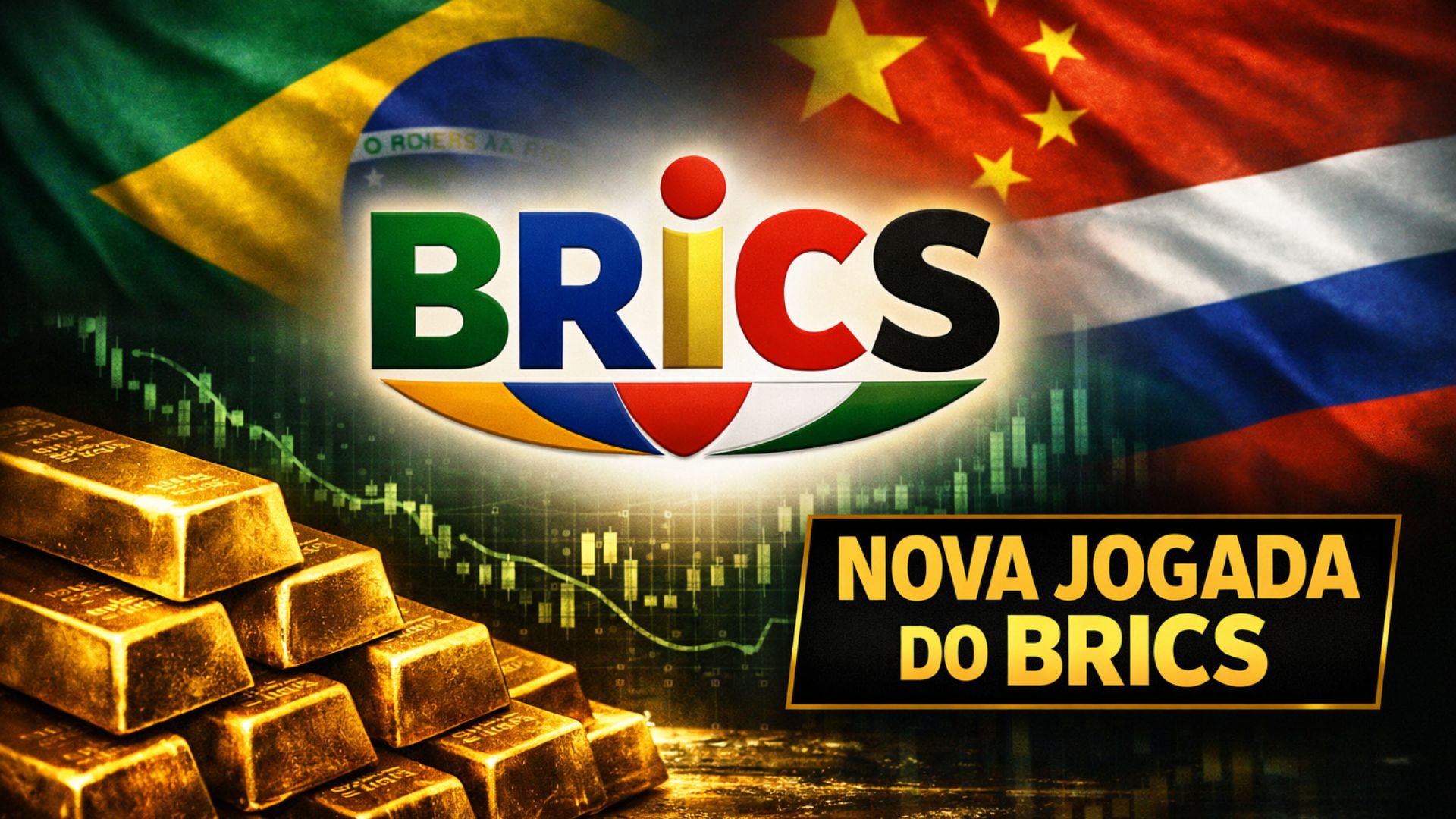


Silent Movement in Global Reserves Repositions Gold, Pressures the Dollar and Puts BRICS Back in the Center of the Economic and Geopolitical Debate, Amid Escalating International Tensions, Changes in U.S. Foreign Policy and Increasing Coordination Among Emerging Market Central Banks.
The surge in gold to unprecedented levels and the change in the composition of central banks’ reserves have once again placed the BRICS bloc at the center of the debate about the future of the dollar in international trade and finance.
In recent weeks, the precious metal surpassed US$ 4,900 per troy ounce and then advanced beyond US$ 5,000, amid a search for perceived safer assets and a wave of institutional buying.
As investors and governments seek protection, a symbolic data point has gained traction.
-
Unemployment rises again to 5.8% at the beginning of 2026, raising alarms about the end of temporary positions and its impact on the Brazilian job market.

-
Document organization can cut invisible costs in small businesses, a simple step that prevents waste, rework, and losses in daily operations.

-
Chinese giant worth nearly R$ 4 billion that manufactures cables for electric cars, solar energy, and robotics wants to open a factory in SC.
-
Many employers do not know, but the law guarantees domestic workers a 25% increase in salary during trips, 50% for overtime, 20% for night shifts, and 17 additional benefits that can lead to labor lawsuits if not paid.

Analyses based on reserve statistics indicate that the value of gold under the control of foreign central banks has begun to exceed the amount invested by these same agents in U.S. Treasury securities, something that had not occurred since the mid-1990s.
Gold Price Increase Reflects Global View on Risk and Confidence
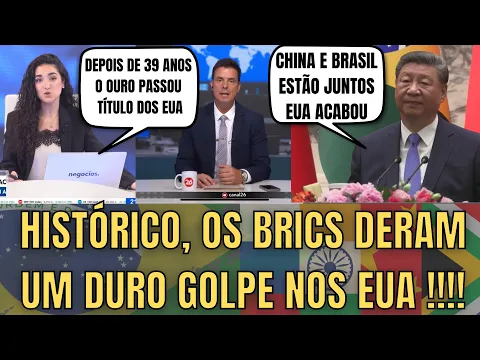

The recent movement is not limited to a one-off price fluctuation.
The trajectory of gold’s appreciation has been sustained by recurring purchases from central banks and the perception that the geopolitical environment remains more unstable than usual by historical standards.
Furthermore, the rise in gold was accompanied by a jump in silver, which also crossed the barrier of US$ 100 per ounce, amid the same rush for protection.
In the data most closely monitored by analysts, institutional demand remains strong.
The gold industry itself, through statistics compiled by international sector entities, has been recording significant net purchases throughout the year, particularly from central banks in emerging markets.
When comparing gold and Treasuries, the difference in absolute values can vary depending on the analysis segment and the period examined.
Still, the implication for the market is clear.
The dollar remains central to the global financial system, but is undergoing a gradual diversification process, where part of the reserves is migrating to physical assets and other currencies.
BRICS Strategy Indicates Diversification and Less Dependence on the Dollar
The narrative that BRICS is leading a preference shift between the dollar and gold frequently arises because major members of the bloc are among the top holders and buyers of the metal.
China and Russia are among the largest global holders of gold, with official stocks exceeding 2,000 tons each, according to widely circulated data.
Brazil, in turn, has seen a recent reconfiguration of its reserves, increasing to about 145 tons, following purchases made over the past year.
In this context, the figure of over 6,000 tons for the total reserves of BRICS members circulates in market compilations and specialized reports, typically based on the sum of the official stocks of Brazil, Russia, India, China, and South Africa.
Nevertheless, the most significant change is not just in the total volume.
The signal sent to the market carries its own weight.
When central banks reinforce positions in gold instead of increasing investments in U.S. sovereign debt, they indicate a preference for diversification, risk reduction, and less exposure to sanctions, blockades, or abrupt changes in economic policy.
This behavior gained traction following recent shocks in the global economy and in a scenario where geopolitical decisions have increasingly begun to affect financial flows and supply chains.
Political Discourse Enters the Radar of the International Market
The discussion about a possible new financial order has not been restricted to reports and indicators.
It has also begun to occupy space in political discourse.
In a public statement in Brazil, President Luiz Inácio Lula da Silva criticized the proposal from U.S. President Donald Trump to create a so-called Peace Council.
According to the Brazilian government’s assessment, the initiative could politically compete with the United Nations system.
During the event, Lula stated that “President Trump is making a proposal to create a new UN, where he alone owns the UN.”
The remark was made in the context of defending multilateralism and bringing back the issue of reforming the Security Council to include new countries.
In the same vein, the Brazilian president also condemned the U.S. military intervention in Venezuela that resulted in the capture of Nicolás Maduro.
The episode was classified as a violation of sovereignty and treated as an example of what the government sees as an advance of unilateralism.
China and Brazil Align Positions Amid Global Instability
The political rapprochement with China gained prominence in a phone conversation between Xi Jinping and Lula.
According to official reports released later, both leaders reiterated their commitment to strengthen the central role of the UN as an instrument to preserve international peace and stability.
From the Chinese side, the message was that China and Brazil, as relevant countries of the Global South, must act as constructive forces in a scenario marked by economic uncertainty and geopolitical tensions.
Meanwhile, the Brazilian government highlighted convergence in defending multilateralism, international law, and trade, along with a willingness to deepen coordination within BRICS.
This alignment helps explain why discussions about currencies, payment systems, and international reserves resurface whenever the bloc gains visibility.
Even without concrete and immediate announcements of a unique alternative to the dollar, BRICS has been associated with initiatives that seek to increase the use of local currencies and reduce costs and dependencies in international transactions.
With gold at historic highs, central banks ramping up purchases, and leaders using multilateral forums as a space for diplomatic contestation, to what extent can this combination of finance and politics accelerate real changes in the global monetary architecture?









Viva os BRICS! Abaixo os USA e Israel!!
O Brasil com uma dívida treinaria, mas o que é isso se os BRICS estão de vento em popa. Obviamente que os BRICS atendem apenas a uma agenda comunista sem o povo como integrante. Basta olhar quem conduz a entidade e seu banco.
E os estados unidos a democracia que vc tanto ama de vento em poupa com uma dívida pública atualmente impagável né kkk vcs são muito seletivos pra criticar mesmo em hipocrisia em …..