





 Portuguese
  English
  Spanish
  5 min of reading
  82 comments


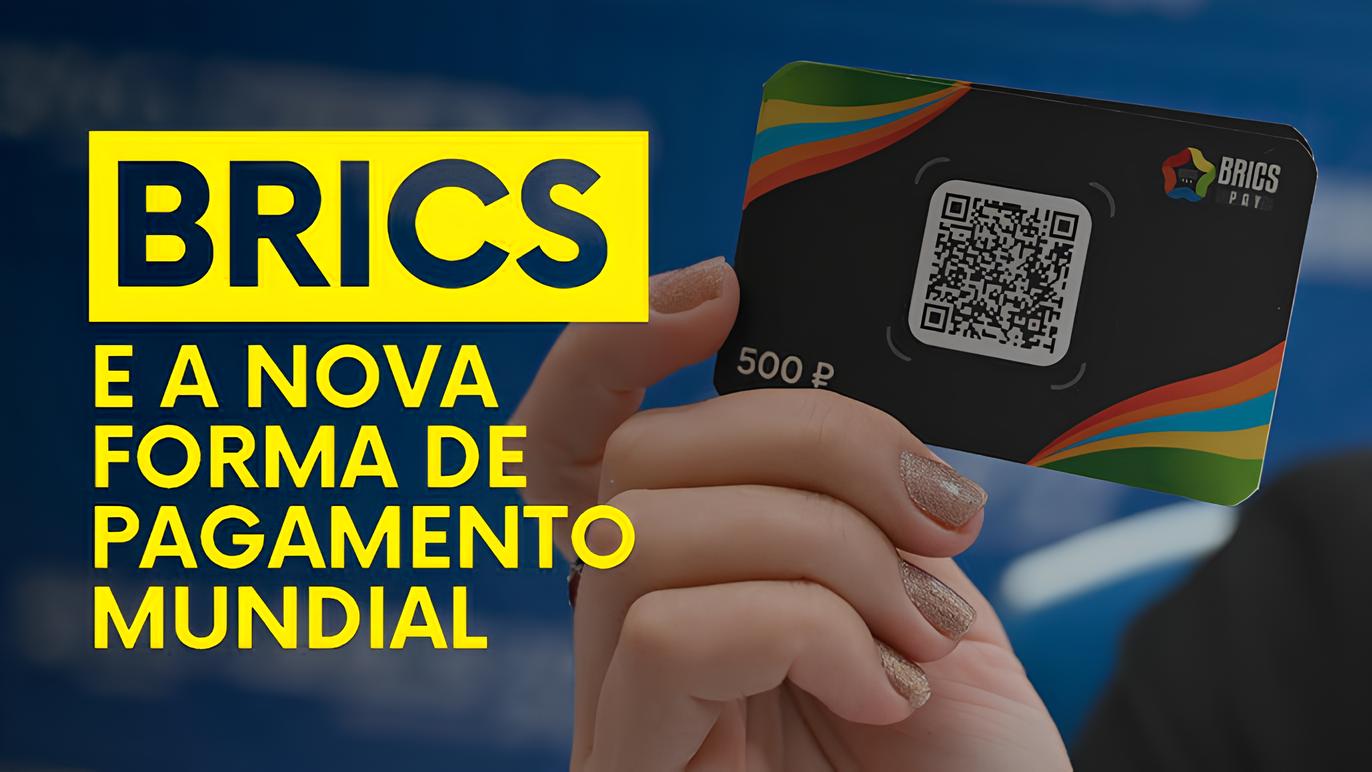


BRICS Pay Promises To Reduce The Use Of The Dollar In International Trade, Lower Transactions And Strengthen The Block In The Global Scenario.
The BRICS is accelerating the implementation of a payment system that could transform global trade and reduce historical dependence on the dollar. Called BRICS Pay, the project is described by some experts as an “international Pix” among countries that together account for more than 40% of the world’s population and represent about 26% of global GDP.
The idea is simple on paper but complex in execution: to create a platform that allows commercial transactions between BRICS members to be settled directly in their national currencies, avoiding conversion to dollars or euros. In practice, this would reduce transaction costs, decrease exposure to financial sanctions, and provide more economic autonomy to the block.
What Is BRICS Pay And How Does It Work

BRICS Pay is a decentralized messaging and financial settlement system, inspired by existing solutions such as CIPS (from China) and SPFS (from Russia), but with the proposal to interconnect all members of the block.
-
50 viaducts, 4 tunnels, 28 bridges, and 40 kilometers of bike paths: BR-262 in Espírito Santo will receive 8.6 billion reais for the largest engineering project in the state’s history, inspired by the Immigrant Highway in São Paulo.

-
Brazil produces too much clean energy and doesn’t know what to do with it: over 20% of solar and wind capacity was wasted in 2025 while investors flee and 509 renewable generation projects were abandoned in the last year.

-
Piauí will produce a new fuel that replaces diesel without needing to change anything in the truck’s engine and reduces pollutant gas emissions by half: truck drivers from all over the Northeast are already celebrating the news that will arrive later this decade.

-
A new Brazilian shopping center worth R$ 400 million will be built in an area equivalent to more than 4 football fields, featuring 90 stores, 5 cinemas, a supermarket, a college, and parking for 1,700 cars, potentially generating 3,000 jobs.


It would function as a secure channel for banks, companies, and governments to make international payments using currencies such as the real, yuan, rupee, ruble, rand, or other currencies from newly joined countries like Egypt and the United Arab Emirates.
This is not currently about creating a single currency — a project that remains in the realm of ideas. The focus is to facilitate the use of local currencies in a practical, fast manner with more competitive rates. Additionally, the system promises integration with national banking platforms, allowing companies to export or import without necessarily going through the dollar as an intermediary.
Why BRICS Wants To Reduce Dependence On The Dollar
Since the end of World War II, the dollar has established itself as the main currency for international trade. Today, about 84% of global transactions use the American currency. This gives the United States a strategic and economic advantage, as well as the power to impose financial sanctions that isolate countries from systems like SWIFT.

For BRICS, dependence on the dollar means vulnerability. In scenarios of geopolitical tension, such as wars or trade disputes, block members may face restrictions on access to the global financial system. Moreover, currency conversion to dollars increases costs and makes exports less competitive.
Recent Advancements And Countries Leading The Project
During the BRICS summit in July 2025, leaders reaffirmed their commitment to accelerate the deployment of BRICS Pay.
China and Russia are the most advanced nations in adopting alternatives to the dollar and have been conducting tests with bilateral transactions using local currencies. Brazil, for its part, has signaled interest in integrating the system to expand agricultural and energy exports to other countries in the block.
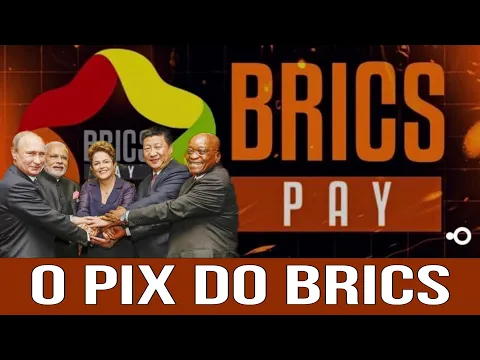
Furthermore, the recent expansion of BRICS to include Egypt, Ethiopia, the United Arab Emirates, Iran, and Indonesia increases the system’s reach and the potential to move hundreds of billions of dollars in annual trade — but without using the dollar.
Impacts On Brazilian Trade With The Arrival Of The BRICS Pay System
For Brazil, BRICS Pay could be a game changer, especially for sectors such as agribusiness, mining, and energy. Currently, much of the exports to China and India, for example, go through the dollar, which generates additional costs. With BRICS Pay, exporters could receive directly in yuan or rupees, converting to reais with less currency loss.
Another benefit would be the opening of new trade routes with countries that currently have little participation in Brazilian exports but would gain more relevance within BRICS. The United Arab Emirates and Iran, for example, are large importers of food and fuels, and could increase purchases without currency barriers imposed by the dollar.
Challenges And Risks Of BRICS Pay
Despite the potential, the implementation of BRICS Pay faces significant challenges. Among them:
- Technological Infrastructure: ensuring that the system is secure, fast, and compatible with the different national banking systems.
- Currency Volatility: currencies of emerging countries are more affected by fluctuations, which can complicate contract pricing.
- Trust And Adoption: convincing companies and banks to adopt a new system takes time and concrete results.
- Geopolitical Pressures: countries outside of BRICS, especially the United States and the European Union, may see the project as a threat and react politically.
Experts Analyze The Future Of The BRICS System
Economists point out that if BRICS Pay is successfully implemented, it could represent the biggest change in international trade since the creation of the euro. However, they warn that the project needs to be gradual and transparent to gain credibility.
According to Russian economist Sergey Glazyev, “financial independence is an essential step for Global South countries to have more voice in global economic decisions. BRICS Pay is more than a payment system; it is a tool for sovereignty.”
A Future Scenario: 2030
In an optimistic scenario, by 2030 BRICS Pay could move hundreds of billions of dollars annually in dollar-free transactions, becoming the main channel for trade among emerging economies. This would reduce costs, increase competitiveness, and weaken the dollar’s hegemony in some markets.
On the other hand, if it faces internal resistance or technical difficulties, the system may end up limited to bilateral agreements between a few members, losing strength as a global alternative.
BRICS Pay emerges as an ambitious project that, if successfully implemented, could change the rules of international trade. But it also faces obstacles that require cooperation and trust among countries with interests that are not always aligned.
The question remains: is Brazil ready to adopt a system that breaks decades of dependency on the dollar and paves the way for more independent trade?









Dólar está com seus dias contados.
Grande parte do poder econômico dos EUA vem de sua moeda ser hegemônica no comercio mundial.
Brics pay quebra essa hegemonia.
Próximo passo: como o fim da hegemonia do dolar, as commodity exchanges:
• NYMEX (Nova York) → petróleo, gás natural
• CBOT (Chicago Board of Trade) → milho, soja, trigo
• COMEX → ouro, prata, cobre
• ICE (Intercontinental Exchange) → café, açúcar, algodão
Deixarão de “ditar” os preços internacionais e provavelmente os Brics fixarão, principalmente os agrícolas.
O que está por trás desse novo meio de pagamento? Só tentar minar a força do dólar? Com tão poucos países? O Euro tinha muito mais cacife e não conseguiu