





 English
  Francês
  Alemão
  Italiano
  Japonês
  Norueguês
  Portuguese
  Spanish
 4 min of reading
  0 comments


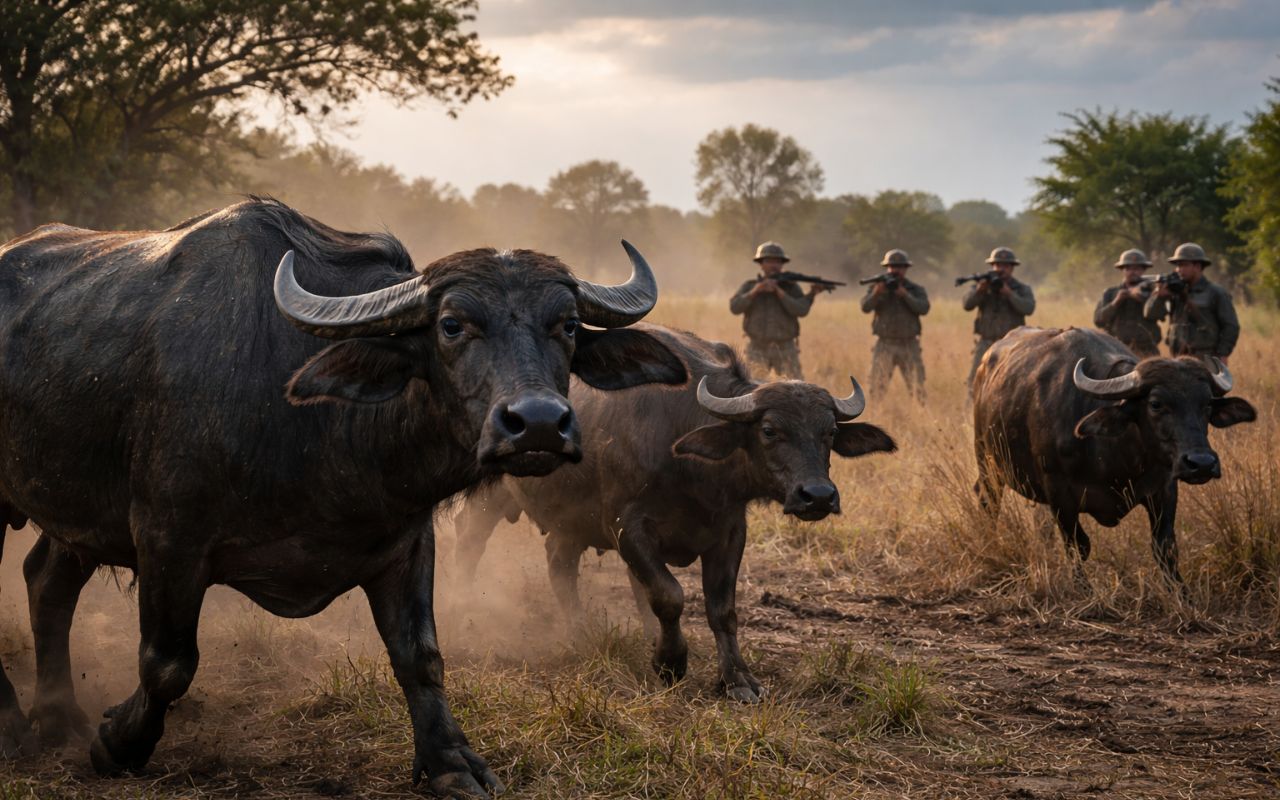
Federal Court suspends the slaughter of buffaloes in Rondônia and demands explanations from ICMBio; decision involves environmental impact and traditional communities.
The Federal Court has ordered the immediate suspension of the slaughter of invading buffaloes carried out by ICMBio in protected areas of Rondônia. The decision was made following an action by the Federal Public Ministry (MPF), which questioned the legality of the operation that began on Monday (16).
The main reason for the interruption is the possible overlap of the area with territories of indigenous peoples and quilombola communities, which had not been consulted beforehand. If the measure is violated, a daily fine of R$ 100,000 has been established.
Federal Court interrupts the slaughter of buffaloes and imposes a fine on ICMBio
The decision of the Federal Court reinforces limits for environmental actions involving traditional populations. The responsible judge highlighted that there was authorization only for the development of a control plan, and not for the direct slaughter of the buffaloes.
-
Forgotten region becomes a powerhouse in the heart of Brazil, transforming unproductive lands into fortune and making MATOPIBA the new billion-dollar agricultural empire that almost no one saw being born.

-
With a 775 hp engine, the world’s largest axial combine harvester arrives in Brazil, promising to harvest more in less time with advanced automation and the capacity for platforms up to 61 feet.

-
With 18 million feet, giant farms, and 2.2 million sacks per year, a mining group is building a coffee empire in Brazil with heavy mechanization, giant silos, and exports to various continents.
-
China and Russia suspend fertilizer exports, prices soar, and Brazil is already at real risk of shortages in the fields.


Furthermore, the determination provides for strict sanctions. ICMBio and the State of Rondônia may be financially penalized if the operations continue, which underscores the seriousness of the case.
On the other hand, the Court also demanded transparency. The institute must present, within five days, the complete project that underpins the action to control the invasive species.
Slaughter of buffaloes generates conflict between ICMBio and the Public Ministry
The impasse involving the slaughter of buffaloes began when the MPF filed a petition requesting the immediate suspension of the operation. According to the agency, the initiative did not respect the right to prior consultation with the affected communities.
This consultation is a legal requirement in cases that impact traditional peoples. Therefore, the absence of this dialogue was decisive for the Federal Court’s decision.
Meanwhile, ICMBio argues that the action was necessary. The institute claims that controlling the species requires practical field studies, which would justify the initiation of activities.
ICMBio defends the slaughter of buffaloes as a necessary environmental measure
According to ICMBio, the uncontrolled growth of buffaloes poses a threat to local biodiversity. The population has reached around 5,000 animals, and the initial plan called for the slaughter of 10% of this total.
The goal was to collect data to structure a definitive eradication strategy. However, the Federal Court’s decision interrupted the process before this stage could be completed.
Additionally, the institute argues that the measure complies with previous judicial determinations that required urgent actions to contain the environmental impacts caused by the animals.
Impacts of buffaloes motivate debate on slaughter and preservation
The presence of buffaloes in protected areas of Rondônia is considered a serious environmental problem. As they are not native to Brazil, these animals have no natural predators, which favors their rapid reproduction.
Consequently, there are direct impacts on fauna and flora. The animals alter the course of flooded areas and threaten native species, some of which are exclusive to the region.
“It is a unique environment, with several endemic [native] species, and the presence of the buffalo will lead to the extinction of many of them. Some species that we only have records of here, whether they are resident or migratory,” explains ICMBio environmental analyst, Wilhan Cândido.

Region affected by the slaughter of buffaloes encompasses three biomes
The buffaloes live in a strategic area in western Rondônia, where three important Brazilian biomes meet: Amazon, Pantanal, and Cerrado. The region includes conservation units such as biological and extractive reserves.
These areas have strict protection rules. In general, only research and environmental education activities are allowed, which increases the complexity of actions such as slaughter.
Additionally, some families still live in these territories. This makes dialogue with local communities essential before any intervention, a central point in the Federal Court’s decision.
Federal Court demands positioning on impact on communities
Another important point of the decision involves the participation of agencies linked to indigenous peoples. The National Foundation of Indigenous Peoples (Funai) has been summoned to express its position within five days.
The institution must assess the impacts of the slaughter of buffaloes on the communities and the need for prior consultation. This positioning will be fundamental for the next developments of the case.
Meanwhile, ICMBio awaits a new judicial definition to resume or adapt its actions. The impasse highlights the challenge of balancing environmental preservation and social rights.
Slaughter of buffaloes remains undefined after the Federal Court’s decision
With the suspension ordered by the Federal Court, the future of buffalo control in Rondônia remains uncertain. The measure, which sought to contain environmental damage, now depends on legal adjustments and dialogue with the communities.
Thus, the case exposes the complexity of decisions involving the environment and traditional populations. The debate on slaughter and control alternatives should continue in the coming days.
In summary, ICMBio’s actions are still under analysis, while the Court seeks to ensure that any actions respect both biodiversity and the rights of local populations.
Source: g1










Seja o primeiro a reagir!