





 Portuguese
  English
  Spanish
  5 min of reading
  0 comments



Under a mountain in southern China, a giant structure began to register signs of almost invisible particles and quickly drew attention for its size, the technology involved, and the speed with which it delivered results.
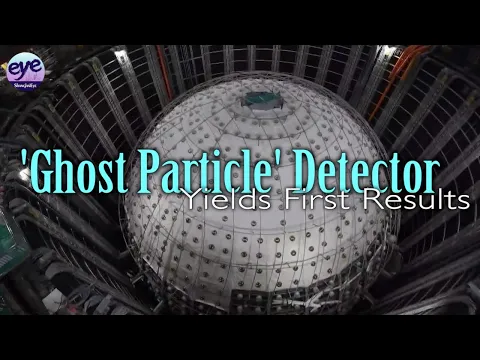
Buried under a mountainous region in southern China, the Jiangmen Underground Neutrino Observatory, known as JUNO, began operating on a scale that is rare even for particle physics: a giant sphere powered by 20,000 tons of liquid scintillator and prepared to register the passage of nearly undetectable particles.
Less than two months after starting operations, the experiment already delivered a result that caught the attention of the scientific community for refining measurements that had been built by different research over about 50 years.
The first data were obtained from 59.1 effective days of collection, after the detector officially began operations on August 26, 2025.
-
Iran enters the center of a climate alert after the war emitted 5.6 million tons of CO2 in two weeks, surpassing the annual pollution of entire countries.

-
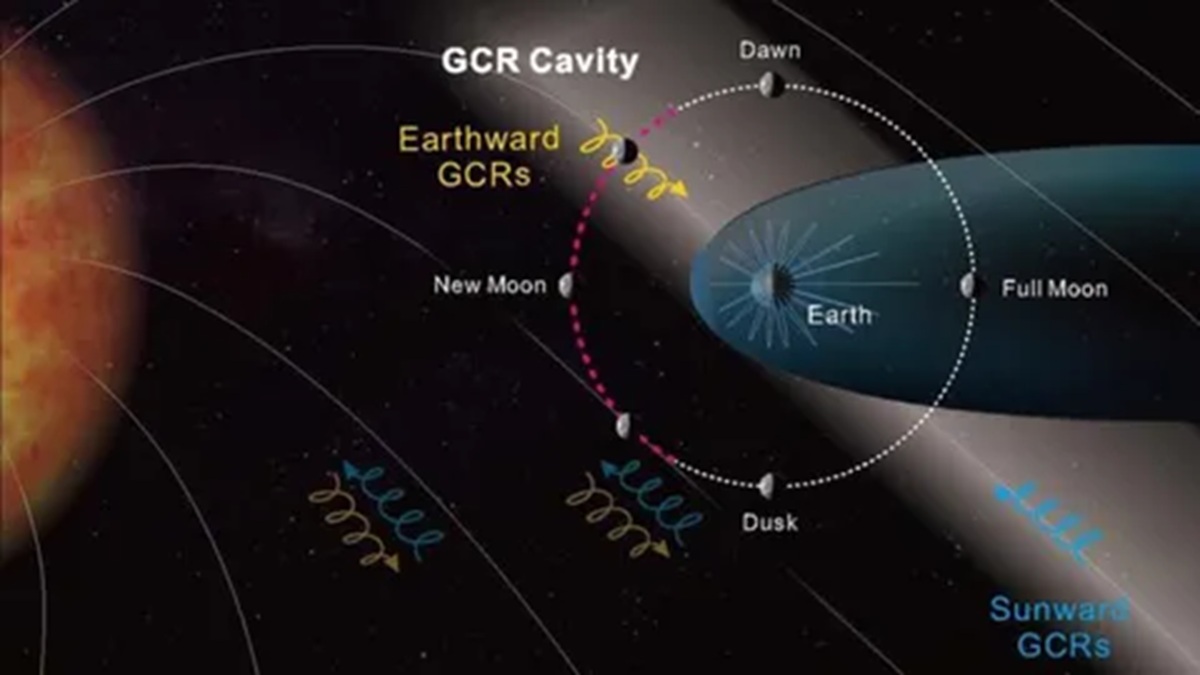
Lunar exploration may change after a Chinese probe finds a “cavity” of radiation that reduces the impact on astronauts by up to 20% at certain times on the Moon.
-
Artemis 2 sends four astronauts on a historic mission to the Moon after 50 years, with a launch on April 1 and a record flight to the far side of the Earth’s natural satellite.

-
Scientists drilled 523 meters of ice in Antarctica with water at 75 degrees and found 218 meters of sediments that prove that where there is now half a kilometer of ice, there was once an open ocean millions of years ago.


With this material, the JUNO collaboration reported achieving the most precise simultaneous measurement ever made of two parameters related to neutrino oscillation, a phenomenon that describes the “identity” exchange of these particles as they travel through space.
According to the scientific paper released by the team, the precision achieved exceeds by about 1.6 times the combination of all previous measurements for this set of parameters.
In numbers, the work recorded sin²θ₁₂ = 0.3092 ± 0.0087 and Δm²₂₁ = (7.50 ± 0.12) × 10⁻⁵ eV² in the normal ordering scenario.
For the reader outside the field, these values may seem distant from everyday life, but they help scientists understand more clearly how neutrinos behave and how far current theories can explain them.
That is why results of this kind often gain prominence: they do not announce an isolated discovery, but tighten the noose around one of the most enigmatic particles ever observed.
Neutrino detector in China draws attention for its size
The size of JUNO helps explain why the experiment sparked so much curiosity even before it began producing results.
At the center of the facility is a 35.4-meter diameter acrylic sphere, filled with a liquid specially prepared to emit flashes of light when a detectable interaction occurs.
Surrounding this structure, thousands of sensors observe the signals and allow reconstruction of what occurred inside the detector.
All of this was installed in an underground laboratory to reduce interference from particles coming from space.

The rock cover acts as a natural barrier against much of the “noise” that could interfere with reading the truly important events.
In practice, the environment was designed to give neutrinos a rare chance to leave some measurable trace, as they almost always pass through matter without interacting with anything.
The operation itself also required a delicate engineering step.
Before the start of data collection, the detector underwent filling with ultra-pure water and then with the 20,000 tons of liquid scintillator that form its active core.
The process was monitored with strict controls to preserve the integrity of the structure and maintain the level of purity necessary for high-precision measurements.
According to official project statements, the performance indicators observed in the initial phase met or exceeded the expected goals.
What are neutrinos and why do they challenge science
Neutrinos are among the most abundant particles in the Universe.
Trillions of them pass through the human body all the time, without causing any noticeable effect.
Still, detecting a single useful signal requires enormous structures, shielding against interference, and highly sensitive instruments.
This practical difficulty is one of the reasons why the topic is often surrounded by fascination even outside laboratories.
In addition to being discreet, neutrinos carry an important story for recent science.
For decades, the Standard Model of particle physics served as the main description of the subatomic world.
The problem is that observations showed that neutrinos have mass, something that the traditional formulation of this model did not predict in the way revealed by experiments.
The confirmation of this behavior, linked to the phenomenon of oscillations, led to the 2015 Nobel Prize in Physics awarded to Takaaki Kajita and Arthur B. McDonald.
This is precisely where JUNO comes in.

The more precise the measurements of neutrino oscillations, the greater the ability to test whether the current description holds without adjustments or if there will be room for new explanations.
In an interview with Live Science, the experiment’s deputy spokesperson, Gioacchino Ranucci, said that neutrinos are, so far, “the only portal to physics beyond the Standard Model”.
The phrase summarizes the researchers’ expectations, but the result released now, in itself, does not represent a break with the theory: it reinforces the precision of the measurements and expands the scope of future tests.
How 59 days of JUNO surpassed decades of measurements
One of the points that resonated most in the first announcements of JUNO was the speed with which the experiment produced competitive numbers.
According to Ranucci, the two parameters now refined had been estimated from a long sequence of experiments accumulated over half a century.
When comparing this history with the initial performance of the observatory, he told Live Science: “In 59 days, we surpassed 50 years of measurements”.

The comparison helps to gauge the instrumental leap, but it does not mean that previous studies have been simply replaced.
In practice, what JUNO did was use a combination of scale, sensitivity, and resolution to reach a level of precision that previously depended on the sum of many results.
The scientific paper itself presents the achievement as a validation of the detector’s design and as a sign that the experiment is ready to advance in its central goals with a broader data set.
This capability had been anticipated because the observatory was installed about 52.5 kilometers from multiple nuclear reactors, a position considered strategic for observing reactor antineutrinos in great detail.
The project design was specifically thought out to record very subtle patterns in the oscillations of these particles.
Now, with the detector already operating and producing concrete numbers, the expectation shifts to rely less on projections and more on the actual performance measured in the first months of operation.







Seja o primeiro a reagir!