





 Portuguese
  English
  Spanish
  5 min of reading
  0 comments


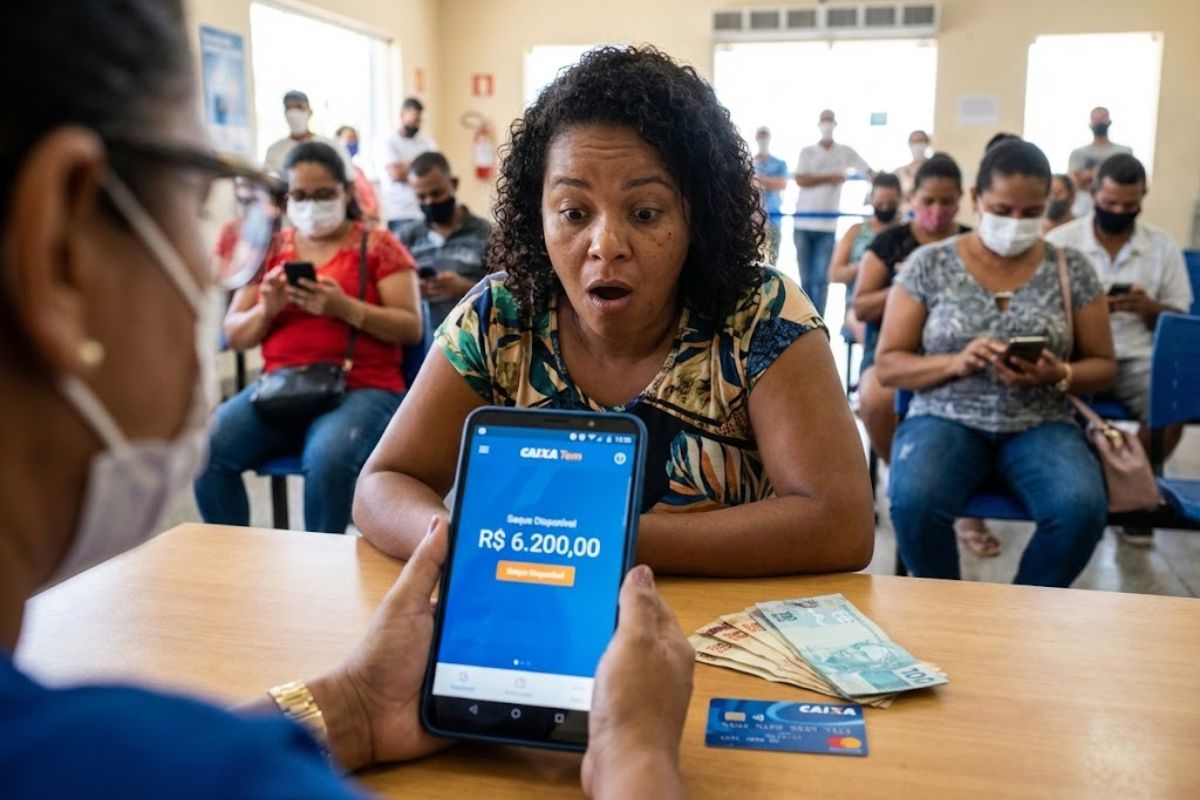
Measure Allows Brazilians in Municipalities with Official Calamity to Request Calamity Withdrawals from FGTS via Mobile, with Funds Going to Account or In-Person Withdrawal, but Only After Document Verification, Address Confirmation, and 12-Month Review. In Açucena and Almenara, Rain Pushes Deadline to April 20.
The Caixa Econômica Federal has begun releasing calamity withdrawals from FGTS for Brazilians living in municipalities recognized as being in a state of public calamity due to heavy rains, with digital applications and a limit of up to R$ 6,220. In the most recent update, approvals have been opened for residents of Açucena and Almenara, in Minas Gerais, with a final deadline of April 20.
In practice, the announcement creates a quick window for Brazilians who need immediate liquidity, but it also exposes the filter of FGTS itself: only those who have not made another withdrawal in the last 12 months can access the calamity withdrawal, and the effective amount depends on the available balance. The screening occurs after the submission of documents and address validation.
Where Calamity Withdrawals Have Been Released and Why Rain Changes the Urgency
The starting point is geographical and administrative: the calamity withdrawal from FGTS has been released for Brazilians in Açucena and Almenara, in Minas Gerais, cities mentioned as having been affected by heavy rains.
-
A new Brazilian shopping center worth R$ 400 million will be built in an area equivalent to more than 4 football fields, featuring 90 stores, 5 cinemas, a supermarket, a college, and parking for 1,700 cars, potentially generating 3,000 jobs.

-
Larger than entire cities in Brazil: BYD is building a 4.6 km² complex in Bahia with a capacity for 600,000 vehicles per year, but the discovery of 163 workers in conditions analogous to slavery has shaken the entire project.

-
With an investment of R$ 612 million, a capacity to process 1.2 million liters of milk per day, Piracanjuba inaugurates a mega cheese factory that increases national production, reduces dependence on imports, and repositions Brazil on the global dairy map.

-
Brazilian city gains industrial hub for 85 companies that is equivalent to 55 football fields.


It is this condition of public calamity that opens the door for the calamity withdrawal, not an individual choice of those who try to withdraw via the app.
The rains come to the forefront of the debate because they compress daily decisions.
When the official deadline is finite, like the deadline of April 20, Brazilians need to organize documents, access the app, choose the method of receipt, and wait for the analysis.
The urgency is not just financial; it is bureaucratic, since authorization exists, but the credit depends on validation.
Who Can Withdraw from FGTS and How the Real Limit Appears in the Balance
Even with a limit of R$ 6,220, the calamity withdrawal from FGTS is not an automatic amount for all Brazilians.
The rule presented is straightforward: how much each person receives depends on the balance that was already deposited in FGTS. This means the app may show a lower availability than the limit, even if the municipality is eligible.
There is also a temporal block that catches many Brazilians by surprise: the calamity withdrawal can only be requested if there has been no other withdrawal from FGTS in the last 12 months.
This 12-month interval acts as a funnel, reducing the eligible audience even in scenarios of rain and public calamity.
How to Request Via Mobile and Where Caixa Tem Comes into Play
The request for the calamity withdrawal occurs in the FGTS app, with a flow described as “Request Your 100% Digital Withdrawal” or via the “Withdrawals” menu, followed by “Request Withdrawal” and “Public Calamity.”
The sequence includes authentication, reading conditions, and selecting the municipality before submitting documents for analysis.
It is here that Caixa Tem becomes a practical reference for many Brazilians because it centralizes routine transactions and receipts.
However, the center of the process remains the FGTS app, where the calamity withdrawal is formalized and where Caixa evaluates the attachments. Caixa Tem may be the daily-use medium, but FGTS is the pathway for the request.
Which Documents Unlock the Analysis and What Usually Delays Approval
The required document package for the calamity withdrawal from FGTS includes an identity document, proof of residence in the name of the worker, and a photo of the face holding the identification document.
The proof of residence must have been issued within 120 days prior to the declaration of calamity, a detail that, in practice, determines who can prove their address without rework.
For Brazilians in areas affected by rain, the greater risk is losing time with inconsistent attachments.
Choosing the correct type of proof, entering the ZIP code and house number, and reviewing what has been attached are steps that influence the decision.
The analysis is straightforward on paper but strict in verification, and the calamity withdrawal only progresses when the data matches.
Deadline Until April, Methods of Receipt, and What to Do to Avoid Getting Stuck in the Middle
The operational message is clear: for Brazilians in Açucena and Almenara, the calamity withdrawal can be requested until April 20.
With that, planning needs to consider two timelines: the time to gather documents and the time for Caixa’s analysis, which only then releases the credit.
When choosing how to receive, the FGTS flow indicates two alternatives: credit to a bank account of any institution or in-person withdrawal.
For Brazilians who already use Caixa Tem in their daily lives, the decision tends to focus on convenience and access, but the final criterion is immediate necessity and the ability to provide proof within the deadline, especially when rains continue to affect daily routines.
The calamity withdrawal from FGTS serves as a short-term valve for Brazilians in municipalities recognized as being in a state of public calamity, but its effectiveness depends on three unforgiving variables: eligibility for the last 12 months, available balance in FGTS, and documentation within the 120-day window and deadline until April.
In scenarios of rain, this set defines who can turn authorization into actual cash.
If you are Brazilian and live in an area affected by rain, which part is most challenging in practice: proving your address, passing the FGTS 12-month rule, or receiving credit via Caixa Tem? Describe your situation in detail, including city and timeline, to help other Brazilians understand the path to the calamity withdrawal.










Seja o primeiro a reagir!