





 Portuguese
  English
  Spanish
 4 min of reading
  0 comments


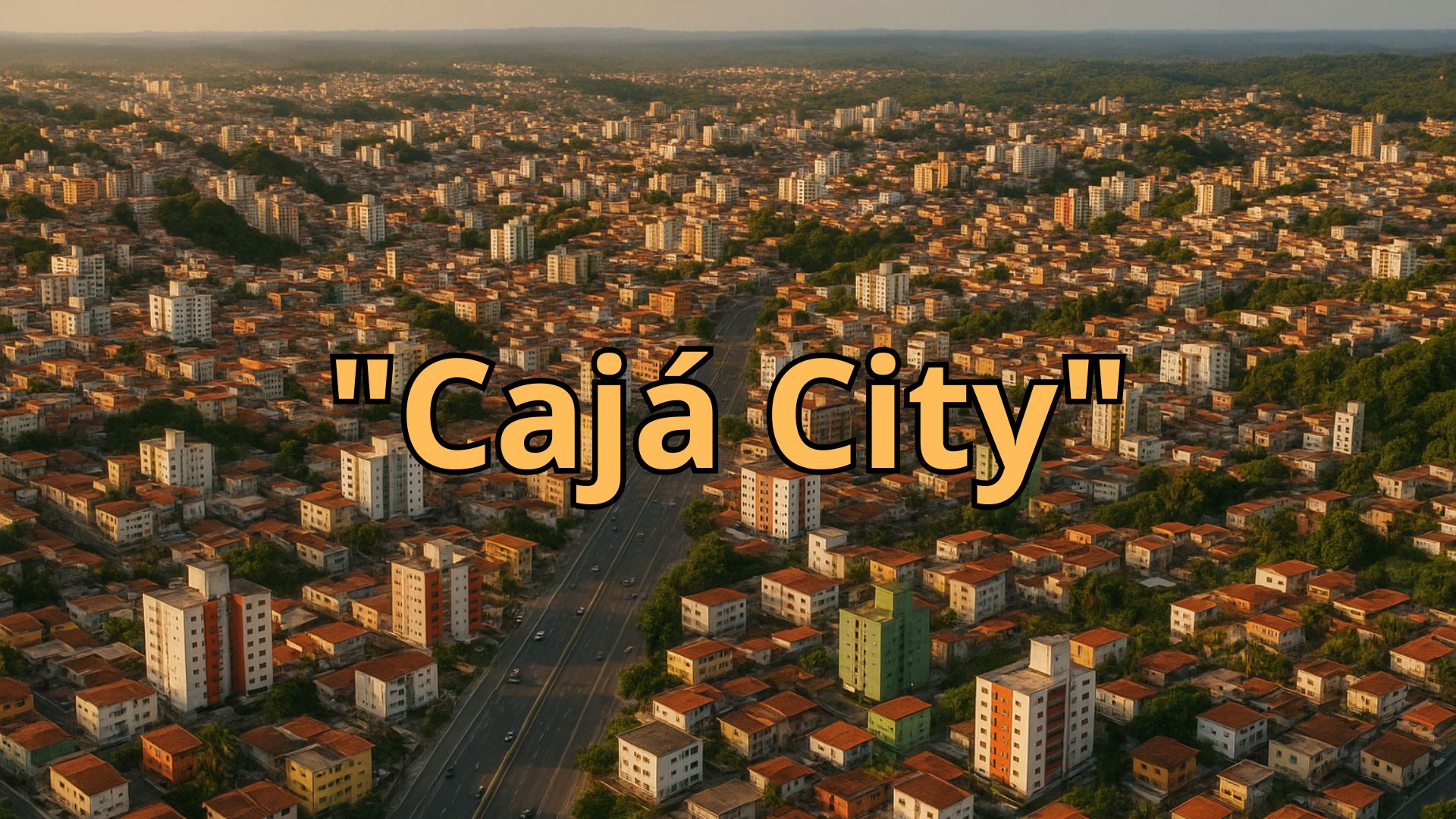
The Neighborhood That Became a City Within Salvador Impresses With Its Territorial Dimension, Population Equivalent to Entire Metropolises, and Urban Structure That Mixes Housing Complexes, Intense Commerce, and Unique Identity Nicknamed “Cajá City”
It is common to imagine that the largest neighborhood in Brazil would be in São Paulo, given its population density. However, the title belongs to the Bahian capital. Located in the southern zone of Salvador, Cajazeiras stands out for both its area and its population. With 16 million square meters, the neighborhood houses over 1 million people, according to real estate market estimates and data from the Brazilian Institute of Geography and Statistics (IBGE).
Affectionately known as “Cajá City”, the neighborhood emerged from a housing project initiated in the 1970s, aimed at accommodating families from other regions of the city. What started as a set of popular housing evolved into a true metropolis within the Bahian capital.
A Giant Divided Into 16 Microrregions
Cajazeiras is composed of 16 microrregions, reinforcing its complex urban character. Each sector, identified by numbers — such as Cajazeiras II, IV, VIII, XI, and XVI — has its own infrastructure, commercial centers, squares, schools, churches, and public transport lines.
-
Friends have been building a small “town” for 30 years to grow old together, with compact houses, a common area, nature surrounding it, and a collective life project designed for friendship, coexistence, and simplicity.

-
This small town in Germany created its own currency 24 years ago, today it circulates millions per year, is accepted in over 300 stores, and the German government allowed all of this to happen under one condition.

-
Curitiba is shrinking and is expected to lose 97,000 residents by 2050, while inland cities in Paraná such as Sarandi, Araucária, and Toledo are experiencing accelerated growth that is changing the entire state’s map.

-
Tourists were poisoned on Everest in a million-dollar fraud scheme involving helicopters that diverted over $19 million and shocked international authorities.

In extension, the neighborhood surpasses not only other districts of Salvador but also the area of dozens of Brazilian municipalities. This accelerated growth has consolidated Cajazeiras as a multifaceted urban center, with a strong local economy and distinctive cultural identity.


Other Large Neighborhoods in Brazil and How They Compare
After Cajazeiras, the list of the largest neighborhoods in the country mainly includes representatives from the Southeast and South regions. The Grajaú, in São Paulo, has about 348 thousand inhabitants; next comes Campo Grande, in Rio de Janeiro, with approximately 352 thousand residents. In Espírito Santo, the highlight is Jardim Camburi, with nearly 49 thousand people.
In Belo Horizonte, the largest neighborhood is Buritis, in the western region, with over 42 thousand inhabitants, according to the 2022 IBGE Census. In Rio Grande do Sul, Restinga, in Porto Alegre, totals 62.4 thousand people, while in Paraná the leader is Industrial City of Curitiba, with 172 thousand inhabitants. Lastly, in Santa Catarina, Aventureiros, in Joinville, appears at the top, with 43 thousand residents.
These figures show that Cajazeiras far surpasses any other neighborhood in the country, both in population and area.
The Origin and Meaning of the Word “Neighborhood”
The term “neighborhood” has a controversial origin. According to an article published by Revista Oeste, there are two main theories. The first suggests that it derives from the Arabic “barri”, meaning “exterior” or “outskirts,” used to designate areas outside the walls of ancient cities. The second theory advocates a Latin origin, from the term “barra” or “barriu”, meaning “separated” or “delimited.”
This etymological divergence reflects the very essence of modern neighborhoods: distinct areas within cities that retain their own characteristics and function almost like small cities within large metropolises.

Cajazeiras: From Housing Complex to Symbol of Urban Expansion in Salvador
According to information from Wikipedia and historical records from the city hall of Salvador, Cajazeiras was born from the Cajazeiras Housing Plan, created to alleviate the city center of the Bahian capital. Over time, the neighborhood gained infrastructure, commerce, schools, religious temples, and cultural centers.
Today, it is one of the most dynamic regions of Bahia, with intense economic and social activity. Cajazeiras features wide avenues, popular markets, service hubs, and one of the largest bus terminals in the city. Due to its grandeur, many residents claim that the neighborhood functions as a “city within a city.”
A Metropolis Within the Bahian Capital
The strength of Cajazeiras goes beyond its territorial extension. The community is marked by strong cultural identity, popular festivals, and artistic expressions. Its growth demonstrates the impact of accelerated urbanization and the need for planning in large urban centers.
In numbers, Cajazeiras is larger than over 90% of Brazilian municipalities. Its size and population density illustrate an increasingly common urban phenomenon: neighborhoods that take on metropolitan proportions.
More than just a neighborhood, Cajazeiras represents Brazilian urban growth in its most vibrant and challenging form. What began as a popular housing project has become a complex, self-sufficient, and pulsating urban space. Salvador, therefore, houses not just a neighborhood — but a true city within itself.
And you, have you ever heard of Cajazeiras, the largest neighborhood in Brazil?
Do you believe that another neighborhood could surpass this urban giant in the coming years?









Seja o primeiro a reagir!