





 Portuguese
  English
  Spanish
  5 min of reading
  0 comments


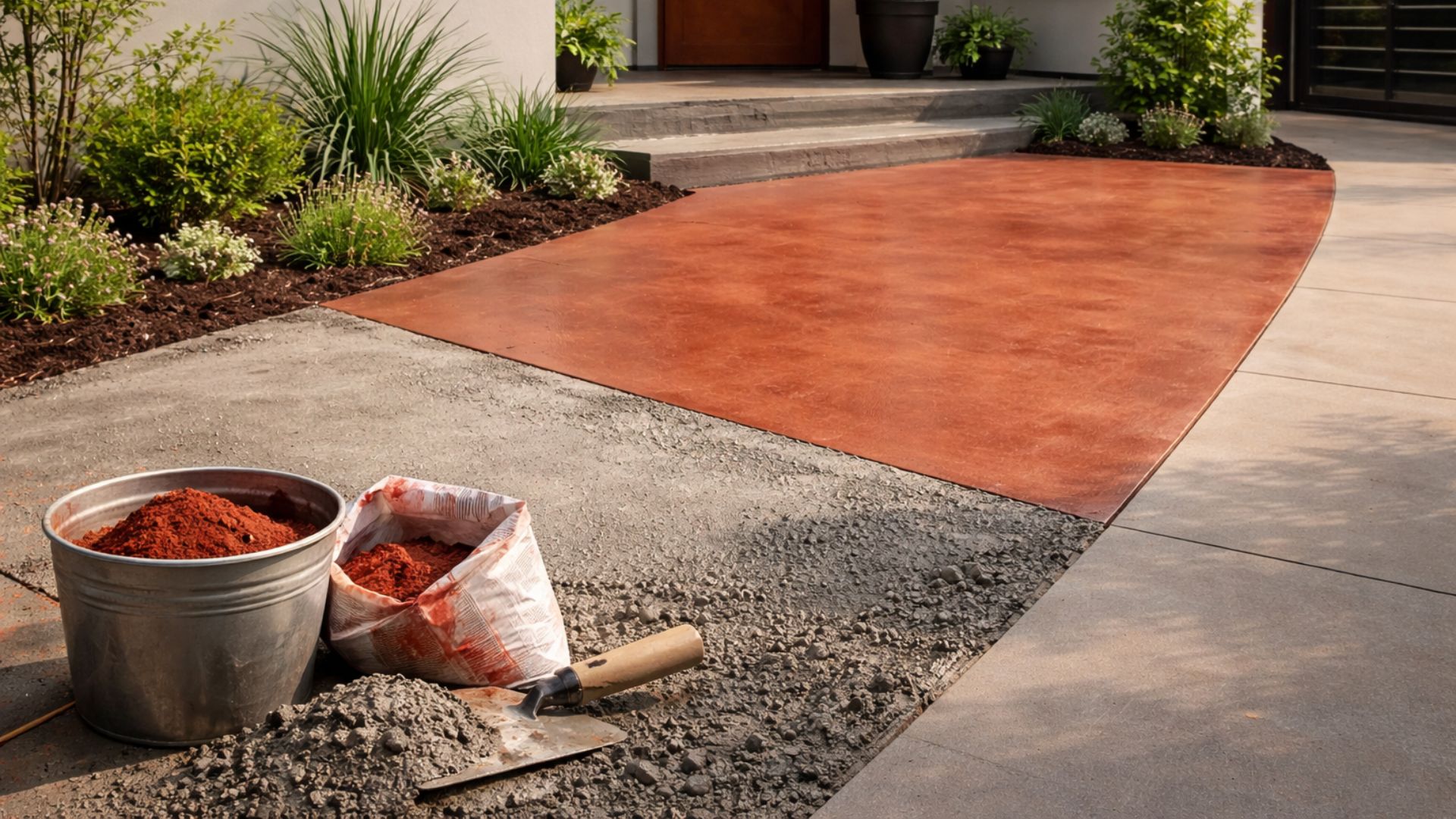
Cement Mixture with Mineral Pigment is Changing the Look of Residential Entrances by Allowing Colored Floors Directly in the Mix, Reducing the Use of Traditional Coatings and Expanding Aesthetic Options in Outdoor Areas Without Altering the Floor Structure or Requiring More Expensive Materials.
A mixture of cement with checker powder has been gaining traction in renovations and residential works because it allows for colored floors, with decorative finishing directly in the mix, without relying on traditional coatings to change the look of the house entrance.
The pigment is incorporated into the dry materials, and when applied correctly, the color becomes a part of the cementitious surface, rather than just sitting on top of it.
For this reason, the technique has been seen as an alternative for those looking to renew sidewalks, balconies, and external access points with more controlled costs and a more contemporary visual language.
-
New CCR concrete paving technology promises roads up to 3x more durable, less maintenance, and cost reduction in Brazil.

-
Made from recycled plastic, plastic wood is gaining space in the construction industry because it does not rot, resists moisture, and reduces maintenance costs over the years.

-
Florianópolis will receive a million-dollar BRT that will begin construction in 2026 with nearly 400 million in funding from the federal government and the Inter-American Development Bank, and the map already shows the routes for the exclusive bus corridors.

-
Without a blueprint, without an engineer, and using scrap from the dump, a father spends 15 years building an 18-room castle for his daughter, featuring tram tracks, 13 fireplaces, and over 700 m², which may now be demolished.

Instead of the uniform gray that marked many constructions for decades, the floor can receive earthy tones, reds, browns, and other variations, depending on the pigment used and the base chosen.
How the Mixture of Cement with Checker Powder Works
Checker powder is an inorganic iron oxide-based pigment, designed to color cementitious materials, mortars, and other mineral finishes.
The most common guideline in technical materials from manufacturers is that the mixture should be made dry first, so that the color is homogeneous before the water is added, a step that directly influences the final result.
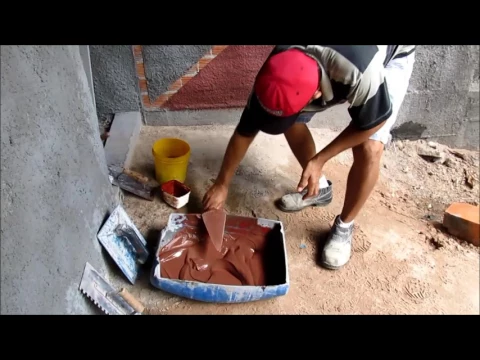

In the most known use for colored burned cement, one of the market references points to a proportion of one 500-gram package for every 10 kilograms of cement.
The same documentation emphasizes that the quantity can be reduced when the intention is to achieve softer shades, especially with white cement, showing that the dosage is not fixed for every construction situation.
This detail is important because the percentage of pigment varies according to the desired effect, the type of finish, and the system adopted by the applicator.
In other applications described in the same technical material, such as mortars and colored concrete floors for sidewalks, the proportions change, distancing the idea of a universal recipe and reinforcing the need to follow the recommendation of the chosen product.
Where Pigmented Cement Appears Most Frequently
In practice, the most visible use occurs in external areas intended for passage, such as house entrances, patios, side corridors, and small circulation paths.
The appeal lies precisely in combining structural finishing and visual effect in the same material, reducing the need for the installation of ceramics, natural stone, or other more expensive and time-consuming coatings.
Besides the aesthetic aspect, the method often attracts interest because it dispenses with a superficial layer of paint to generate color.
Since the pigment is mixed into the cement, the shade does not depend solely on an external film, a characteristic that helps explain why this type of solution is usually associated with greater visual stability than superficial paints subjected to sun, rain, and daily wear.
Nevertheless, the final result does not depend only on color.
The preparation of the subfloor, the consistency of the mix, the amount of water, and the way the surface is troweled weigh as much as the pigment in the appearance of the finished floor.
In technical materials focusing on the use of the product, the manufacturer mentions the importance of leveling, compaction, and continuous movements during application to avoid stains and imperfections.
Correct Execution Makes a Difference in the Floor Result
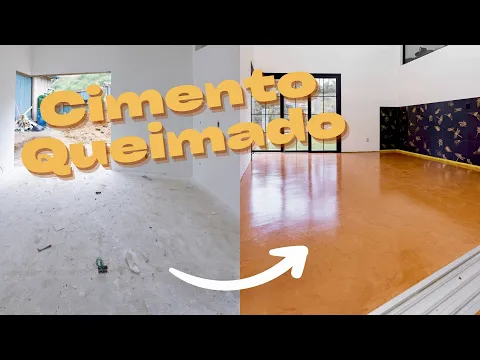
The popularization of pigmented cement is also related to the appreciation of the so-called cement effect in residential projects.
Rather than hiding the base with another covering, the proposal is to embrace the mineral appearance of the floor and transform it into an aesthetic language, with subtle texture and even appearance, something that aligns with more sober facades, xeriscapes, and walls in neutral tones.
This visual gain, however, does not eliminate the need for execution and maintenance care.
Technical publications on cementitious floors record that shrinkage cracks can appear when there are dosing, curing, or execution detailing issues, which requires attention from the initial stage of the work.
In materials for applying checker powder, the use of joints also appears as a measure to reduce the occurrence of cracks and fissures.
In outdoor areas, another point that cannot be treated as a detail is safe circulation.
The ABNT NBR 9050 standard establishes, for external floors, transverse slope of up to 3% and longitudinal slope of less than 5% in the accessible route, relevant parameters for any residential entrance project that aims to reconcile finishing, water drainage, and accessibility.
Why the Colored Cement Technique Gained Popularity
The growing interest in this type of floor arises from the combination of practicality and customization.
The technique allows for altering the appearance of a very visible area of the house without necessarily relying on industrialized covering pieces.
In targeted renovations, this can simplify the work, as long as the preparation of the base and the labor align with the intended finish.
The available color variety also weighs in.
Product catalogs indicate options such as yellow, red, black, green, blue, brown, and terracotta, with the possibility of combinations between colors to create new shades.
In residential projects, this flexibility favors the integration of the floor with gates, walls, gardens, and facade elements, without requiring a standardized solution for all properties.
More than just a decorative change, the technique repositions the sidewalk and entrance as visible parts of the house’s identity.
Spaces previously treated merely as passage areas are now receiving planning for color, layout, and texture, following a broader trend of attention to the design of outdoor areas.
The effect is direct: a simple intervention can change the reading of the facade without altering the structure of the property.
When execution respects dosing, homogenization, curing, and appropriate floor conditions, pigmented cement ceases to be just a work improvisation and starts functioning as a finish.
In this scenario, the old gray floor makes way for a solution that combines cementitious base, mineral pigmentation, and a more elaborated appearance, suitable for both renovations and new constructions.









Seja o primeiro a reagir!