





 Portuguese
  English
  Spanish
  3 min of reading
  0 comments


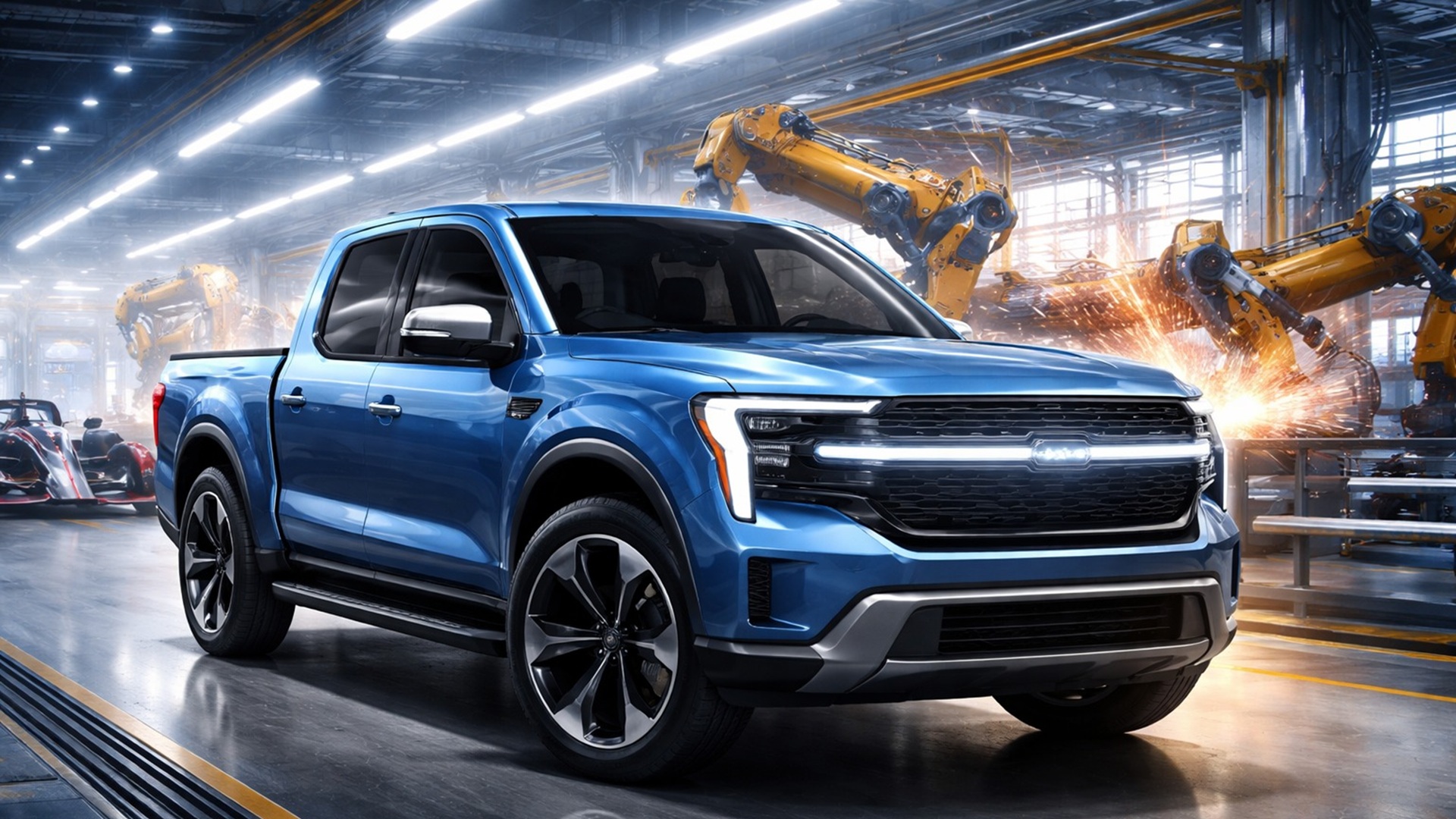
With a Price Target Around US$ 30,000, Ford Bets on New Dedicated Platform, Formula 1-Inspired Engineering, LFP Batteries, and Production in Louisville to Enable an Affordable Electric Truck with Fewer Parts, Lower Weight, and Structured Cost Reductions
The Ford Motor Company, based in Michigan, announced that it is developing an affordable electric truck priced around US$ 30,000, based on a new dedicated platform focused on cost reduction, lower complexity, and Formula 1-inspired engineering.
New Strategy to Launch Affordable Electric Truck Priced at US$ 30,000
The company has reshaped its strategy for electric vehicles after incurring significant financial losses in previous programs, including dialing back ambitions surrounding the Ford F-150 Lightning.
The goal now is to launch an affordable electric truck aimed at a broader segment of the conventional market, prioritizing accessibility, efficiency, and simplified engineering.
-
A French brand placed a car on four huge red balloons to prove that its suspension made the vehicle “float,” and the surreal scene became one of the most iconic and unusual images in automotive history.

-
Jeep Avenger begins production in Brazil, debuting as the brand’s new entry-level SUV and inaugurating an unprecedented phase by becoming the first national Jeep manufactured outside of Goiana, as part of a R$ 3 billion plan.

-
Costing R$ 12,490, the new Shineray Urban Lite 150 “cheap one” arrives in Brazil with a CVT transmission, digital dashboard, and LED lights, making it more affordable than the Biz and targeting those who want to abandon the bus.
-
Ducati brings to Brazil the Superleggera V4 Centenario: 228 hp that become 247 with a track kit, carbon fiber and carbon-ceramic brakes, estimated price between R$ 1.5 and 2 million, deliveries only in 2027.


Instead of adapting gasoline vehicle platforms, the automaker is developing an entirely new architecture called Ford’s Universal Electric Vehicle Platform, specifically designed to reduce complexity and production costs.
The new base, also referred to as UEV, will initially be used for a midsize pickup truck, with an estimated price around US$ 30,000.
Formula 1 Engineering Applied to the Affordable Electric Truck
Reports indicate that a core part of the strategy involves hiring engineers with experience in Formula 1, an environment where performance depends on maximizing efficiency and minimizing weight.
Race-related techniques, such as advanced aerodynamic optimization, lightweight structural design, and rapid prototyping, are being adapted for a mass-market vehicle.
By improving aerodynamic efficiency, the company aims to reduce the size and cost of the battery needed to achieve competitive range. The battery is one of the most expensive components of any electric vehicle.
This approach seeks to make the affordable electric truck financially viable without compromising performance and efficiency goals.
Internal Reward System and Data-Driven Decision Making
Internally, a reward system has been introduced that assigns measurable financial and performance values to engineering decisions.
Instead of isolated negotiations between departments, teams quantify how design changes impact cost, range, weight, and manufacturing complexity.
The model encourages engineers to prioritize the overall efficiency of the vehicle, avoiding the optimization of individual components at the expense of the complete system.
According to the company, this data-driven methodology helps accelerate development while keeping the final product within the established price target.
Cost Reduction Measures and Use of LFP Batteries
Among the additional cost reduction measures is the adoption of lithium iron phosphate (LFP) batteries, generally cheaper and more durable than some alternatives.
The automaker is also reducing the number of parts through large structural castings, simplifying wiring and electronics, and consolidating software systems.
These changes aim to decrease assembly time and material usage, directly impacting the final cost of the affordable electric truck.
Production is expected to take place in Louisville, where there are investments in manufacturing upgrades to support the new electric vehicle platform.
Platform Built from the Ground Up and Future Expansion
The UEV is described as the first electric vehicle built from the ground up by the company, marking a strategic shift from the Mustang Mach-E and the Lightning EV, which utilized existing infrastructure and manufacturing practices.
According to Alan Clarke, a Tesla veteran with 12 years of experience, the platform could eventually support a sedan, a crossover, a three-row SUV, and small commercial vans.
The company claims the new model will be US$ 20,000 cheaper than the average new vehicle while still generating profits.
Despite sharing details about engineering, structure, and cost strategy, the automaker has not disclosed specifications such as range, features, or charging times for the future electric vehicle.
The information was shared in blog posts and social media, as well as in a report published by TechCrunch.
If successful, the strategy could reposition the company in the global low-cost electric vehicle market while altering how traditional automakers approach cost reduction and efficiency in manufacturing high-volume electric models.
The project represents an attempt to make the affordable electric truck competitively priced while maintaining strict control over weight, parts, production processes, and dedicated architecture.










Seja o primeiro a reagir!