





 Português
  Inglês
  Espanhol
  3 min de leitura
  1 comentário


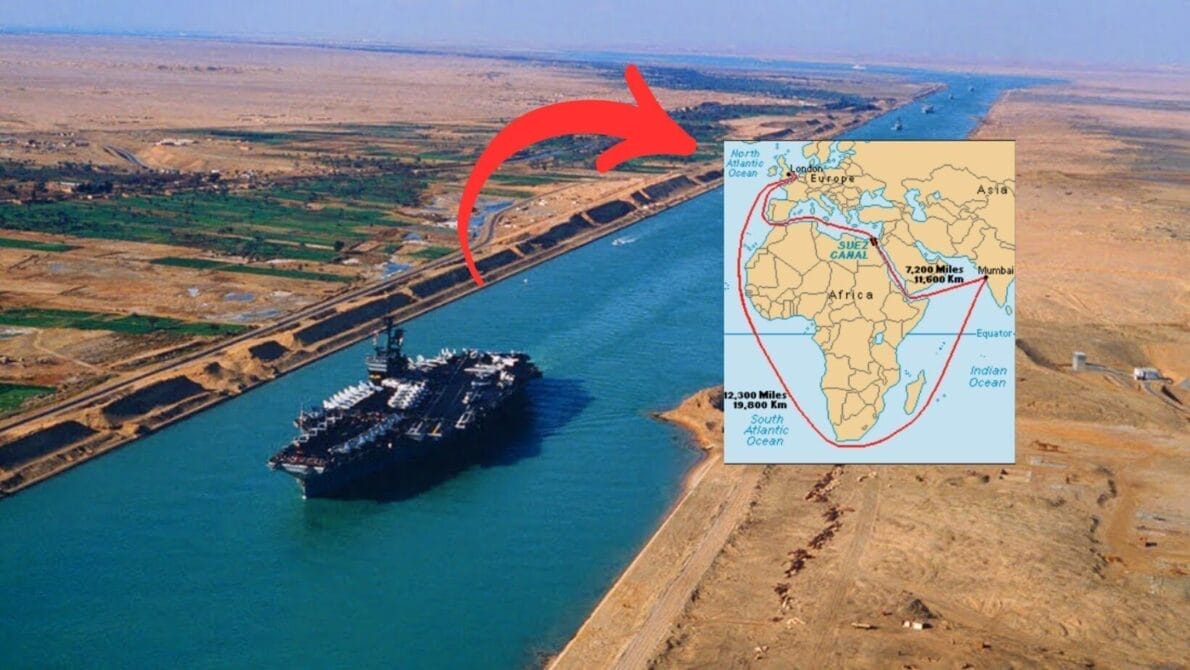


The Waterway Is a True Marvel of Engineering That Connects the Mediterranean to the Red Sea, Revolutionizing Maritime Transport
The Suez Canal, an impressive artificial waterway stretching 193 km, cuts through Egypt linking the Mediterranean Sea to the Red Sea. Inaugurated in 1869, this canal is crucial for global trade, allowing the passage of hundreds of ships daily between Europe and Asia, without the need to go around the African continent, which would considerably reduce travel time. Responsible for about 14% of the world’s goods transport, the Suez Canal is one of the most important engineering feats ever undertaken by humanity, according to the video from the channel Construction Time.
The History of the Suez Canal
Located in the Sinai Peninsula, in Egypt, the waterway of the Suez Canal was envisioned over 3,800 years ago, during the reign of pharaohs who sought to facilitate the crossing of boats. However, the modern project of the canal only began to take shape in the late 18th century, during Napoleon Bonaparte’s expedition to Egypt. Napoleon believed that the creation of a canal controlled by the French at the Isthmus of Suez would cause trade issues for the British, who dominated maritime trade via South Africa.
Get to Know the Suez Canal Better


The studies for Napoleon’s plan began in 1799, but an error in measuring the levels of the Mediterranean Sea and the Red Sea halted construction. Only in 1859, under the leadership of French diplomat and engineer Ferdinand de Lesseps, was the construction project of the Suez Canal officially initiated. The work involved the removal of 2.613 million cubic feet of earth, with 600 million through excavation and 2.013 million through dredging.
-
A bright yellow mushroom imported from Asia escaped from a cultivation farm in the United States in 2010 and is now aggressively spreading across 25 states, destroying entire communities of native fungi in American forests.

-
Buried under China, a colossal machine weighing 20,000 tons began operating as the largest neutrino detector on the planet and, in just 59 days, surpassed results that science took half a century to achieve.

-
Iran enters the center of a climate alert after the war emitted 5.6 million tons of CO2 in two weeks, surpassing the annual pollution of entire countries.

-
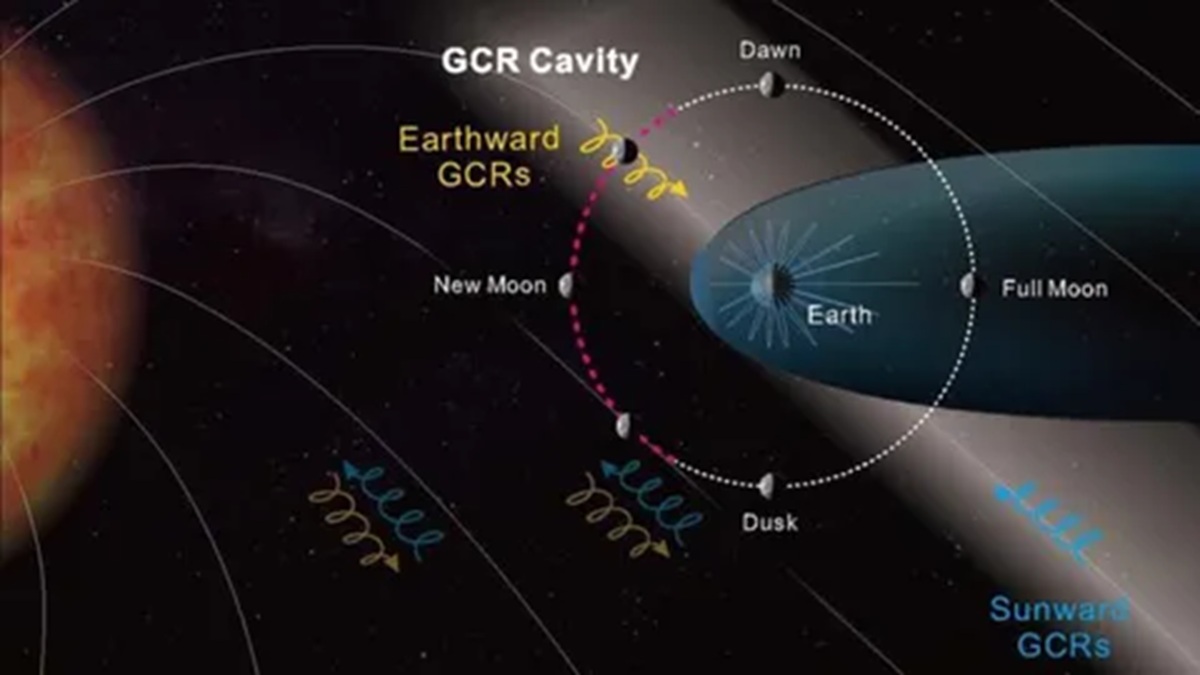
Lunar exploration may change after a Chinese probe finds a “cavity” of radiation that reduces the impact on astronauts by up to 20% at certain times on the Moon.

Suez Canal: A Project Much More Difficult Than Imagined
The construction of the Suez Canal was not an easy task. Initially, the work was carried out by forced labor until slavery was abolished in 1863. This necessitated the introduction of steam and coal-powered dredges to continue construction. The edges of the canal were built with clay extracted from the bottom of Lake Manzala, forming blocks that were left to dry in the sun, creating a solid and firm structure.
The canal, 60 to 90 meters wide at the surface and 21 meters wide at the bottom, was designed to have no locks, due to the flat terrain and the small difference in sea level between the ends. The absence of locks allowed for continuous navigation, facilitating maritime transit.

Strategic and Economic Importance of the Waterway
Since its inauguration, the Suez Canal has been an essential route for global trade. In 2021, the waterway generated a record revenue of $6.3 billion, despite the historic blockage caused by the container ship Ever Given, which ran aground in March of the same year. This incident reinforced the strategic importance of the canal, demonstrating how its obstruction can negatively impact the global economy.
To remain competitive, especially in relation to the Panama Canal, the Suez Canal Authority announced in 2014 an expansion plan. This project included the creation of a new parallel lane of 72 km, allowing for two-way traffic and reducing transit time from 18 to 11 hours. The capacity of the canal increased to 97 ships per day, doubling its previous capacity.






ameiii hello uhul ebaaa