





 Português
  Inglês
  Espanhol
 4 min de leitura
  0 comentários


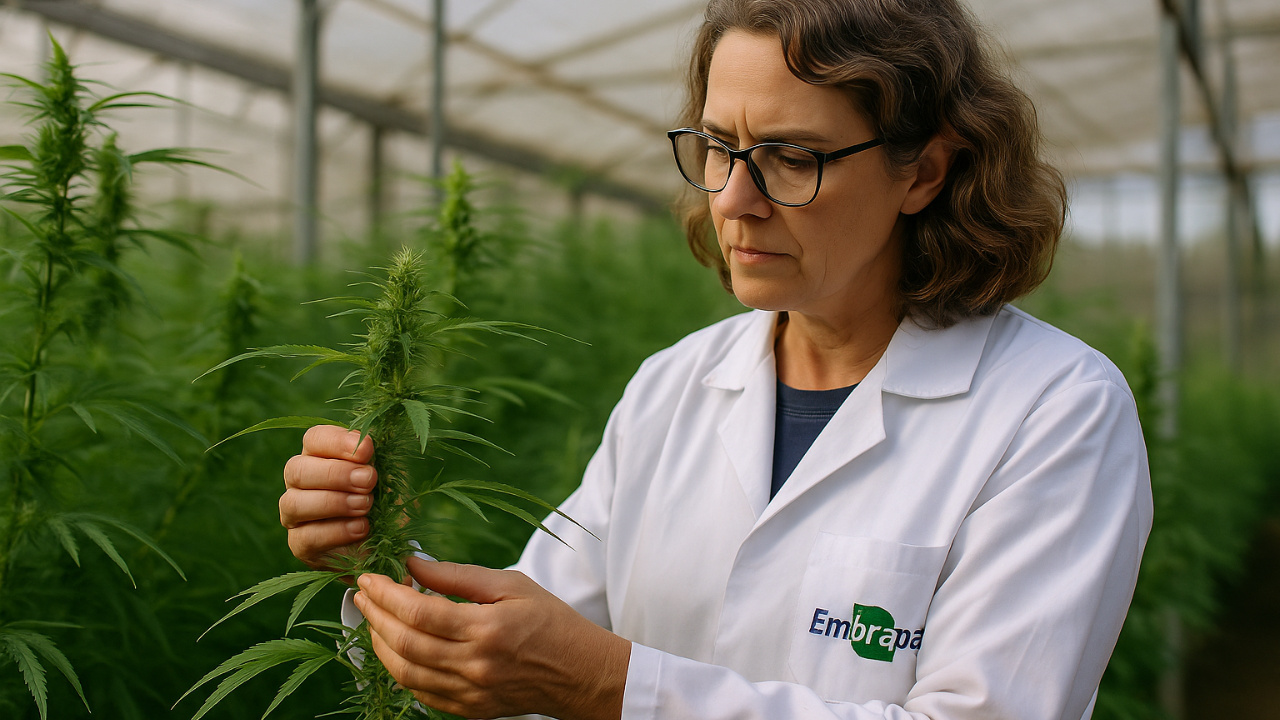
Anvisa Authorized Embrapa to Research Cannabis and, According to an Expert, “Cannabis is an Agricultural Crop”
The decision by the National Health Surveillance Agency (Anvisa), announced on November 19, authorizing Embrapa to conduct research on Cannabis sativa, marks a historic turning point in the debate over the medicinal and industrial use of the plant in Brazil.
The permission, valid only for scientific purposes and under strict technical control, was the central theme of the program CB.
Agro, broadcast on November 21, where researcher Daniela Bittencourt explained what changes, who is involved, when the research begins, where it will be conducted, how it will be developed, and why the advancement represents a revolution for the agricultural sector.
-
Alone, the producer applies 7,400 hectares with the T100 drone in an optimized structure, replaces the generator with a silent battery, and demonstrates how technology reduces costs, increases productivity, and even challenges the uniport in the field.

-
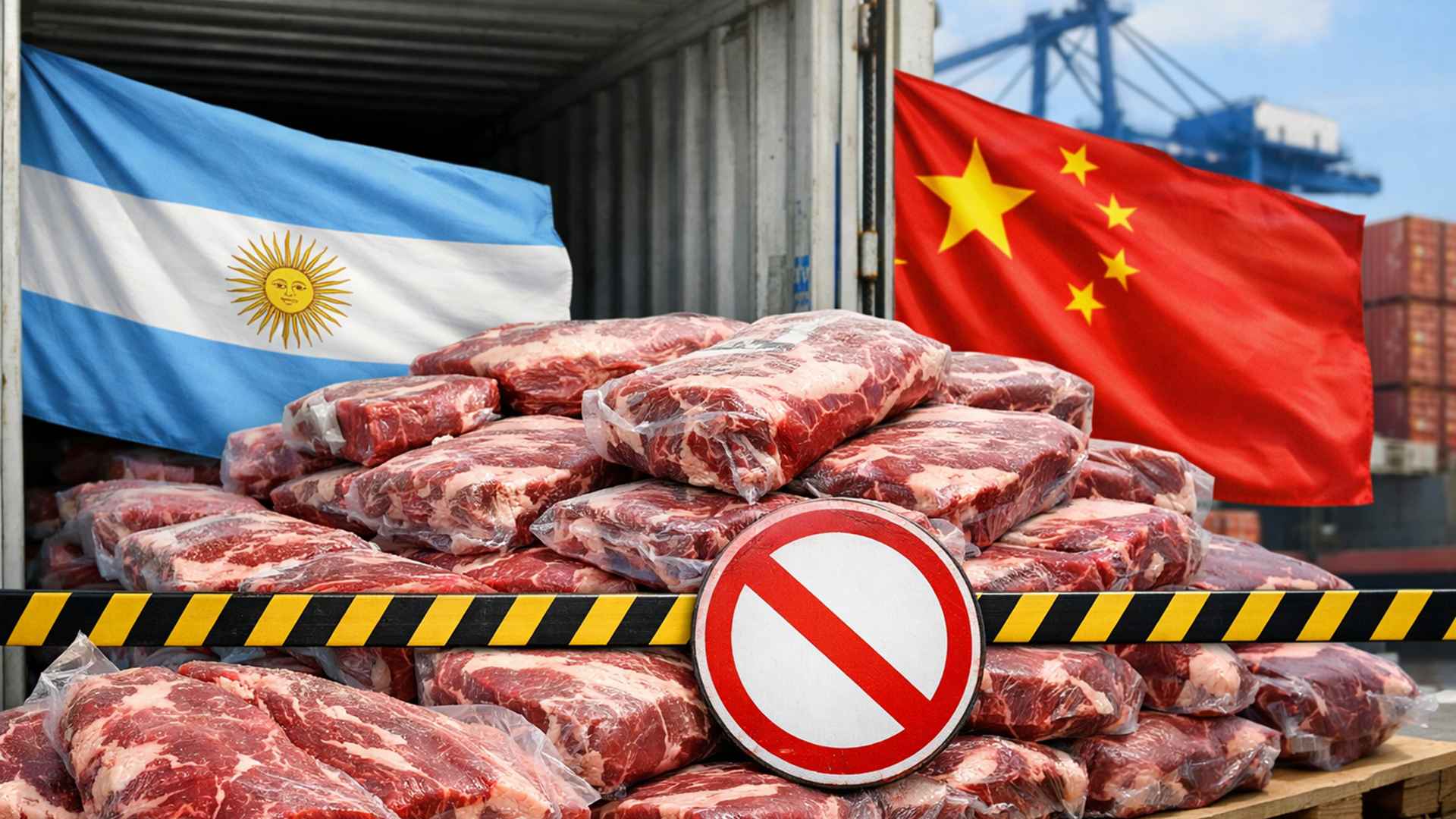
China banned the export of 22 tons of meat from Argentina.
-
JBS, founded by the Batista brothers, continues to conquer the world: entrepreneurs built a ‘factory in the desert’ creating 3,000 jobs.

-
With only 1% of Brazil’s territory, Santa Catarina has built one of the most competitive industrial parks in the country, with 64,000 companies, nearly 1 million jobs, and a growth rate of 5.3% while the national industry is practically stagnant.


Right at the beginning of the conversation, Bittencourt highlighted that the decision opens the doors to consolidate the plant as a new productive front in the country, reinforcing the statement that has become the axis of the debate: “Cannabis is an agricultural crop,” says an expert from Embrapa.
According to her, scientific research has the potential to drive innovation, generate jobs, and create space for industrial sectors that do not currently exist in Brazil.
Anvisa Authorization Changes the Course of Research and Agroindustry
The Anvisa release represents the first institutional step for cannabis to be treated with the same seriousness as other strategic crops.
According to the researcher, Embrapa has already been internally assessing the potential of the plant and has structured a dedicated working group on the subject.
“We created a working group to evaluate the potential of the plant in agriculture and, from that, structured a research program in cannabis,” said Bittencourt.
Thus, the statement “Cannabis is an agricultural crop,” says an expert from Embrapa, gains even more relevance in the regulatory scenario.
Production Chain Does Not Exist Yet, But Technology Can Change the Scenario
Currently, there is no cannabis production chain in Brazil due to the prohibition of cultivation.
However, Embrapa understands that the country could become a production hub in the future, especially with industrial hemp, used in the manufacture of durable fibers and biomaterials.
“Our goal is to develop the entire chain, from planting to the final product,” explained the researcher.
Three Embrapa Units Will Lead Structuring Studies
The authorization encompasses three main projects, distributed across strategic units:
Embrapa Genetic Resources and Biotechnology (Brasília) – creation of the germplasm bank and genetic characterization.
Embrapa Temperate Climate (Pelotas – RS) – focus on genetic improvement for medicinal use.
The teams will work in an integrated manner.
“One project complements and feeds the other. We will work in a network.”
Brazil Seeks International Partnerships to Accelerate Advances
Embrapa has already started conversations with foreign groups to reduce Brazil’s scientific gap compared to countries that have been studying cannabis for decades.
“There is no way to ignore it. We are behind. Partnerships are essential.”
This collaboration is seen as strategic to validate methodologies, access genetic banks, and accelerate results, a crucial step in a research environment still under development.
Funding and Expansion of the Research Network
Thus, the projects are funded by Finep, which, according to the expert, was decisive for Anvisa’s authorization.
Therefore, Bittencourt states that the goal is to expand the research network and involve universities, institutes, and even the private sector.
Regulation of Hemp: A Link Between Research and Public Policies
Thus, the discussion progresses in parallel to the judgment in the STJ regarding the cultivation of medicinal hemp, whose deadline for regulation has been extended to March 31, 2026.
“We hope for an inclusive standard that also covers industrial hemp, seeds, fibers, and biomaterials.”
So, for the specialist, public policies directly depend on research, which provides the technical security for strategic decisions.
Research Can Expand Access, Quality, and Safety for Consumers
Thus, the specialist emphasizes that science will play a central role in expanding the market, developing new medicines, and creating reliable sanitary parameters.
“The more technical knowledge we have, the more accessible this market tends to become.”
Thus, the statement “Cannabis is an agricultural crop,” says an expert from Embrapa, summarizes not only a diagnosis but a strategic vision for the future of agriculture and health in Brazil.










-

-

5 pessoas reagiram a isso.