





 Portuguese
  English
  Spanish
  5 min of reading
  0 comments


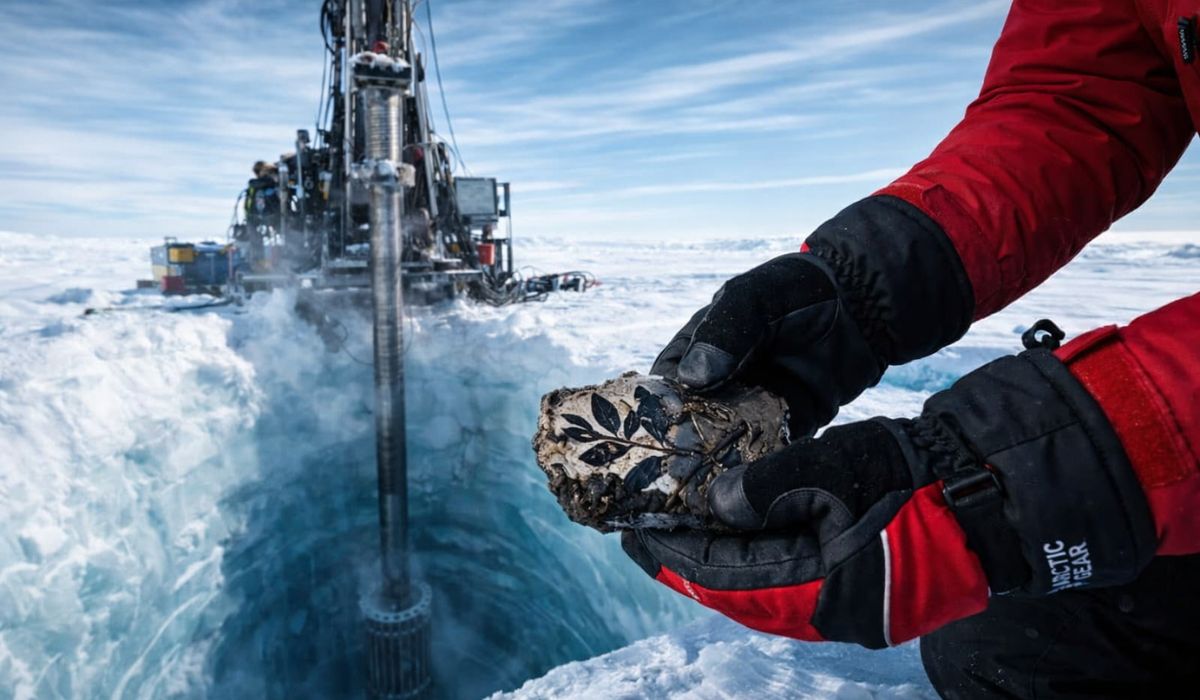
Studies With Preserved Sediments Under the Greenland Ice Sheet Rekindled the Scientific Debate on Ice Stability and Brought New Evidence of Ancient Landscapes, With a Direct Impact on Understanding the Earth’s Climatic History.
Fossils of plants, fungi, and parts of insects preserved under the Greenland ice sheet reinforced evidence that areas now covered by thick ice have been ice-free in a geologically recent past.
In part of the samples studied at Camp Century, in the northwest of the island, dating indicated exposure to sunlight about 416,000 years ago.
The samples, reexamined by teams from universities in the United States, Denmark, and other countries, preserved traces of tundra in an unusually good state of conservation.
-
China accelerates global science and may surpass the United States in 2 years with increased public investment, continuous growth, and direct impact on the global technological competition.

-
Scientific studies indicate that drought may be strengthening a much greater silent threat: more resistant superbugs.
-
Man builds functional 5-meter submarine in his garage using gas cylinders, PVC pipes, and a refrigerator motor, and navigates with the vessel on a lake in Colombia.
-
Millions of people have been eating yam for centuries without knowing that this humble tuber contains a compound called diosgenin, which scientists have now discovered can improve memory and help control blood sugar levels.


According to researchers, this set of evidence suggests that not only peripheral areas but also broader sectors of the ice sheet may have been exposed in relatively recent intervals of Greenland’s climatic history.
Fossils Under the Greenland Ice
Two studies form the basis of this scientific debate.
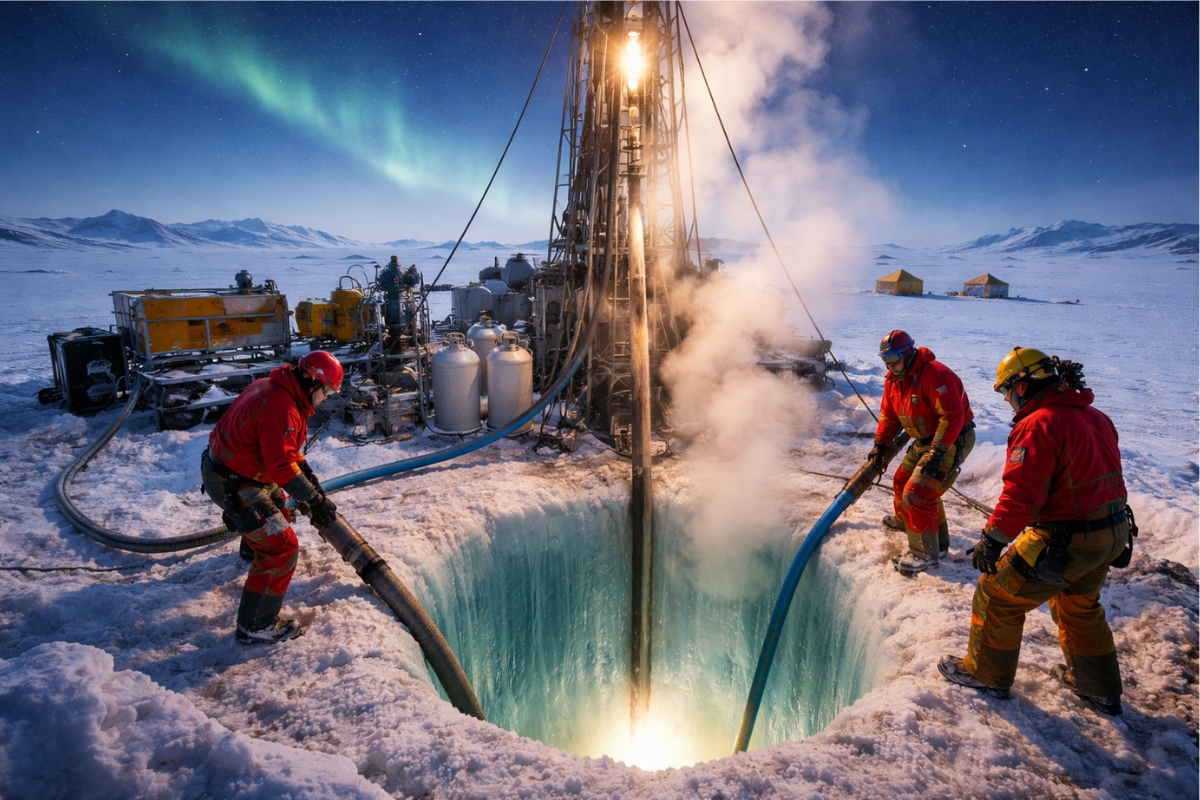
The first, published in 2021, analyzed frozen sediments retrieved in 1966 from under nearly 1.4 kilometers of ice at Camp Century.
In this material, researchers identified branches, leaves, mosses, and other plant remains preserved at the bottom of the core.
The second study, published in 2024, examined a few centimeters of soil from the bottom of the GISP2 ice core, drilled in 1993 in central Greenland.
This analysis described willow wood, fungi, an Arctic poppy seed, and parts of insects.
For the authors, the findings indicate that not only the edge but also more internal areas of the ice cover have been free of this layer.
This point changed the weight of the available evidence.
Until then, the hypothesis that Greenland had lost ice broadly in relatively recent periods was largely based on models and geochemical signals.
With the identification of preserved macrofossils, the studies began to present direct evidence of exposed soil and vegetation in areas that today remain under a thick ice cover.
Preservation of Sediments in Camp Century
The conservation of the materials is related to the environment in which they remained sealed.
In the case of Camp Century, the organic remains were frozen at the base of the core and protected from rapid decomposition processes.
This condition allowed delicate plant structures to remain recognizable under the microscope and, in some cases, visible to the naked eye.
When announcing the results of 2021, the University of Copenhagen reported that these were the first macrofossils recovered under the Greenland ice sheet large enough to be observed without a microscope.
The data was highlighted by researchers as an indication of the unusual preservation of the material.
Another decisive element was the rediscovery of the samples.
The sediment drilled in 1966 had not been studied in depth at the time and went through different storage facilities before being found again and reevaluated with more recent techniques.
Therefore, a sample collected decades ago only gained scientific prominence after being subjected to new analysis methods.
Dating of Fossils and New Chronology
The first analysis already indicated that the ice had receded at some point within the last million years.
Later, a study published in the journal Science in 2023 refined this estimate.
Using luminescence dating, the team concluded that the upper layer of subglacial sediment from Camp Century was last exposed to sunlight about 416,000 years ago, with a margin of error of 38,000 years.
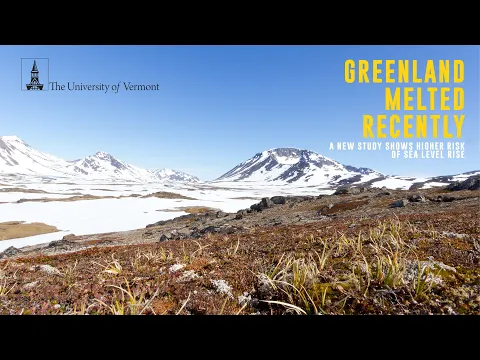

The authors associated this interval with marine isotopic stage 11, a prolonged interglacial period.
At Camp Century, researchers describe signs of tundra with vegetation, including mosses, lichens, and, in some reconstructions, the possible presence of trees such as spruces and pines.
In central Greenland, the material analyzed in 2024 was also interpreted as indicative of a green tundra landscape.
What Studies Indicate About the Greenland Ice Sheet
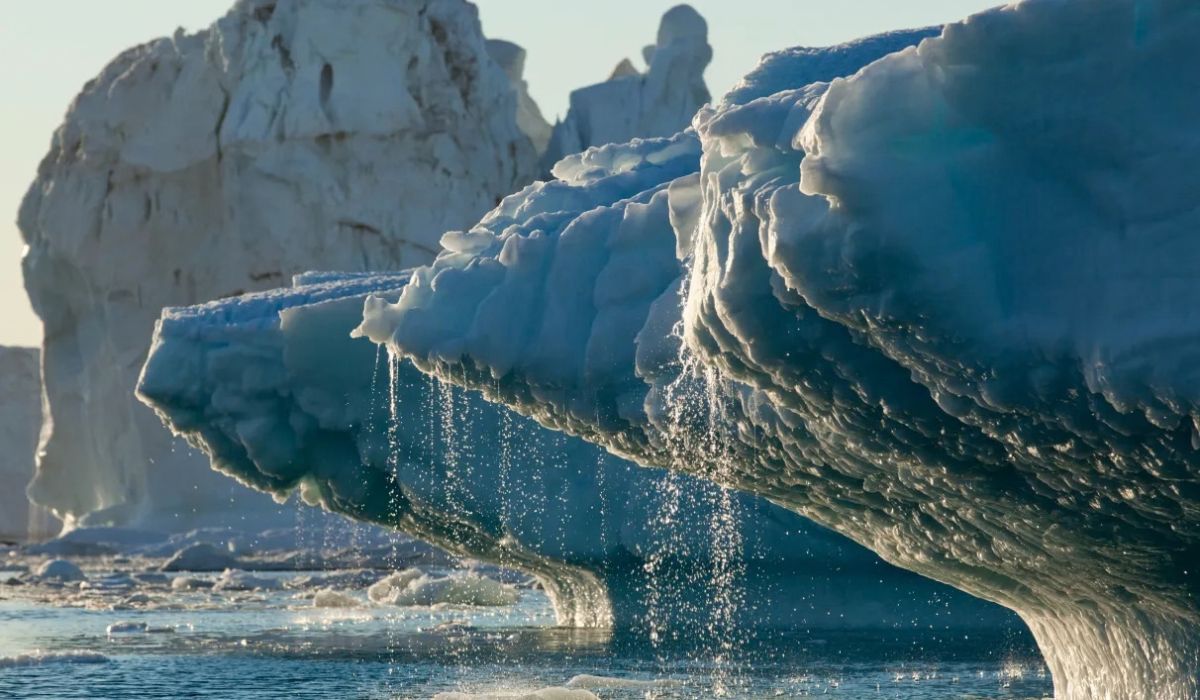
The studies converge on one aspect: the Greenland ice sheet may be more sensitive to climate changes than part of the scientific literature previously assumed.
In 2021, the team that analyzed Camp Century concluded that the site was ice-free at least once within the last million years.
Three years later, the work with the GISP2 core added direct evidence that the center of Greenland also lost ice in a geologically recent past.
As a result, the scope of scientific interpretation has expanded.
The previous reading in part of the models treated the ice cover as a more stable structure over prolonged intervals.
The new findings, according to researchers, indicate that the history of the ice sheet is more dynamic than previously estimated.
Still, the studies do not define, by themselves, a timeline for any potential wide-ranging ice loss in the future.
What the authors affirm is that Greenland has responded significantly to natural warming periods in the past.
For this reason, this type of evidence has been incorporated into the debate about future projections of the cryosphere and sea level.
Impact on Climate Debate and Sea Level
The relevance of these fossils is linked to Greenland’s role in the global climate system.
The teams involved in the research remind us that the island’s ice sheet holds enough volume to raise sea level by about 7 meters in the event of near-complete melting.
In this context, the proof that vast areas have already been ice-free in a relatively recent past has been treated as an important datum for the revision of long-term climate scenarios.
At the same time, the material preserved under the ice has also expanded knowledge about ancient ecosystems in the region.
As subglacial samples of this type are rare, each fragment of seed, wood, or fungus helps reconstruct not only moments of ice retreat but also the environmental conditions that existed in Greenland before the advance of the ice sheet.
These studies, therefore, have been used by researchers to understand the relationship between climate, ice cover, and landscape over geological time.
Scientific interest focuses both on climatic history and on records of life preserved under one of the largest ice masses on the planet.





Seja o primeiro a reagir!