





 Portuguese
  English
  Spanish
  4 min of reading
  0 comments


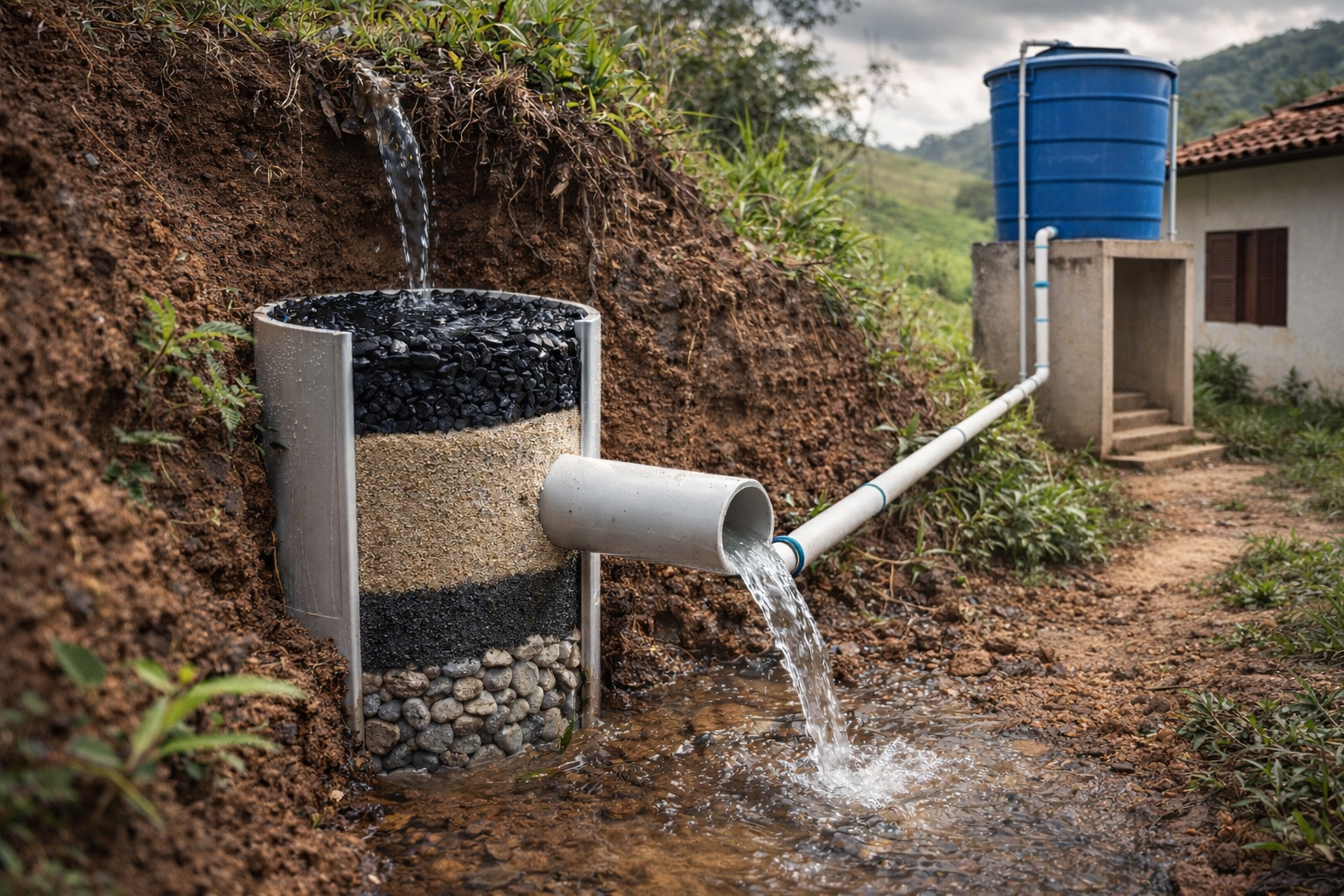
Surface Water Collection System with Gravel, Sand, and Activated Carbon Filter Offers Low-Cost Alternative to Deep Well for Small Rural Properties.
Drilling a deep well can easily exceed R$ 15,000, depending on the depth, soil type, and need for casing. For small rural properties that have springs, water mines, or perennial surface flows, there is a simpler technical alternative: surface collection with a filtration system using layers of gravel, sand, and activated carbon.
This model does not replace large supply systems but can meet basic rural consumption when properly sized and accompanied by adequate disinfection.
How Surface Water Collection from Springs Works
The collection begins at the spring itself or the water outcropping point. The goal is to protect the source point from external contamination and convey the water by gravity to a pre-filtration system. The most commonly used method in rural areas involves:
-
Friends have been building a small “town” for 30 years to grow old together, with compact houses, a common area, nature surrounding it, and a collective life project designed for friendship, coexistence, and simplicity.

-
This small town in Germany created its own currency 24 years ago, today it circulates millions per year, is accepted in over 300 stores, and the German government allowed all of this to happen under one condition.

-
Curitiba is shrinking and is expected to lose 97,000 residents by 2050, while inland cities in Paraná such as Sarandi, Araucária, and Toledo are experiencing accelerated growth that is changing the entire state’s map.

-
Tourists were poisoned on Everest in a million-dollar fraud scheme involving helicopters that diverted over $19 million and shocked international authorities.


- Physical protection of the spring with a masonry box or concrete ring
- Initial canalization in PVC pipe
- Conveyance to a multi-layer filter


The system relies on the natural slope of the land to function by gravity, reducing or eliminating the need for an electric pump.
Layered Filter: Gravel, Sand, and Activated Carbon
The filter is assembled within a drum, water box, or masonry structure. It operates through slow percolation of water through different filtering media. The typical sequence includes:
- Bottom Layer of Coarse Gravel: Retains larger particles and assists in drainage.
- Middle Layer of Washed Sand: Removes fine particles and reduces turbidity.
- Top Layer of Activated Carbon: Adsorbs organic compounds, improves odor and taste, and reduces some chemical contaminants.
This principle is similar to that used in slow sand filters historically employed in rural communities and simplified treatment systems.
Capacity to Serve Small Properties
The sizing depends on the flow rate of the spring. In small properties, flow rates between 500 and 2,000 liters per hour are common in perennial mines.
A well-designed system can supply a rural residence, provide water for light irrigation, or meet the consumption of small herds. The total volume available depends on the constancy of the spring, not just the structure of the filter.
Estimated Cost of the System
The materials are simple and easily found:
- Plastic drum or tank: R$ 200 to R$ 300
- Gravel and washed sand: R$ 150 to R$ 250
- Activated carbon: R$ 150 to R$ 250
- PVC pipes and fittings: R$ 200 to R$ 300
The total cost can be below R$ 1,000, depending on the region and the size of the structure. Compared to drilling a deep well with a submersible pump and electrical installation, the investment is significantly lower.
Important: Filtration Does Not Replace Disinfection
Although the filter reduces turbidity and particles, it does not completely eliminate pathogenic microorganisms. For human consumption, an additional disinfection step is recommended, which may include controlled chlorination, boiling, or certified complementary systems. The final water quality should be assessed by laboratory analysis whenever possible.
Advantages of the Surface System
Among the main positive points:
- Low initial cost
- Simple installation
- Gravity operation
- Affordable maintenance
- Independence from electric power
Additionally, maintenance basically involves periodic replacement of sand and activated carbon, as well as cleaning the system.
Limitations and Technical Care
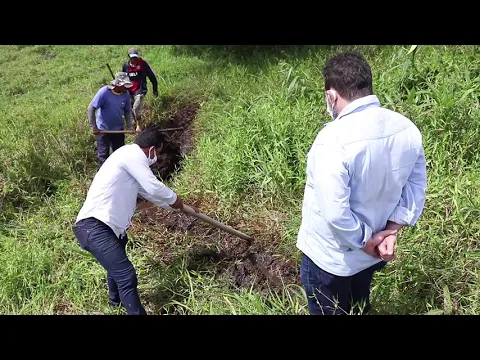
The solution depends on a spring with a constant and protected flow rate. Areas at risk of contamination from agricultural activities, sewage, or nearby animal husbandry require extra attention.
The protection structure of the spring must prevent the entry of animals and the surface infiltration of contaminated water. Without these precautions, the system may compromise water quality.
Comparison with Deep Well
The deep well offers:
- Greater natural protection against surface contamination
- Stable flow in regions with deep aquifers
- Higher initial investment
On the other hand, surface collection with a simple filter offers:
- Low cost
- Quick installation
- Dependence on the natural quality of the spring
The choice depends on the geographical and water conditions of the property. The surface water collection system with gravel, sand, and activated carbon filter represents a viable technical alternative for small rural properties that have a surface water source.

With an investment of less than R$ 1,000, it is possible to set up a functional pre-filtration structure that meets basic demands, provided it is accompanied by adequate disinfection and periodic maintenance.
The solution does not replace professional treatment systems but expands water independence in regions where deep well drilling is economically unviable.










-

-

-

-

-

93 pessoas reagiram a isso.