





 Portuguese
  English
  Spanish
  5 min of reading
  226 comments


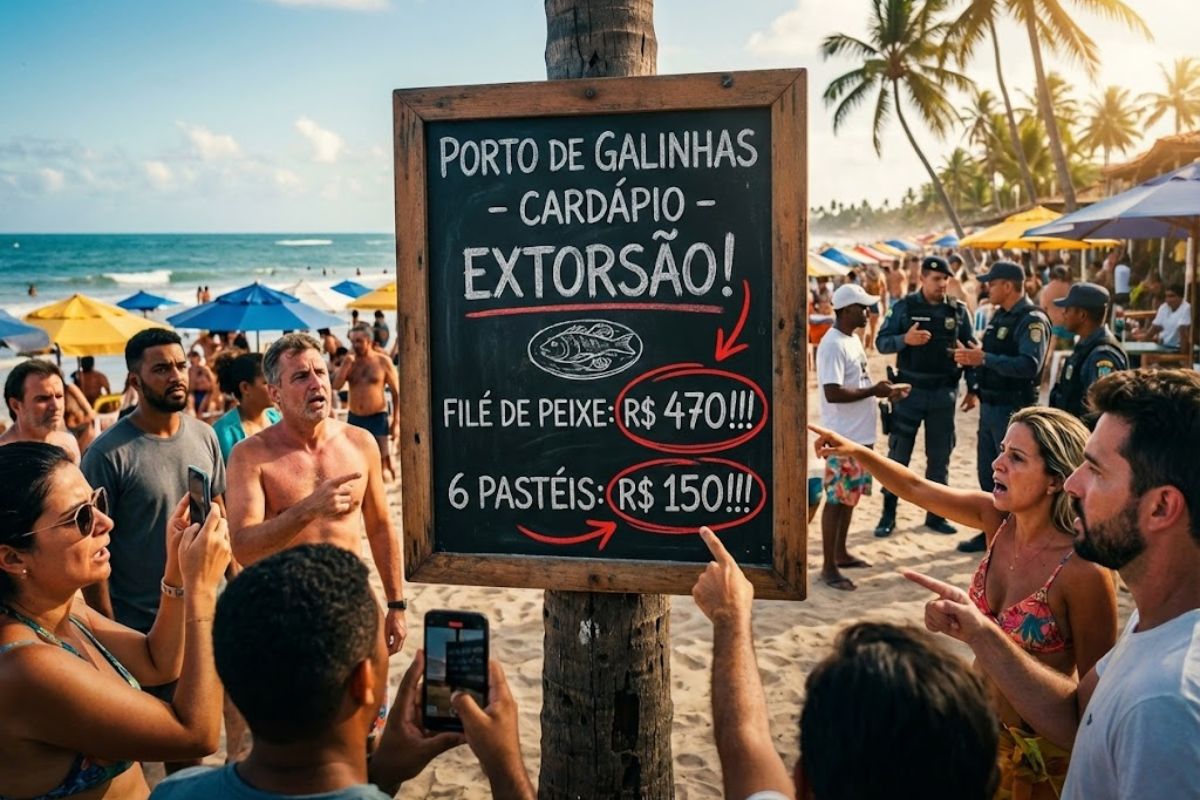


Images of a Beach Menu Attributed to Stalls in Porto de Galinhas Display Filet at R$ 470, Tropical Dish for R$ 580 and Six Pastries for R$ 150, Raising Suspicion of Extortion and Reinforcing Alerts About Inspection, Licenses and Food Safety on the Sand During the Season, According to the Record.
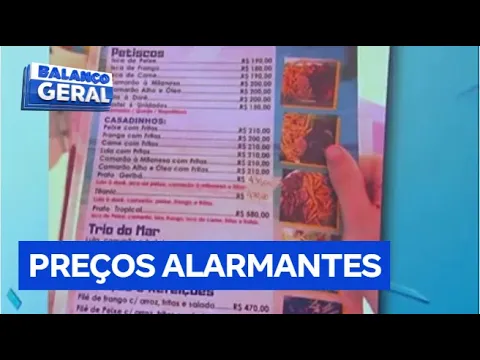
The editorial team accessed a video in which a beach menu attributed to sales points in Porto de Galinhas shows prices that drew attention: filet with rice, fries, and salad for R$ 470 and six units of pastry for R$ 150, which amounts to almost R$ 30 per unit.
In the same material, the presenters associate the beach menu with a pressure practice on tourists who do not consume, classifying the prices as extortion and arguing that municipal inspection should be permanent, not just when the issue goes viral. On December 31, 2025, the video also reinforces the warning about licenses and sanitary risk in the street vendors’ trade on the sand.
What Appears on the Menu and What Values Were Cited

The record shows a beach menu with prices highlighted by the narrators themselves.
-
50 viaducts, 4 tunnels, 28 bridges, and 40 kilometers of bike paths: BR-262 in Espírito Santo will receive 8.6 billion reais for the largest engineering project in the state’s history, inspired by the Immigrant Highway in São Paulo.

-
Brazil produces too much clean energy and doesn’t know what to do with it: over 20% of solar and wind capacity was wasted in 2025 while investors flee and 509 renewable generation projects were abandoned in the last year.

-
Piauí will produce a new fuel that replaces diesel without needing to change anything in the truck’s engine and reduces pollutant gas emissions by half: truck drivers from all over the Northeast are already celebrating the news that will arrive later this decade.

-
A new Brazilian shopping center worth R$ 400 million will be built in an area equivalent to more than 4 football fields, featuring 90 stores, 5 cinemas, a supermarket, a college, and parking for 1,700 cars, potentially generating 3,000 jobs.


One of the items is described as chicken filet with rice, fries, and salad for R$ 470; in another excerpt, the same price is repeated as fish filet with the same side dishes, without the video clarifying whether there was a substitution of items or just an error in speech.
According to the video, there is also a tropical dish mentioned for R$ 580, featuring a combination of fish bites, shrimp, and squid.
The pastry is offered by quantity: six units for R$ 150.
The mentioned flavors include cheese, Neapolitan, and shrimp, with the note that each pastry is said to be larger than common versions and that the individual price is close to R$ 30.
How the Extortion Complaint Arises and the Tension with Consumers
The video argues that the controversy is not limited to the numbers on the beach menu.
The narrative includes the idea that when tourists do not buy, some vendors might get nervous, which amplifies the embarrassment and reinforces the perception of extortion.
There is also an explicit mention of customer selection by appearance, suggesting that people perceived as wealthy would be targeted with higher charges.
Although the excerpt is opinion-based, it directs the focus of the video to the impact on tourism: the fear of paying a high price may deter visitors and harm the reputation of Porto de Galinhas.
Inspection, Licenses and Responsibilities of the City Hall and Vendors

The main demand of the video is for continuous inspection.
The narrators argue that the city hall should always inspect, checking authorizations, beach occupancy rules, and commercial conduct, to reduce opportunities for abuse and curb practices that could be classified as extortion of consumers.
In the same argument, the discussion about vendors is treated in two layers: the need for work and the obligation to meet licenses and minimum hygiene standards.
The criticism is not against all activities on the sand, but against those operating without control, increasing sanitary risks and undermining visitors’ trust in the beach menu and the destination.
Sanitary Risk and the Cited Example of a Summer Operation in Another City
To support the alert, the video presents a report cited as an example: the City Hall of Praia Grande, on the coast of São Paulo, is said to have begun a summer inspection operation to organize the waterfront and reduce sanitary risk.
In this segment, the material states that some common products on beaches would not have a license for sale on the sand, citing grilled cheese, barbecue, and sunglasses.
The same content mentions that the operation would have around 50 employees, including inspectors and assistants, operating throughout the season until Carnival, and that the presence of carts and equipment on the boardwalk would be prohibited.
The insertion serves as a contrast: where there is structured inspection, the municipality tries to reduce irregularities, even among vendors.
What the Consumer Can Observe Before Buying on the Sand
In high tourist demand scenarios, the practical guidance suggested in the video is straightforward: read the beach menu carefully, compare prices, and avoid consuming under pressure, especially when prices are out of the ordinary.
In the case of ready-to-eat foods, attention should focus on handling, preservation, and exposure time to heat.
For items like pastries, the perception of hygiene does not eliminate sanitary risk but helps the consumer decide.
If there is doubt about licenses or abusive conduct from vendors, the way is to report the incident and activate the official inspection channels.
Next Steps for Investigation
With the available data, the case boils down to a beach menu with prices described as abusive in the video, an extortion complaint, and a warning about inspection, licenses, and sanitary risk linked to vendors on the sand of Porto de Galinhas.
The material does not provide a date for the episode nor formally identifies the stall, which limits verification and opens space for additional inquiry.
If you have a photo of the beach menu, proof, location, and date of the record in Porto de Galinhas, use these elements to formalize a complaint to municipal channels and consumer protection agencies.
Reports with context reduce noise, help direct inspections, and increase the chance of a quick response, especially when there is vendor activity in the area.
Have you ever seen a beach menu with prices like this in Porto de Galinhas? If you have, did the inspection reach the vendors selling pastries on the sand?









Tem que fazer boicote a Porto de galinhas.
Está um absurdo, cadê a fiscalização?????
Eles tem que sofrer punições e até perder a licença.
É só não ir. Existem lugares melhores por preço mais acessível. Eles dependem dos frequentadores, e não o contrário
Este cardapio é de uma praia de búzios. Não de Porto de Galinhas