





 English
  Francês
  Alemão
  Italiano
  Japonês
  Norueguês
  Portuguese
  Spanish
 4 min of reading
  0 comments


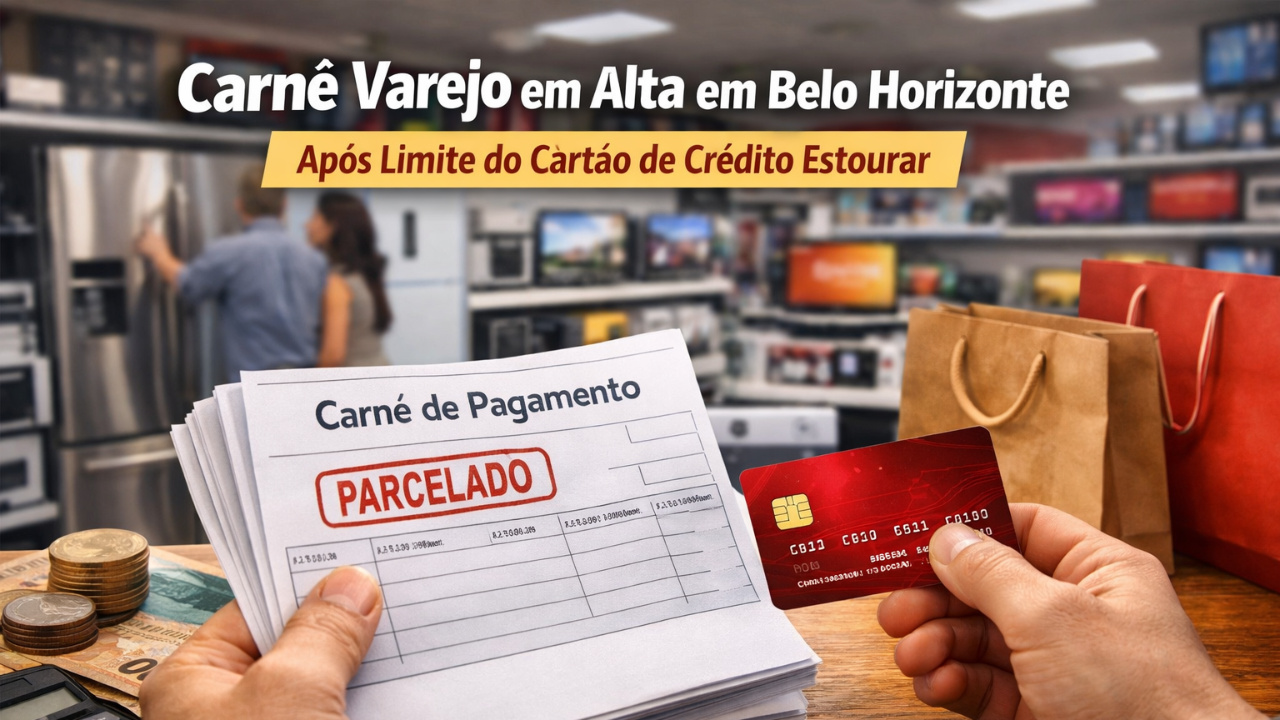
Family Indebtedness And Credit Card Limits Drive Return Of Retail Installment Payments In Belo Horizonte.
The retail installment payment has regained space in stores in Belo Horizonte as a payment alternative for consumers with committed credit card limits.
The strategy has been adopted by retailers to maintain sales turnover and expand access to consumer credit, especially among customers who are already in debt.
The trend was identified in a survey released by Fecomércio-MG in February, with data referring to January.
-
Expansion of Federal Institutes: 38 new campuses and R$ 200 million for public education; see the cities included.

-
Lula’s government changes rule in important benefit and thousands of Brazilians will no longer receive it; see what has changed.

-
New Gripen fighter makes Argentines surrender to Brazil, and the heavy reaction exposes envy, frustration, and shock at Brazil’s technological leap.

-
This discovered deposit near the Andes could change the future of Argentina, attract billions, and even shake up the global metals market.


According to the study, delinquency in the capital of Minas Gerais showed a slight reduction of only 0.1%, a drop considered practically imperceptible.
Nevertheless, the scenario continues to be pressured by the high level of family indebtedness, mainly due to intensive use of credit cards.
According to the Consumer Indebtedness and Delinquency Survey (PEIC), 96.3% of indebted consumers in Belo Horizonte have credit card debts. Among families with incomes above ten minimum wages, the rate is even higher, reaching 99.2%.
In light of this scenario, retail is resuming a traditional practice: offering store credit through installment payments.
Growth Of Retail Installment Payments After The Pandemic
Although it lost space in recent years, the retail installment payment has started to grow in the post-pandemic period. The survey by Fecomércio-MG shows that the modality underwent significant fluctuations over the last decade.
In January 2019, the installment payments represented 21.6% of consumer debts. By 2020, the percentage dropped to 13%, following the reduction of demand and the rise of digital payments and credit cards.
However, the scenario began to change after the pandemic. In January 2024, about 27.4% of indebted families used installment payments. Currently, the rate has reached 30.6%, demonstrating a consistent recovery of this form of consumer credit.
This growth reveals a change in the financial behavior of families.
Credit Cards Pressure Family Budgets
The increase in the use of retail installment payments is directly linked to the high commitment of income to credit cards. In many cases, the card has been used for basic daily expenses, which reduces the purchasing capacity for more expensive products.
The economist from Fecomércio-MG, Gabriela Martins, explains that this scenario limits access to durable and semi-durable goods.
“We have seen a significant rise in the use of installment payments among consumers. This indicates to us that people are likely maxed out on credit cards, and when they need to buy higher-value items, they have no credit available or cash.
They end up seeking installment payments, which is a modality normally offered directly by companies, mainly in retail,” she explains.
Thus, items such as stoves, refrigerators, cell phones, and tablets are often purchased through store credit, an alternative directly provided by retailers.
How Store Credit Maintains Active Consumption
For decades, the retail installment payment has been one of the main financing mechanisms in Brazilian commerce. Large retail chains grew using this model of installment payment.
Companies like Casas Bahia and Magazine Luiza popularized the system, where the consumer pays monthly installments with predefined amounts.
The model creates a direct relationship between the customer and the store, without the intermediation of banks or card operators.
Moreover, the system helps to foster customer loyalty.
The logic was simple: by keeping a good credit record, the customer would continue to have access to the store credit and could make new purchases. This trust relationship helped sustain the sales flow.
Now, with many consumers lacking available credit on their credit cards, retail is betting on this format again.
“When a large portion of families has their income significantly tied up — and sometimes even all their credit exhausted — they would have no means, credit, or revenue available to make a purchase. Seeing this, retailers are promoting installment payments to avoid losing sales or customers.
They offer a payment facility — despite the very high interest rates — but the customer continues to buy. It’s a way to ensure that indebted consumers keep consuming so that sales don’t drop,” the economist comments.
Retail Installment Payments Require Consumer Attention
Although it facilitates access to consumer credit, the retail installment payment also requires caution. This is because the interest rates embedded in this modality tend to be high.
According to experts, direct installment payments at store credit can increase family indebtedness if there is no financial planning.
Economist Gabriela Martins warns that the commitment made in the installment payment can weigh on budgets over time, especially for those already facing financial difficulties.
Another risk involves the impact on commerce itself.
If the number of delinquent consumers increases, stores may also suffer from reduced sales and difficulties in recovering credits.
“Highly indebted families are more cautious when consuming, and delinquent ones often have no access to any form of credit.
The installment payment is a way for stores to approach these consumers and make the sale,” concludes Gabriela Martins.
See more at: Belo Horizonte Commerce Adopts Installment Payments To Boost Sales








Seja o primeiro a reagir!