





 Portuguese
  English
  Spanish
  7 min of reading
  0 comments


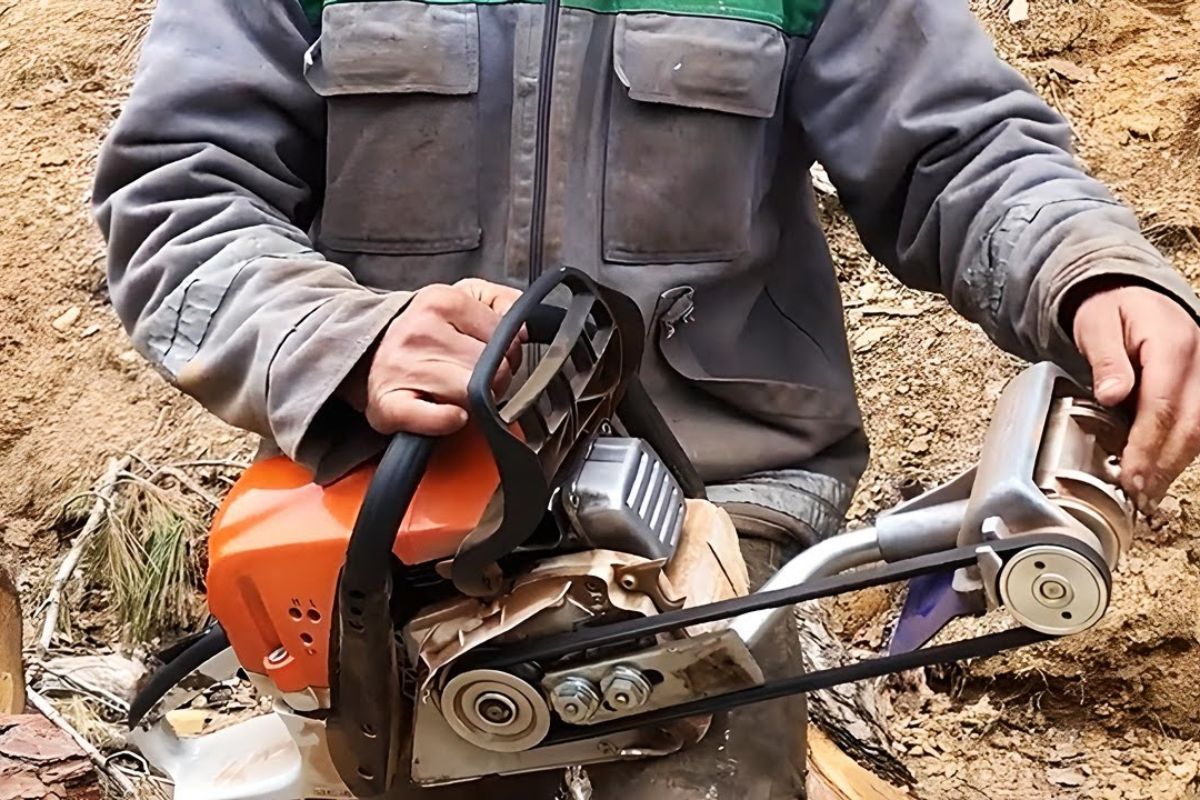
In Carpenters’ Workshops, a Portable Sawmill Shows That It Is Possible to Cut a Large Log into Boards with Simple Use, Less Wear and More Speed. The Barker Acts in Seconds, the 80-Ton Divider Splits into 24, and Cutters and Grinders Complete the Flow with Precision, Safety and Profit.
Carpenters who spend years dealing with raw wood learn to be skeptical of easy promises, especially when someone says that a portable machine can transform a giant log into boards without drama and unnecessary wear. Still, just seeing the portable sawmill in operation is enough to understand why so many people change their minds.
What is happening in the workshops is not a loud revolution, but a silent transformation: tools designed to work with wood make previously heavy steps more direct, quicker, and less exhausting. The routine changes when physical effort decreases and processing gains speed, from peeling to cutting, from breakdown to utilizing scraps.
When Skepticism Turns into Attention: The Portable Sawmill at the Center of the Change

For many carpenters, the first barrier is psychological. A portable machine seems too small to handle a large log.
-
A “silent skill” is allowing Brazilians to earn up to R$ 22,000 per month without a degree and become indispensable for companies that rely on millions of data to survive.

-
Researchers at the Toyota Research Institute found that if a human uses robotic arms to flip a pancake 300 times in an afternoon, the robot learns to do it on its own the next morning, and this is currently the most promising method to solve the biggest bottleneck in modern robotics.

-
Goodbye iron: a common item in households is starting to lose space to technology that smooths clothes in minutes without an ironing board and with less energy consumption.

-
Antarctica reveals an unusual clue high in the Hudson Mountains, and what appeared to be just an isolated rock began to expose a secret hidden under the ice for ages.


However, its goal is straightforward: to allow the operator to transform a large log into wood by cutting boards practically.
The immediate effect is on workflow. The workshop stops relying solely on strength, repetition, and long time to begin processing.
When the first boards appear, skepticism turns into focus because the most emblematic step of brute effort gains a clear path.
Another important point for carpenters is the perception of use. The portable sawmill is described as useful and practical, and this, on the workshop floor, means less complexity to start producing and more predictability in the results.
The machine is not just a novelty; it becomes a routine tool when it fits what day-to-day requires.
From Log to Board: Why Wood Processing Stalls Without the Right Steps
Carpenters rarely deal only with the “beautiful” part of the material. Before any finishing, there is raw wood with bark, irregularities, volume, weight, and resistance. It is at this point that work often stalls, as each step prepares the next.
When the workshop tries to skip phases, the cost appears in rework, fatigue, and wasted time. The logic of machines is to chain a process that was previously scattered: peeling, dividing when necessary, cutting into equal parts when the project requires, shaping with precision, grinding scraps, and even turning waste into fuel.
That’s why carpenters end up looking at a set of equipment rather than a single isolated solution. The real gain comes when the entire sequence stops being a bottleneck.
Log Peeler: Seconds That Change the Beginning of the Service

One of the most thankless steps for carpenters is dealing with the bark when the goal is to process quickly. The log peeler comes in as a direct response: to peel the bark off a log in seconds.
This “in seconds” is not a small detail. It changes the pace right from the start, as it anticipates the preparation of the piece and makes the material ready for the next operations. When the log is peeled, the workshop gains control, whether to break it down into boards or to move on to other machines.
Additionally, carpenters often measure efficiency by repetition. If a step is repeated dozens of times, every second saved translates into a real difference by the end of the day.
80-Ton Log Divider: Concentrated Force, Multiplied Results

If there is an image that symbolizes physical effort, it is that of splitting heavy wood into manageable parts. The log divider described here is an 80-ton divider, capable of splitting the log into 24 pieces at once. This completely changes the scale of the work.
For carpenters, the point is not just “splitting,” but multiplying results consistently. Splitting into 24 pieces at once means transforming a large volume into units that can proceed to other uses and operations without the same manual wear.
The equipment also has a hydraulic loader, which directly connects with workshop routines: less improvisation to position the material and more fluidity to feed the process.
When handling improves, the work stops being a test of endurance and becomes a sequence of execution.
Wedge Cutting Machine: Equal Parts, Higher Pace and Less Correction
In woodworking and carpentry, not everything is just cutting “to size”; often, it is cutting to pattern. The wedge cutting machine exists for this purpose: to cut wedges into equal parts quickly and practically.
The gain here is silent but profound. Carpenters know that standardization reduces accumulated errors. When the pieces come out equal, assembly and fitting become more predictable, and the time that would go into correcting small differences can go to producing more or refining the finish.
This is the difference between a workshop that “puts out fires” and a workshop that operates methodically: less variation, more consistency.
Portable Cup Cutter: Precision and Safety in Building with Logs
In the process of constructing a log house, the portable cup cutter with a stand is described as essential. Its function is clear: to cut quickly, precisely, and safely.
The word “safety” matters to carpenters because operations with logs require control. When the cut needs to be precise and repeatable, a well-supported portable tool shortens the path between intention and execution.
Speed without precision means quick error, and precision without speed becomes a bottleneck. The value of the cup cutter lies precisely in balancing these points.
Moreover, portability reinforces the central theme: bringing capability to the material rather than making each step dependent on fixed infrastructure.
Peeling and Smoothing Device: Simple on the Outside, Effective Where It Matters Most
Not every tool impresses with its size, and carpenters tend to respect more what solves problems than what seems grandiose.
The peeling and smoothing device may appear simple, but it is described as quite effective and useful, capable of quickly peeling a log.
Its role is similar to that of the peeler, but with a different nuance: in addition to peeling, it also prepares and smooths, making the log more “workable.”
When the surface improves, the rest of the process flows, and the workshop spends less time dealing with irregularities.
For carpenters, this type of gain is what “changes the day” without fanfare because it does not depend on grand promises; it depends on well-executed repetition.
Wood Shaving Machine: Large Volume, Hard Material and Real Utilization
In any workshop, there is leftover wood. Smaller logs, branches, green trimmings, parts that do not become boards, and residues from the process are left over.
The wood shaving manufacturing machine comes into play to deal with this on a large scale: a grinder for producing high-quality shavings, suitable for large quantities of material, capable of shredding any fibrous material, including particularly hard woods.
The impact is twofold. First, it organizes what was previously a mess. Second, it transforms waste into product. For carpenters, making good use of material is part of profit and efficiency because waste is hidden cost.
When the volume is large, the workshop needs solutions that don’t choke on quantity. That is why the expression “large quantities” is so important here: it speaks directly to routine, not demonstration.
Turning and Decoration: Wood Becomes a Perfect Work of Art
Not everything in the carpenters’ universe is just productivity. There is the side of detail, form, and finish.
Wood turning and decoration presented as part of this set reinforce this: from the process, a perfect work of art emerges.
This part is important because it shows that machines do not replace the eye; they expand possibilities.
When technique meets tool, wood ceases to be merely material and becomes language, and this is also part of the “silent change” in workshops: more ability to create, not just to cut.
Pellet-Making Machine: Shavings and Wood Become Fuel
The chain does not have to end at the board. The pellet-making machine produces wood and sawdust pellets for fuel.
There is also a pellet production test with leaves, branches, and soil collected from the garden, with the observation that this fuel is environmentally friendly, and then the pellets are checked in a pellet stove.
For carpenters, this step connects with the theme of utilization: what was previously just waste can gain another function. Pellets transform scraps into energy, and this changes the way the workshop views its own waste.
The verification in the oven reinforces the idea of a complete process: it is not just about producing, but checking the result, ensuring that the final step makes sense within the intended use.
What Is Silently Changing for Carpenters in Practice
When these tools enter the routine, carpenters stop spending the best part of the day “overcoming the wood” and start spending the best part of the day “building with the wood.”
The portable sawmill places the board at the beginning of the process. The peeler and the peeling and smoothing device shorten the preparation of the log.
The 80-ton divider transforms heavy volume into manageable parts, with 24 pieces at once.
The wedge machine delivers standard in equal parts. The portable cup cutter provides speed, precision, and safety in log constructions.
The grinder organizes and utilizes scraps into shavings. The pellet machine expands the destination of sawdust and wood for fuel.
The result is less concentrated physical effort in the toughest steps and more energy placed in the steps that really define value and finish.
In your opinion, do carpenters first adopt the portable sawmill to transform logs into boards or the 80-ton divider to cut effort at the root?







-

-

-

-

-

-

33 pessoas reagiram a isso.