





 Português
  Inglês
  Espanhol
  4 min de leitura
  3 comentários


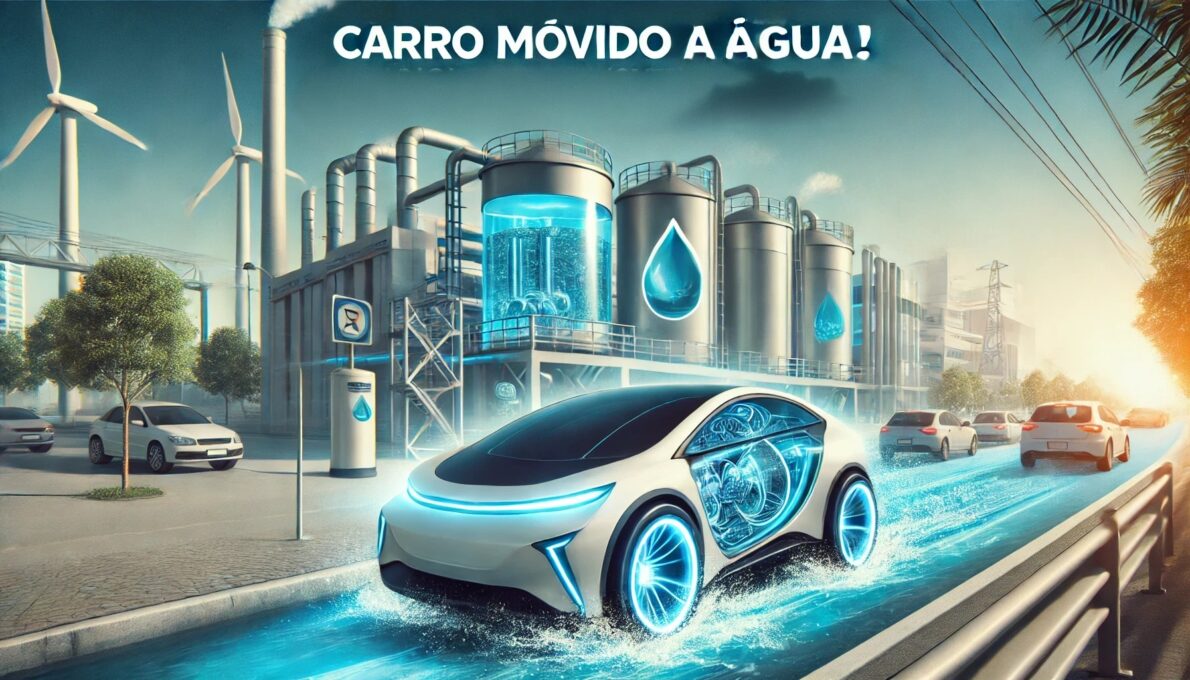

Sewage Water-Powered Car? New Technology Promises to Transform Wastewater Treatment Plants into Sustainable Energy Plants, Generating Green Hydrogen to Fuel Vehicles and Industries.
It sounds like something out of a movie, but it’s real! Imagine a car powered by water, using green hydrogen (H2V) extracted from wastewater. A British company, Wastewater Fuels, is at the forefront of this innovative idea that transforms sewage water into clean fuel. With this technology, sewage treatment plants can become true hydrogen production powerhouses.
How Does the Transformation of Sewage Water into Green Hydrogen Work?
The process used by Wastewater Fuels to transform sewage water into fuel involves a piece of equipment called Microbial Electrolysis Cell (MEC). This technology is capable of generating hydrogen using the organic matter present in wastewater. Imagine this: stainless steel rods are placed in the sewage water, promoting the growth of microbes that decompose organic matter and release hydrogen ions.


These ions then migrate to the metal rods, where they are transformed into gaseous hydrogen. The resulting hydrogen can be collected, stored, and used as fuel, whether to power vehicles or to generate electricity. This is a sustainable and revolutionary idea that promises to give new life to sewage water and contribute to the production of green hydrogen.
-
OMODA & JAECOO grows in Europe in 2026 with an integrated strategy of sales, innovation, local production, and technological advancement in the United Kingdom, Italy, and Spain.

-
OMODA & JAECOO expands after-sales service in Brazil with competitive maintenance, a 7-year warranty, and high availability of parts for technological SUVs.

-
OMODA & JAECOO appoints Alessandra Souza as executive marketing director in Brazil and accelerates brand expansion with a focus on innovation, networking, and hybrid portfolio.

-
Jaecoo 7 with super hybrid SHS system exceeds 1,200 km of combined range with a 1.5 turbo engine, high-density battery, and intelligent energy management.


The best part? This technology doesn’t require large structures, moving parts, or frequent maintenance. It’s a practical solution ideal for remote locations where the installation of traditional treatment systems would be more complicated and costly.
Meet Green Hydrogen, the Fuel That Only Releases Water as a Byproduct
Green hydrogen has become one of the main bets for clean energy. Unlike fossil fuels that emit CO₂ and other pollutants, hydrogen only releases water as a byproduct when used as fuel. This makes it an excellent alternative to help in the energy transition and reduce the carbon footprint of transportation and industry.
In addition to being a clean energy source, green hydrogen is an excellent complement to renewable energy sources, such as solar and wind. It can be stored and transported, ensuring stability in energy networks throughout the day, compensating for fluctuations in solar and wind production. This addresses one of the major challenges of renewable energy: how to store and provide energy consistently.
Wastewater Fuels not only intends to produce hydrogen for use in its water-powered car (H2V), but also to generate electricity directly in treatment plants. This innovation can be implemented across various industries and sectors, offering a versatile solution to decarbonize areas where the use of electricity is not feasible, such as heavy industry and long-distance transportation.
Water-Powered Car? Is It Possible?
The idea of a water-powered car may sound like a dream, but with the development of green hydrogen, we are getting closer to seeing this happen. When we talk about a “water-powered car,” we are actually referring to vehicles that use hydrogen extracted from water (in this case, from sewage water) as fuel.
The process is simple: the green hydrogen generated from sewage water is used to fuel vehicles with fuel cells, which convert hydrogen into electricity to move the car. As a result, the only “waste” emitted is water, making the transportation process 100% clean.
This concept is not only environmentally friendly but also economical and offers a solution for waste reuse. If Wastewater Fuels’ technology expands, we could see sewage treatment plants transforming waste into energy to fuel vehicles and even entire cities!
Sewage Water-Powered Car Opens Doors to a More Sustainable Future
In addition to revolutionizing the transportation sector, the production of green hydrogen from wastewater opens doors to a more sustainable and conscious future. Wastewater Fuels, in partnership with the Coventry Council and with the support of the Defence and Security Accelerator (DASA), is leading this change, with pilot projects being implemented at RAF Digby.
This technology represents a giant leap in the circular economy, transforming what was once waste (sewage water) into a valuable resource. In a world that seeks alternatives to fossil fuels, sewage water can become a strategic resource, helping to reduce greenhouse gas emissions.
The process can also be adapted to produce green hydrogen on a large scale, allowing its use in sectors that face challenges in reducing emissions, such as aviation and heavy industry. This fuel not only helps stabilize the power grid but also provides viable and clean alternatives for sectors that depend on fossil fuels.










A tecnologia eletroquímica, aplicada ao tratamento de efluentes de diversos seguimentos industriais já é utilizada no Brasil há alguns anos, atingindo seu nível de excelência disruptiva com o desenvolvimento dos reatores eletrocapacitivos pelo Grupo VTS.
Com o advento da transição energética, o negócio de tratamento de efluentes, com o uso da tecnologia eletroquímica, está sendo reposicionado para formação de “Hubs Verdes” para produção de hidrogênio verde ou de baixo carbono.
Quer saber mais? Visite o site http://www.vtsgroup.com.br
A solução não é nova, aqui no Brasil já existe projeto já implementado com esta solução de gerar H2 através de resíduos líquidos (efluentes) . Trata-se de um processo eletroquimico muito revolucionário e a aplicação está sendo realizada em parceria com o IFRJ!
Genial! Que está descoberta se torne uma alternativa eficiente e ajude o planeta 👏👏👏🤝👍