





 English
  Francês
  Alemão
  Italiano
  Japonês
  Norueguês
  Portuguese
  Spanish
  5 min of reading
  0 comments


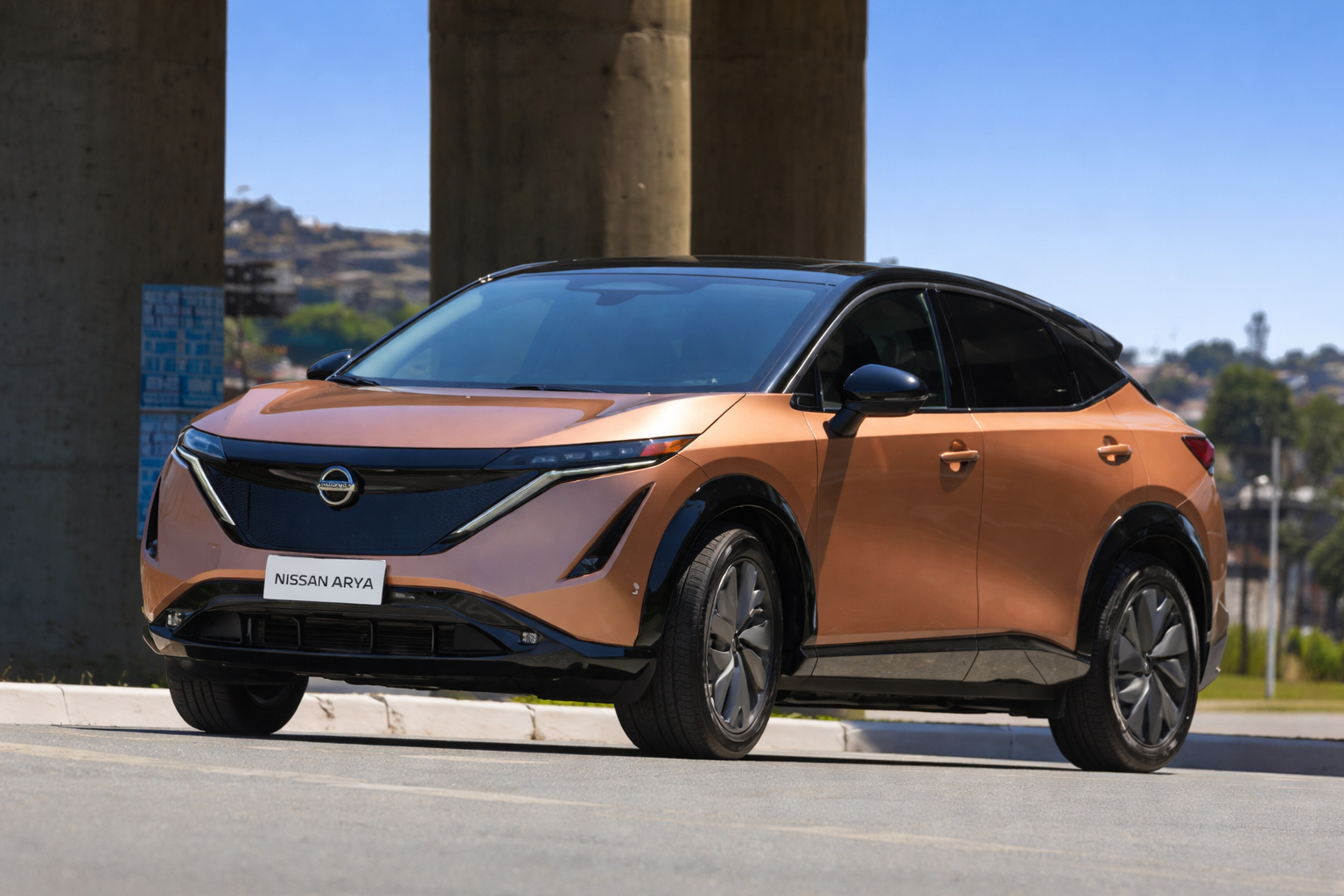
Nissan Reveals Electric SUV with Integrated Solar Panels That Generate Extra Range, Reduce Dependence on Chargers, and Point to a New Path for Sustainable Mobility of the Future.
For many years, the idea of a self-charging car seemed far from everyday reality. Still, even during this time, the automotive industry was already seeking alternatives to reduce emissions and decrease dependence on fossil fuels. Over time, however, the advancement of electric mobility and renewable energy began to transform this scenario. Thus, what once seemed improbable started to become technically feasible.
In this context, Nissan introduced a concept that combines electrification and solar energy in a single vehicle. By using the Ariya SUV as a testing base, the automaker demonstrates how innovation can profoundly change the relationship between people and automobiles. Therefore, when Nissan reveals an electric SUV powered by solar energy, it not only presents a technological novelty but also reinforces a structural change in the automotive industry.
Moreover, more than just an experiment, the proposal indicates a new stage in the evolution of electric cars. At the same time, this approach directly engages with urban reality, where time, cost, and infrastructure influence mobility choices.
-
Roraima bets on the sun to escape high tariffs: Amid the energy crisis and price hikes, solar energy is growing in Roraima and transforming consumption in the North region.
-
Copel boosts solar energy in Paraná and brings innovation to public schools, promoting savings on electricity bills, energy efficiency, and a direct impact on the quality of education.
-
Brazil reaches historic milestone in solar energy: Sector surpasses 2 million accumulated green jobs and generates billions in the national economy even under market pressure.
-
Minas Gerais takes the lead in renewable energy: State surpasses historic mark of 14 GW in solar energy generation in MG and consolidates dominance in the Brazilian electric sector.

Nissan’s Trajectory in Electric Mobility
To better understand the importance of this initiative, it is necessary, first of all, to observe the trajectory of Nissan in electrification. In 2010, for instance, the brand launched the Nissan Leaf, marking a turning point in the global automotive sector. At that time, while many automakers were still hesitant, Nissan moved forward.
From there, the Leaf showed that an electric car could meet daily usage needs. In addition, the model helped expand the debate regarding carbon emissions, energy efficiency, and sustainable alternatives to combustion engines. Consequently, the public began to view electric vehicles with less skepticism.
Over the following years, Nissan expanded its portfolio, invested in new electric platforms, and strengthened its sustainability strategy. Thus, when Nissan reveals an electric SUV with integrated solar technology, the announcement emerges in a consistent manner with this history of innovation.
The Ariya SUV as an Innovation Platform
Within this evolution process, the Ariya SUV takes on a central role. It is, therefore, a model that represents the new generation of electric vehicles from Nissan, combining modern design, embedded technology, and focus on energy efficiency.
At the same time, by transforming the Ariya into a testing platform for solar energy capture, Nissan expands the traditional concept of electric mobility. Thus, the car ceases to be just an energy consumer and also begins to generate part of the electricity it uses.
Therefore, when Nissan reveals an electric SUV with integrated solar panels in its body, the automaker stimulates a broader reflection on range, energy independence, and intelligent use of natural resources.
How Solar Energy Capture Works in the Vehicle
In the presented concept, Nissan utilizes photovoltaic panels installed in strategic areas of the vehicle, such as hood, roof, and rear hatch. This way, these surfaces receive high-efficiency solar cells, designed to capture light throughout the day.
Next, the system converts solar energy directly into direct current. Thus, this electricity can power internal systems or complement the main battery charge. Consequently, the vehicle transforms the time it remains parked into useful energy generation.
Although similar initiatives have emerged in the past, today the advancement of photovoltaic technology allows for more consistent results. Therefore, what once seemed unfeasible now appears practical and functional.
Practical Results and Autonomy Gains
During tests conducted by Nissan itself, the solar system generated additional kilometers of range in a single sunny day. Furthermore, in regions with high solar incidence, the daily gains proved to be even more significant.
On the other hand, even in cities with less sun exposure, the technology managed to reduce the need for frequent recharges. Thus, over time, this daily compensation can result in energy savings and reduction in operational costs.
Therefore, when Nissan reveals an electric SUV with its own energy generation, it directly addresses one of the biggest consumer concerns, which is range in real usage.
Impacts on Infrastructure and Daily Use
Another important point regards charging infrastructure. Currently, in many countries, this network is still expanding. In this scenario, any solution that reduces dependence on public chargers represents a significant advance.
In urban routes and short trips, for example, solar energy can offset part of daily consumption. This way, the use of the electric car becomes more predictable, more practical, and less dependent on constant recharges.
<pThus, when Nissan reveals an electric SUV powered by solar energy, it presents a concrete response to a daily challenge of electric mobility.
Global Development and Technological Partnerships
To make the project viable, engineering teams from Nissan worked in different regions of the world, such as Dubai and Barcelona. In this way, the company managed to test the system under varied climatic conditions.
Additionally, Nissan partnered with technological specialists in solar mobility. This collaboration between sectors accelerated the development of the solution.
Therefore, by combining automotive knowledge and expertise in renewable energy, the automaker broadens its innovation potential and anticipates global market trends.
A Concept That Points to the Future
Even being in the conceptual phase, the project already points to clear paths for the future of the automotive industry. Historically, many technologies that are now common began as experimental prototypes.
This was the case, for instance, with hybrid cars and electric vehicles. Thus, when Nissan reveals an electric SUV powered by solar energy, it lays the foundations for future commercial applications.
Especially in regions with limited access to energy, this technology can represent a transformative advance.
Sustainable Mobility and Long-Term Vision
Finally, the concept reinforces that the future of mobility depends on the integration of different sustainable technologies. Thus, electrification, solar energy, and energy efficiency begin to work together.
As a result, the automobile ceases to be just a consumer of resources and begins to play an active role in the energy transition. Therefore, by showing that a car can generate part of its own energy, Nissan broadens the debate about innovation and sustainability.
In this way, the project is not limited to a technological curiosity, but represents a concrete step towards a cleaner, smarter, and more sustainable transportation model.











-

Uma pessoa reagiu a isso.