





 Português
  Inglês
  Espanhol
  4 min de leitura
  0 comentários


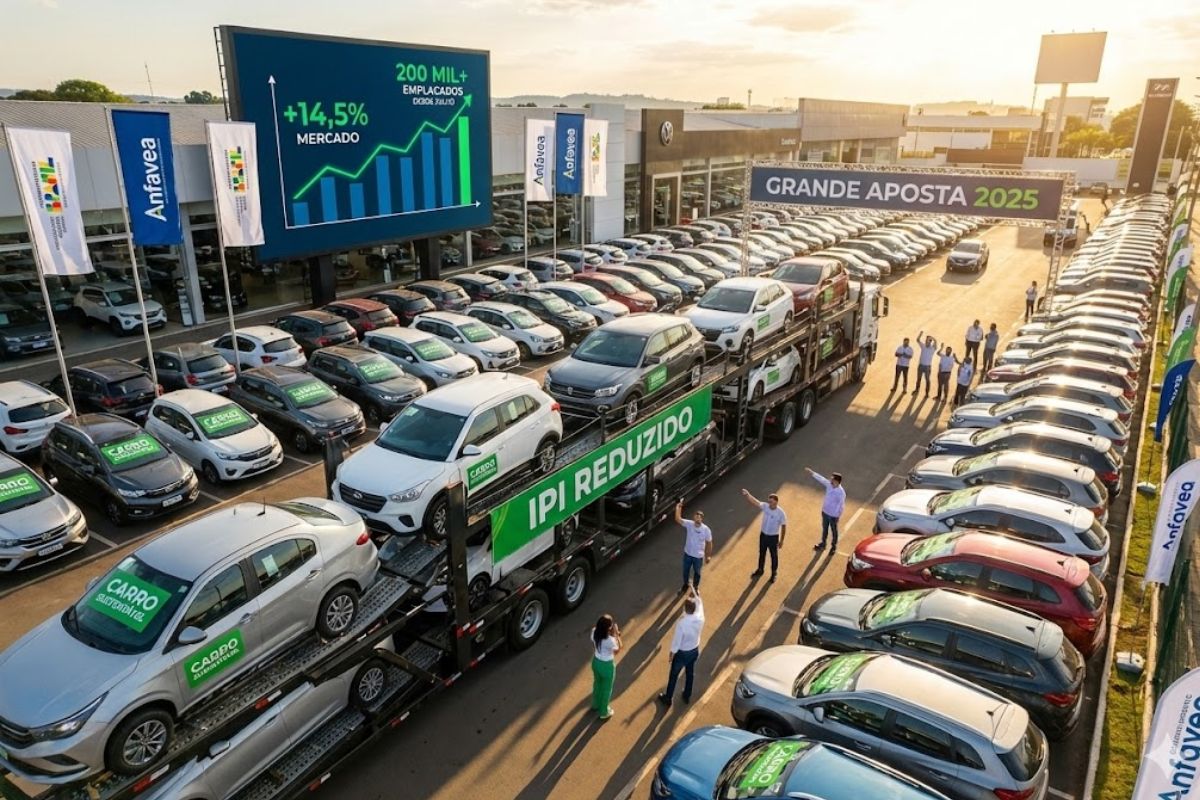
Launched on July 11, the Sustainable Car Program Reduces the IPI of Popular Models, Boosts 14.5 Growth in Zero KM Sales, Surpasses 200 Thousand Registrations, and Consolidates Anfavea’s Bet on the Heated Brazilian Automotive Retail, According to the Entity, Focused on Vehicles Approved with Green IPI in Dealerships.
Since July 11, 2025, when it came into effect, the Sustainable Car Program has been offering IPI reductions for zero km popular vehicles, and within a few months, it has already changed the mood of the Brazilian automotive sector. According to G1, Anfavea reported that the initiative helped drive a 14.5 growth in automobile sales, with over 200 thousand cars registered in the second half.
According to the National Association of Motor Vehicle Manufacturers, the federal government’s program is consolidating as one of the main bets to sustain demand in 2025. The high concentration of results in retail indicates that the Sustainable Car is reaching directly to the final consumer, reinforcing the strategy of using a lower IPI as a lever to move stock of popular models.
Sustainable Car Program Reduces IPI and Targets Popular Vehicles
The Sustainable Car was designed to reduce the Tax on Industrialized Products applied to zero km popular vehicles qualified for the program. In practice, the benefit focuses on models approved by Anfavea, which start to be sold with a lower IPI and, consequently, a more competitive final price at dealerships.
-
OMODA & JAECOO grows in Europe in 2026 with an integrated strategy of sales, innovation, local production, and technological advancement in the United Kingdom, Italy, and Spain.

-
OMODA & JAECOO expands after-sales service in Brazil with competitive maintenance, a 7-year warranty, and high availability of parts for technological SUVs.
-
OMODA & JAECOO appoints Alessandra Souza as executive marketing director in Brazil and accelerates brand expansion with a focus on innovation, networking, and hybrid portfolio.

-
Jaecoo 7 with super hybrid SHS system exceeds 1,200 km of combined range with a 1.5 turbo engine, high-density battery, and intelligent energy management.

According to the entity, the program has been in effect since July 11, 2025, focusing on vehicles that meet the defined criteria and can be included in the list of approved models.
The logic is simple and straightforward for consumers looking for a cheaper zero km car: by reducing the tax at the industry’s end, the Sustainable Car opens room for discounts at retail and more aggressive negotiation conditions.
Models like Volkswagen Polo, Fiat Mobi, and Renault Kwid are among the vehicles advertised with discounts linked to the Green IPI, reinforcing the focus on compact and entry-level cars.
The presence of these popular models within the scope of the Sustainable Car helps broaden the program’s reach among consumers looking for their first vehicle or replacing it with a more affordable zero km.
Registrations Grow 14.5 and Surpass 200 Thousand Vehicles
The numbers released by Anfavea show that the Sustainable Car has already caused a significant leap in sales indicators. Since the program came into effect, 201.4 thousand units of approved vehicles have been registered, compared to 176 thousand in the same period the previous year.
This difference represents an important reinforcement in the volume of registrations in the second half of 2025, driven directly by the models covered by the benefit.
More than just surpassing the 200 thousand vehicle mark, the data clearly compares the market’s performance with and without the program’s effect, reinforcing the role of the Sustainable Car as an additional demand factor.
For the industry, the 14.5 growth in automobile sales within this scope helps to compensate for fluctuations in other segments and provides predictability for production.
By concentrating the sales boost on zero km popular vehicles, the program creates a sort of strengthened entry-level segment within the Brazilian automotive sector.
Anfavea Speaks of Success and Foresees Plateau in Sales
Anfavea’s reading of the Sustainable Car is positive but realistic. The president of the entity, Igor Calvet, states that the program continues to rise, especially in retail, and classified the initiative as a success for the market.
At the same time, he emphasized that this type of measure usually has a more pronounced initial curve, followed by a phase of stability, a plateau considered natural.
In practice, this means that the explosion in registrations seen in the first months after July 11 tends to stabilize, maintaining a higher sales level but without indefinitely repeating the same intensity of growth.
The entity’s message is that the Sustainable Car has already fulfilled, in a few months, the role of unlocking postponed buying decisions, especially among retail consumers.
Even with the prospect of stabilization, Anfavea continues to treat the program as a central piece to navigate the cycle of 2025 with greater security.
By pointing to the Sustainable Car as a major bet of the sector, the entity indicates that the impact of the reduced IPI has already entered the radar of automakers, dealerships, and consumers.
Popular Vehicles with Green IPI Dominate Showcases at Dealerships
At the retail level, the reflection of the Sustainable Car appears in displays and campaigns focused on popular models.
Volkswagen Polo, Fiat Mobi, and Renault Kwid are among the cars advertised with Green IPI discounts, becoming symbols of this phase of incentives for more affordable zero km vehicles.
With the tax benefit, these vehicles gain extra visibility in showrooms and advertisements, helping to explain part of the sales increase. The program focuses on lower-priced cars, directly connecting with an audience sensitive to any reduction in installments or down payments in financing.
For consumers, the message is that the Sustainable Car translates today into concrete opportunities to pay less for a zero km within a specific list of approved models.
And you, do you plan to take advantage of the Sustainable Car Program to buy a zero km car in 2025, or do you prefer to wait for the next moves in the Brazilian automotive market?










-

-

2 pessoas reagiram a isso.