





 Portuguese
  English
  Spanish
  4 min of reading
  0 comments


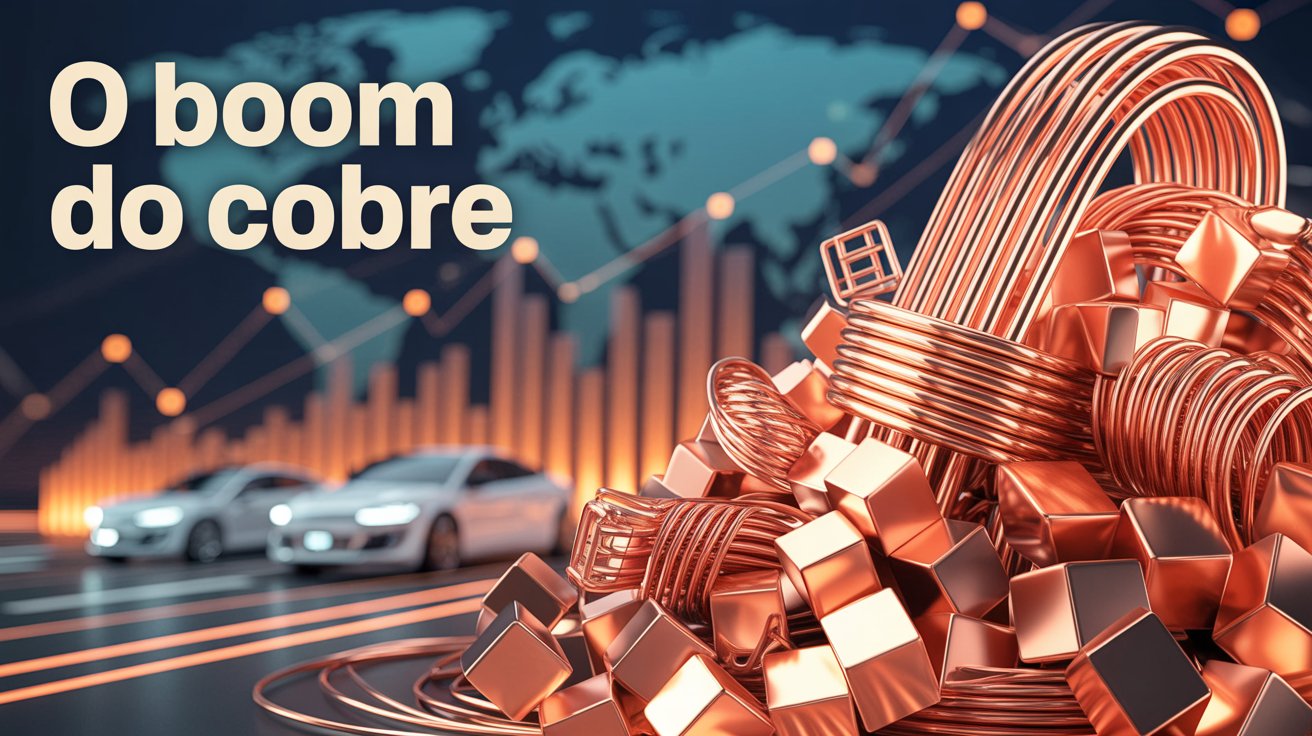
Explosive Growth Of Copper Reveals New Dynamics In The Global Market, Impacting Everything From Electric Vehicles To Geopolitical Decisions, And Creating Unexpected Tensions Between Supply, Demand And Financial Speculation Transforming The Global Economic Scenario.
Copper has once again shone in the commodities market and has become the star metal of 2025, jumping more than 16% this year and trading near US$ 10,600 per ton on June 8, the highest value since the historical record of 2024.
The movement is driven by a combination of accelerated demand for electric vehicles, risk of global tariffs, and supply bottlenecks that threaten a structural deficit in the coming years.
Electric Demand Surpasses Expectations
Automakers are electrifying their lines at a frantic pace.
-
Mercado Livre has just started selling medications with delivery in up to three hours to your door, and this move could completely change the way Brazilians buy medicines on a daily basis.

-
In Dubai, rising tensions from the war in the Middle East are causing super-rich individuals to leave the Gulf and direct their fortunes to a new financial refuge in Asia.

-
Tourists were poisoned on Everest in a million-dollar fraud scheme involving helicopters that diverted over $19 million and shocked international authorities.

-
Hidden beneath the dense forest of the Sierra Nevada, Betoma emerges in a neighbor of Brazil as the greatest archaeological discovery of the century, revealing a colossal ancestral city covering over 18 km², with 8,334 stone structures and the potential to rewrite the history of South American civilizations.

Each fully electric vehicle consumes, on average, up to 83 kg of copper – nearly four times the amount found in a combustion car.
A study by Benchmark Minerals projects that
the demand for copper by the battery sector could grow 177% by 2030,
surpassing 2.5 million tons annually and putting pressure on the production chain.
Giants like BYD, Tesla, and Volkswagen are already revising long-term contracts to ensure enough metal for motors, inverters, and charging infrastructure.
In Brazil, the expansion of “green” factories in the Southeast and state incentives for e-mobility reinforce the trend and increase the appetite of national steelmakers for high-purity copper concentrate.
Tariffs On The Radar Increase Tension
The financial market is pricing in another trigger for a price increase: the possibility that the U.S. government will impose tariffs of 10% to 25% on refined copper and its derivatives as early as 2025, as part of the White House’s protectionist measures.
Anticipating the potential tax, major consumers — especially China, India, and South Korea — are ramping up purchases to stockpile the metal.
This strategy raises freight premiums, depletes inventories on metal exchanges, and creates “peaks” of volatility that attract investment funds and high-frequency traders.
According to JP Morgan,
the average price could reach US$ 11,000 per ton as early as the first quarter of 2026,
if the global deficit materializes.
Collateral Effect On Mines
The race for metal contrasts with a supply surrounded by geopolitical uncertainties.
The Cobre Panamá megaproject, which accounted for 1% of global production, remains closed following a decision by the Panamanian Supreme Court in 2023 and has only been granted emergency authorization to export 120,000 tons stockpiled to cover environmental maintenance costs of the site.
Meanwhile, labor protests in Zambia and stricter environmental licenses in Chile are delaying expansions and complicating the replenishment of reserves.
Any sudden disruption — an accident at a smelter or a new strike in the Andes — could tighten the supply-demand balance even further, triggering new highs.
Gold Shines, But Loses Protagonism
The yellow metal hasn’t been left behind.
Since January, gold has accumulated a valuation of 26% and is flirting with US$ 3,350 per troy ounce, driven by the resilient inflation scenario and tariff wars.
Still, analysts observe that some of the funds that would traditionally migrate to gold as a “safe haven” are seeking diversification in copper, given the narrative of the energy transition.
It’s the first time in nearly two decades that both metals have appreciated simultaneously for distinct reasons, broadening the discussion about the new portfolio protection basket.
How Brazilians Can Invest In The Metal
Although the B3 does not offer copper ETFs or listed contracts, local investors are already accessing the segment through international platforms like Avenue and Nomad.
The United States Copper Index Fund (CPER) leads the return ranking in New York, with a 20.7% increase this year, followed by the Global X Copper Miners (COPX), which replicates the performance of giants like Freeport-McMoRan and Antofagasta.
Those who prefer dividends find additional potential in miner ETFs, as cash-generating companies tend to pass on a significant portion of profits to shareholders.
However, funds that mix other metals — such as the Invesco DB Base Metals — are suffering from the decline in aluminum and zinc and show negative returns in 2025.
Experts recommend checking the total expense ratio (TER) of the funds, currency exposure, and daily liquidity before allocating resources.
Brazil Feels The Effect On The Economy
Rising prices benefit concentrate exporters based in Pará and Goiás, elevating the balance of the minerals trade.
Wire and cable companies, however, warn of cost pass-throughs in infrastructure and construction projects — sectors already facing price pressures from steel and cement.
The increased cost of copper also affects the consumer’s pocket, raising prices for appliances and the cost of installing home charging points for light vehicles.






Seja o primeiro a reagir!