





 English
  Francês
  Alemão
  Italiano
  Japonês
  Norueguês
  Portuguese
  Spanish
 5 min of reading


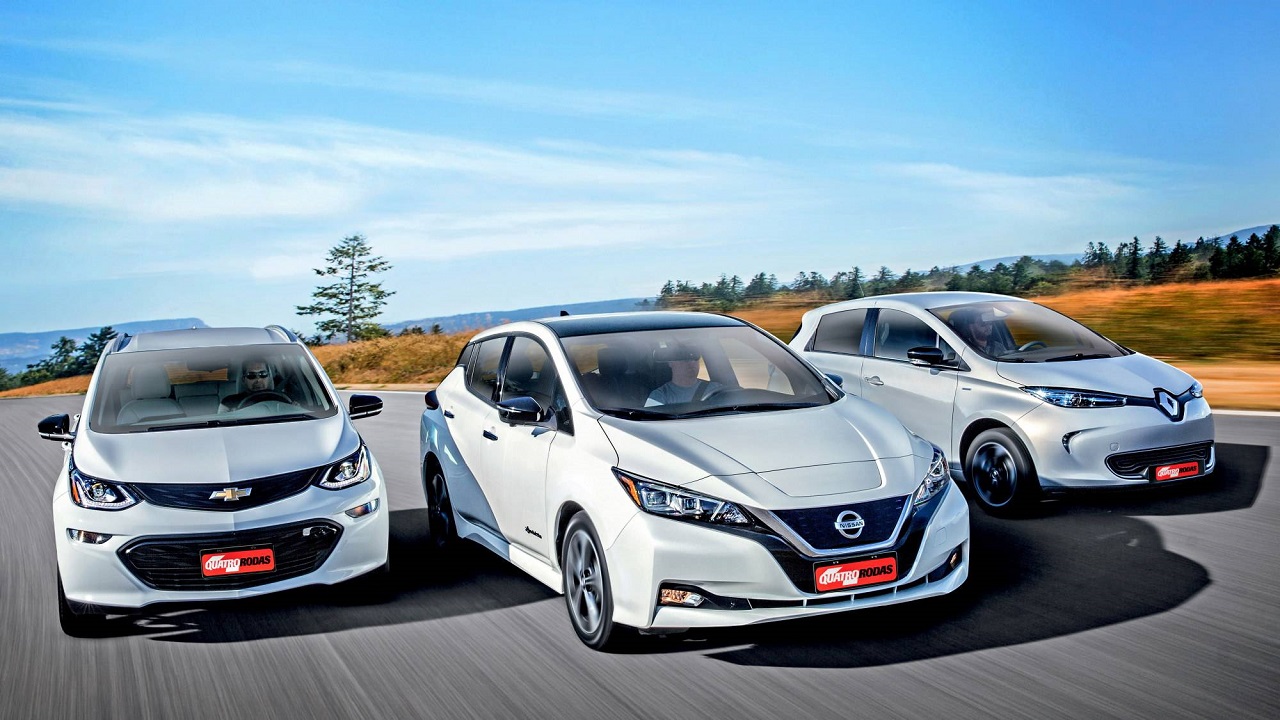
There Are Currently 46,851 Electric Cars Running in Brazil
Have you ever imagined driving an electric car? Most people who drive would say yes. After all, this is the trend worldwide. The high price of fuel, the more affordable maintenance compared to conventional cars, and the fact that they are non-polluting are the main factors driving the electric car market in Brazil, as the oil market will start to decline from 2030.
And we are not just talking about cars. Electric scooters and electric scooters are also being adopted in people’s daily lives here in Brazil. In the last survey by the Brazilian Association of Electric Vehicles (ABVE), the import of these so-called lightweight vehicles grew by 735% over three years. There has been an increase in sales and imports eleven times since 2017. Welcome to the new era of electro-mobility.
The companies wishing to offer sharing services, in addition to people wanting to be out of the increasingly crowded public transport, are also the main drivers of this specific sector of the electric car market in Brazil.
-
A study reveals the expansion of renewable energy procurement in Brazil and shows how companies are taking advantage of opportunities to reduce expenses, ensure energy efficiency, and strengthen strategic environmental commitments.

-
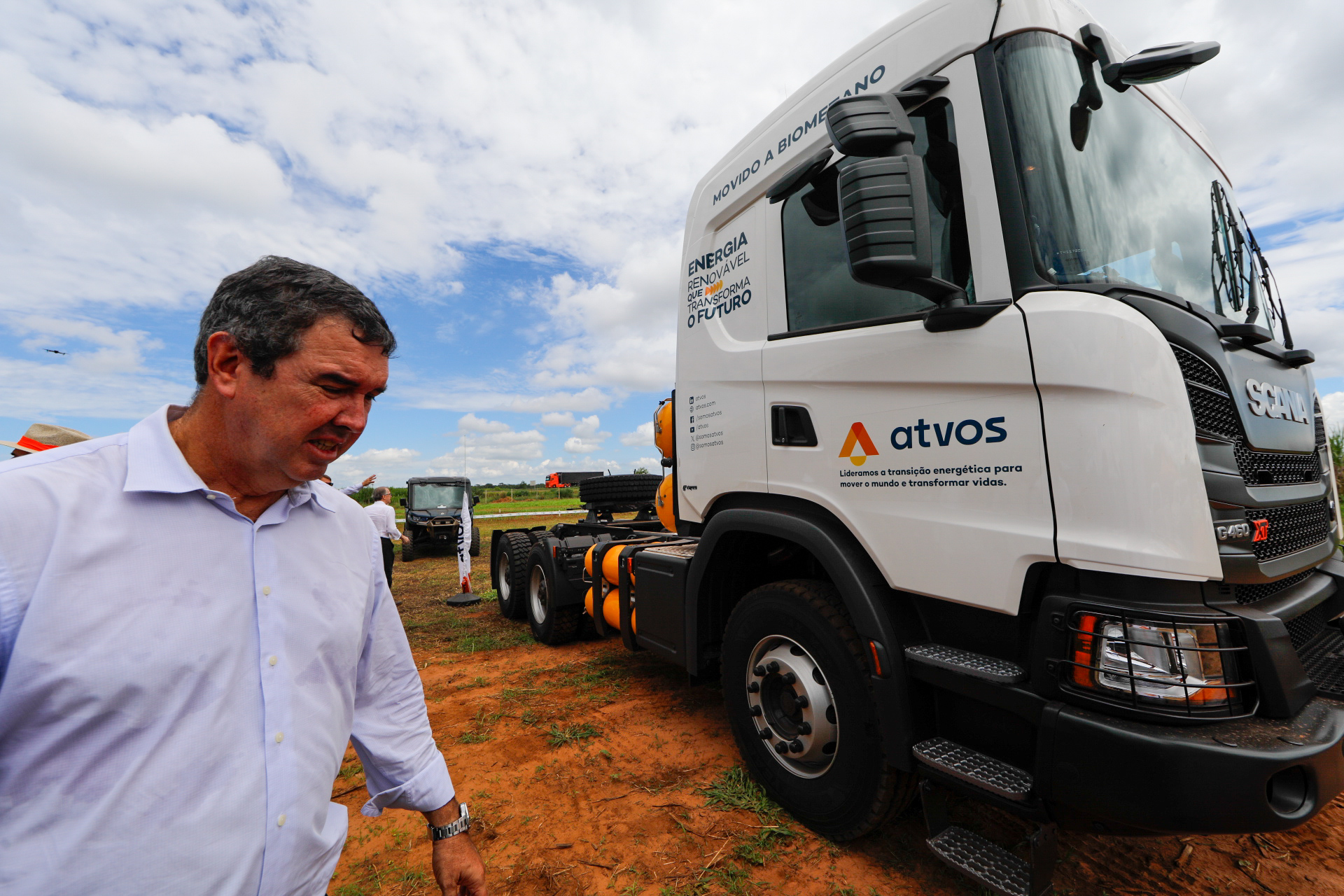
Mato Grosso do Sul excels in the sugar-energy sector: the state reaches a milestone of 22 operating mills and accelerates the production of clean energy in MS with a focus on sustainability.
-
National energy dilemma: Brazilians support clean energy but reject increases in tariff costs to finance the sustainable transition.
-
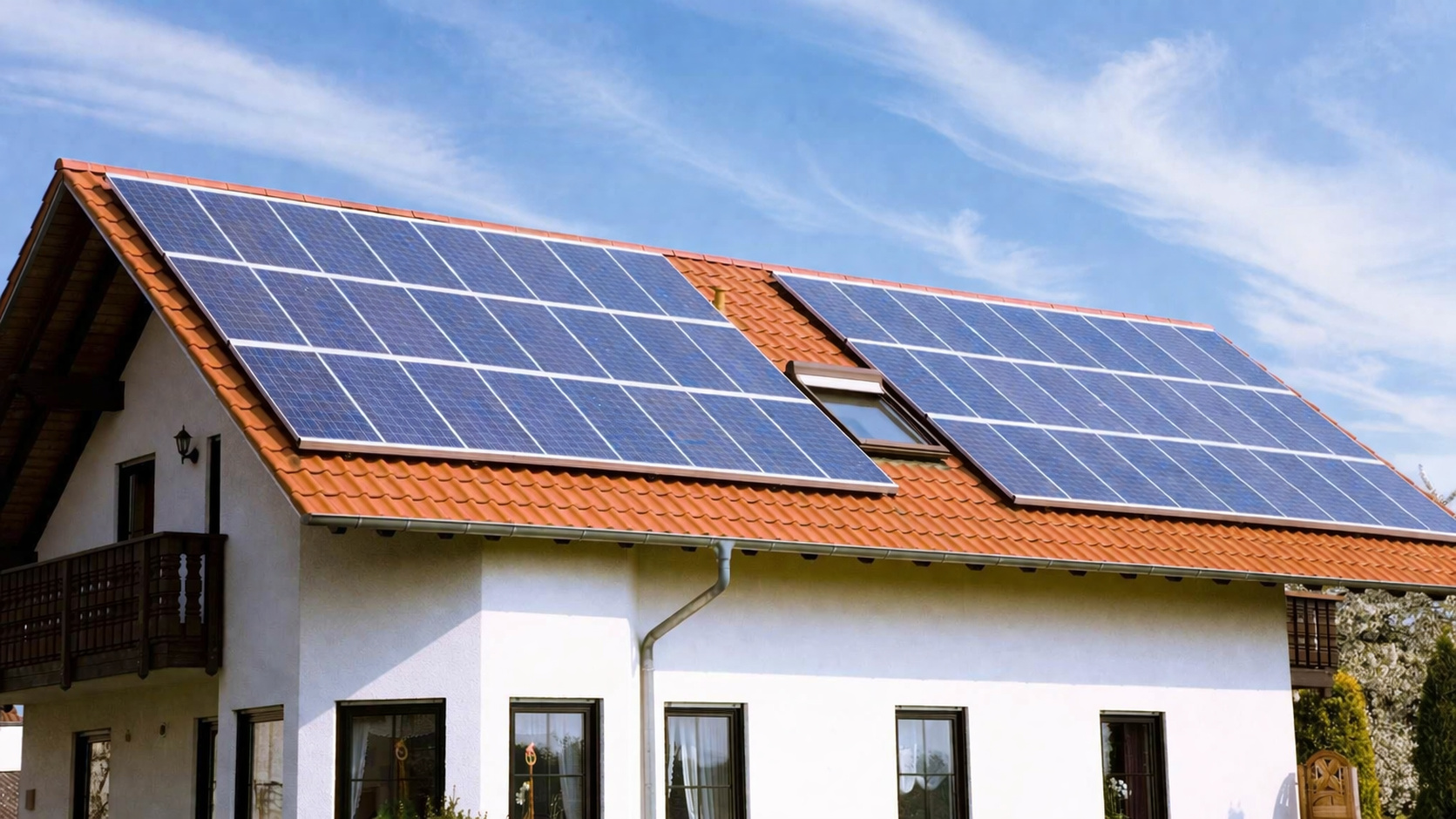
Research indicates that Brazilians support clean energy and wish to advance in the energy transition, but reject paying more on their electricity bill, showing a direct conflict between cost and sustainability.


Regarding electrified cars, the Ministry of Economy, through the National Registry of Motor Vehicles, indicates that there are currently 46,851 units running in Brazil. See the details below.
The electric vehicle market in Brazil has been on an encouraging rise: from 2013 to 2019, there was a jump from 800 registrations to 11,858 in 2019. In 2020, there were 19,745 registered electrified units. This represented a 66.5% increase in registrations compared to the previous year, and there were still many structures to be installed by the manufacturers themselves. We will see more ahead.
However, the estimate before the pandemic caused by the new Coronavirus was for 27,000 registrations according to the ABVE for 2020.
How Many Electric Cars Are There Currently in Brazil?
Nevertheless, analyzing the numbers, it is possible to affirm that the electric car market in Brazil has slightly slowed down, but it has definitely not flipped. In 2021, 4,584 electric vehicles were registered in Brazil. At the same time last year, there were 5,191 registrations. This information is exclusive to the website Click Petrol and Gas, through the ABVE Press Office. Check out the details in the image below.
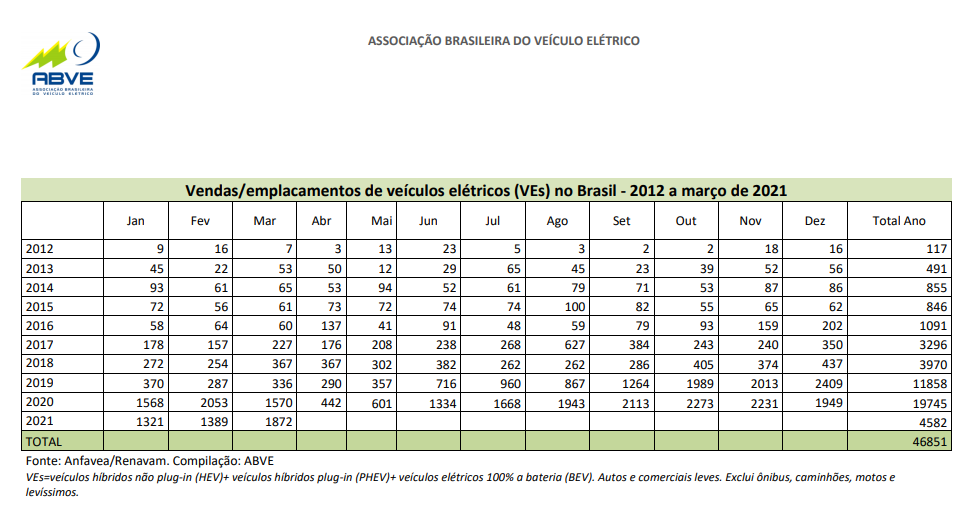
The number of electrified cars sold reached 1% of the 1,950,889 light vehicles registered, according to the National Federation of Motor Vehicle Distributors.
[citation] We should celebrate. It is an important symbolic mark. But clearly, we are still very far from a significant share of the total market. We must persist in measures to support electric mobility.
Antonio Calcagnotto, Director of Light Vehicles at ABVE
See also: FIAT electric cars will arrive in Brazil in 2021 thanks to the partnership with Enel X
Charging Stations for Electric Cars: Companies Invest to Sustain the Market in Brazil
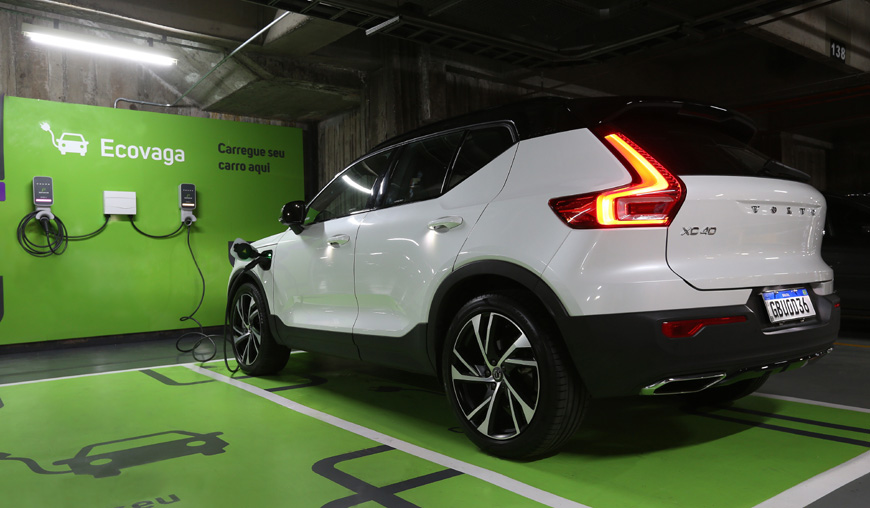
Low-emission transport has already changed the landscape and economic outlook worldwide. This future is therefore a reality here. The electric vehicle market in Brazil is growing every year; however, incentives for maintenance structures are needed to build trust among investors and end consumers.
One incentive that companies have been adopting through partnerships with other companies is the increase in the number of charging stations. Currently, Brazil has approximately 500 public and semi-public charging stations.
The company BMW was the first to launch 100% electric cars in Brazil and to install charging stations for electrified vehicles in the country. In 2017, it installed six units at Ipiranga gas stations along the Presidente Dutra Highway, between São Paulo and Rio de Janeiro. This highway is considered the most important for electrified mobility. Since then, more than 250 points have been installed in shopping malls and supermarkets.
Volvo aims to deliver one thousand charging stations by 2021, investing R$ 12 million. The manufacturer, along with Toyota, dominates 90% of the hybrid vehicle market in Brazil. A list produced by Bright Consulting indicates that Toyota sold 12,883 units in 2020 and Volvo sold 3,215.
“We are investing in charging infrastructure so we can build trust, break barriers, and provide greater ease for hybrid and electric vehicle owners, not just from Volvo but from any other brand.
Rafael Ugo, Marketing Director at Volvo Car Brazil.
Audi also promises an additional R$ 10 million for 200 vehicle charging points by 2022, with 130 set for 2021. This amount is part of the more than R$ 32.9 million partnership with Porsche and Volkswagen, who also plan an additional 30 charging station locations.
See also
- WEG and EDP will ensure charging stations for Renault electric cars in Brazil
- Federal Government mandates that new buildings must have charging points for electric cars in SP
The Charging Stations Are Valid for All Models of Electric Cars in Brazil
If this was a doubt in deciding whether to buy a hybrid or 100% electric car, interested parties can rest easy. Companies guarantee that the charging systems for vehicles follow the same standard, the European one. Therefore, any car can be charged at any charging station.
The difference in charging electric vehicle motors is the total charging time. The variation is between one to three hours. The models are fire, shock, and weather resistant, according to the companies.
Which Companies Sell the Most Electric Vehicles in Brazil?
First, it is important to highlight that there are subcategories of electrified cars. They are: HEV Flex (Hybrid Electric Vehicles with two engines, one powered by a battery and the other for conventional refueling with gasoline or alcohol), HEV (Hybrid Electric Vehicles that use gasoline, alcohol, or diesel as the main fuel source), PHEV (combines a combustion engine powered by gasoline/alcohol or diesel with an electric motor and a rechargeable battery) and BEV (a 100% electric motor).
- HEV Flex: Toyota Corolla – 9,613 sales
- HEV: Toyota RAV4 – 3,217 sales | Lexus UX250H – 368 sales | Lexus UX300H – 236 sales
- PHEV: Volvo XC60 – 1,835 sales | Volvo XC40 – 606 sales | Porsche Cayenne – 472 sales
- BEV: Audi E-Tron – 183 sales | GM Bolt – 108 sales | Nissan Leaf – 105 sales
Regarding the range of electric vehicle batteries, we have brought a complete and updated list. Check it out here.
Article written by Junior Aguiar – Journalist at Click Petroleum and Gas [Content protected by copyright]










Seja o primeiro a reagir!