





 Portuguese
  English
  Spanish
  5 min of reading
  0 comments


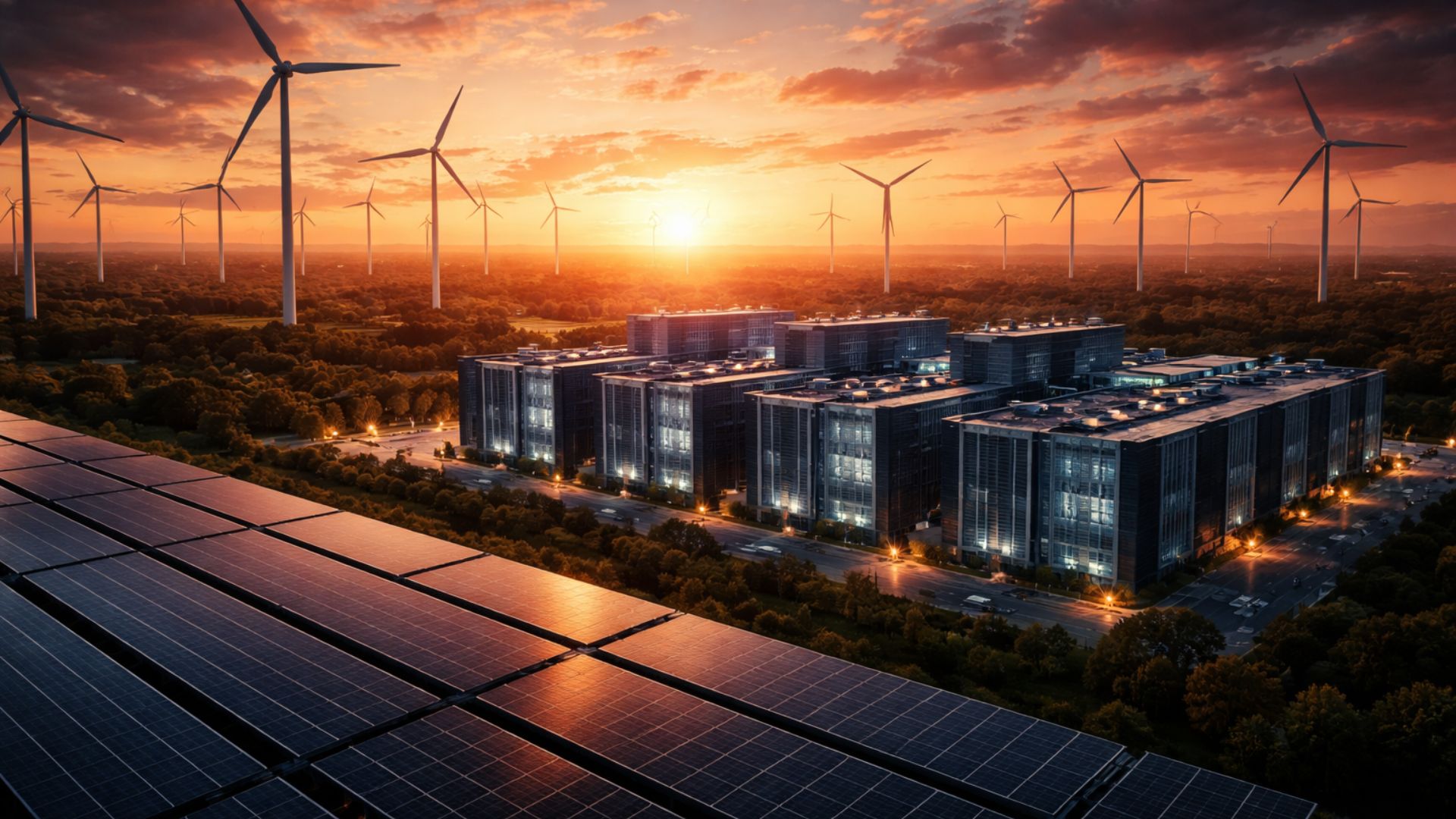
Casa dos Ventos Forms Partnership to Expand Renewable Energy Generation in Brazil, Serving Ascenty Data Centers and Strengthening Investments in Sustainable Digital Infrastructure.
In January 2026, the generator Casa dos Ventos announced a strategic agreement valued at over US$ 500 million for the supply of renewable energy to data centers of Ascenty in Brazil. The information was disclosed on the InvestNews website this Tuesday (13). The agreement could reinforce Brazil’s position as a competitive destination for investments in technology, cloud computing, and artificial intelligence, sectors highly dependent on reliable, predictable, and sustainable power supply.
Casa dos Ventos Expands Its Role in the Renewable Energy Market
The Casa dos Ventos, one of the largest developers of renewable energy in Brazil, with France’s TotalEnergies as a shareholder, structured the partnership as a foundation to enable two new large-scale projects: one wind farm and another solar.
Together, the projects represent over 1.5 gigawatts (GW) of installed capacity, with estimated investments of around R$ 7.5 billion. A significant portion of this energy will be allocated for the consumption of Ascenty’s data centers, while the surplus could serve other large consumers in the free market.
-
Renewable energy advances over protected areas in Brazil, and a survey by the Energy Transition Observatory reveals silent impacts that challenge environmental conservation and pressure sensitive traditional territories.

-
Rio Grande do Sul accelerates energy transition: State invests in renewable technologies and consolidates decarbonization strategies and pathways to attract billions in new industrial investments.

-
With 160,000 m² of collectors, an area larger than 20 football fields, Silkeborg, in Denmark, hosts a solar thermal plant that heats 19,500 homes and could become the largest solar heating plant in the world.

-
A study reveals the expansion of renewable energy procurement in Brazil and shows how companies are taking advantage of opportunities to reduce expenses, ensure energy efficiency, and strengthen strategic environmental commitments.


The adopted model is that of self-production, in which the consumer participates as a partner of the generating enterprise, ensuring direct access to energy and cost predictability in the long term.
Renewable Energy Dedicated to Ascenty Data Centers in Brazil
Ascenty, a company specialized in data centers and controlled by Canadian Brookfield in partnership with Digital Realty, currently has 20 units in operation in Brazil and another eight under construction. The accelerated expansion of the portfolio requires robust energy supply contracts.
According to the company, the new parks are expected to generate about 110 average megawatts (MWm) of energy directed to its portfolio. The expectation is that commercial operation of the ventures will begin in 2027, replacing energy contracts that will expire in the coming years.
Data Centers Drive New Phase of Investments in Clean Energy
The advancement of cloud computing, generative artificial intelligence, and data storage has significantly increased the electricity consumption of data centers.
Investors in the sector assess that Brazil has relevant competitive advantages, such as an abundance of wind and solar resources, a predominantly clean energy matrix, and lower generation costs compared to other global markets.
In this context, agreements like the one signed between Casa dos Ventos and Ascenty follow an international trend where technology companies seek to secure long-term energy supply, with lower exposure to regulatory risks and price volatility.
Dom Inocêncio Wind Complex and Paraíso Solar Gain Scale
The agreement officially enabled two new strategic projects from Casa dos Ventos. The first is the Dom Inocêncio Wind Complex, located in the state of Piauí, which will have 828 megawatts (MW) of installed capacity and estimated investments of R$ 5 billion.
The second venture is the Paraíso Solar Complex, in Mato Grosso do Sul, with 640 MW of capacity and additional investments of approximately R$ 2.5 billion. Both have been structured to serve large consumers, focusing on efficiency, scale, and operational predictability.
Self-Production Strengthens Casa dos Ventos and Ascenty’s Strategy
The self-production model of renewable energy has gained strength among large industrial consumers and technology companies. By becoming partners in the ventures, customers reduce risks associated with the short-term market and ensure stable supply in the long run.
For Casa dos Ventos, contracts act as financial anchors, facilitating access to financing, reducing market risks, and accelerating project implementation timelines. For Ascenty, the model ensures dedicated energy to sustain the continuous expansion of its data centers in Brazil.
Brazil Can Consolidate as a Global Hub for Sustainable Data Centers
During the announcement of the agreement, Ascenty‘s CEO, Christopher Torto, emphasized that the regulatory environment could further enhance Brazil’s competitiveness. According to him, the potential approval of Redata, a federal incentive program for the sector, could position the country as one of the main global hubs for data centers focused on artificial intelligence.
“Today, energy is an increasingly critical input for data centers,” said the executive. This assessment is shared by Lucas Araripe, executive director of Casa dos Ventos, who sees the offer of competitive renewable energy as a crucial factor for attracting long-term investments.
Casa dos Ventos Announces New Projects Beyond the Partnership with Ascenty
In addition to the projects related to Ascenty, Casa dos Ventos also announced the launch of a third major wind project. Named Ibiapaba, the complex will be installed in Ceará and will have 630 MW of installed capacity.
Planned investments amount to around R$ 4 billion, with equipment supplied by the Chinese manufacturer Envision, one of the global leaders in wind technology. The project’s first clients have not yet been disclosed, but the initiative reinforces the company’s strategy to maintain a robust generation pipeline.
Energy Oversupply and Challenges of the Brazilian Renewable Sector
Despite the progress of investments, the entry of new projects increases the energy oversupply in Brazil. The country is already facing episodes of wasted wind, solar, and hydropower generation, as well as risks of systemic imbalance during certain periods.
This scenario has led major companies in the sector, such as Engie and CPFL, to put new investments on hold. Still, long-term structured contracts, like the one signed between Casa dos Ventos and Ascenty, are seen as important mechanisms to reduce uncertainties and ensure financial sustainability for the projects.
What the Agreement Reveals About the Future of Energy and Data Centers
The agreement announced in January 2026 between Casa dos Ventos and Ascenty highlights a structural transformation in the Brazilian electricity sector. The growing demand from data centers is redefining how new renewable energy projects are conceived, financed, and contracted.
By aligning digital expansion with clean generation, Brazil strengthens its position in the global scenario, attracts billion-dollar investments, and creates solid foundations for the growth of the digital economy in the coming decades.








Seja o primeiro a reagir!