





 Portuguese
  English
  Spanish
  4 min of reading
  21 comments


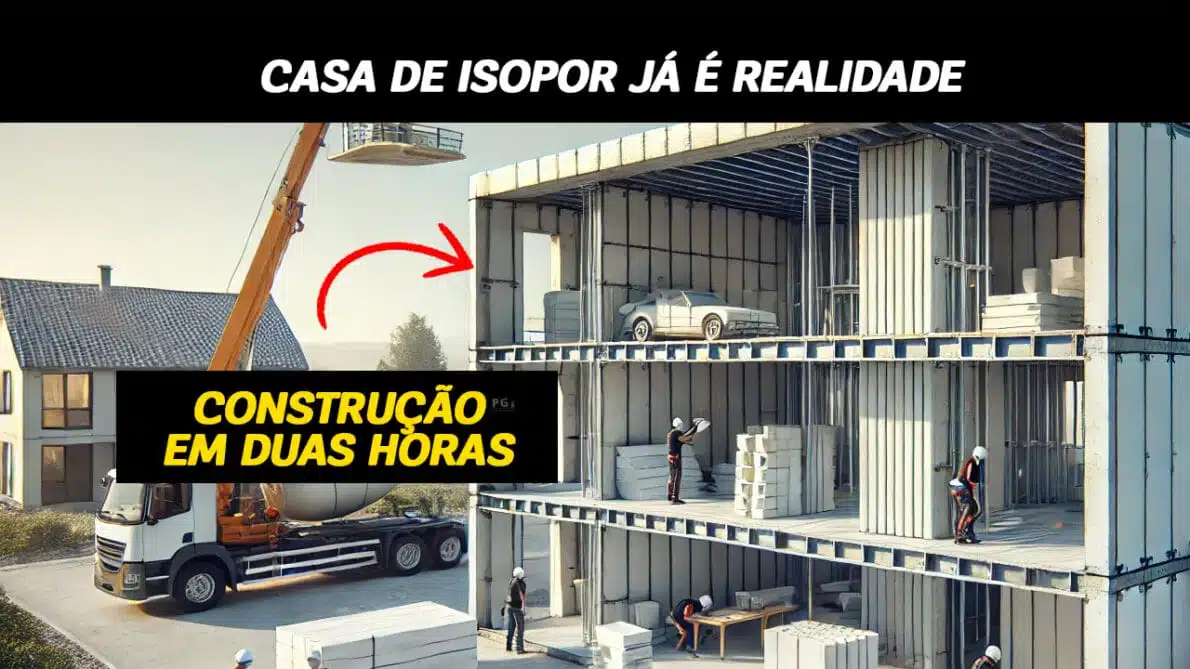


Innovative Technology Not Only Accelerates Construction But Also Drastically Reduces Costs, Bringing a More Accessible and Sustainable Future for Brazil.
Have you ever imagined living in a house that was built in record time? The construction industry, traditionally slow and expensive, is about to undergo a revolution that promises to change the reality for thousands of Brazilians.
And all of this thanks to an innovative technology that can erect a house in just two hours. That’s right: in less time than it takes to watch a movie, a house can be ready to live in!
Lightwall: The Innovation That Is Transforming The Real Estate Market
The company responsible for this impressive change is Lightwall, which has brought a new solution to the sector.
-
Son of a seamstress from the rural area of Ceará who did not speak English wins a scholarship of over 2 million reais at Williams College, one of the top 10 universities in the United States, covering everything including dormitory, meals, and annual trips to Brazil.

-
Bill Gates revealed that the true secret behind every great achievement is not a brilliant leap but rather small improvements repeated over the years, and the data from his own career and the fight against climate change prove that he is right.

-
With 22 thousand tons of steel, a height nearly three times greater than the Eiffel Tower, and a cost of R$ 1.6 billion, China is building the highest bridge on the planet over a colossal canyon, reducing a crossing time of over 2 hours to just over 2 minutes.

-
With more than 635,000 doctors, Brazil sees competition increasing in large cities, and recent graduates are competing for shifts at an accelerated pace while the countryside still faces shortages.

Using panels made of concrete and Styrofoam, the company has developed a system that not only reduces construction time but also lowers costs by up to 4 times compared to traditional methods.
The concept behind this innovation is as simple as it is genius: the construction panels are assembled quickly and efficiently, with fittings similar to Lego pieces.
In 2024, Lightwall inaugurated its second factory in Brazil, in the city of Rio Claro, São Paulo, marking a decisive step towards expanding this technology in the country.
The result? In one of the most impressive demonstrations, the company managed to build a house of 42 m² in just 1h55. This is not only an advance in construction speed but also in the use of more sustainable resources.
Why is Lightwall’s Technology So Special?
The panels developed by Lightwall are made from a mixture of concrete and Styrofoam, creating a material that is much lighter than conventional concrete, but with exceptional thermal and acoustic insulation properties.
This innovative combination offers several advantages. In addition to being easier to handle, the material also has a high degree of waterproofing, increasing the durability of constructions.
The interlocking system of the blocks eliminates the need for large amounts of mortar, further reducing costs and construction time.
How Did This Revolution in Construction Arise?
The idea behind Lightwall was born from a simple yet revealing observation.
According to Marcos Fernando Araújo, the company’s CEO, the inspiration came from a trip his father took to Portugal, where he noticed the waste of materials in construction sites.
Motivated by this perception, in 2016, he brought to Brazil the first container with concrete and Styrofoam panels.
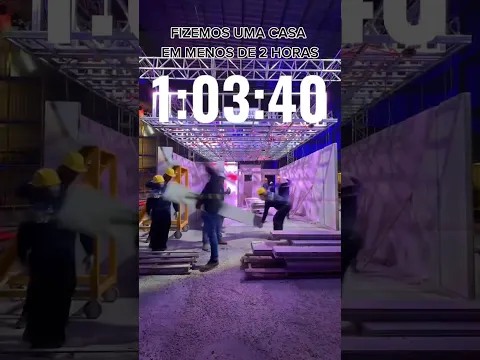

The success was immediate, and the technology began to be used in various types of projects, from affordable homes to large commercial ventures.
In 2021, Lightwall was selected to contribute to the My House My Life program, aiming to build more affordable housing.
Since then, the company has been expanding its operations and plans to open five more factories by 2025, with an investment of R$ 220 million.
Today, with two factories operating in Brazil, the production capacity is already sufficient to build 20,000 affordable homes per year.
A Revolution in the Real Estate Market
Building houses using the Lightwall system brings significant economic and social advantages. In addition to reducing construction time by up to five times, the system has the potential to quickly meet the high demand for housing in Brazil.
For example, MNGT, a construction company partnering with Lightwall, managed to build 100 houses in just three months in the municipality of Rio Claro, a feat that would have taken much longer using traditional methods.
This result demonstrates the significant impact of the technology on speeding up housing construction, especially in areas with a large housing deficit.
Economy and Sustainability: The Future of Civil Construction
The concrete and Styrofoam panel system is not only fast but also cost-effective and sustainable.
As mentioned, construction costs can be up to four times lower than conventional methods, which opens doors for the creation of low-cost housing with high quality.
Additionally, constructions can be transported by truck, facilitating the movement of materials and reducing logistics costs.
Lightwall is also investing in portable constructions, which can be easily assembled and disassembled, providing solutions for temporary commercial establishments and even for areas affected by natural disasters.
The company is already partnering with Steel Corp, led by businessman Roberto Justus, to develop these innovative projects.
The Future of Civil Construction in Brazil and the World
The speed and efficiency provided by Lightwall’s system place the company at the forefront of innovation in civil construction.
The sector, previously known for being slow and costly, has the company’s solutions as a sustainable and accessible alternative.
This technology not only promises to revolutionize the real estate market in Brazil but can also expand to other countries, providing a new form of rapid and efficient urbanization.
The question remains: Is Brazil ready to widely adopt this technology and transform the country’s housing landscape?
With the continuous growth of this innovation, there is a real chance that Brazilian cities can be reshaped to become more accessible, sustainable, and modern.






O nome da empresa não se pronuncia: ‘láituól’ ? LÁIT WÓL SERIA A PRONUNCIA CORRETA DO NOME DA EMPRESA.
Gostaria de um contato direto
Deve ser altamente inflamavel…ou nao?