





 Portuguese
  English
  Spanish
  4 min of reading
  1 comment


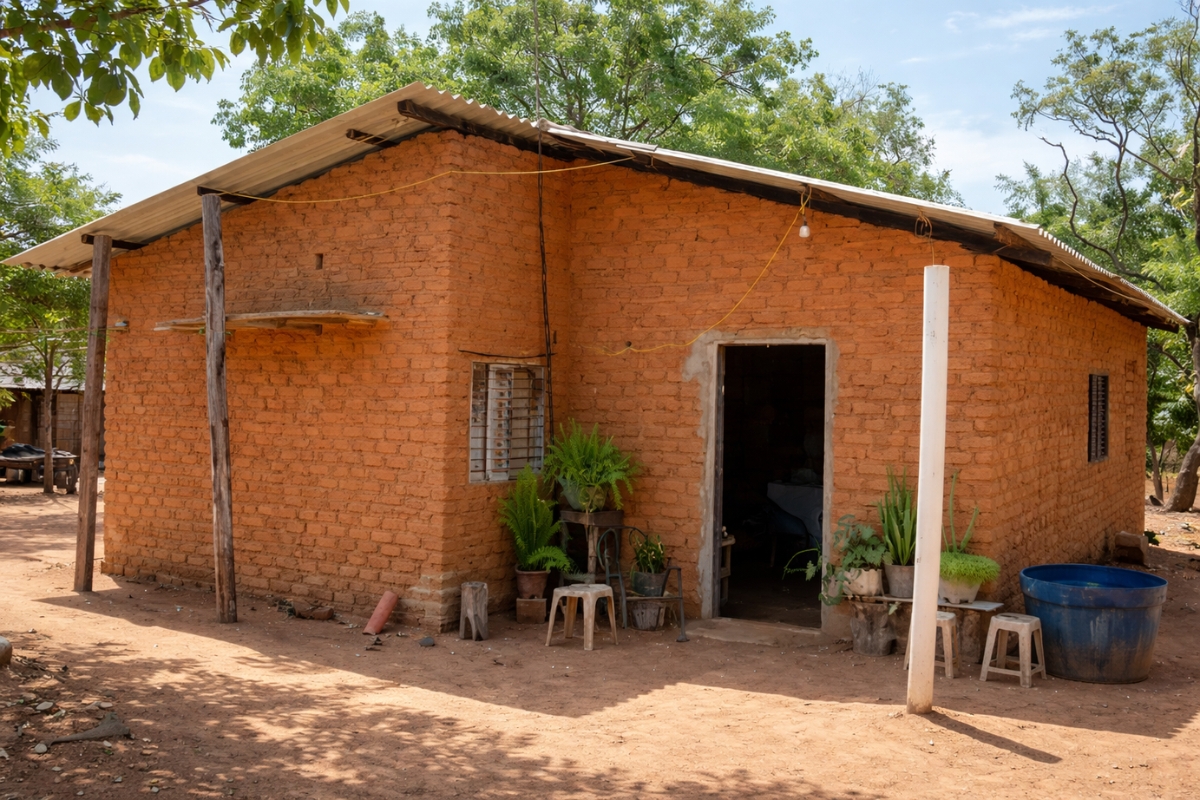


In Palmas, Osmar Gomes Luz and Tânia Maria de Souza built their own house with handmade adobe bricks dried for 4 days in the sun to achieve permanent housing, causing a radical change in their lives and drawing attention for the simplicity and durability of the method.
Sitting in a wire chair, looking at the new adobe house, Osmar Gomes and Tânia Maria celebrate an achievement that seemed distant months ago. Where there was once a canvas shack, there now stands a building erected with their own hands.
The change took place in March of this year. The house was built entirely of earth, using an ancient technique that withstands time. For the couple, it is not just a construction. It is the realization of the dream of homeownership.
“I’m in paradise,” Tânia affirms, emotionally. The phrase summarizes the magnitude of the transformation they experienced in the rural area of Palmas, in the São João I settlement.
-
Friends have been building a small “town” for 30 years to grow old together, with compact houses, a common area, nature surrounding it, and a collective life project designed for friendship, coexistence, and simplicity.

-
This small town in Germany created its own currency 24 years ago, today it circulates millions per year, is accepted in over 300 stores, and the German government allowed all of this to happen under one condition.

-
Curitiba is shrinking and is expected to lose 97,000 residents by 2050, while inland cities in Paraná such as Sarandi, Araucária, and Toledo are experiencing accelerated growth that is changing the entire state’s map.

-
Tourists were poisoned on Everest in a million-dollar fraud scheme involving helicopters that diverted over $19 million and shocked international authorities.

From Canvas to Adobe: The Turning Point That Changed the Couple’s Life in the São João I Settlement
The reality in the countryside is not simple. In the São João I settlement, difficulties are part of daily life. Still, Osmar and Tânia faced each challenge with patience and courage.
Months before the construction, the couple lived in a canvas shack. The makeshift structure offered neither safety nor comfort.
The decision to build their own house marked a turning point. What seemed impossible began to take shape with clay, water, and willpower.

How Raw Earth Bricks Are Made Using Traditional Techniques and Sun Drying
The house was made with adobe, a brick produced from raw earth, straw, and water. The mixture is shaped in molds and left to dry in the sun for about 4 days.
The process is entirely manual. The clay needs to be kneaded with feet before going into the mold. After being removed, the brick rests until it reaches the ideal point to be placed in the wall.
The detail that caught the most attention is that the factory for the material is located in a pit in the land, known as a barreiro. That’s where Osmar prepares the clay and produces the bricks.
Rustic Interior, Beaten Earth Floor, and a Clay Jug Over 90 Years Old Reinforce Tradition
Inside the house, there is no ceramic or porcelain. The floor is beaten, maintaining a simple and rustic style.
On the shelves, gourds, calabashes, and a clay jug over 90 years old keep the water always fresh. The environment is simple yet functional.
The house is cool and tranquil, an important characteristic for those living in a hot climate like Tocantins. The natural material helps maintain a pleasant temperature even on the hottest days.

Osmar is a bricklayer who has participated in the construction of various buildings throughout his life. Nevertheless, he considers this the primary work he has ever done.
Construction Can Last Decades, and the Pit Can Still Turn into a Water Reservoir or Fish Tank
He believes that the house can stand for many, many years. According to the bricklayer himself, he was raised in a similar house that lasted 50 years and is still being lived in.
Another important point is that the pit used to extract the clay will not go to waste. The space can be transformed into a water reservoir or even a fish farming tank.
In addition to the house, the couple keeps chickens around, ensuring a supplementary income.
The construction of the adobe house in Palmas shows that ancient techniques remain current and efficient. With clay, straw, water, and determination, a couple who lived in a canvas shack achieved their own resilient housing with the potential to last decades, proving that simplicity and persistence can transform realities.










Cuando yo era pequeña en el pueblo donde vivía en Venezuela, muchisimas casas de la época eran elaboradas con esos materiales y le llamábamos casas de bahareque.