





 Portuguese
  English
  Spanish
  7 min of reading
  0 comments


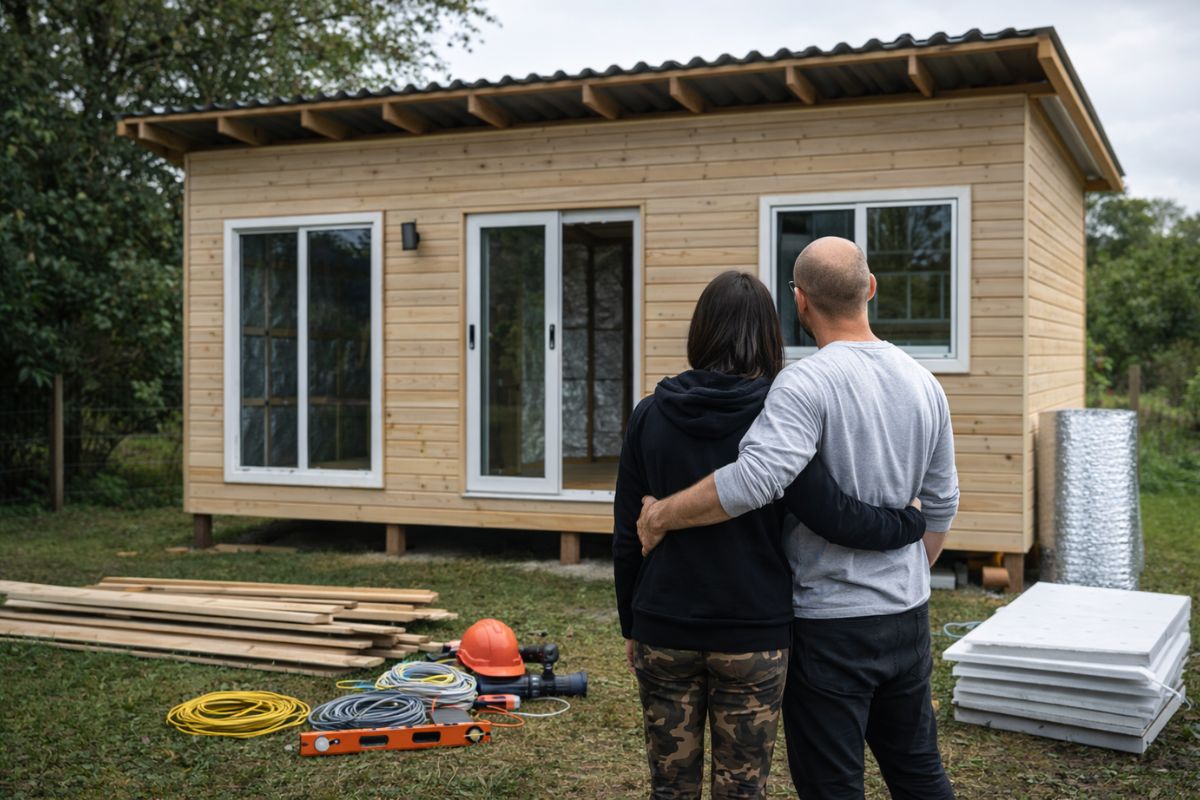
In The Budget Report Of The Mini Wooden House 3×6, The Couple In Charge Of The Channel Living On The Road Details Spending On Treated Wood, Roof, Glass, Electricity, And Insulation, Explains The Cost Jump, And Shows Why The Final Bill Of R$ 7,835 Does Not Include Labor, Even With The Structure Ready And Basic Use Possible.
The mini wooden house 3×6 has entered the budgeting stage with a figure that stands out for its clarity and contrast with conventional works. Adding structure, roof, ceiling, glass, initial electricity, and insulation, the couple reported an expense of R$ 7,835, excluding labor.
The final amount, however, comes with context. The house is still under finishing, and the planned furniture for the interior will come at a later stage, with a separate budget. There’s also an important point in the calculation: part of what was added to the cost is categorized as an improvement in comfort and aesthetics, not as a minimum requirement to make the space usable.
What Was In The Account And What Was Left Out Of The Main Calculation

The survey presented clearly separates two ideas that often get mixed up in small construction budgets. One thing is to leave the little house structurally ready and functional.
-
Friends have been building a small “town” for 30 years to grow old together, with compact houses, a common area, nature surrounding it, and a collective life project designed for friendship, coexistence, and simplicity.

-
This small town in Germany created its own currency 24 years ago, today it circulates millions per year, is accepted in over 300 stores, and the German government allowed all of this to happen under one condition.

-
Curitiba is shrinking and is expected to lose 97,000 residents by 2050, while inland cities in Paraná such as Sarandi, Araucária, and Toledo are experiencing accelerated growth that is changing the entire state’s map.

-
Tourists were poisoned on Everest in a million-dollar fraud scheme involving helicopters that diverted over $19 million and shocked international authorities.


Another is to elevate the standard of comfort, finish, and internal appearance. This distinction is what prevents a hasty comparison with other low-cost projects.
In the R$ 7,835 account, the couple includes the complete structure, covering, glass, part of the electricity, and thermal and acoustic comfort items.
Labor was completely excluded because the construction was done by themselves, with only occasional help in putting up the roofing. Furniture was also postponed, with a future budget.
Structure Of The Mini Wooden House 3×6 And The Choice Of Materials

The most substantial expense in the budget of the mini wooden house 3×6 was the initial purchase of wood.
The couple reported a spending of R$ 4,060 on an initial load of treated wood, purchased in Araranguá, used in the structure of the little house, flooring, lateral closure, and roof structure, still without the tiles. The main wood cited was pine, treated against termites and rot.
Additionally, R$ 300 went towards the feet of the little house, made with treated eucalyptus logs buried in the ground.
The couple explains that they could have used concrete, as many suggested, but opted for the wooden solution because it is considered lighter and easier to work with, also thinking about a possible future relocation of the structure.
It’s a technical and practical choice, not just economic.
The report also shows that there was an adaptation in the construction system, with a solution inspired by wood frame, but adjusted to local reality and the available budget.
They claim that if they had followed a common system in the region with less wooden structure, the cost could have dropped by around R$ 1,000. On the other hand, a complete wood frame, in the American standard, would be more expensive.
Roof, Small Items, And The Part Of The Budget That Usually Escapes Memory
For the roofing, the mini wooden house 3×6 incurred an expense of R$ 488 on tiles.
The couple remarks that they wanted to use sandwich-type tiles, focusing on acoustics and insulation, but the quote mentioned for this option was around R$ 1,600 just for the roof, which removed this alternative from the project at that moment.
There’s also a relevant detail for those trying to replicate the budget. Liquid tarpaulin was applied, but this material was a gift and was not accounted for.
This means that in another project without this condition, the final amount could increase. It’s a good example of how a real budget depends on context, not just on a spreadsheet.
Another important block was that of small items, which often disrupt cost predictions in small construction.
Screws, nails, roof locks, glue, and even supporting items accounted for R$ 400. It seems like a small item by item, but it’s exactly this combination that usually distorts budgets at the end of the job.
Ceiling, Window, Glass, And The Leap From The Structure To A More Comfortable House
After the structural stage, the couple records a second shipment of wood costing R$ 1,060, used for ceiling, eaves, and finishes, as well as door parts and trim around the roof.
Costs for glass and window also emerge, mentioning R$ 100 for glass and R$ 200 for a pre-made window.
Even with specific amounts mentioned throughout the budget report, the couple consolidates this first phase at R$ 6,600, already considering the house practically ready for basic use.
They themselves highlight that, at this stage, it would still be possible to live in the space, even without the additional internal covering on the walls. This is the difference between “habitable” and “finely finished”.
From there, the mini wooden house 3×6 received improvement items. The first stage of electricity totaled R$ 315, including hoses, boxes, and wires for basic lighting and outlets.
The couple warns that more complete and refined electricity will come later, with another cost.
Insulation And Thermal Comfort Explain Why The Mini Wooden House 3×6 Reached R$ 7,835
The point that brings the budget to the reported final value is the sum of interior finishing and comfort.
The couple adds R$ 600 for interior wall finishing and R$ 320 for glass wool, justifying it as an improvement to thermal comfort, acoustics, and also the internal appearance of the little house.
These items were not presented as obligations for basic operation, but as choices to raise the standard of use. This changes the perception of the final figure.
The mini wooden house 3×6 did not become more expensive due to a miscalculation, but because the project was refined with conscious comfort decisions.
With that, their closed math stood at R$ 7,835 by the time of recording, excluding labor.
The amount results from the base of R$ 6,600 added to the initial electricity and the internal finishing package with insulation. It’s a surprising number, but it also shows how small additions can accumulate quickly.
Labor, Execution Time, And The Limit Of Comparing This Cost With Contracted Work
The absence of labor is the main factor preventing a direct comparison with outsourced delivery.
The couple estimates that in the region, labor to raise and complete something of this size could range from R$ 3,000 to R$ 4,000, with the caveat that it could even be more. As they built it themselves, this cost did not enter the spreadsheet.
This point is decisive for those who just look at the total of R$ 7,835 and try to transform it into a universal reference. In small construction, labor represents a significant part of the final cost.
When the family executes the construction, the material budget may seem very competitive, but the time and effort become the invisible currency of the project.
As for the timeline, they report that the part of raising the structure and making the roof was completed in less than ten days by two people, even with a pause for recording. The estimate for finishing the little house at a dedicated pace, with two people and little experience, would be about 30 days.
This data is useful because it shows realistic productivity, without promising professional team speed.
What This Case Teaches About Cost Planning In Small Construction
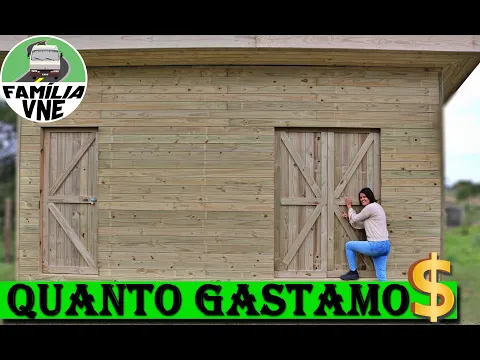

The budget report of the mini wooden house 3×6 presents a simple and valuable lesson for anyone planning to build.
The total cost does not depend only on the square footage. It depends on choices of construction system, finish standard, type of tile, level of insulation, and what will be considered essential in the first stage.
It is also clear that an honest budget needs to separate structure, comfort, and future finishes. When everything is packed together without this division, the project seems incoherent.
Here, the couple does the opposite and explains each block, including where they could have saved more and where they decided to spend better. This transparency is what makes the final number more useful for those who are truly researching.
Another important lesson lies in using accessible materials, such as treated pine, combined with solutions adapted to local reality.
It is not a construction presented as a universal standard, but rather as a feasible arrangement within a concrete financial limit. This provides practical references for those thinking of building something small without romanticizing the cost.
The mini wooden house 3×6 reached R$ 7,835 without labor because the project went beyond the minimum structure and incorporated roof, initial electricity, glass, internal finishing, and insulation.
The amount surprises due to the size of the house, but makes sense when the account is opened item by item, and the couple separates what is essential from what is included as comfort and finish.
Now, I want a specific answer, considering your budget and your way of building. If you were to assemble a mini wooden house 3×6, at what stage would you first try to save, roof, internal finishing, insulation, or pre-made window, and at which stage would you absolutely not cut costs for safety and durability?










-

Uma pessoa reagiu a isso.