





 Portuguese
  English
  Spanish
  7 min of reading
  0 comments


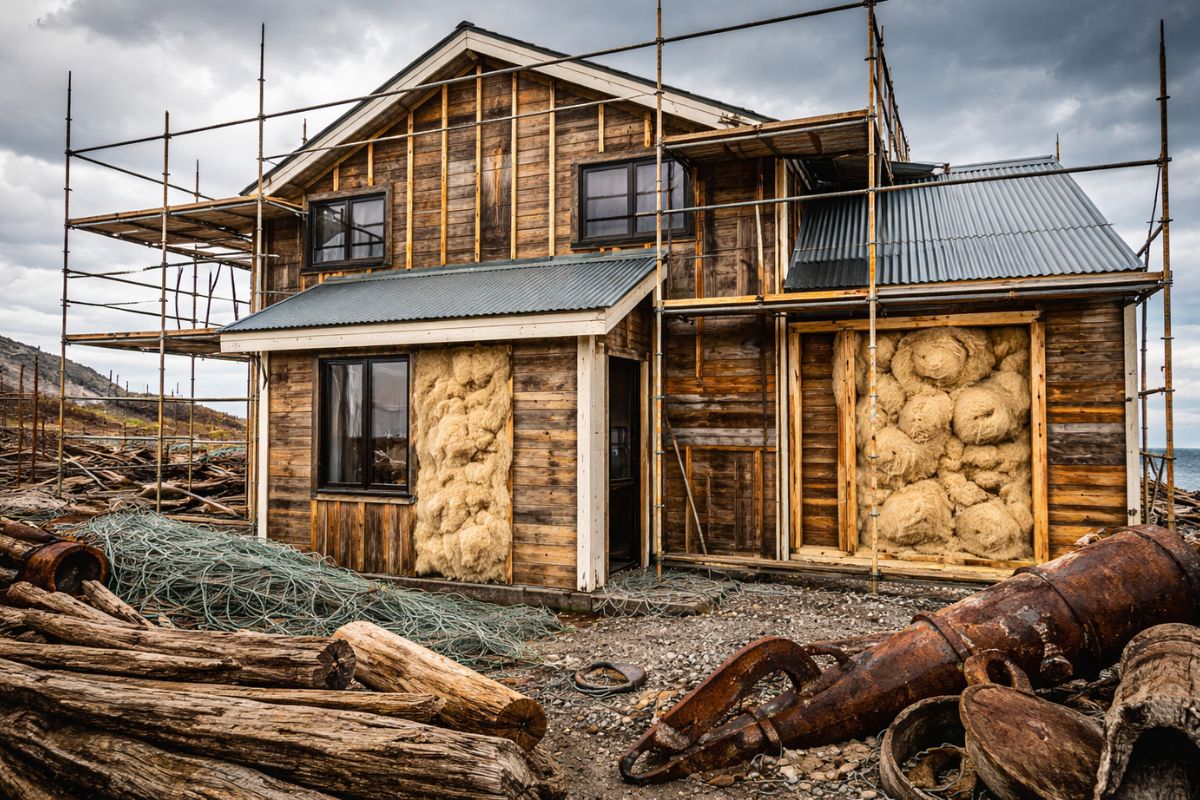
In The Falkland Islands, Houses Made Of Sheep Wool Show How Wood Scarcity, Constant Cold, Strong Winds, And Geographical Isolation Led Residents Of Stanley And Rural Areas To Combine Wood Frame, Metal Sheets, Colored Roofs, And Even Wood From Wrecked Or Dismantled Ships In The Port By Local Generations.
The houses made of sheep wool seem, at first glance, an eccentricity of a remote territory in the South Atlantic. But in Stanley, the capital of the Falkland Islands, according to the channel Manual do Mundo, this type of housing was born less from curiosity and more from necessity: when trees are scarce, the cold tightens, and the wind dominates daily life, construction must follow the logic of the place.
In an environment where the sea offers an abundance of life, while the land presents rock, sand, low vegetation, and almost no easy raw materials for construction, local architecture has been molded by adaptation. The result is a unique urban landscape, with simple-looking houses, striking roofs, light structures and thermal solutions that combine wood, steel, natural insulation, and reuse of materials from the maritime environment itself.
Where The Landscape Imposes The Rule Of Construction
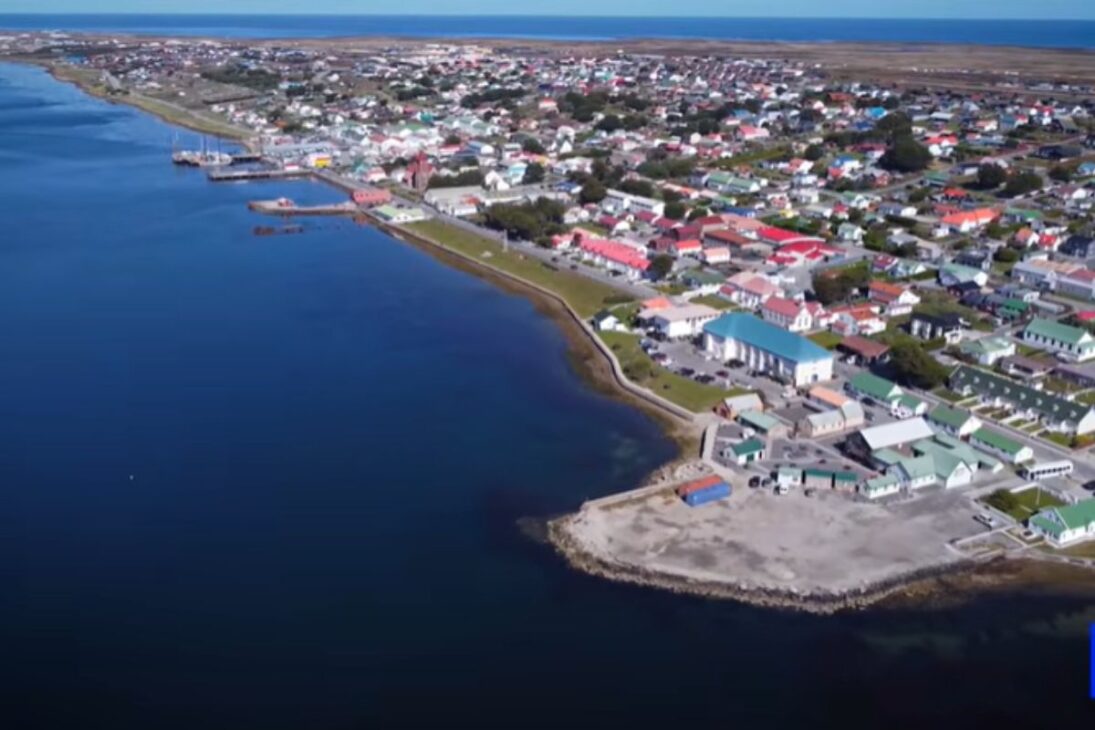
Stanley has about 3,000 inhabitants and is surrounded by a geographical context that explains much of what is seen in the houses. The cold is constant, the wind is strong, and the native vegetation does not provide enough wood to sustain a construction tradition based on local trunks. There is no forest available, nor a natural stock of trees that can continuously supply construction, and this completely alters the way housing is conceived.
-
Made from recycled plastic, plastic wood is gaining space in the construction industry because it does not rot, resists moisture, and reduces maintenance costs over the years.

-
Florianópolis will receive a million-dollar BRT that will begin construction in 2026 with nearly 400 million in funding from the federal government and the Inter-American Development Bank, and the map already shows the routes for the exclusive bus corridors.
-
Without a blueprint, without an engineer, and using scrap from the dump, a father spends 15 years building an 18-room castle for his daughter, featuring tram tracks, 13 fireplaces, and over 700 m², which may now be demolished.
-
A megaproject worth R$ 89 billion is advancing in Iraq and promises to change the game in global trade by creating a new corridor between Asia and Europe, reducing traditional routes and repositioning the country as a logistics powerhouse.

Stone, which might seem like the most logical alternative, also does not solve the problem easily. According to local reports, it is a very hard material, difficult to break, and not practical for being shaped into useful construction pieces. Instead of an abundance of resources, what exists is a scenario of restrictions. Therefore, for a long time, building in the Falkland Islands meant importing materials, adapting techniques, and utilizing everything that could arrive from outside or be reused.
Why Wood And Steel Came To Dominate Housing
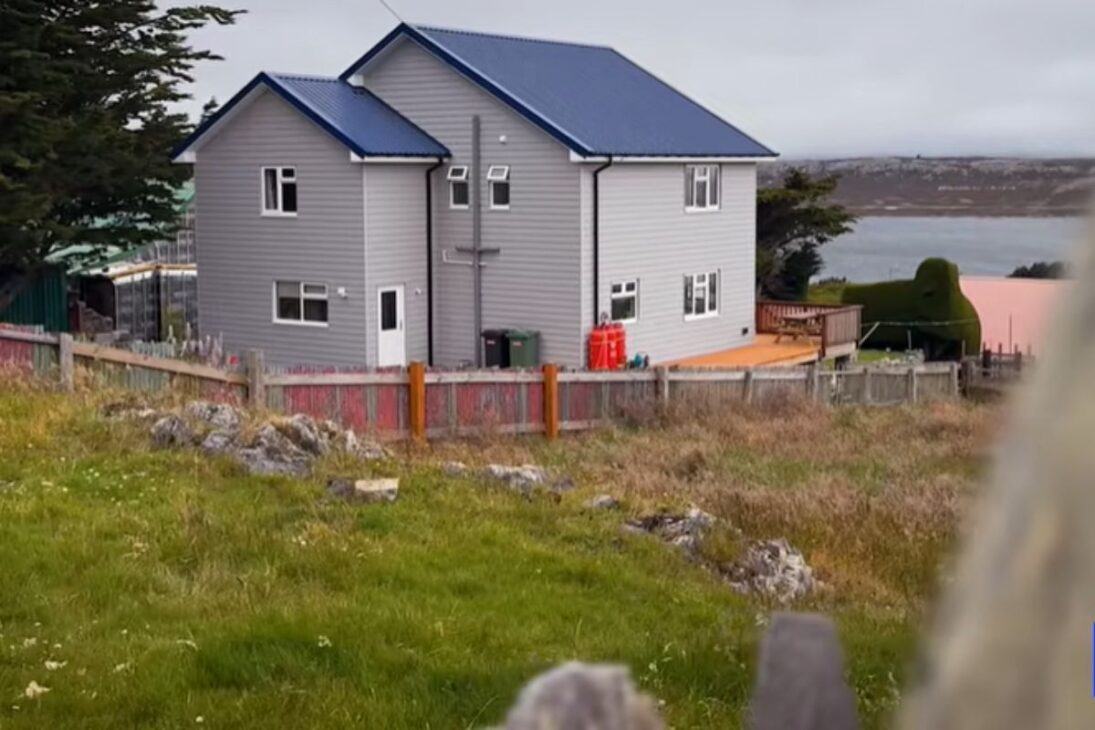
In this context, the combination of wood and steel became central. Wood gained prominence because it is versatile, relatively easy to transport, and works well in lightweight systems. Steel began to be used both for its strength and practicality, especially in sheets and roofs.
When the territory makes the local extraction of inputs difficult, the most efficient material is not necessarily the most traditional, but the one that best withstands transportation, climate, and maintenance.
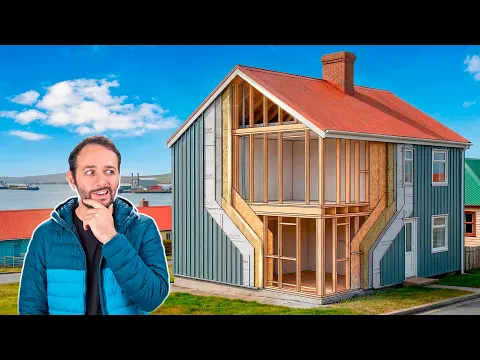
This logic helps explain why many houses on the island are built in wood frame, a system that is uncommon in much of Brazil but quite coherent for a cold and windy region.
Instead of solid walls, the structure functions as a wooden skeleton filled with insulating material, protected by layers that help block wind, moisture, and heat loss. It is a type of construction that responds directly to the climate, not just to cost or aesthetics.
How The Houses Made Of Sheep Wool Work In Practice
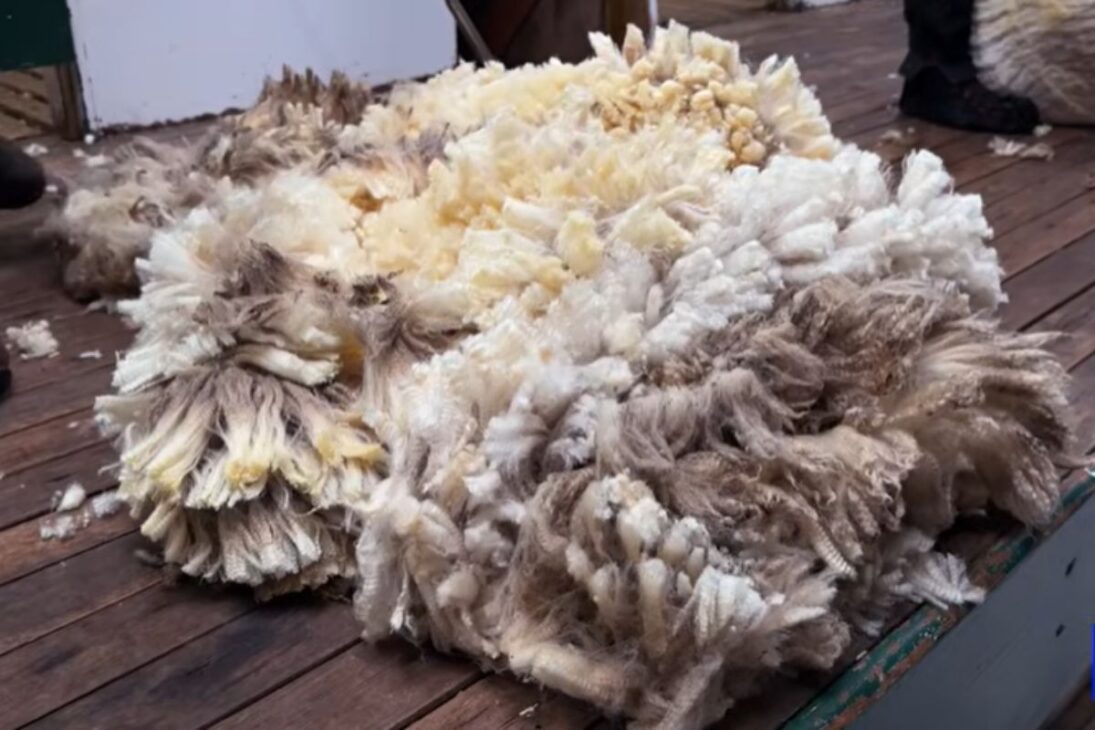
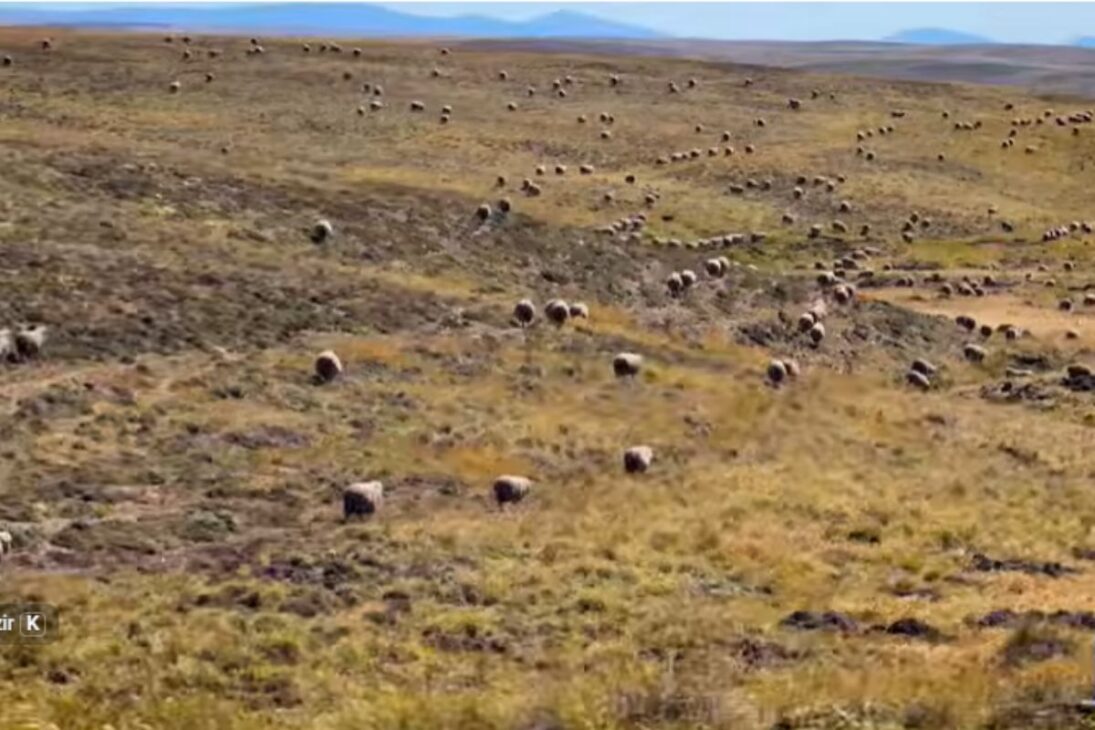
The houses made of sheep wool utilize a simple and efficient principle: keep internal heat and reduce the entry of cold. Inside the wooden structure, the space between the pieces receives an insulating fill. Today, this filling is usually associated with glass wool or rock wool, but for a long time, the abundance of sheep made natural wool a logical solution for the insulation of homes. In an archipelago with an estimated population of about 400,000 sheep, the material was available on a large scale.
In practice, this filling made a real difference in thermal comfort. The wool helped retain the temperature inside the house and fit into a routine where the cold required constant heating. After filling, the structure received panels, wind protection, and external closure.
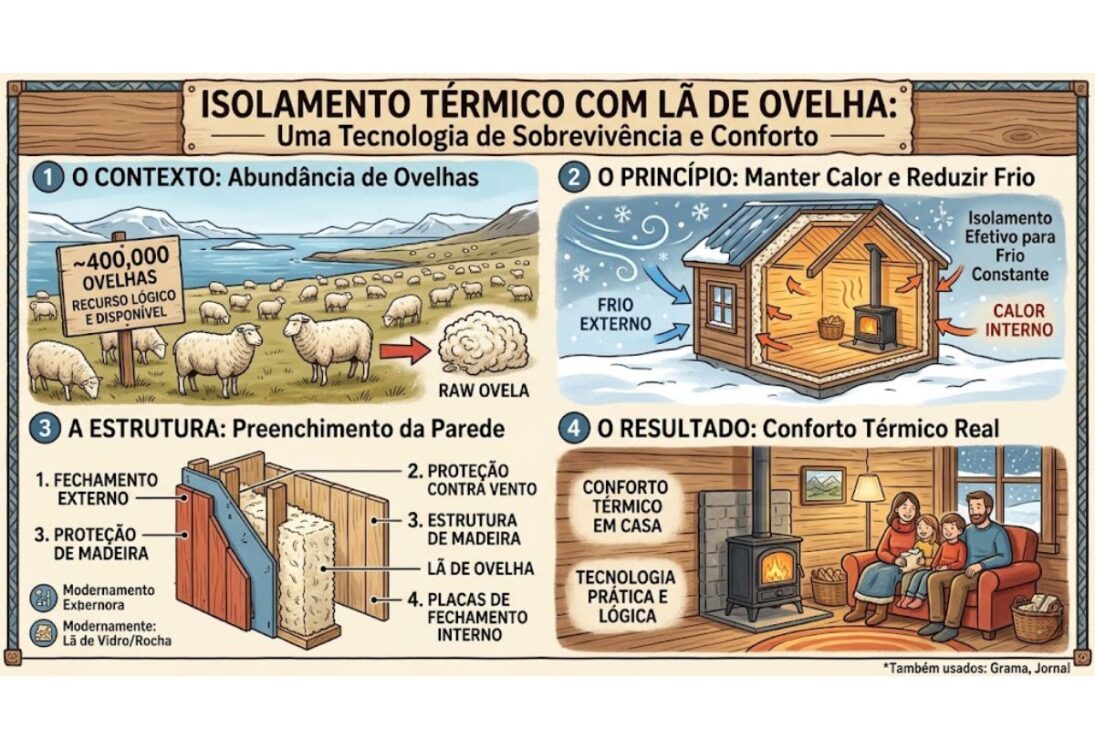
This was not a whimsical artisan choice, but a survival technology adapted to what was most abundant in the territory. At different times, in addition to wool, other resources have also been used to improve insulation, such as grass and even newspaper.
When The Sea Also Became A Source Of Material For Housing
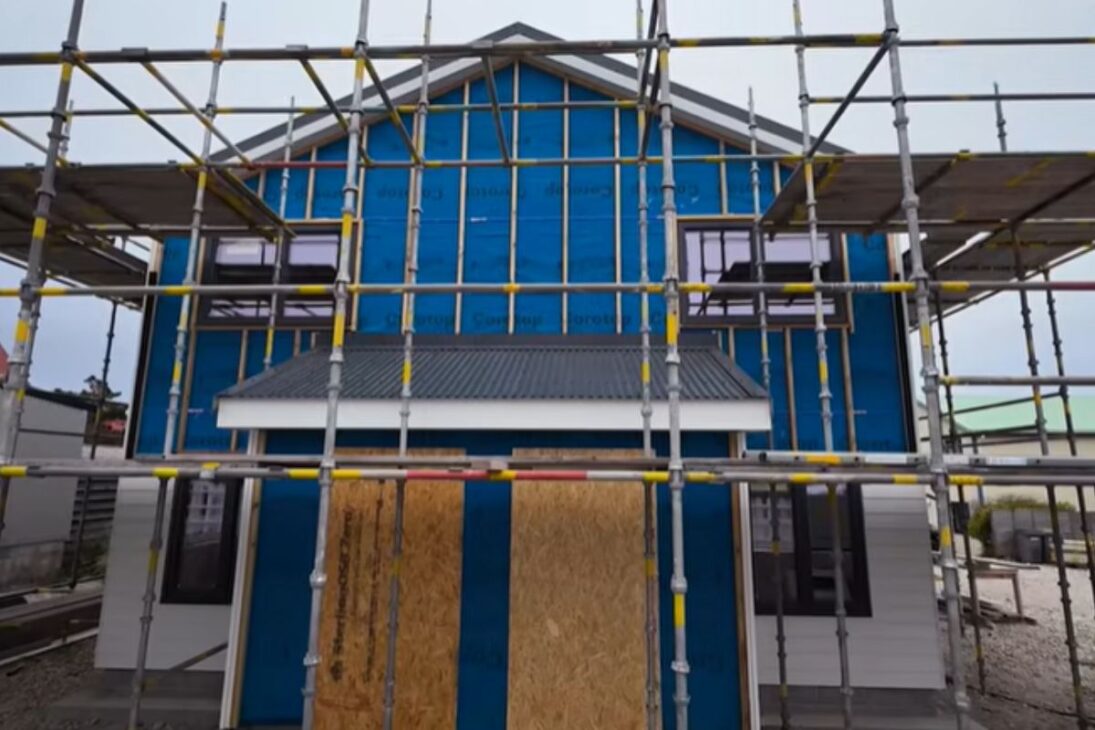
The scarcity of resources on land made the sea, indirectly, a supplier of raw materials. In earlier periods, part of the wood used in constructions came from wrecked ships or from vessels dismantled in the port.
In an isolated community with difficult access to inputs, repurposing such material was not the exception; it was a rational choice. Every piece of reclaimed wood reduced external dependency and expanded the possibilities for building or renovating.
This repurposing was not limited to structures. Elements from ships were also incorporated into domestic life in other ways. There are reports of using glazed parts of vessels to build small greenhouses in backyard gardens, an important solution in a place where winter severely restricts cultivation.
In older houses, even sails from ships were repurposed. What may seem unusual today was, for a long time, merely the natural continuation of a scarcity economy where almost nothing could be wasted.
The Outside Changed, But The Thermal Logic Continued
If the logic of insulation remained important inside, the houses also transformed on the outside. The outer wood required a lot of maintenance and also posed an evident risk in an environment where fire was an essential part of domestic life.
With frequent heating and chimneys in operation, the concern about flammability made sense. Therefore, metallic sheet coverings, and later, fiber cement boards that resembled wood gained space.
This movement shows how local architecture has modernized without abandoning its functional base. Today, some houses maintain the visual appearance of wooden constructions but use industrialized materials that require less care and offer greater resistance.
There are coverings that arrive pre-painted, imitating boards, while internally the finishing can use systems like drywall. The aesthetics may even suggest tradition, but behind it lies a continuous search for durability, safety, and lower maintenance costs.
Colored Roofs, Greenhouses, And Shelters That Help Tell This Story
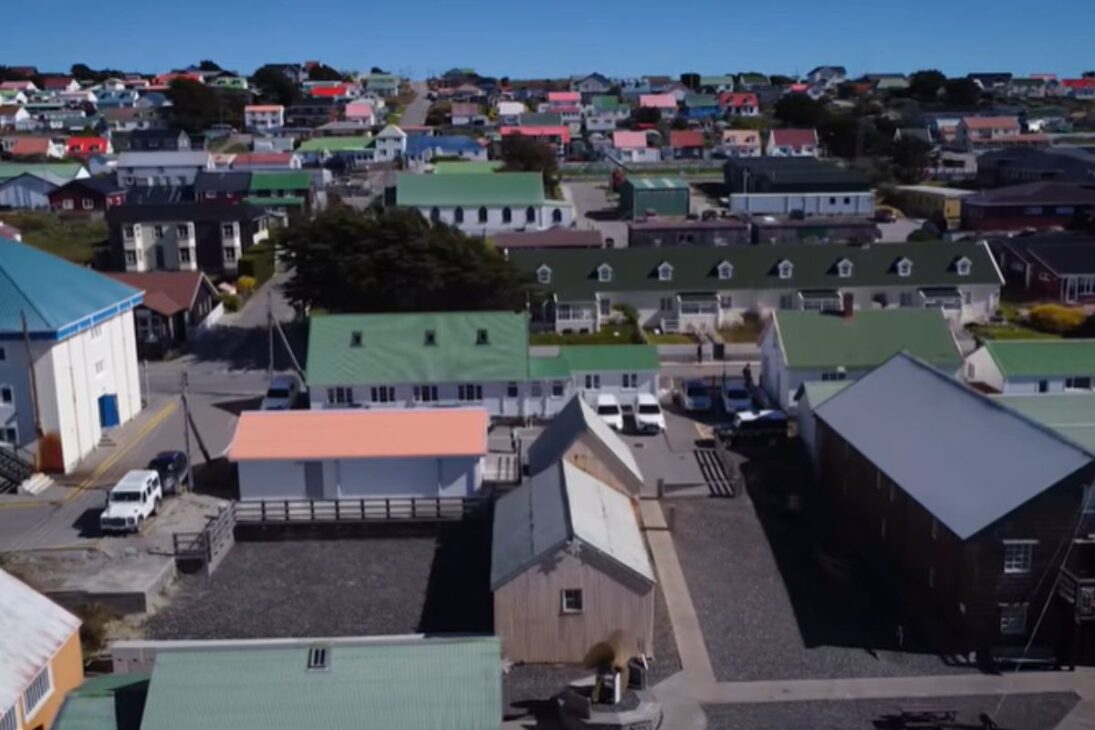
One of the most visible traits of Stanley’s landscape is the colored roofs. The coverings, often made of galvanized steel sheets, help compose an immediately recognizable urban identity. In the past, the bright paint had a practical function: to make the houses visible from the sea, even in snowy periods.
Over time, the original need lost strength, but the custom remained. The roof ceased to be just a covering and became a cultural mark.
Around the houses, other elements reinforce how the environment shaped local habits. Small greenhouses arise as a response to the difficulty of maintaining plants and vegetables during winter. The so-called Nissen huts, semicircular structures associated with military use in the 20th century, have been incorporated into daily life as garages, storage rooms, workshops, and chicken coops.
The architecture of the Falklands is not limited to the main house; it spreads across annexes, low fences, sheltered backyards, and spaces designed to face the climate without excessive complexity.
Speed Of Assembly And Kit Houses Reinforced This Model

Another important point is the speed of construction. The wood frame system allows for faster assembly than heavy models based on solid masonry.
In one reported case, a house was built by two people in six months, already considering specific project decisions. This helps explain why the method has consolidated in a region where material transport is expensive, the weather can hinder construction stages, and practicality is as valuable as resistance.
There is also an old tradition of kit houses shipped by sea, bought ready for assembly. This detail reveals that the search for industrialized and adaptable solutions is not recent in the Falkland Islands.
Long before the topic gained contemporary appeal, the residents already relied on prefabricated models to shorten stages and deal with distance. In a remote territory, reducing uncertainty in construction has always been a huge advantage, even when the kits took months to arrive.
More Than Curiosity, These Houses Show A Complete Response To The Territory
The houses made of sheep wool stand out because they deviate from the most common image of housing in the Latin American urban imagination. But the most interesting aspect lies not in the exoticism of the material but in the coherence of the whole.
The lack of trees, the difficulty in utilizing local stone, the cold, the wind, and the need for constant heating pushed the population towards a lightweight, reusable, and progressively easier-to-maintain model.
In the end, these homes show how architecture can arise from scarcity without compromising efficiency. Wood from ships, natural wool, metal sheets, fiber cement, painted roofs, greenhouses, and entrance vestibules form a unified logic: to protect the house from a severe environment and do so with the resources available. It is a construction that does not try to conquer geography by force; it negotiates with geography every day.
This may be the most interesting part of this story. Instead of reproducing an imported standard without adaptation, the residents of the Falkland Islands transformed limitations into method.
And this raises a question worth debating: in places with harsh climates or scarce resources, does it make more sense to insist on traditional models or adopt local solutions, no matter how unusual they may seem? Would you live in a house like this or do you believe that this type of construction only works in this extreme context?







-

Uma pessoa reagiu a isso.