





 Portuguese
  English
  Spanish
  6 min of reading
  0 comments


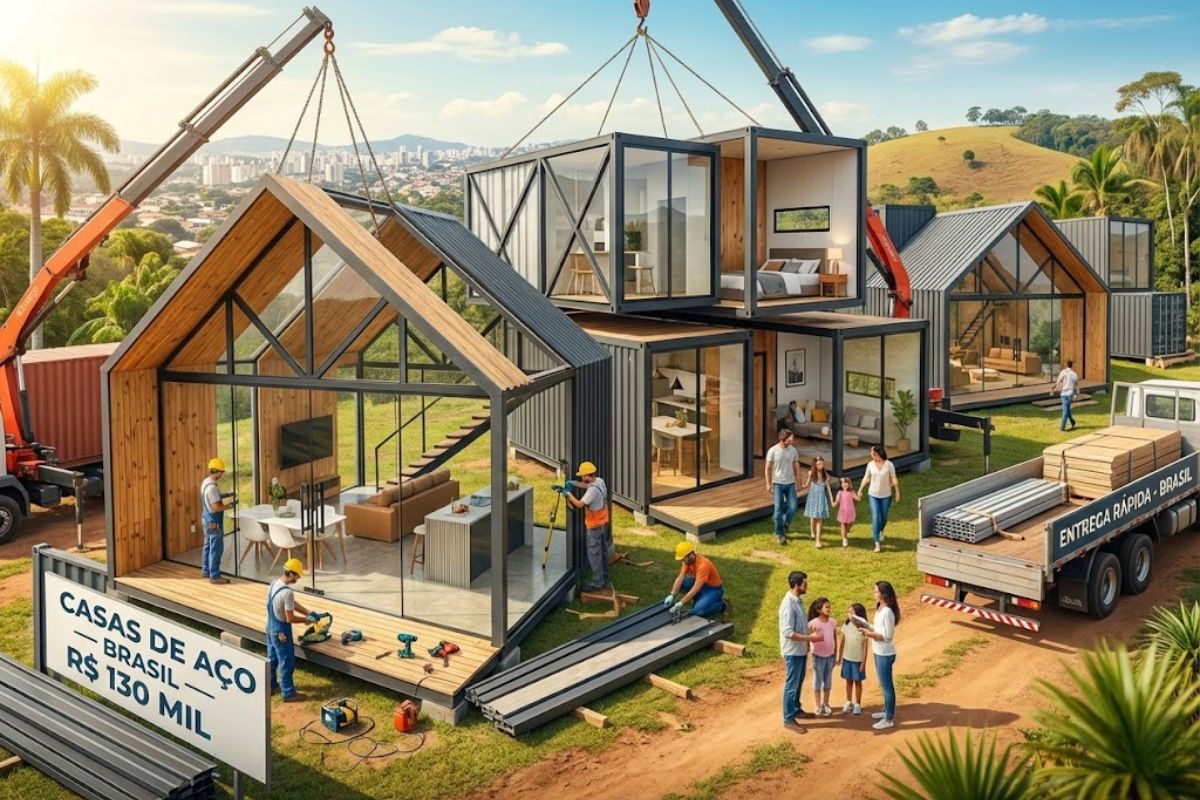
For Sale on Mercado Livre Starting at R$ 120 Thousand, Prefabricated Steel Houses Gain Ground as a Compact and Customizable Alternative, with Integrated Kitchen and Living Room and Models of Up to Three Bedrooms. They Promise Transportation, Installation, and Lower Costs, but Depend on Municipal Regulations to Come to Life.
Prefabricated houses made of steel have started to emerge strongly in the Brazilian real estate market as a direct proposal for those who want to escape renting without engaging in a long, costly, and unpredictable construction. Sold on platforms like Mercado Livre, they come with an initial price of around R$ 120 thousand and attract attention for combining treated steel structure, modular design, and quick on-site installation.
While they appeal with the idea of practicality and lower cost than many traditional properties, prefabricated houses also raise a question before the first screw is even turned: what does the city allow. In several cities, municipal rules and regularization requirements can determine whether the project becomes a real house or remains a promise, even when the proposal seems technically ready to be assembled.
Why Prefabricated Houses Have Become a Topic in Brazil Now
The appeal of prefabricated houses is easy to understand: they deliver the feeling of a “ready property” without requiring the classic path of foundation, masonry, months of construction, and costs that only increase as time goes on.
-
A megaproject worth R$ 89 billion is advancing in Iraq and promises to change the game in global trade by creating a new corridor between Asia and Europe, reducing traditional routes and repositioning the country as a logistics powerhouse.

-
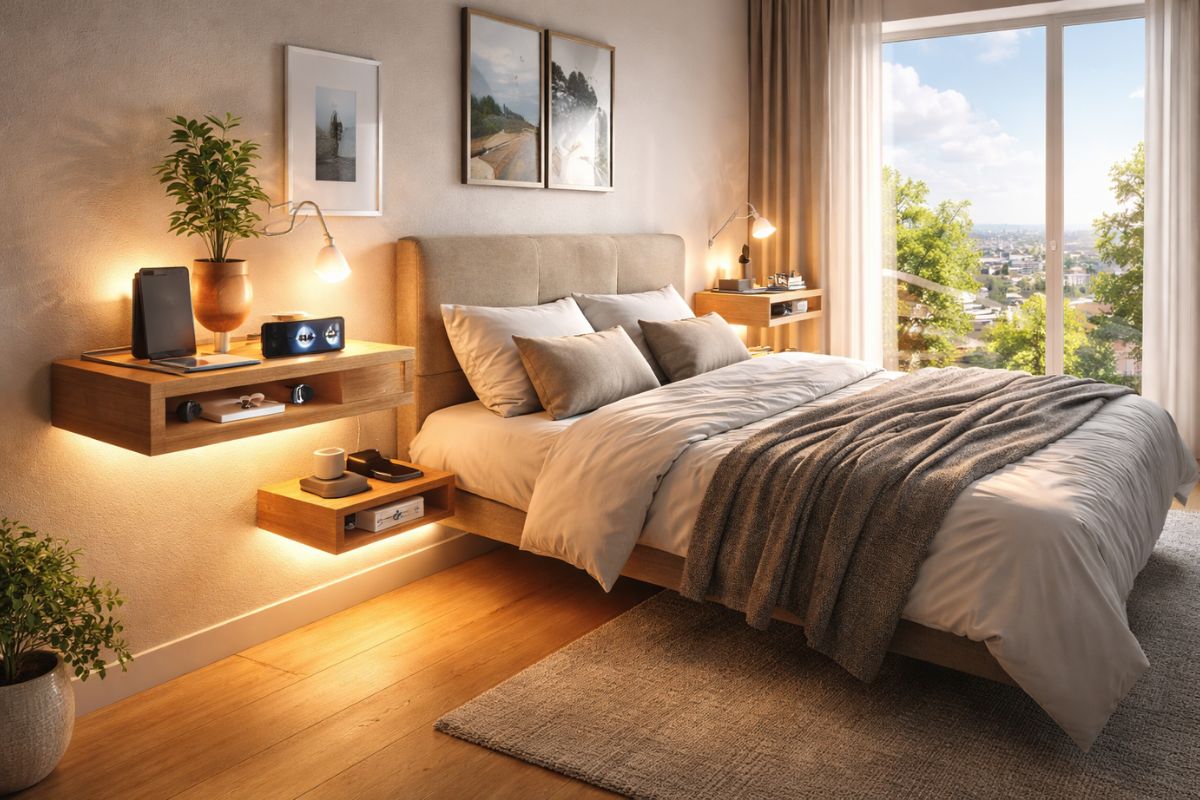
Goodbye bedside table: floating shelves become a trend in 2026 by freeing up space in the bedroom, improving circulation, bringing visual lightness, and integrating technology without taking up floor space.
-
Israel, Greece, and Cyprus signed an agreement in 2020 to transport gas from the Mediterranean to Europe via a 1,872 km pipeline, but Turkey claimed sovereignty over part of the maritime route, and the project never materialized.

-
Israel, Greece, and Cyprus signed an agreement in 2020 to transport gas from the Mediterranean to Europe via a 1,872 km pipeline, but Turkey claimed sovereignty over part of the maritime route, and the project never materialized.

When the advertised price is below R$ 130 thousand, the comparison with the traditional market happens automatically, especially in a scenario where properties and renovations are increasingly weighing on budgets.
There is also a significant psychological factor. Escaping renting is not just a financial decision, it is a life decision.
The promise of putting the house “up” more quickly resonates with those who feel trapped by contracts, adjustments, forced moves, and long-term insecurity.
That is why these offers garner so much click-through, discussion, and so many people trying to understand if it’s “really real” and how it works.
What the Prefabricated Steel House Is Like and What the Material Changes in Practice
The houses advertised as prefabricated use treated steel as a structural base, a central point of the proposal.
The durability message is tied to two ideas that the public easily understands: climate resistance and corrosion protection.
In other words, the material is presented as something made to withstand environmental conditions without “rotting,” without relying on the logic of brick and cement, and without easily succumbing to wear from moisture and time.
The modular format acts as a complement.
Instead of a construction that “grows” slowly on the plot, the logic is of pieces and modules that can be efficiently transported and assembled.
This not only speeds up the process but also changes the way of thinking about the property: instead of “construction,” the promise is “installation.”
Size, Layout, and the Logic of Compact Space
The prefabricated houses mentioned have approximate measurements of 11.7 meters long by about 6 meters wide, a size that reinforces the compact and functional profile.
The focus is not on excess, but on utilization.
Therefore, the proposal insists on the idea of an efficient arrangement of rooms, with practical and comfortable environments within a relatively tight space.
In popular models, the layout is usually presented with integrated kitchen and living room, as well as options that can reach up to three bedrooms.
This detail is what makes many people stop: it is not just an “adapted container” for one person, but something that seeks to cater to a family routine or, at the very least, a house that doesn’t force the resident to live in a single room with everything mixed together.
Quick Assembly and the Promise of Reducing Costs Without “Losing Comfort”
The word driving this trend is speed.
The argument is that quick installation reduces the total time of the project and, consequently, reduces expenses that normally arise when construction drags on: more labor days, more steps, more rework, more unforeseen issues.
The narrative is straightforward: less time assembling means less money “leaking” in the process.
Another associated promise is that cost savings don’t come at the expense of quality.
The prefabricated houses are presented as an option that can be accessible without sacrificing comfort, precisely because the design is inherently focused on functionality and because the treated steel structure is marketed as synonymous with robustness.
Still, it’s worth noting the limits of what can be confidently asserted: what is certain is the promise of speed and cost-effectiveness, not a “miracle” that solves all details on its own.
Expectations are high, and this increases the buyer’s demand for a clear understanding of what is included and how the property will be installed on the plot.
Customization: The Point That Transforms the Same House Into Multiple Uses
One of the main attractions repeated in this proposal is the possibility to customize the interior according to needs.
This changes the game because the same model can serve very different profiles: those seeking permanent housing, those considering a vacation home, and those seeing the unit as temporary lodging.
Customization also serves as a response to a common fear in modular solutions: the concern about an “inflexible” house.
By presenting the interior as adjustable, prefabricated houses aim to position themselves not as a unique product, but as a base that can be organized internally according to what each person considers essential.
The Decisive Point: Municipal Regulations and the Question That No One Ignores
Even with an attractive price, durable material, and the message of quick assembly, there is a filter that can determine everything: the municipal installation regulations.
This is the type of detail that doesn’t show up in the ad photo but becomes apparent in real life when the buyer tries to place the house on the plot and legalize the residence.
The discussion is not small. In many municipalities, what matters is the local rule on construction, zoning, approval requirements, and urban standards.
That is why prefabricated houses raise questions and create a clear tension: technology and the product seem to move faster than bureaucracy and than the adaptation of rules to new forms of housing.
In the end, what makes sense for the consumer is simple: it’s not enough to be able to buy.
It is necessary to be able to install, regularize, and use without turning into a continuous headache.
Has Traditional Construction Lost Meaning, or Has It Just Gained a Strong Competitor?
The question hanging in the air is not just about price. It’s about a mental model.
When a steel, modular, compact house appears, with the promise of quick installation and up to three bedrooms, the comparison with the traditional path becomes inevitable. For many, traditional construction starts to seem slow, cumbersome, and difficult to control.
At the same time, traditional construction still carries strong cultural value: a sense of permanence, “a house built the right way,” a connection with the land and with urban standards.
What prefabricated houses do is open a real duel between two logics: the logic of property as a long-term project and the logic of property as a modular solution, designed to be placed in place.
And it is exactly this dispute that explains why so many people are looking at this as if it were a sign of change.
If you could install one of these prefabricated houses on your plot with everything regularized, would you make that exchange to escape renting, or would you still trust traditional construction more?










-

-

-

-

-

19 pessoas reagiram a isso.