





 Portuguese
  English
  Spanish
  4 min of reading
  0 comments


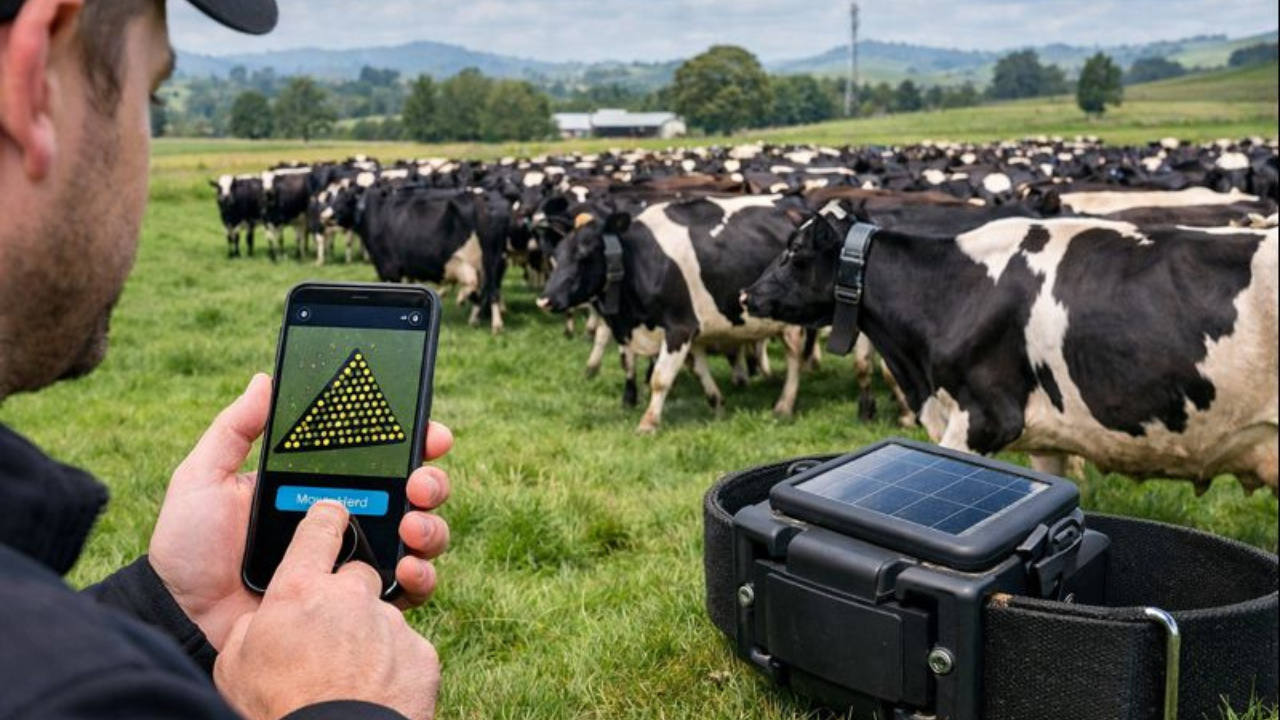
Virtual Fences for Cattle Unite Agritechnology, Smart Livestock, and Animal Welfare to Increase Productivity in Agriculture.
The adoption of virtual fences for cattle is revolutionizing the way herds are managed by integrating agritechnology, smart livestock, animal welfare, and innovation in agriculture.
Developed by the New Zealand company Halter, the technology uses smart collars connected to a mobile app to remotely guide cows, reducing operational costs, saving time, and increasing farm productivity.
Thus, the solution has been scaling from New Zealand to the United States and is now targeting strategic markets like Brazil, Argentina, and Europe, precisely at a time when agriculture seeks efficiency and sustainability.
-
They said no to 26 million dollars and would do it all over again: mother and daughter from Kentucky reject a million-dollar offer from a mysterious company that wants to build the largest data center in the state on more than 2,000 acres of rural land.

-
While corn requires rain and is expensive, sorghum produces almost the same volume per hectare at a cost up to 80% lower and uses less water, and it is revolutionizing dairy farming in the Triângulo Mineiro, where producers save hundreds of reais per hectare.

-
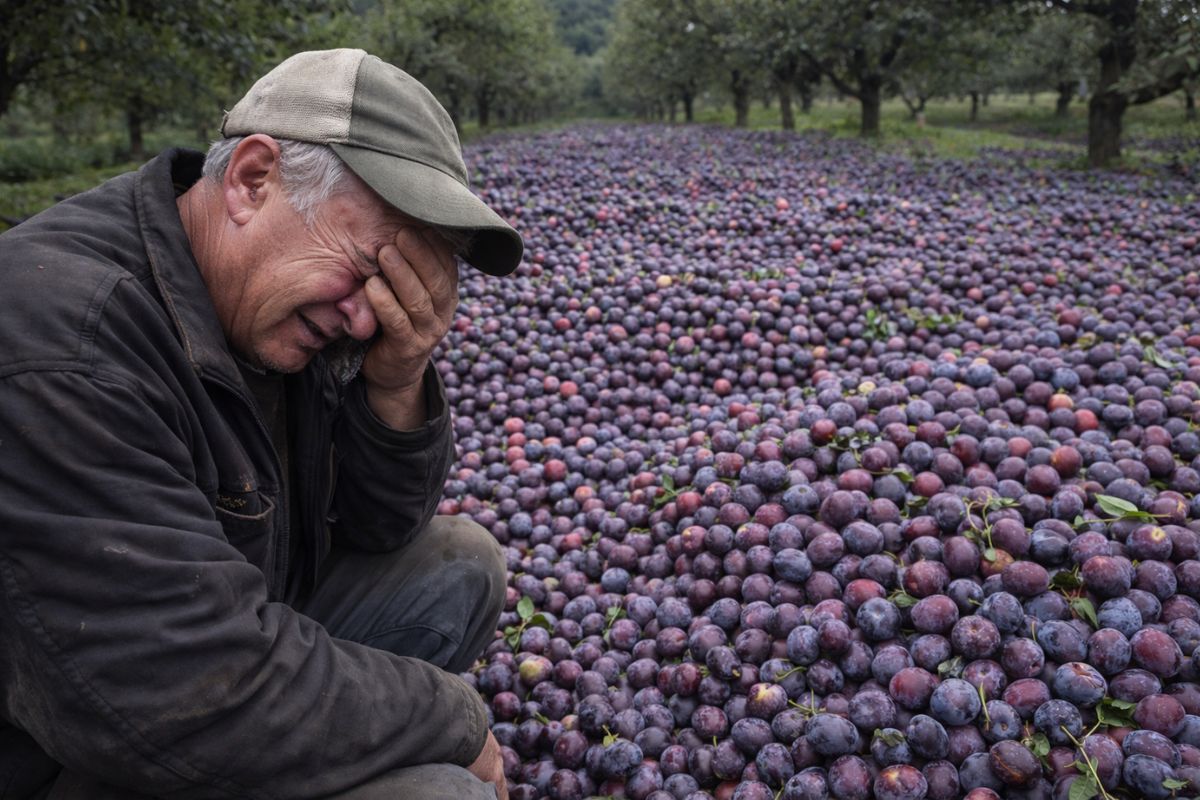
A rural producer from Urubici cries as he shows 50 tons of plums thrown on the ground because no one wanted to buy them, and in desperation, he records a video asking anyone to come to the property to pick the fruits before they rot.
-
Unable to pass through Hormuz, Brazil activated a plan B that uses Turkey as a gateway to the Middle East: the route through Gibraltar and the Mediterranean is longer and more expensive but ensures that chicken, beef, and corn continue to reach Arab markets.


How Virtual Fences for Cattle Work in Practice
Unlike traditional physical fences, virtual fences for cattle operate through sound signals and vibrations sent to the collars worn by the animals.
Therefore, the rancher sets the limits of the pasture and available grazing areas through the app.
As the animal approaches a restricted area, the alerts increase in intensity.
In specific cases, a low-energy electric pulse — significantly less than that of conventional fences — reinforces learning. According to the company, training takes an average of two to three days.
Agritech That Reduces Work and Increases Efficiency
According to Craig Piggott, founder and CEO of Halter, the technology allows for a weekly saving of between 20 and 40 hours of work on rural properties.
In an interview with Forbes Asia, he summarizes the company’s ambition:
“Our centerpiece is to build the category to a point where an individual would simply not dream of managing a farm or ranch without some form of virtual fencing product.”
This efficiency explains why Halter’s agritechnology is already present in over 1,300 dairy and beef farms, managing about 650,000 animals across three countries.
Smart Livestock Based on Data and Algorithms
In addition to controlling movement, the platform continuously collects data on herd health, such as body temperature and chewing patterns.
This information feeds proprietary machine learning algorithms, nicknamed by the company as “cowgorithms.”
Thus, smart livestock begins to anticipate diseases, identify ideal breeding periods, and improve feeding planning.
The result is more precise, preventive, and economical management.
Animal Welfare at the Center of Innovation
One of the most sensitive points in the use of technology in livestock is animal welfare.
In this aspect, Halter claims to have developed the system based on field tests and close monitoring of producers.
According to the company, the predominant use of audio and vibration reduces herd stress, while the elimination of physical fences decreases injury risks.
For many producers, predictability in management also improves animal behavior.
International Expansion and Focus on the United States
Thus, the company’s growth strategy has intensified since opening an office in Colorado.
Since then, over 200 American producers across 22 states have adopted virtual fences for cattle, totaling over 39,000 kilometers virtually fenced.
Halter estimates that its clients in the U.S. have saved around US$ 220 million in costs associated with traditional fencing.
In August, the company also announced a partnership with the U.S. Bureau of Land Management, supported by US$ 2.7 million in public funding.
Innovation in Agriculture Attracts Global Investors
The advancement of innovation in agriculture has also caught the attention of the financial market.
Therefore, in June, Halter raised US$ 100 million in a Series D round led by BOND, reaching a valuation of US$ 1 billion and becoming one of the rare unicorns in New Zealand.
For Daegwon Chae, partner at BOND, agriculture is still a sector underexplored by technology:
“Agriculture and livestock are actually one of those gigantic markets just waiting for innovation.”
Revenue, Competition, and Competitive Advantage
Official data shows that Halter’s subscription revenue in New Zealand grew 45% in the last fiscal year.
Thus, despite competition from companies like Nofence, Gallagher, and Vence, analysts highlight the technical advantage of the platform.
According to Samantha Wong of Blackbird Ventures:
“Their technical advantage is now so far ahead of the competition that the game belongs to Halter.”
What This Means for the Future of Livestock
With agriculture occupying about half of the planet’s habitable land, solutions that increase productivity without expanding areas are increasingly strategic.
So, in this context, virtual fences for cattle, combined with agritechnology, tend to consolidate as a key piece of smart livestock, balancing economic efficiency, animal welfare, and sustainability.









-

-

-

-

18 pessoas reagiram a isso.