





 Portuguese
  English
  Spanish
  6 min of reading
  34 comments


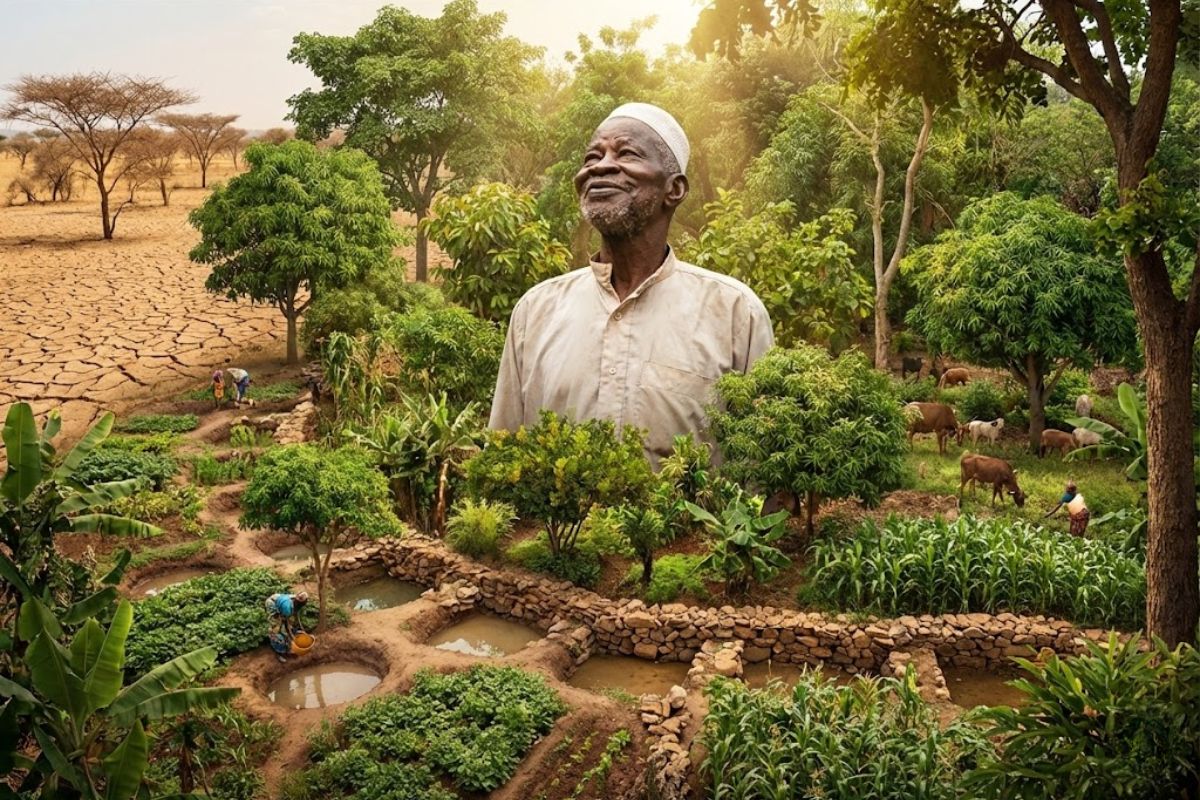


In Northern Burkina Faso, In The Yatenga Region, Farmer Yacouba Sawadogo Began Digging Zaï Pits To Retain Soil And Water In 1980. Four Decades Later, His Forest Of Nearly 40 Hectares Gathers More Than 60 Species And Inspired Land Restoration In Niger Throughout The Sahel
Farmer Yacouba Sawadogo, known as “the man who stopped the desert,” decided to confront the severe drought that hit the Sahel around 1980 and chose an unlikely path for his community in Yatenga, in northern Burkina Faso.
In lands that were once arid, degraded, and abandoned, the farmer transformed soil considered “dead” into a managed forest of nearly 40 hectares with more than 60 species of trees and shrubs, proving that indigenous knowledge, manual labor, and persistence can reverse desertification.
A Farmer On The Edge Of Drought Chooses To Return To The Village

Yacouba Sawadogo (1946-2023) did not start as a global symbol. After attending a Koranic school in Mali, he returned to Yatenga and worked as a seller in a local market.
-
A couple buys an old chalet, breaks the kitchen floor for renovation, and finds over a thousand coins of gold and silver hidden since the English Civil War over 4 centuries ago.
-
Rigid bags with their days numbered: new trend prioritizes comfort in 2026.

-
YouTuber creates an excavator equipped with a giant 4.5-meter sword to challenge his brother to a rematch, and the invention quickly goes viral on social media.

-
The U.S. Army surprises the world by presenting the UH-60MX Black Hawk helicopter capable of flying without pilots, controlled by a tablet, featuring the MATRIX system, smart sensors, and full autonomy in real combat and rescue missions.


The turning point came when the severe droughts in the region around 1980 decimated agricultural production and pushed entire communities into hunger and migration.
Many people left rural areas for cities.
The farmer chose the opposite path: he returned from the city to his home village determined to restore the land.
The goal was direct and difficult at the same time: to cultivate what already seemed impossible and to make exhausted soil fertile again, without relying on external solutions or quick promises.
The Zaï Technique Becomes A Tool For Survival And Regeneration

The foundation of the farmer’s success was the experimentation with traditional planting pits for soil, water, and biomass retention, known as zaï in the local language.
The logic is simple in concept, demanding in execution: digging holes at regular intervals to capture rainwater and concentrate fertility where the plant truly needs it.
In practice, the farmer did not merely repeat an ancient method. He refined the zaï over the years to increase crop productivity and create conditions for the establishment of trees in degraded areas.
The result was a gradual, cumulative, and visible change, until the “void” began to gain shade, roots, vegetation cover, and ultimately, diversity.
Called Crazy, Burned, And Yet Persistent
The beginning was marked by local resistance. Sawadogo was called “crazy” for breaking with traditional practices of zaï as they were applied and for insisting on planting trees where many had already given up.
In one of the most critical moments, his forest was set on fire.
Still, he did not retreat. The farmer’s persistence became a central part of the method, because the regeneration he sought was not immediate.
Over time, hostility turned into curiosity and then admiration. The forest that no one believed could exist began to be seen as concrete proof that the land could react.
What The Farmer Did In Practice To “Stop The Desert”
The good practices developed by Sawadogo combined planting, soil and water conservation, and encouraging wildlife. These actions were repeated for years, requiring much manual labor and patience.
Planting And Agroforestry
- He dug zaï holes at regular intervals.
- He made larger holes for larger species, like the baobab.
- He filled the pits with organic fertilizer or compost before planting seeds.
- He cultivated millet, sorghum, and corn alongside trees, applying an agroforestry model adapted to the Sahel.
Soil And Water Conservation
- He built stone dikes to slow down rain runoff, helping the soil absorb more water and retain nutrients.
- He also constructed a small reservoir in arid land within the forest to store water.
Wildlife, Seeds, And Pollination
- He placed water pots in the trees for birds and troughs on the ground for other animals. The birds brought seeds from other places, speeding up diversity.
- He kept bees for honey production, with the added effect of cross-pollination.
A Forest Of Nearly 40 Hectares With More Than 60 Species In The Sahel
Four decades after the start of this turnaround, the area created by the farmer reached nearly 40 hectares and now includes more than 60 species of trees and shrubs.
Besides the vegetation, the space developed a variety of wildlife, reinforcing the idea that it was not just about “planting trees,” but about rebuilding an ecological system.
The forest became one of the most diverse planted and managed by a farmer in the Sahel, precisely because it stemmed from the combination of local technique, continuous management, and adaptation to the extreme conditions of a territory marked by desertification.
The Cascade Effect: From Farmer To Farmer, Village By Village
Sawadogo was always willing to share what he learned. He trained thousands of visitors from the region and beyond, empowering farmers to regenerate their own lands.
The impact was not restricted to the property: tens of thousands of degraded hectares were restored and became productive again in Burkina Faso and Niger.
One of the most important strategies began in 1984, when he started organizing the “zaï markets” on his land.
What began as small events gradually grew until each market day gathered representatives from over 100 villages. The dynamics occurred twice a year:
- After the harvest, farmers brought samples of the varieties grown in their zaï. Sawadogo stored the seeds in a seed bank on the property.
- Just before the rainy season, farmers returned to select species and varieties to plant, considering the best growing conditions.
Even in his final years, the farmer received visitors from Burkina Faso and abroad, including farmers, researchers, policymakers, and journalists.
He also continued to hold training sessions, especially for young people, in “master classes on zaï.”
Water, Food, And Less Conflict: What Changes When The Soil Starts Working Again
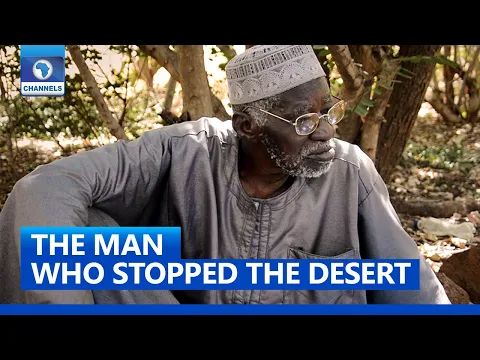

The farmers who adopted Sawadogo’s techniques often achieve food security because zaï conserves rainwater and improves soil fertility.
Trees planted alongside crops enrich the soil, produce fodder for livestock, and open business opportunities, such as beekeeping.
Even in dry years, trees in agricultural lands provide chain benefits: they retain water, protect against erosion, block direct sunlight, and reduce wind speed.
They also provide firewood, fodder, nutrition, medicine, timber, and ecosystem services like pollination.
In practice, regeneration reduces vulnerability and increases resilience, helping farmers adapt to climate change, reduce rural poverty, and prevent local conflicts related to water and natural resources.
When Zaï Recharges Aquifers And Raises The Well
The zaï system collects and concentrates rainwater and surface runoff. Among the observed results, there are examples of recharging local aquifers.
In some cases, water levels in wells increased by 5 to 17 meters.
This changed the daily life of villages that previously faced severe drinking water issues for eight months of the year.
With recovery, they began to have water in the wells throughout the year.
The farmer not only planted, but he helped reconfigure the relationship between rain, soil, and natural water storage in vulnerable regions.
Expansion To Niger And The Harsh Test Of 1990
The method also crossed borders. In 1989, 13 farmers from the Tahoua region in Niger visited Sawadogo’s fields, and upon returning, began to restore degraded lands with zaï.
The following year, 1990, a new drought underscored the difference: only farmers who used zaï had a reasonable harvest.
From then on, the technique spread even further in Niger, reinforcing the idea that well-applied local knowledge can be reproduced on a regional scale.
International Recognition And The Story That Became A Documentary
Sawadogo’s journey gained international attention over time.
In 2010, his story and achievements became the subject of the documentary “The Man Who Stopped The Desert,” which received numerous awards in 2011.
In 2013, he was honored by the United Nations Convention to Combat Desertification as one of its first Global Champions of Drylands. In 2014, journalist Andrea Jeska published a book about his achievements.
His presence at international events also marked this recognition, including participation in conferences of the Convention to Combat Desertification in South Korea in 2011 and in Namibia in 2013.
The Farmer Who Was Seen As A Problem Became A Reference, and his phrase summarizes the logic of the work: to create “seeds of wealth” for the future, not just for the present.
Do you think techniques like zaï should be taught and adopted on a large scale in other dry regions of the world, including Brazil?







Essa técnica deveria ser ensinada em larga escala nas escolas publicas, privadas, e atraves de Ong’s e Instituições ambientalistas. Esse sabio agricultor desafiou os **** e negativistas da sua época, colocando em prática aquilo que ele acreditava ser funcional. E ao final, o sucesso chegou com toda a força.
Espetacular ! Um homem sábio e com visão adiante do seu tempo, que deixou um grande legado para todos nós.
Com certeza