





 Portuguese
  English
  Spanish
  6 min of reading
  0 comments


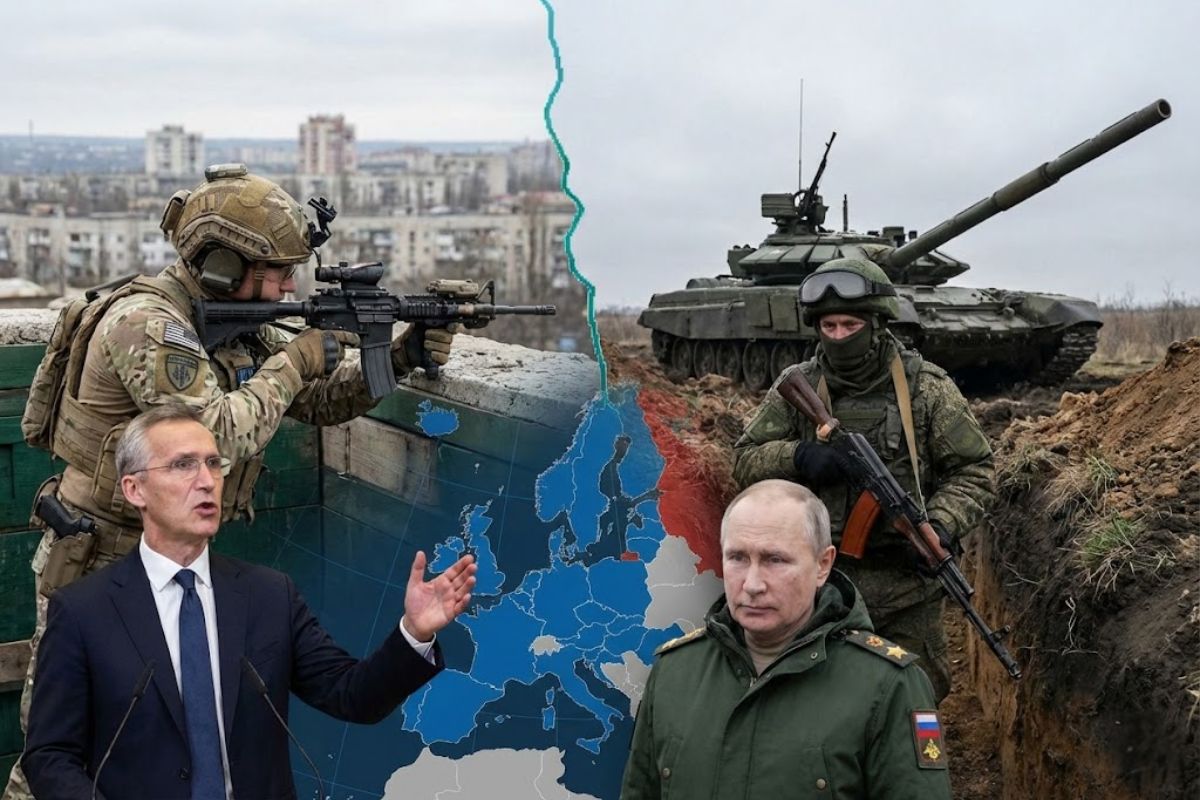
Speaking at a conference in Germany on December 11, 2025, NATO chief Mark Rutte said that Europe is the next target of Russia, urged for greater military urgency, and responded to recent threats from Vladimir Putin by repeating that the alliance must prepare for a long war.
The NATO chief’s warning was accompanied by a direct comparison to 20th-century conflicts, in a message to governments that, according to him, underestimate the risk of escalation. At the same time, the Kremlin’s rhetoric has hardened: Putin declared earlier this month that if Europe wants war, Russia is ready now, while also rejecting adjustments to the peace plan discussed with the United States, Ukraine, and European leaders.
The NATO Chief’s Warning About Russia’s “Next Target”

In a speech on Thursday, December 11, 2025, during the Munich Security Conference in Berlin, NATO chief Mark Rutte stated that the military alliance countries are the next target of Russia. For him, the conflict is not limited to Ukraine but has already reached Europe’s doorstep.
-
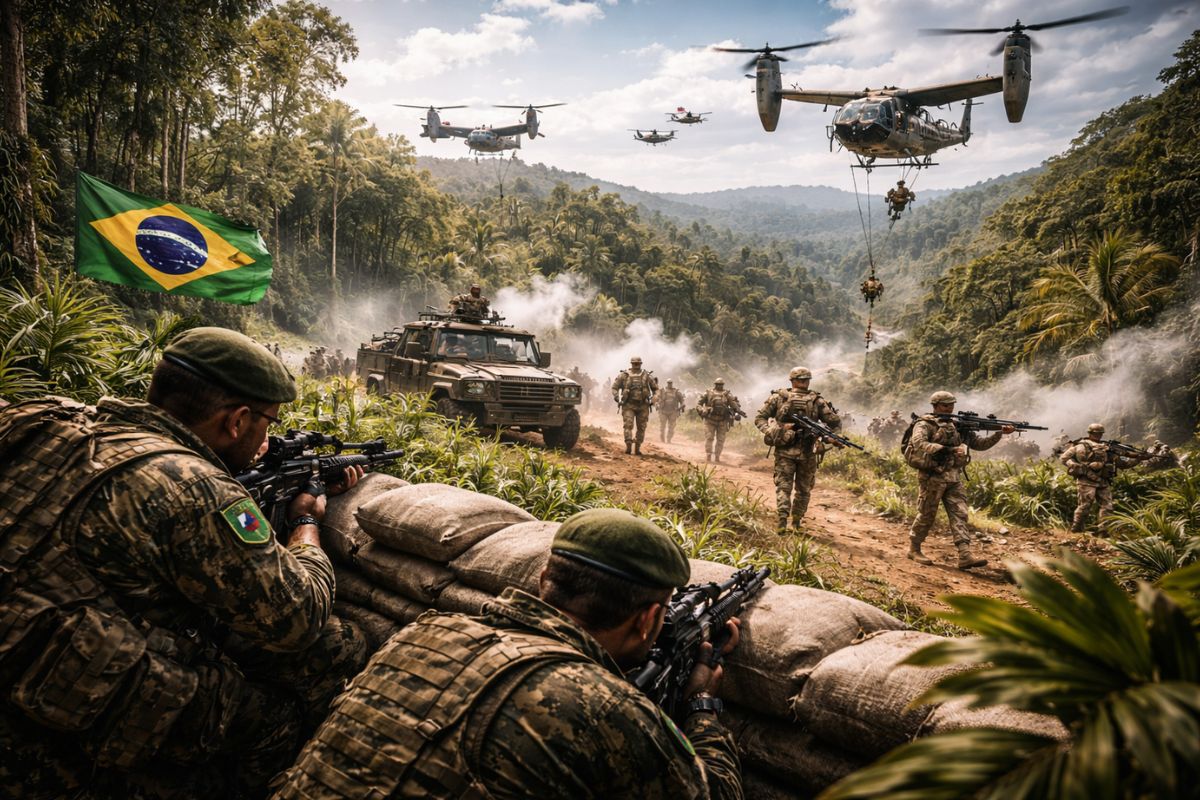
If the USA were to go to war with Brazil, Washington’s greatest fear would not be the attack itself, but facing a vast territory, prolonged resistance, and a costly, chaotic, and unpredictable occupation.
-
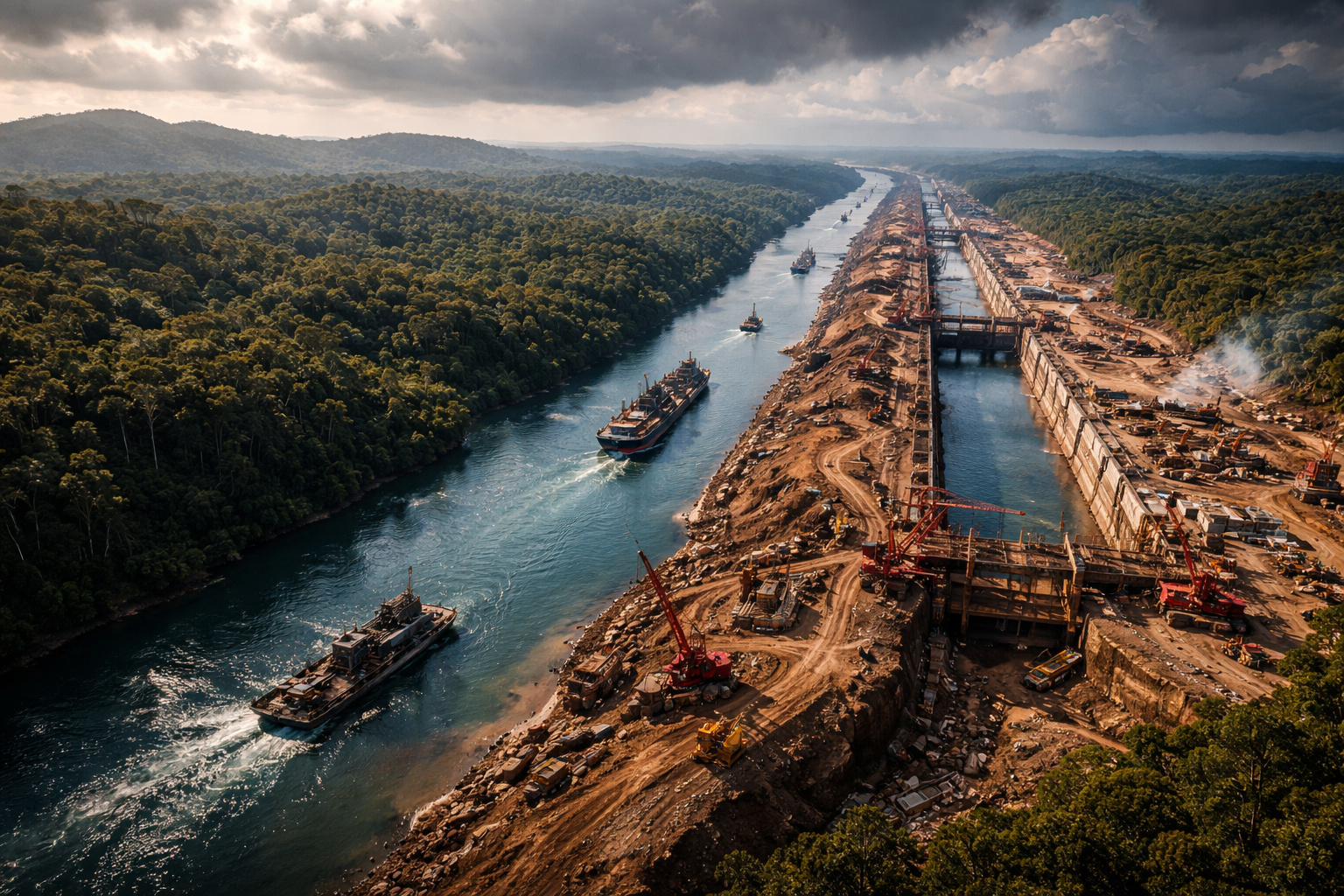
In 2013, Nicaragua sold the concession for a canal to rival Panama to a Chinese billionaire who lost 85% of his fortune, disappeared, and was declared bankrupt. Now the project resurfaces with a new route, a new Chinese partner, and a cost of $64.5 billion.
-
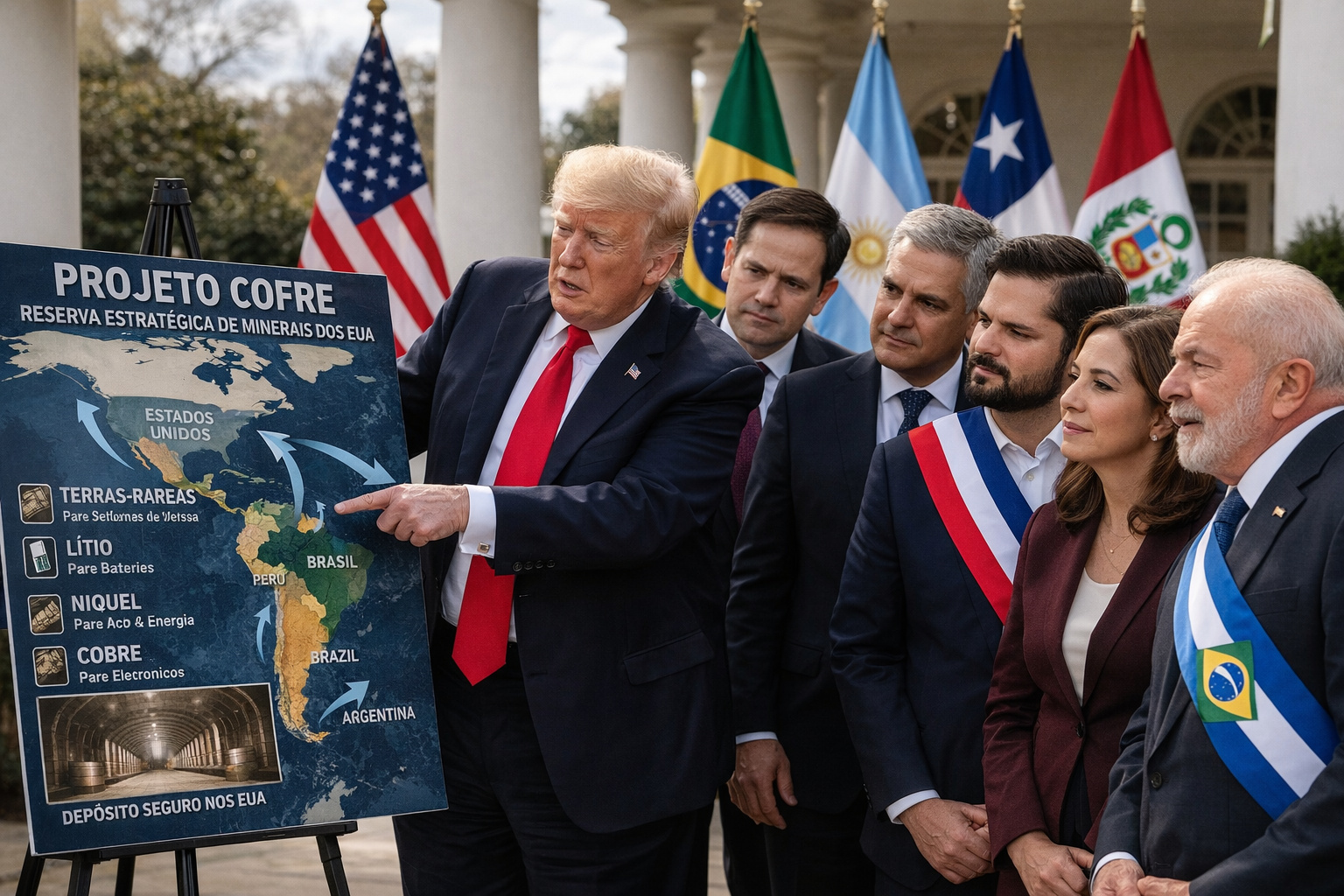
The USA announces a mysterious billion-dollar vault project to store critical minerals, but what intrigues experts is not just the plan itself, but why Latin America, including Brazil, has entered the center of this global dispute against China.
-
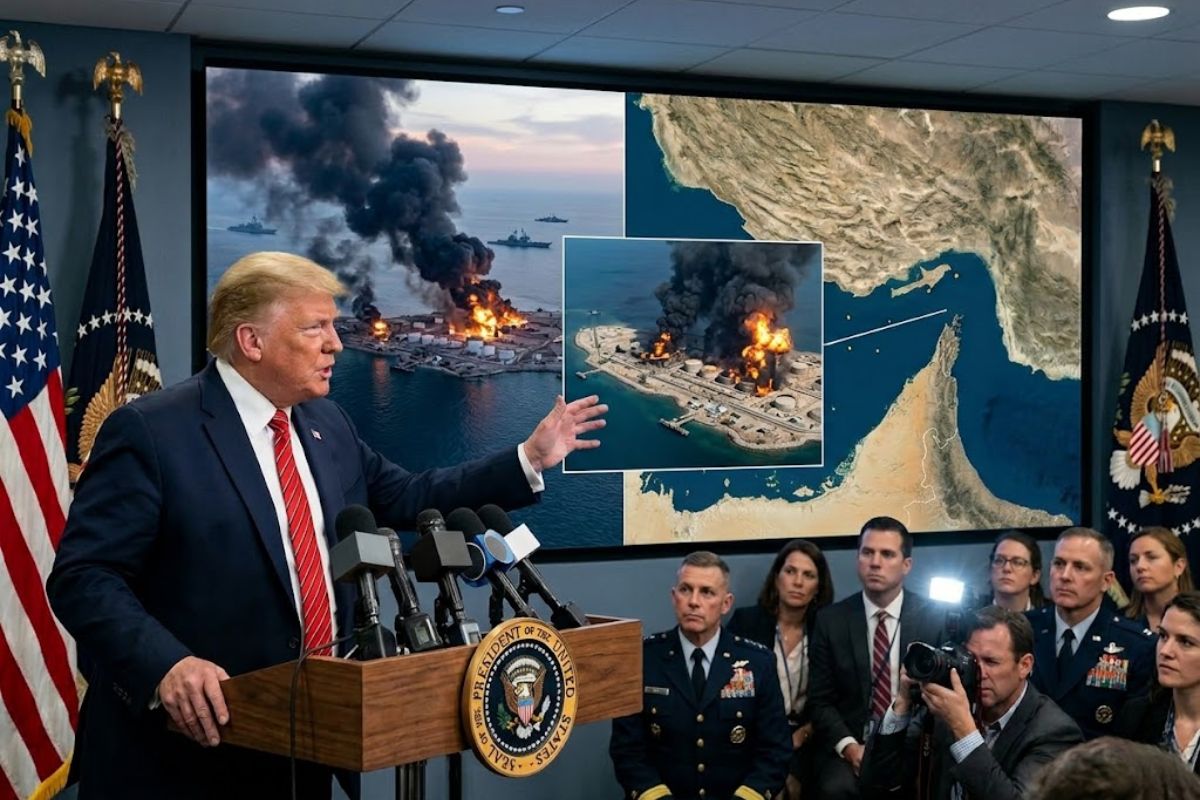
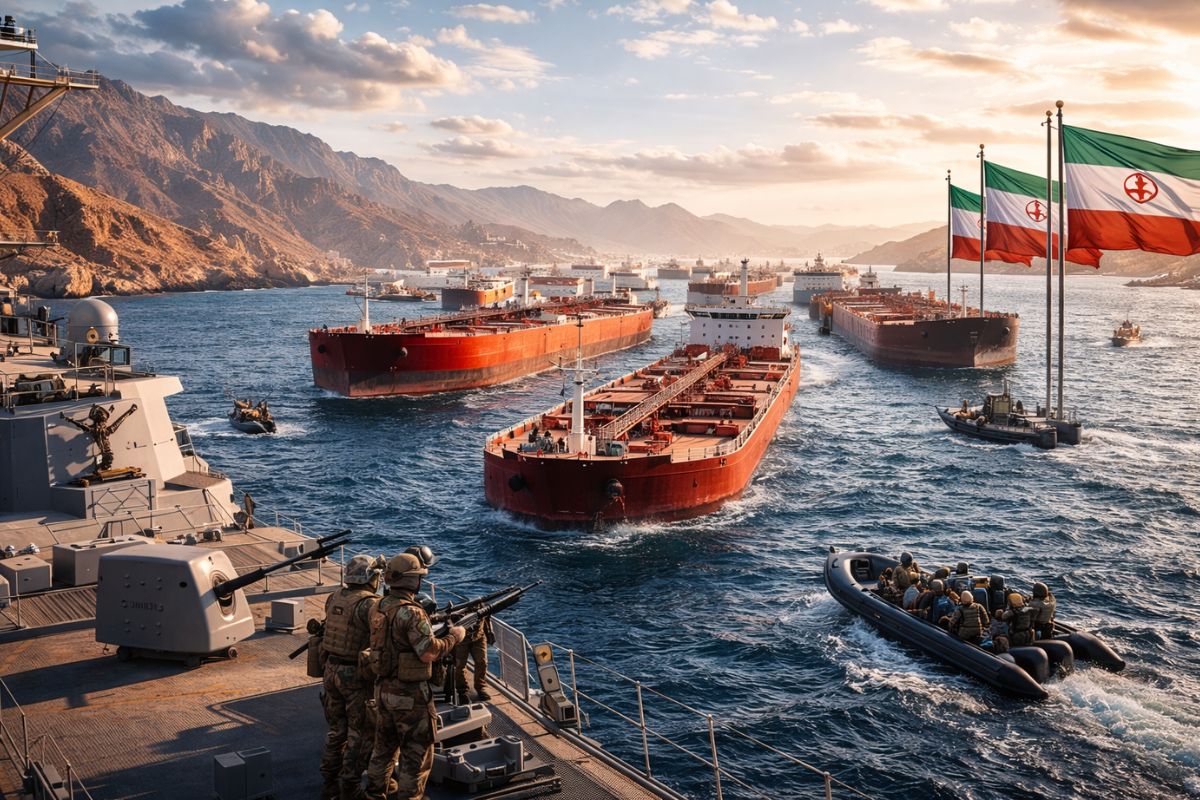
Trump Announces Bombing of U.S. Military Targets on Iranian Island Responsible for About 90% of Iran’s Oil Exports, Warns of Further Attacks if Navigation in Strategic Strait of Hormuz Is Threatened

Rutte insisted that the alliance must prepare for a war on the scale of what our grandparents faced, a clear reference to the two world wars.
According to the NATO chief, many governments remain “calmly complacent,” failing to feel the urgency of the Russian threat, as if time were on the West’s side, which he called a dangerous illusion.
Reinforcing the message, Rutte stated that the conflict is at Europe’s doorstep and that Russia has brought war back to the continent.
The NATO chief demanded political and budgetary decisions commensurate with a prolonged tension scenario, focusing on enhancing military capabilities, logistics, and troop readiness.
Comparison With Our Grandparents’ Wars and Sense of Urgency

By evoking the scale of the wars experienced by “our grandparents,” the NATO chief sought to frame the Russian threat in a historical context that goes beyond localized clashes.
The implicit message is that Europe must abandon the notion that the war in Ukraine is a distant conflict, limited to the eastern part of the continent.
Rutte highlighted that many allies continue to believe that time will work against Moscow, whether due to economic wear or diplomatic isolation.
For the NATO chief, this calculation ignores the combination of the resilience of the Russian military apparatus, support from partners like China and North Korea, and Moscow’s ability to maintain pressure in multiple theaters, including through hybrid warfare.
According to the alliance’s military command, NATO is already discussing responses to cyberattacks, sabotage, disinformation operations, and drone incidents associated with Russia.
In a recent statement, the NATO military commander even mentioned the possibility of “preventive attacks” against Russian targets to repudiate hybrid actions on European soil, a formulation that angered the Kremlin and further escalated the tone of the dispute.
Putin’s Response: “If Europe Wants War, We Are Ready Now”
On the Russian side, the rhetoric has also hardened.
In early December, Vladimir Putin accused Europe of not wanting peace and stated that “if Europe wants to fight a war, we are ready now”, in a message directed directly at European governments and NATO.
The Kremlin, on the other hand, has reiterated in recent weeks that it does not intend to attack the military alliance, in an attempt to contain the perception that it seeks a direct confrontation.
The contradiction between the official denial discourse and Putin’s public threats feeds the reading within NATO that Moscow is working on two fronts: denying offensive intentions while keeping the door open for military intimidation.
The NATO chief responded to this environment by stating that relying solely on Moscow’s declarations would be a strategic mistake.
For Rutte, the combination of threats, territorial advances in Ukraine, and military cooperation with China and North Korea demands that Europe treat the possibility of escalation as real, even if not inevitable.
Peace Plan, Impasse in Negotiations, and Russian Refusal
Putin’s most recent comments occurred during a meeting in Moscow with the special envoy of the United States government, Steve Witkoff, who presented a reformulated version of the peace plan originally drafted during Donald Trump’s administration.
The American proposal envisaged, among other points, the cession of about one-fifth of Ukrainian territory to Russia, a guarantee that Kyiv would not join NATO, and a significant reduction in the personnel of the Ukrainian Armed Forces.
European leaders and the Ukrainian government considered some of the clauses unacceptable.
According to American media, there was an attempt to adjust the terms, such as reviewing the cut in Ukrainian personnel from 900,000 to 800,000 soldiers, but the idea of ceding territory remained a point of rupture.
Putin classified Ukraine’s and the European Union’s additional demands as “completely unacceptable” and indicated that if there is no agreement, Russian forces will continue advancing and taking more areas of Ukrainian territory.
In practice, the meeting ended without concrete progress, according to the Russian government itself, which admitted there was no advancement in the peace negotiations.
Occupied Territory, Russian Advance, and Pressure on NATO
On the battlefield, Russia controls more than 19% of Ukrainian territory, equivalent to about 115,600 square kilometers, according to maps aligned with Kyiv.
In 2025, the pace of the Russian advance has intensified again, in the fastest movement since 2022, although Ukrainian authorities claim that the territorial gains have come at a heavy cost to Moscow’s troops.
Putin himself recently celebrated the capture of a key city in Ukraine, a result that Kyiv contests.
Nevertheless, the situation on the front fuels the perception within NATO that Russia remains capable of sustaining a long war, which reinforces the NATO chief’s argument about the necessity of structural preparedness, not just ad-hoc responses.
For European governments, the scenario becomes more delicate as pressure for military investments, ammunition stockpiling, and reconfiguration of industrial chains increases.
The combination of fatigued public opinion, pressured budgets, and the risk of escalation with a nuclear power complicates political calculations but does not eliminate the obligation for strategic planning.
Europe Between Rearmament, Deterrence, and Risk of Direct Escalation
The European response already includes increased military spending in various countries and announcements of programs to modernize armies, navies, and air forces.
However, the NATO chief insists that current efforts are still not compatible with the scale of the challenge posed by Russia, especially if the war in Ukraine drags on for years without a negotiated solution.
At the same time, the alliance needs to calibrate its rhetoric to avoid pushing the continent towards an uncontrolled escalation.
The mention of “preventive attacks” against Russia, for example, shows how narrow the line is between deterrence and provocation, especially in an environment marked by distrust, drone incidents, and mutual accusations of hybrid warfare.
For Rutte, the key is to combine real increases in military capabilities with internal political coordination, so that NATO is not caught off guard by a potential escalation of the conflict beyond Ukraine, while also not surrendering the narrative that it seeks a direct war with Moscow.
The balance between readiness and restraint depends, however, on quick decisions in European capitals that, so far, are moving at different speeds.
In your opinion, are European countries taking the NATO chief’s warning seriously, or do they still treat the Russian threat as a distant risk, unlikely to turn into direct confrontation?






-

-

2 pessoas reagiram a isso.