





 Portuguese
  English
  Spanish
  5 min of reading
  0 comments


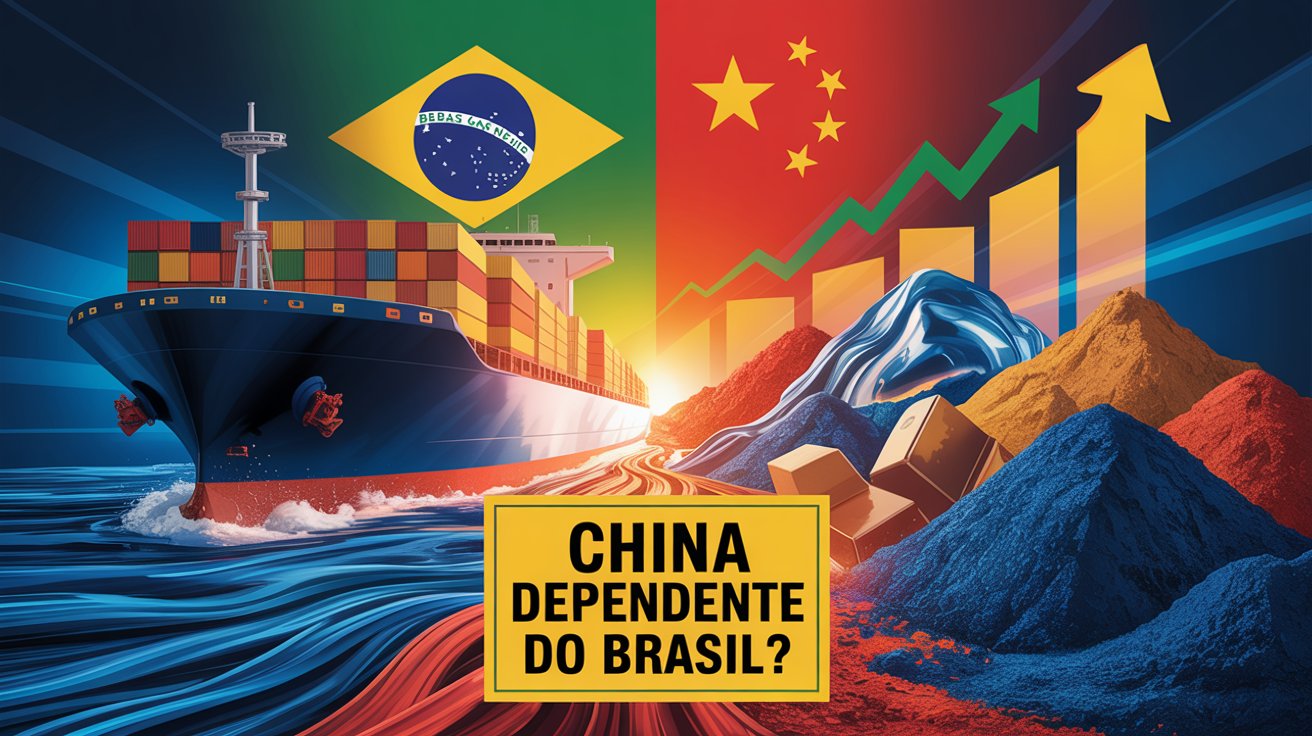
The Intensification of Tariffs Between the United States, China, and Brazil Alters the Global Flow of Commodities and Highlights New Opportunities and Challenges for the Brazilian Economy.
The intensification of the trade war between the United States and various global economies, starting in April 2025, triggered an unprecedented reconfiguration of international economic relations, especially in the Brazil-China axis.
The recent move by the United States government to impose a 50% tariff on certain Brazilian products repositioned Brazil as a strategic partner for China, according to Wang Wen, dean of the Institute of Financial Studies at Renmin University in Beijing.
According to data released by the General Administration of Customs of China (GACC), bilateral trade between Brazil and China showed significant growth in May and June 2025.
-
Unemployment rises again to 5.8% at the beginning of 2026, raising alarms about the end of temporary positions and its impact on the Brazilian job market.

-
Document organization can cut invisible costs in small businesses, a simple step that prevents waste, rework, and losses in daily operations.

-
Chinese giant worth nearly R$ 4 billion that manufactures cables for electric cars, solar energy, and robotics wants to open a factory in SC.
-
Many employers do not know, but the law guarantees domestic workers a 25% increase in salary during trips, 50% for overtime, 20% for night shifts, and 17 additional benefits that can lead to labor lawsuits if not paid.

In May, the traded volume between the two countries registered an increase of 4.5% compared to the same period in 2024.
In June, the advance was 2.4% over June of the previous year.
This increase comes after a start to the year marked by contraction when, between January and April, trade showed a decline of 18.4%.
The figures reflect the direct effects of the new tariffs imposed by Washington, especially following the so-called “Liberation Day” of then-President Donald Trump.
According to experts, Brazil gained relevance as an alternative source of agricultural and mineral supplies, especially in a scenario where China, impacted by 30% U.S. tariffs, sought to diversify suppliers.
“Since the U.S. launched its tariff war, China has increased its imports from Brazil. A large part of China’s agricultural imports from the U.S. has been replaced by Brazilian imports. In this perspective, Brazil is becoming increasingly important for China, and vice versa”, explains Wang Wen.
The decision by the United States to apply a 50% tariff on Brazilian products, formalized on July 30, 2025, left Brazil with the highest rate among the countries affected by the U.S. tariff hike, surpassing even the Chinese rate, currently at 30%.
According to the announcement, 694 Brazilian products — including orange juice and airplanes — were excluded from the main tariff hike and remain subject to a 10% rate.
However, most of the items exported by Brazil were affected by the measure.
Chinese resistance to the U.S. tariff policy became evident in the diplomatic negotiations over the past months.
At one point, the tariffs imposed by the U.S. on Chinese products reached 145%.
After intense rounds of negotiation, Beijing and Washington established a truce, but the trade clash laid bare the global contest for strategic minerals, primarily the so-called “rare earths”.
Global Contest for Rare Earths Elevates Brazil’s Importance
The rare earth sector — a group of 17 chemical elements essential for manufacturing high-tech products, such as smartphones, batteries, and military equipment — gained prominence on the Brazil-China bilateral agenda in 2025.
China remains the world’s largest producer, accounting for over 60% of global supply.
Data from the United States Geological Survey (USGS) presented in an article on the site Poder 360 indicate that China holds estimated reserves of 44 million tons of these minerals.
Brazil, in turn, despite currently producing about 10,000 times less rare earths than China, ranks as the holder of the second-largest global reserve, estimated at 21 million tons by the USGS.
The country intensified exports of these minerals to the Chinese market in the first half of 2025, establishing itself as a relevant supplier, especially in a context of tariff escalation and global search for alternatives outside the U.S.-China axis.
When questioned about possible exclusive agreements between Brazil and the United States for the sale of rare earths, Wang Wen stated that such moves do not concern the Chinese government.
“The expensive purchases of Brazilian minerals by the U.S. will raise global prices, thus increasing China’s revenue from mining rights abroad. However, the main market for Brazilian minerals remains China. Leveraging its capital, technology, and market size, China can maintain its influence by deepening its industrial ties with Brazil”, assessed the expert.
Brazil-China Trade: Agricultural, Mineral, and Technological Prominence
The advancement of the commercial relationship between Brazil and China is not limited to tariff dynamics and the rare earth market.
Brazil established itself as an important supplier of soybeans, corn, iron ore, meat, and other agricultural and mineral products, sectors positively impacted by China’s quest for diversification of partners in light of U.S. protectionism.
Brazil’s position as a leader in the supply of food and strategic minerals, combined with the relevance of its natural reserves, was emphasized by sources in the sector.
The intensification of Brazilian exports to the Chinese market, especially of rare earths, places the country in a global technological and industrial contest, increasing its weight in multilateral negotiations.
While China adopts a stance of resistance to protectionism and advocates for a multilateral agenda, Brazil seeks to leverage the new scenario to increase investments, attract capital, and strengthen its base industry.
The movements of both countries reflect profound transformations in the international economic order, driven by trade disputes between the United States, China, and other global powers.
Outlook for the Coming Months in Brazil-China Relations
Experts point out that the trend is for deepening Sino-Brazilian trade relations, with an emphasis on increasing exports of rare earths, agricultural, and industrial products.
The strengthening of these ties is expected to have direct impacts on the Brazilian economy, creating opportunities and challenges for various productive sectors.
However, the scenario remains subject to uncertainties, as U.S. tariff policy may undergo further adjustments, and potential bilateral or multilateral agreements may influence trade flow between the two largest emerging economies in the Southern Hemisphere and East Asia.
In the face of this context of global reconfiguration and disputes over strategic resources, one question remains: how can Brazil position itself sovereignly to extract the maximum benefit from the dispute between the United States and China, without compromising its autonomy and sustainable development?








-

-

-

-

-

26 pessoas reagiram a isso.