





 English
  Francês
  Alemão
  Italiano
  Japonês
  Norueguês
  Portuguese
  Spanish
  5 min of reading
  0 comments


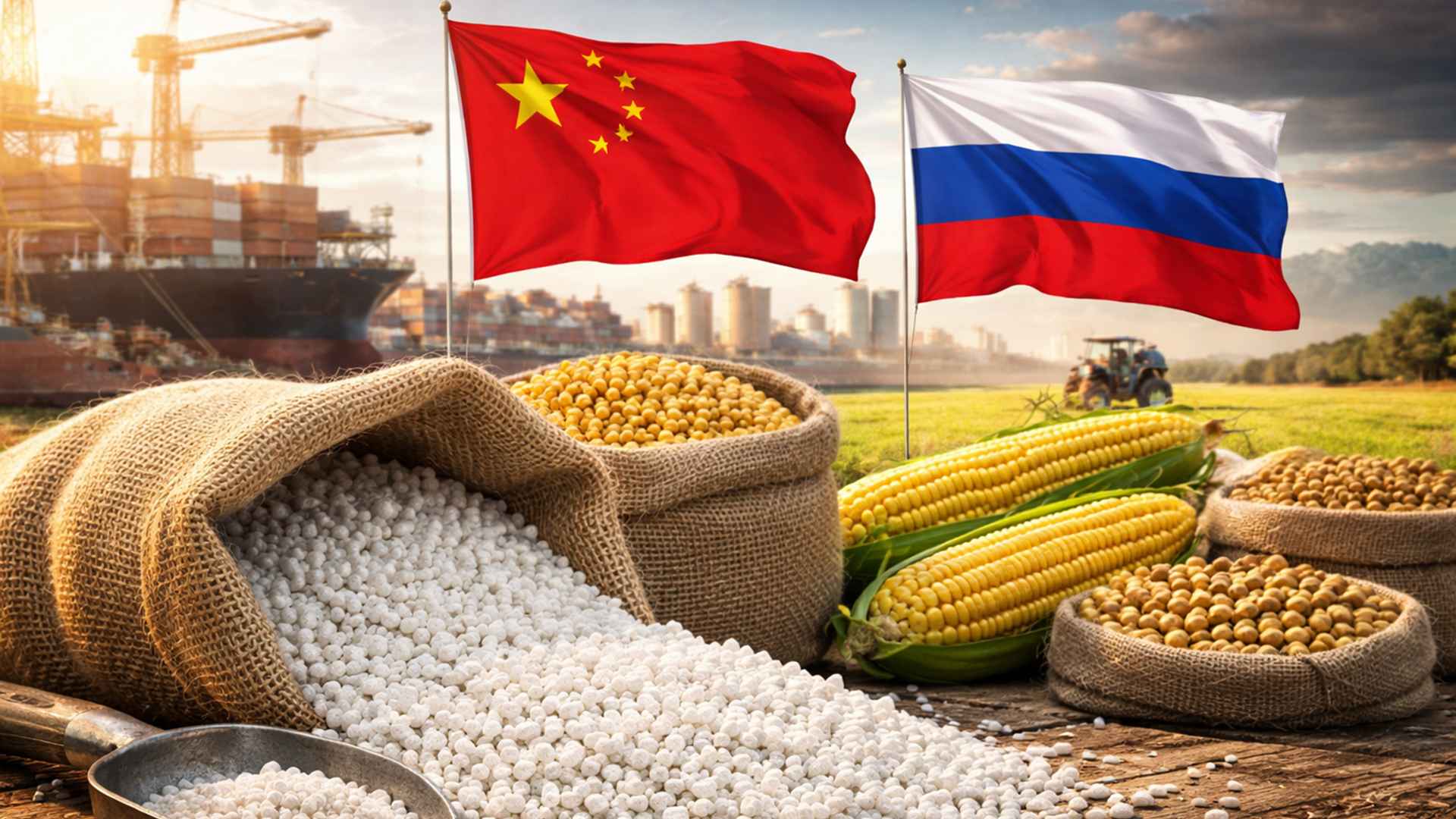
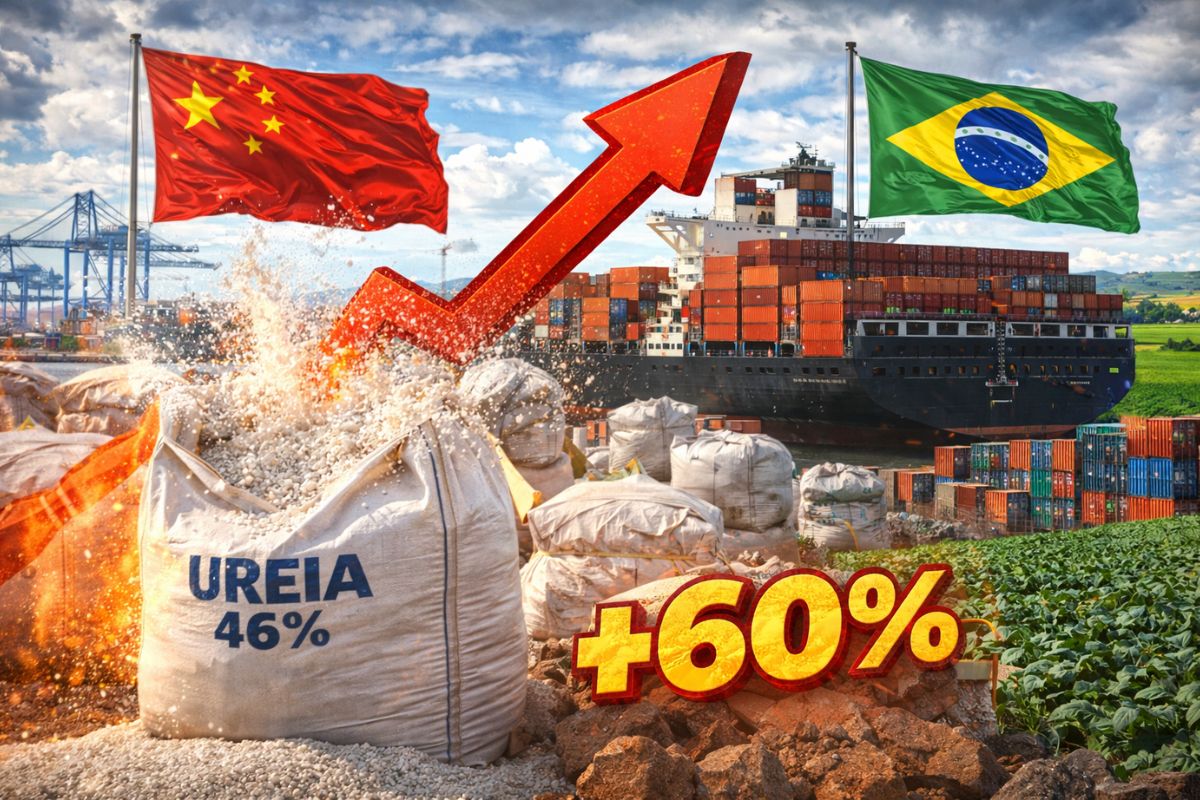
The suspension of fertilizer exports by China and Russia increases pressure on the Brazilian agribusiness, which is already facing higher costs, logistical barriers, and delays in purchases, in a scenario that raises the risk of shortages and tightens the producer’s budget
The escalation of the war in the Middle East and the restriction on fertilizer exports by major international producers have heightened concerns in the Brazilian agribusiness regarding the supply of the input. At the same time, producers are facing rising costs, logistical barriers, and falling domestic grain prices, which have led to delays in purchases.
The assessment presented is that the Brazilian fertilizer market has entered a period of strong uncertainty. In addition to the war, the closure of the Strait of Hormuz and the decision by China and Russia to prioritize their own supply have further pressured the sector.
External dependence and supply restrictions
Brazil imports fertilizers and raw materials from several key countries in this market, including Iran, Oman, Canada, Russia, and China. Some of these products are mixed in the country, but domestic production is still considered dependent on the international market.
-
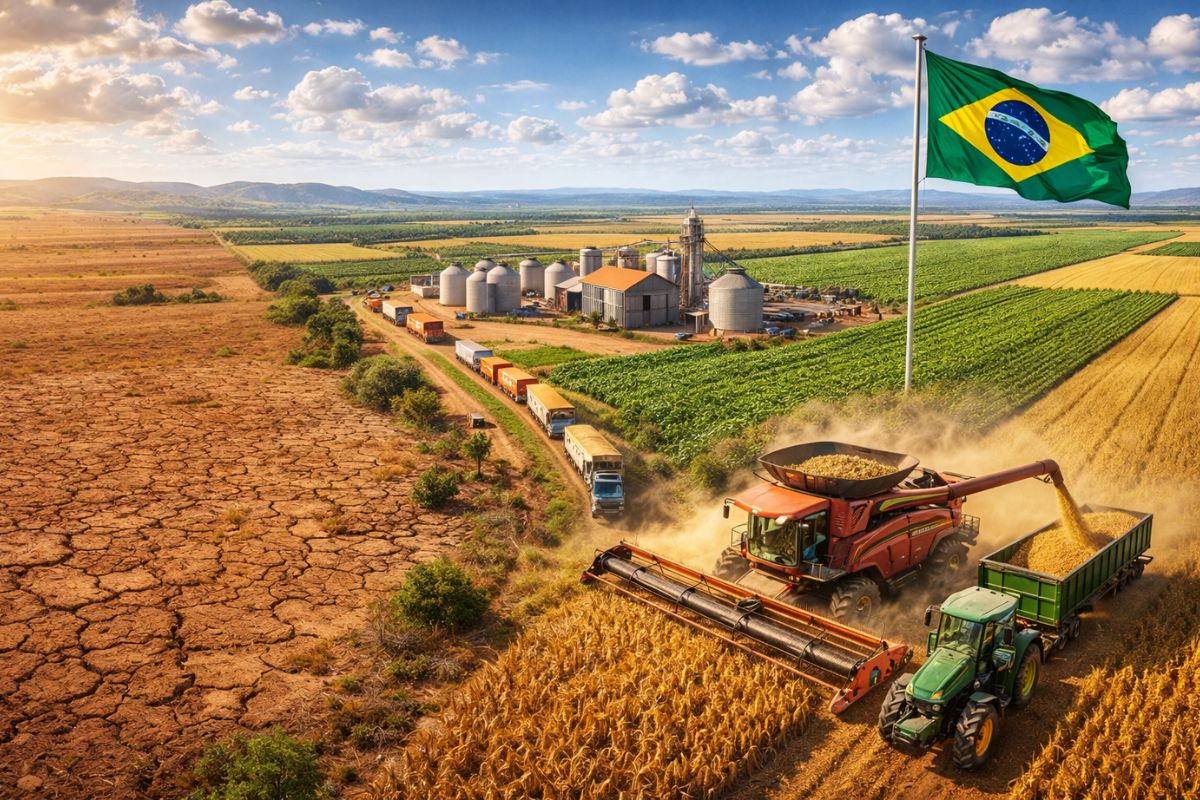
Forgotten region becomes a powerhouse in the heart of Brazil, transforming unproductive lands into fortune and making MATOPIBA the new billion-dollar agricultural empire that almost no one saw being born.
-
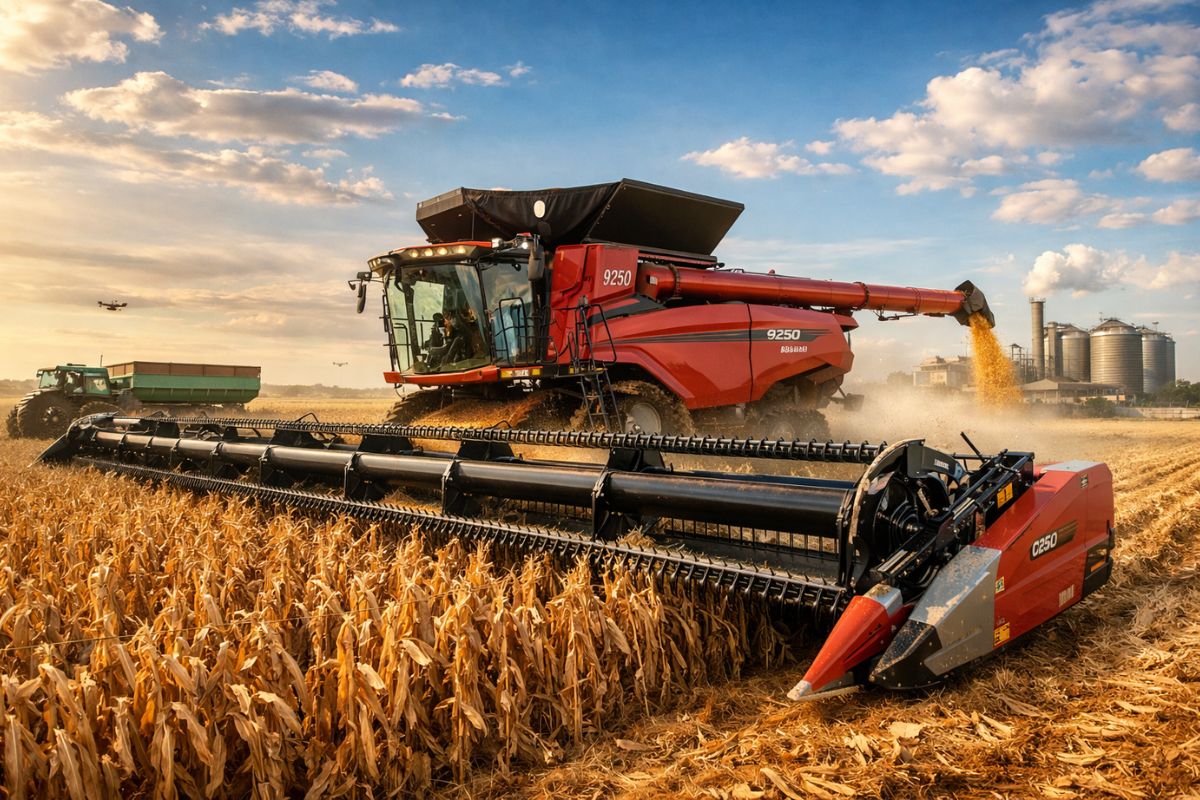
With a 775 hp engine, the world’s largest axial combine harvester arrives in Brazil, promising to harvest more in less time with advanced automation and the capacity for platforms up to 61 feet.
-
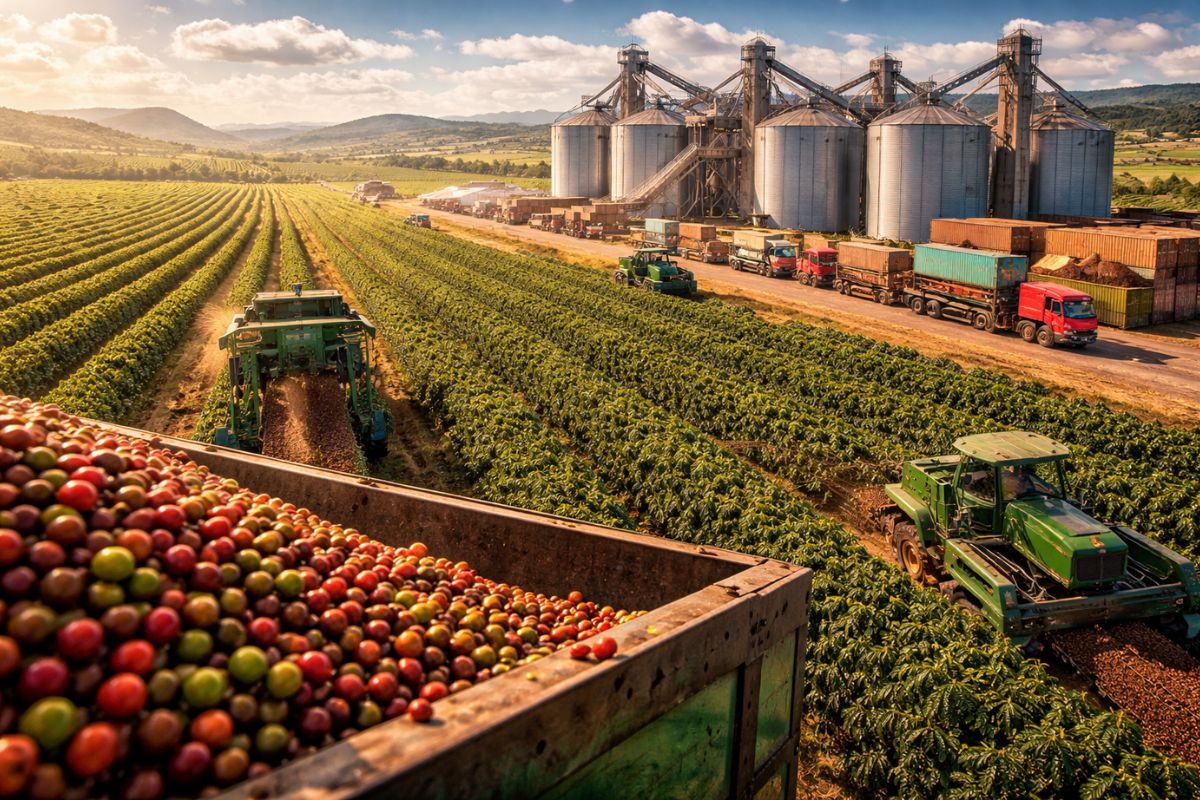
With 18 million feet, giant farms, and 2.2 million sacks per year, a mining group is building a coffee empire in Brazil with heavy mechanization, giant silos, and exports to various continents.
-
Brazilian soybeans feel little impact from the surge in oil prices, and producers see part of their profits vanish due to higher freight costs, pressured expenses, and uncertainty in sales for the 2025/2026 harvest.


With the war in the Middle East, suppliers from the region have stopped shipping fertilizers to Brazil due to the closure of the Strait of Hormuz. The alternative seen by analysts was to increase purchases from China, but this path has become more difficult after the suspension of Chinese exports.
Russia has also restricted exports during a period deemed critical for planting in these countries. As a result, two of the world’s major producers have reduced external supply, which has driven up fertilizer prices.
Deteriorating exchange relationship and producer delays purchases
Despite the pressure in the market, Brazilian producers do not need to buy fertilizers immediately, as the main harvest occurs in the second half of the year. This ability to wait is seen as a temporary advantage, but it does not solve the cost problem.
According to the analysis presented, producers have been avoiding locking in this expense because the exchange relationship has become less favorable. On the field, the purchase of inputs is usually based on sacks of soy or corn, which serve as a value reference for various negotiations.
A cited statistic, attributed to a major fertilizer industry in Brazil, shows that today 26 sacks of soy are needed to purchase one ton of fertilizer. Last year, it was 24 sacks.
In corn, the difference is even greater. Last year, 43 sacks were needed to acquire one ton of fertilizer, while this year it is 61 sacks.
The analysis highlights that corn requires more fertilizer, which increases cost pressure. In this scenario, the producer is neither selling nor locking in this expense, and the decision is being postponed.
Logistics pressure prices in Brazil
In addition to rising input costs, producers are facing falling domestic prices for soy and corn in Brazil. The explanation given is that there is currently a logistical bottleneck that reduces the price paid to producers, even with sustained external references.
The price in Chicago and the dollar continue to serve as a basis for price formation, but freight and logistical costs have begun to erode competitiveness. Higher diesel prices, increased freight costs, and the situation at ports, amid the uncertainty caused by the Strait of Hormuz, have weighed on the domestic market.
It was explained that, at certain times of the year, exporters usually offer a premium to stimulate soy sales. However, at this moment, what exists is a discount on this premium, that is, a discount motivated by logistics.
This discount causes the price of soy in Brazil to fall below the international reference. Thus, while fertilizer prices rise, the value received by producers for grains decreases in the domestic market.
The direct consequence is the stalling of negotiations. On one side, producers are waiting for an increase in soy and grain prices; on the other, they are hoping for a decrease in fertilizer and other input prices.
Risk of shortages worries the industry
The postponement of purchases creates another problem for the coming months. When producers decide to buy, the fertilizer will need to arrive in the country during a potentially more concentrated demand period, which could generate new logistical overload.
The industry is already considering the possibility of shortages. It was also mentioned that there are alternatives to source products from other suppliers and that domestic production is growing, although it still represents a small amount.
The market, according to the analysis presented, is stalled for both producers and the industry. The situation is one of waiting, with no clear definition regarding prices, supply, and logistics.
Effect also impacts other markets
In the United States, the situation is also considered concerning, but for a different reason. There, this is the planting season, which makes the need for fertilizers more immediate.
It was reported that more than 60 American producer organizations are asking the government for tariff exemptions on fertilizers coming from Morocco. This measure is seen as an attempt to circumvent logistical and supply issues.
It was also mentioned that this scenario adds to the tariffs previously imposed by the Trump administration. The combination of war, trade restrictions, and logistical difficulties has been described as an environment of absolute unpredictability.
Natural gas comes to the forefront of concern
In the analysis presented, Oman was cited not only as a participant in this chain but also as a producer of natural gas. This input is considered essential for the production of fertilizers, especially nitrogenous ones.
Urea was mentioned as an example of this type of product, with reference to Iran. It was also explained that natural gas undergoes liquefaction for transport and, upon arriving in Brazil, is used in the transformation into fertilizers.
In the end, the possibility of cooperation between Brazil and Bolivia to increase the supply of natural gas to the country was mentioned. However, the assessment is that the main question is the time required for this alternative to actually materialize.
In this scenario, the central concern remains about the supply of fertilizers, rising costs, and the impact of logistics on the producer’s income. The assessment presented is that the sector continues to wait for a clearer definition regarding supply, prices, and delivery capacity.










Seja o primeiro a reagir!