





 Portuguese
  English
  Spanish
  3 min of reading
  0 comments


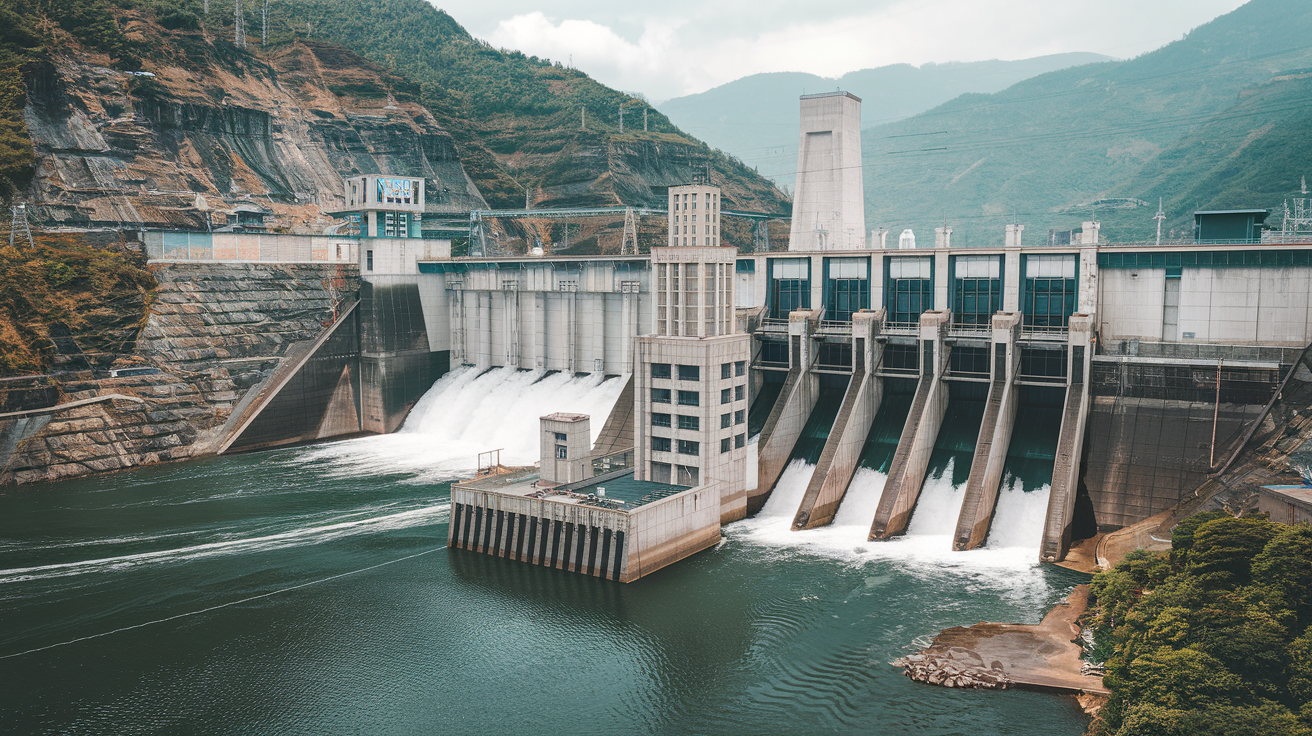
New ‘World’s Largest Hydroelectric Plant’ in China Surprises with Capacity of 300 Billion kWh per Year. The New Chinese Hydroelectric Dam Promises to Outperform Even the Three Gorges Dam.
A megaproject hydroelectric in development in China could become the largest hydroelectric plant in the world if completed. It is the Medog dam, planned to be built on the Yarlung Tsangpo River, in the Tibetan Plateau, near the border with India. The plant promises to surpass the Three Gorges Dam in power generation capacity, potentially reaching up to 300 billion kWh per year. However, the project raises environmental and geopolitical concerns, especially due to the possible impacts on the region and neighboring countries.
Understand China’s Goal with the New Megaproject
China states that the Motuo Hydroelectric Station, being built in Tibet, is essential for its efforts to achieve its clean energy goals. The country also sees these projects as a way to boost the slow economy and create jobs. However, this new ‘world’s largest hydroelectric plant’ in China raises concerns among environmentalists and neighboring countries, partly because China has not detailed the project.
The area where the new Chinese hydroelectric dam is being installed is prone to earthquakes. The Tibetan river being dammed, the Yarlung Tsangpo, flows into neighboring India as the Brahmaputra and into Bangladesh as Jamuna, raising concerns about water security in those countries.
-
Historic bankruptcy of Centauro shocks the market, and the century-old company puts more than 500,000 products, machines, and complete infrastructure up for online auction.

-
New shoe factory in Ceará is expected to create 400 jobs and strengthen the local economy.

-
No one imagined it, but a mixture of sawdust with a mineral that fights fires surprises scientists with a result that changes the course of fire-resistant construction.

-
From empty land to a high-end house, wooden construction uses a lightweight system, metal structure for the foundation, ventilated ceramic cladding, and special windows to create an efficient and comfortable living space throughout the year.

China announced at the end of December that the government had approved the construction of the project aimed at surpassing the Three Gorges Dam in the lower parts of the Yarlung Tsangpo, but has provided few details about it. This includes the project’s cost, where the funding will come from, responsible companies, and how many people are likely to be displaced.
New Megaproject of a Possible ‘World’s Largest Hydroelectric Plant’ in China Expected to Produce Up to 300 Billion kWh
The new Chinese hydroelectric dam will be in the Medog County, in Tibet, in a steep canyon where the river makes a horseshoe bend known as the Great Bend, and then falls about 2,000 meters over approximately 48 kilometers.
By harnessing the kinetic energy of this drop, the new ‘world’s largest hydroelectric plant’ in China could generate 300 billion kWh per year, according to state-owned PowerChina, in 2020.
This would be three times the capacity of the Three Gorges Dam, currently the largest in the world, which cost about US$ 34 billion to develop. The country has not disclosed which company is behind the project, however some analysts claim that PowerChina, the largest hydroelectric infrastructure construction company in the country, is likely involved. The company has not commented on this.
Experts say that the new ‘world’s largest hydroelectric plant’ in China at the Great Bend, a 500-meter-deep canyon without roads, would likely take a decade due to technical challenges. Even the basic design of the dam is unknown.
Main Risks of the New Chinese Hydroelectric Dam
It is worth mentioning that the same natural forces that created the Great Bend pose risks to China’s dam, which aims to surpass the Three Gorges Dam. The Tibetan plateau was formed by a collision between the Indian and Eurasian tectonic plates millions of years ago.
To this day, the Indian plate is still slowly moving towards the Eurasian plate, which is why the Himalayas are regularly hit by earthquakes. Such seismic events threaten the safety of dams. Chinese authorities state that cracks are appearing in five dams in Tibet after a magnitude 7.1 earthquake struck near the city of Chegaste this month.
Even if the new Chinese hydroelectric dam is well-built to withstand an earthquake, landslides and mudflows are hard to contain and can kill people living nearby. Experts say that the giant excavation involved in constructing the new ‘world’s largest hydroelectric plant’ in China could make the chances of disasters even greater.








Seja o primeiro a reagir!