





 Português
  Inglês
  Espanhol
  3 min de leitura
  0 comentários


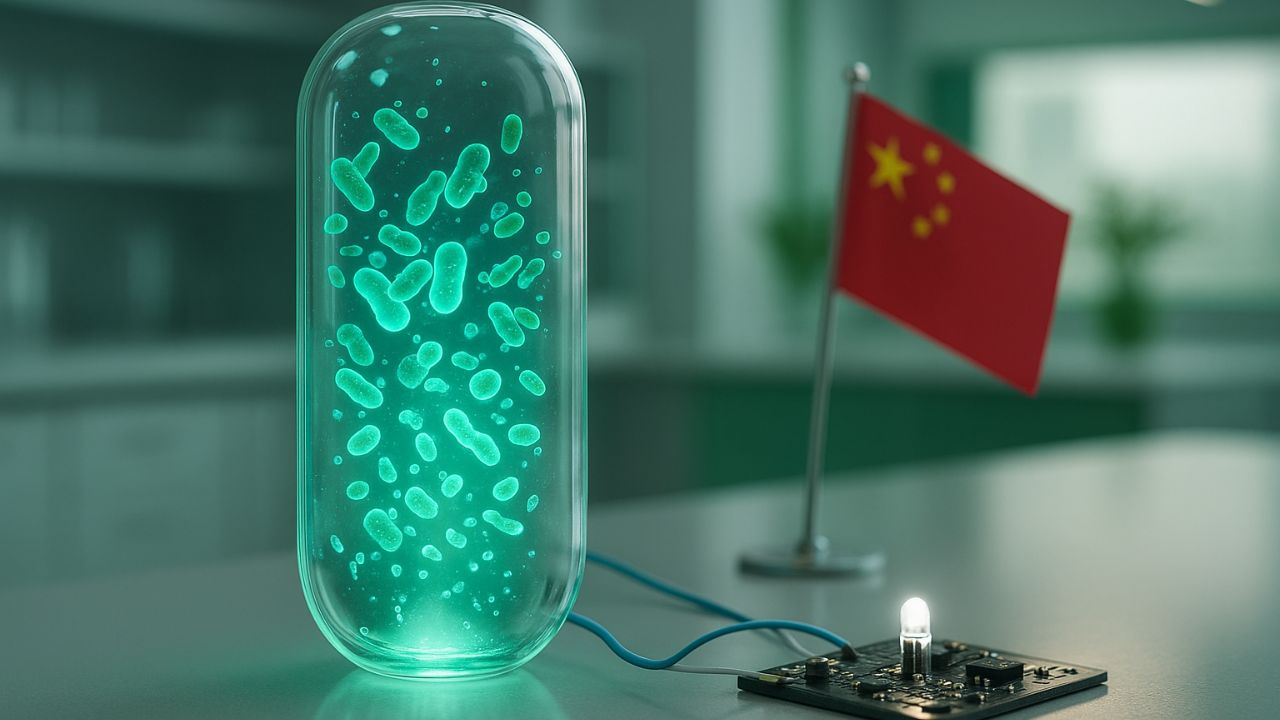
New Portable Chinese Device Turns Bacterial Metabolism into Clean and Autonomous Electricity
Researchers from the Chinese Academy of Sciences have developed an innovative biobattery that converts the activity of living microorganisms into electrical energy. With over 99% efficiency and potential for automatic recharging, this technology represents an unprecedented advancement in the field of sustainable energy, according to the portal Interesting Engineering.
Sustainable Energy Based on Living Microorganisms
China has just unveiled an innovation that could change the way the world produces sustainable energy. Scientists from the Shenzhen Institutes of Advanced Technology, affiliated with the Chinese Academy of Sciences, created a biobattery that transforms the metabolism of electrogenic bacteria into electricity. The main advantage? The device does not need external energy sources to function; it recharges itself, as shown in the report by Interesting Engineering.
This portable biobattery achieved a coulombic efficiency of over 99.5% over 50 charge and discharge cycles. This means that nearly all the energy generated by the bacteria is utilized with minimal losses. Furthermore, the viability of the microorganisms was maintained at high levels: about 70% activity during operation and 97.6% at the end, ensuring durability and stability for the system.
-
Renewable energy advances over protected areas in Brazil, and a survey by the Energy Transition Observatory reveals silent impacts that challenge environmental conservation and pressure sensitive traditional territories.

-
Rio Grande do Sul accelerates energy transition: State invests in renewable technologies and consolidates decarbonization strategies and pathways to attract billions in new industrial investments.

-
With 160,000 m² of collectors, an area larger than 20 football fields, Silkeborg, in Denmark, hosts a solar thermal plant that heats 19,500 homes and could become the largest solar heating plant in the world.

-
A study reveals the expansion of renewable energy procurement in Brazil and shows how companies are taking advantage of opportunities to reduce expenses, ensure energy efficiency, and strengthen strategic environmental commitments.

Living Materials and 3D Printing Reinforce Innovation in Sustainable Energy

The device is constructed with living hydrogels, composed of bacterial biofilms encapsulated in an alginate matrix. These components are precisely shaped using 3D printing, maintaining active biological properties such as electroactivity. This feature allows the microorganisms to generate and conduct electrons, as well as promote the reduction of graphene oxide, an essential element for the optimal functioning of the system and crucial in sustainable energy production with a low environmental impact.
The study, also published in Cell Reports Physical Science, shows that this bioengineered approach is more than an experiment: it is a viable platform for developing new forms of sustainable energy, especially for applications in biomedical devices and high-precision sensors.
Biobatteries: Promising Future of Sustainable Energy
The Chinese advancement shows that sustainable energy does not need to rely solely on traditional sources like sun or wind. By harnessing biological processes such as bacterial metabolism, science expands the frontiers of energy generation with a low carbon footprint. The biobattery could serve as the basis for technologies for medical, environmental, and even military use, where reliability and autonomy are crucial.
According to the portal ScienceDaily, which also reported on the subject, this type of solution using living materials integrates innovation and environmental responsibility, paving the way for biodegradable batteries and safer energy storage systems.
Chinese Technology Reinforces Leadership in Green Solutions
This project reinforces China’s role as a leader in technologies focused on sustainable energy. The integration of biotechnology, 3D printing, and materials engineering results in solutions that meet the global demand for cleaner and more efficient energy systems. In this context, the biobattery shows that it is possible to produce energy from life itself, literally, while minimizing environmental impacts.
The development of this technology signals a global trend: using nature as an ally to ensure sustainable and low-cost energy without compromising environmental balance or relying solely on non-renewable resources.








Seja o primeiro a reagir!