





 Portuguese
  English
  Spanish
  3 min of reading
  0 comments


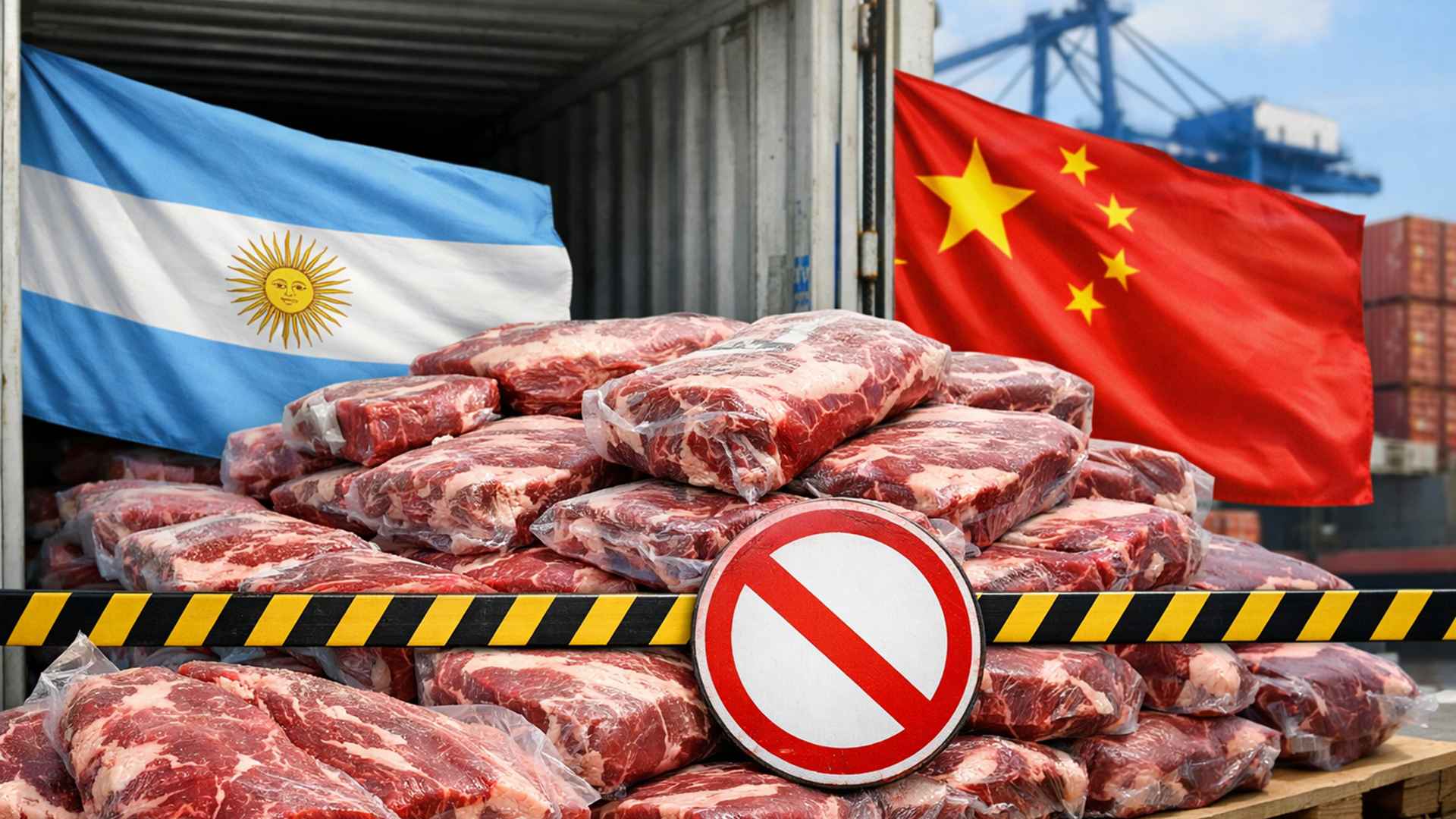
The suspension of the ArreBeef unit by China, following the detection of chloramphenicol in a 22-ton container of Argentine beef, mobilized health and diplomatic authorities and raised concerns about impacts on shipments, traceability, and the credibility of the exporting sector
China suspended imports of beef from unit No. 2082 of ArreBeef, in Pérez Millán, Ramallo district, in the province of Buenos Aires, after detecting, on March 19, 2026, residues of chloramphenicol in a container from the company.
The measure affects one of Argentina’s main exporters and comes amid tightening Chinese controls on imported protein.
Chloramphenicol is a broad-spectrum antibiotic prohibited for use in cattle intended for meat consumption since 1995.
-
JBS, founded by the Batista brothers, continues to conquer the world: entrepreneurs built a ‘factory in the desert’ creating 3,000 jobs.

-
With only 1% of Brazil’s territory, Santa Catarina has built one of the most competitive industrial parks in the country, with 64,000 companies, nearly 1 million jobs, and a growth rate of 5.3% while the national industry is practically stagnant.

-
Brazil has just secured a secret route through Turkey to save agribusiness exports that were threatened by the closure of the Strait of Hormuz amid violent clashes in the Middle East.

-
JBS, founded by the Batista brothers, continues to conquer the world: the entrepreneurs built a ‘factory in the desert’ with 3,000 jobs.


Although the case involves only one container of 22 tons, the suspension has caused concern throughout the Argentine production chain and mobilized health, diplomatic, and agricultural authorities in the country.
Suspension occurs amid stricter controls
The new blockade imposed by Beijing was recorded in a context of stricter oversight of imported beef by China, the main destination for Argentine exports of the product. The previous week, the Asian country had already suspended the activities of the Uruguayan slaughterhouse San Jacinto after detecting traces of fluazuron in beef.
According to the newspaper Clarín, the suspension of ArreBeef’s shipments triggered an investigation and the activation of a management protocol. The work is being conducted by SENASA, the Ministry of Foreign Affairs, and the Ministry of Agriculture.
Investigations attempt to explain the origin of the residue
Based on the traceability and control system implemented by SENASA, investigations are ongoing and include cross-referencing information with Chinese authorities.
The goal is to understand how traces of chloramphenicol were found in the shipment sent by ArreBeef.
According to the report from Clarín, initial technical hypotheses point to the possibility of a false positive or a derivative of another similar substance. At the same time, the Argentine defense has relied on the traceability and sanitary control system as a basis to contest the case.
A formal presentation was sent to China with information about the national monitoring program for meat residues, presented as a guarantee of health and safety.
This work continued throughout the extended holiday in Argentina, while the government awaits more details from GACC about the affected batch.
Diplomacy seeks to limit the effects of the restriction
According to the report, the expectation is to establish traceability back to the farm where the animals were raised, something that the Argentine system allows in these cases. The authorities’ intention is to demonstrate that the incident can be resolved, including the possibility of a trip to China, as occurred in 2016 in a similar case involving Ecocarnes.
Since GACC decided to prevent new shipments from the ArreBeef unit, diplomatic efforts have focused on two objectives. The first is to limit the problem to the specific container, without affecting shipments in transit dispatched before March 19; the second is to obtain the removal of the restriction as quickly as possible.
Company maintains operational alternative
Despite the suspension of the Pérez Millán unit, the impact on ArreBeef’s operations, according to Clarín, is not expected to be severe. The company can continue operating from CAIBER, formerly Finexcor, in Quilmes, for shipments destined for China or other markets.









Seja o primeiro a reagir!