





 Portuguese
  English
  Spanish
  4 min of reading
  0 comments


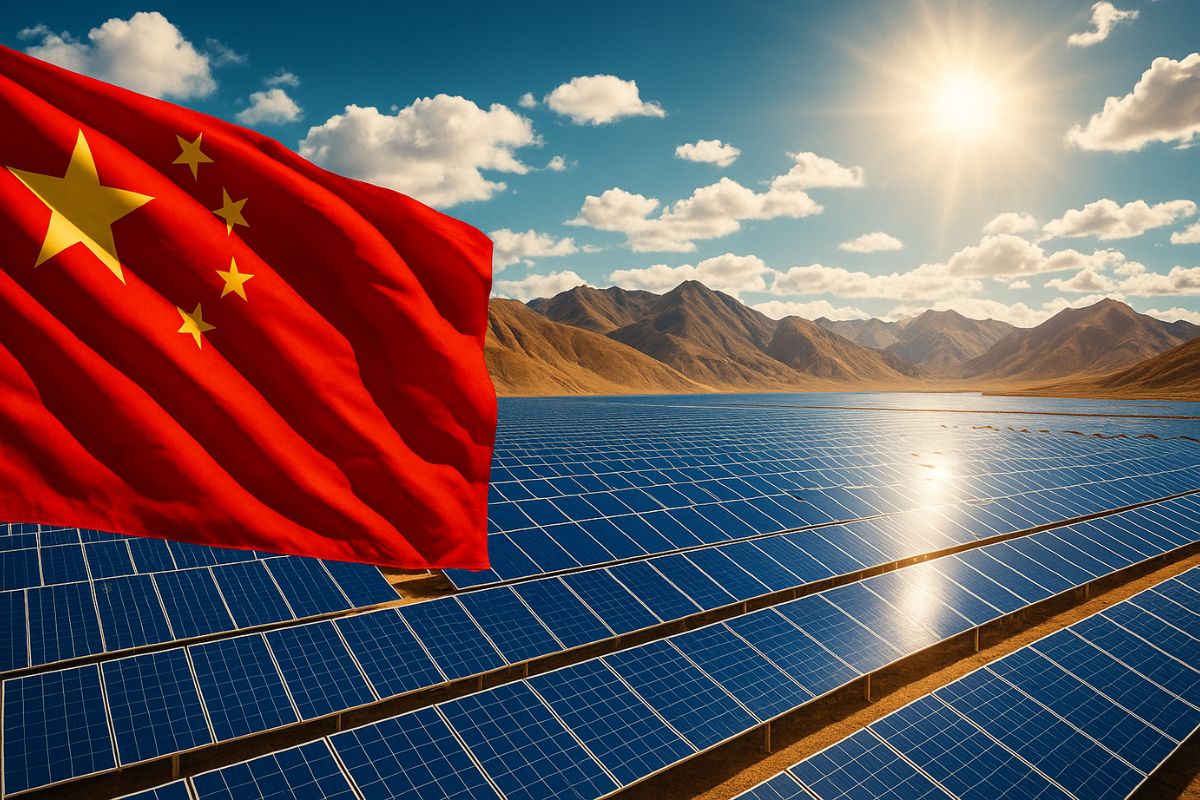
The Gigantic Network of Solar Panels in the Tibetan Plateau, Covering 420 km², Takes Advantage of Extreme Altitude, Intense Sunlight, and Low Temperatures in the Region to Generate Clean and Cheaper Energy, Marking a Strategic Turn in China’s Electric Matrix
The construction of solar panels in the Tibetan Plateau transformed a desert and cold area into one of the largest clean energy hubs on the planet. China installed 420 square kilometers of photovoltaic panels in Qinghai province, in the west of the country, in an unprecedented initiative due to its altitude and size. The project, which covers an area seven times larger than Manhattan, aims to reduce electricity costs, cut dependence on coal, and meet the growing national energy demand.
The altitude of nearly 3,000 meters, intense sunlight, and rarefied air make the plateau ideal for solar capture. The result is an efficiency up to 40% greater than in power plants in lower regions, with generation sufficient to supply the entire Tibetan Plateau and power data centers used in artificial intelligence. The country bets on clean energy as the axis of its new industrial and environmental strategy.
Clean Energy at High Altitude Drives the Transformation of the Chinese Matrix
The Talatan Solar Park in Gonghe County is the heart of the project.
-
Solar cells have just achieved the “impossible” with this 130% breakthrough.

-
50 viaducts, 4 tunnels, 28 bridges, and 40 kilometers of bike paths: BR-262 in Espírito Santo will receive 8.6 billion reais for the largest engineering project in the state’s history, inspired by the Immigrant Highway in São Paulo.

-
Brazil produces too much clean energy and doesn’t know what to do with it: over 20% of solar and wind capacity was wasted in 2025 while investors flee and 509 renewable generation projects were abandoned in the last year.

-
Piauí will produce a new fuel that replaces diesel without needing to change anything in the truck’s engine and reduces pollutant gas emissions by half: truck drivers from all over the Northeast are already celebrating the news that will arrive later this decade.


There are thousands of panels stretching to the horizon, flanked by wind turbines that balance production at night.
High-voltage transmission lines connect the region to cities over 1,600 kilometers away, delivering electricity to factories, high-speed trains, and urban centers.
The Chinese government aims to increase its renewable energy production sixfold by the end of the decade.
The electricity generated in Qinghai costs about 40% less than that produced from coal, becoming a benchmark in energy efficiency.
According to local authorities, this combination of solar, wind, and hydropower creates a model that can be replicated in other arid regions of the country.
Unique Natural Conditions Increase Solar Panel Efficiency
The choice of the Tibetan Plateau was not casual. The low temperatures prevent overheating of the panels, and the rarefied air increases direct sunlight exposure, enhancing panel efficiency.
Moreover, the flat and sparsely populated terrain of Qinghai province facilitates the transport and assembly of the structures, reducing logistical costs.
No other country uses such high altitudes to generate solar and wind power on an industrial scale.
The Chinese model combines climatic and geographic advantages with heavy state investment, positioning the country as a global leader in the renewable energy sector.
Integration of Solar, Wind, and Hydropower
To maintain a constant supply, solar generation is balanced with wind energy at night and with hydroelectric dams during low irradiation periods.
Qinghai province uses the Yellow River and new projects on the Yarlung Tsangpo River to regulate electric supply, further reducing the need for coal plants.
Hydroelectric plants act as “natural batteries”, storing energy during the day and releasing it at night.
This integration creates one of the most stable and sustainable energy networks in the world, reducing emissions and strengthening national energy security.
Green Expansion and Global Leadership
Despite still being the largest carbon emitter in the world, China has committed to reducing emissions across the economy.
President Xi Jinping announced at the UN that the country will accelerate the replacement of fossil fuels and expand renewable capacity on a large scale.
The solar panels in the Tibetan Plateau represent the realization of this promise.
The clean energy produced powers the railway system, electric vehicle factories, and technology hubs, consolidating the country as a global powerhouse in battery, turbine, and photovoltaic panel production.
Environmental and Social Impacts in the Region
The project also altered the landscape and the daily lives of Tibetan herders, who used the region for grazing.
To minimize the impact, the panels have started to be installed on elevated structures, allowing animals to graze underneath them.
Even so, the need for environmental monitoring remains, as the plateau is the source of major Asian rivers and requires permanent ecological balance.
Local authorities emphasize that the human impact is small due to it being a sparsely populated area, but experts warn that any alteration in water flows or vegetation cover can cause long-term regional effects.









-

-

-

-

8 pessoas reagiram a isso.