





 Português
  Inglês
  Espanhol
  5 min de leitura
  5 comentários


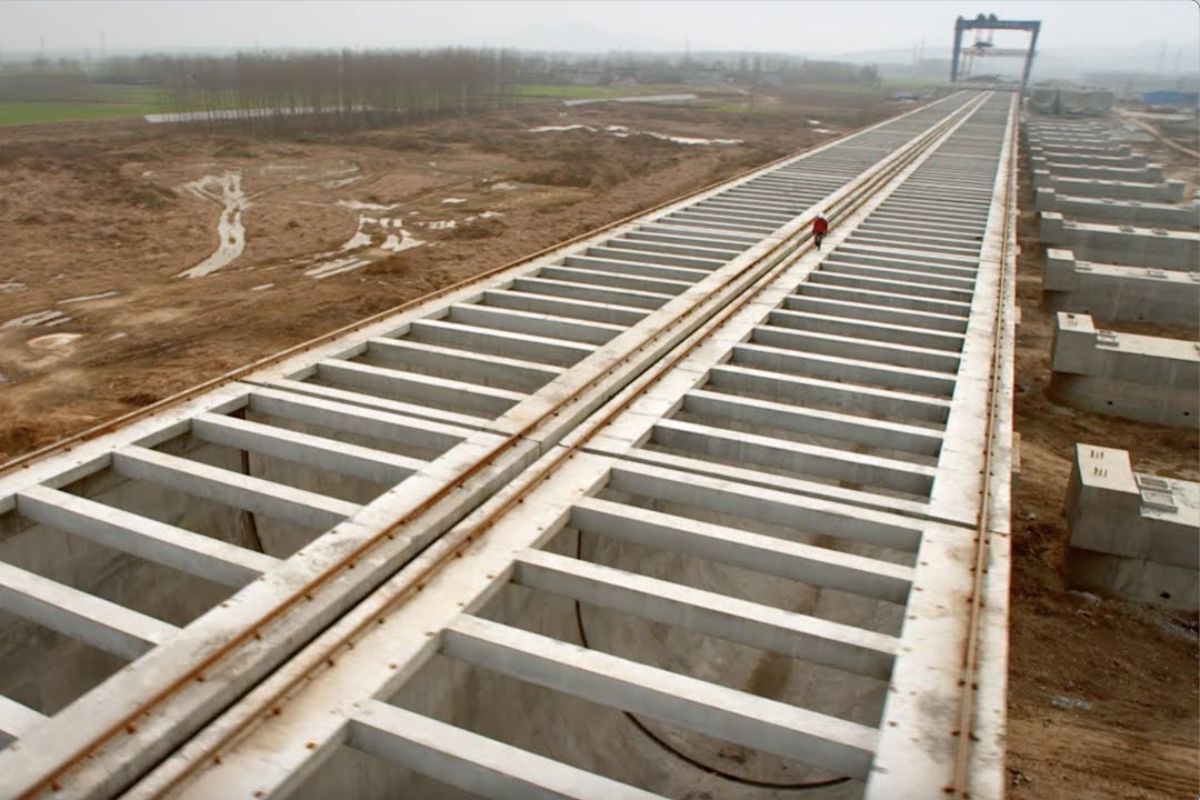


The Artificial River Is Born In An Elevated Aqueduct Mounted In 50-Meter Sections, With Steel Structure Made By 20 Men And Surrounded By Concrete. Each Block Weighs 1200 Tons, Is Positioned By Crane With An Inclination Of One Centimeter, Without Pumps, For The Water To Flow Naturally North To Beijing.
China Is Building An Artificial River Suspended In The Form Of An Elevated Canal, Described As The Largest Ongoing Engineering Project On The Planet. The Aim Is To Bring Water To The North Of The Country To Beijing, Using An Aqueduct That Relies On Its Own Natural Flow, Without Pumps, To Move Water Along An Extensive Route.
The Artificial River Is Assembled Piece By Piece, With Separate 50-Meter Sections, Erected By Teams On Site And Placed In Position With High-Powered Cranes. The Project Will Not Be Fully Operational Until 2030, When It Should Be Carrying Water And Benefiting Millions Of People In Northern China.
Where The Work Takes Place And Where The Water Needs To Go

The Construction Occurs In China, In A Corridor Of Water Infrastructure That Crosses The Landscape With An Elevated Aqueduct. The Cited Destination Is The North Of The Country, With The Water Needing To Reach Beijing, A Flow That Demands Extreme Precision Because The Canal Was Designed To Operate Without Pumps.
-
A megaproject worth R$ 89 billion is advancing in Iraq and promises to change the game in global trade by creating a new corridor between Asia and Europe, reducing traditional routes and repositioning the country as a logistics powerhouse.
-
Goodbye bedside table: floating shelves become a trend in 2026 by freeing up space in the bedroom, improving circulation, bringing visual lightness, and integrating technology without taking up floor space.

-
Israel, Greece, and Cyprus signed an agreement in 2020 to transport gas from the Mediterranean to Europe via a 1,872 km pipeline, but Turkey claimed sovereignty over part of the maritime route, and the project never materialized.
-
Israel, Greece, and Cyprus signed an agreement in 2020 to transport gas from the Mediterranean to Europe via a 1,872 km pipeline, but Turkey claimed sovereignty over part of the maritime route, and the project never materialized.
The Central Detail Is That The Water Needs To Go North “On Its Own Initiative.” This Transforms The Aqueduct Into A System That Cannot Rely On Continuous Mechanical Corrections. The Project Needs To Be Correct From The Start, Because Alignment Errors Accumulate And Compromise Gravity As The Engine Of Movement.
How The Artificial River Is Assembled In 50-Meter Sections

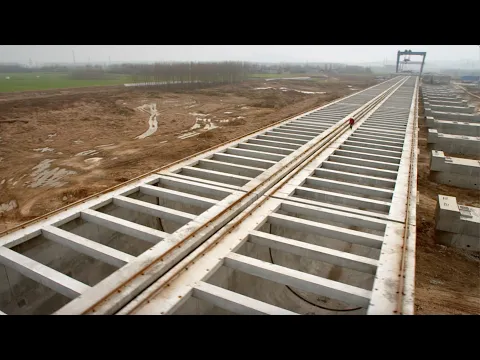
The Construction Method Is Modular. The Aqueduct Is Assembled In Separate 50-Meter Sections. Each Section Begins As A Gigantic Structure Of Steel Rods, Described As A “Bird’s Nest” In The Shape Of A Skeleton.
A Team Of 20 Men Constructs This Frame. Then, The Entire Structure Is Surrounded By Concrete, Forming The Final Block. Only After That Is The Piece Ready To Be Moved And Positioned Along The Path Of The Aqueduct. The Logic Is Of Industrial Repetition In The Field, With A Manufacturing And Installation Pattern Repeating Along A Very Long Aqueduct.
1200-Ton Blocks And The Logistics Of Lifting “Three Jumbo Jets”

Each Section Weighs 1200 Tons, Described As More Than Three Jumbo Jets. This Number Defines The Type Of Equipment Required: To Move Pieces Of This Size, The Project Uses Some Of The Most Powerful Cranes Available.
The Movement Of A 1200-Ton Piece Is Not Just A Test Of Strength. The Weight Imposes Stability Restrictions, Operating Rhythm, And Fine Control During Lifting And Fitting. The Crane Becomes The Operational Heart Of The Site, Because It Is The One That Transforms A Completed Structure Into A Functional Section Of The Artificial River.
The 25-Year-Old Operator And The Human Role In Risk Control

The Report Mentions A 25-Year-Old Crane Operator, Kwong Ann Fung, Presented As Someone Who Is Not Intimidated By The Size Of The Pieces. The Mention Helps Size Up That, Even In An Engineering Project Of Extreme Scale, Decisions And Execution Continue To Be Made By People In Cabins, With Minute-By-Minute Control.
In Projects Like This, The Operator Does Not Just Make Vertical Movements. He Needs To Synchronize Movement, Rotation, Speed, And Micro-Adjustments To Fit A 1200-Ton Piece In The Right Spot, Without Deformation And No Alignment Errors. When The System Relies On Gravity, Human Error Also Becomes Hydraulic Error.
The Decisive Detail: Inclination Of One Centimeter To Function Without Pumps
The Positioning Of The Blocks Is Described As Crucial. The Water Has To Flow North To Beijing Without Pumps, So The Inclination Needs To Be Millimeter-Precise. The Mentioned Adjustment Is Just One Centimeter: One Side Of The Block Must Be One Centimeter Lower Than The Other.
This Is The Type Of Specification That Seems Small But Defines The System’s Operation. In A Long Canal, The Gradient Is The Engine Of The Water. If The Inclination Is Not Correct, The Flow Can Slow Down, Stagnate, Or Cause Undesirable Hydraulic Behavior. The Artificial River Relies On A “Thread” Of Decline To Become A Current.
Why The Aqueduct Needs To Be So Long And Why 2030 Is The Turning Point
The Aqueduct Is Described As Very Long And, Therefore, Will Not Be Fully Operational Until 2030. The Date Appears As A Milestone Of Functional Completion: When The Canal Is Carrying Water, The Benefit Should Reach Millions Of People In Northern China.
The Relationship Between Length And Deadline Is Direct. Fifty-Meter Sections Mean Many Units To Manufacture, Concrete, Transport, Erect, And Align. Each Unit Requires A Crane, An Operating Window, And Precise Fitting. The Complexity Is Not In One Piece, But In The Accumulation Of Thousands Of Correct Fits Along The Path.
The Final Objective Of The Artificial River And The Logic Of Bringing Water To Where People Live
The Stated Purpose Is To Bring Water To Where People Live, Benefiting Millions In Northern China. The Project Is Presented As A Response To A Need For Redistribution Of Water Resources, Creating A Corridor Of Water That Crosses The Territory And Delivers Volume Where Human Demand Concentrates.
In The Report, Engineering Appears As A Consequence Of Basic Needs: To Feed And Sustain Populations. The Final Phrase Ties This Idea To The Human Impact On The Landscape, Suggesting That It Is The Need For Supply And Production That Has Transformed The Face Of The Planet With Giant Projects.
In China, An Artificial River Suspended Is Being Erected As An Elevated Aqueduct In 50-Meter Sections, Assembled From Steel Rods By Teams Of 20 Men, Enveloped In Concrete, And Moved By Cranes To Fit 1200-Ton Blocks. The Operation Requires An Inclination Of One Centimeter Per Piece For Water To Flow North To Beijing Without Pumps, And The System Must Be Fully Operational By 2030, With A Promise To Benefit Millions Of People In Northern China.
Do You Trust An Artificial River That Only Depends On Gravity And A One-Centimeter Inclination, Or Do You Think That A System Without Pumps Increases The Risk Of Failures Over Time?









Hopeless repetitive article. Where, how long, what cost, who’s building it, the start and finish points.
Time wasting read.
That’s funny, because I saw answers to each one of those questions w/the exception of the cost. You should try actually reading it before commenting to avoid showing you spent more time writing a complaint than actually reading the info. That’s America for you. We all know what we know, and we often refuse or dispute information readily available. Shame on us as a nation, and shame on our education system designed to create workers and stifle critical thinking.
What a Waste of Resources China keeps building bigger at Everything, but they take everything from the Earth like they the Only ones living on this Planet. Are they getting water from the gigantic Dams they built and Hoarding everything they can.. hopefully the Project fails they on a Different level of Greed..Raping the Planet for their Own.
Questions:-
1) What is the total length of the elevated canal, anybody knows?
2) Since there is no pumps and relying only on gradient flow, how do you control the flow rate downstream? Relying on only upstream source control will pose a long time lag to check downstream flowrate in emergency scenario.
3) Are there no intermediary reservoir along the whole canal length?
4) What mechanism do you use to arrest earth settlement since the slope gradient is very small just to maintain steady flow?