





 Português
  Inglês
  Espanhol
  5 min de leitura
  3 comentários


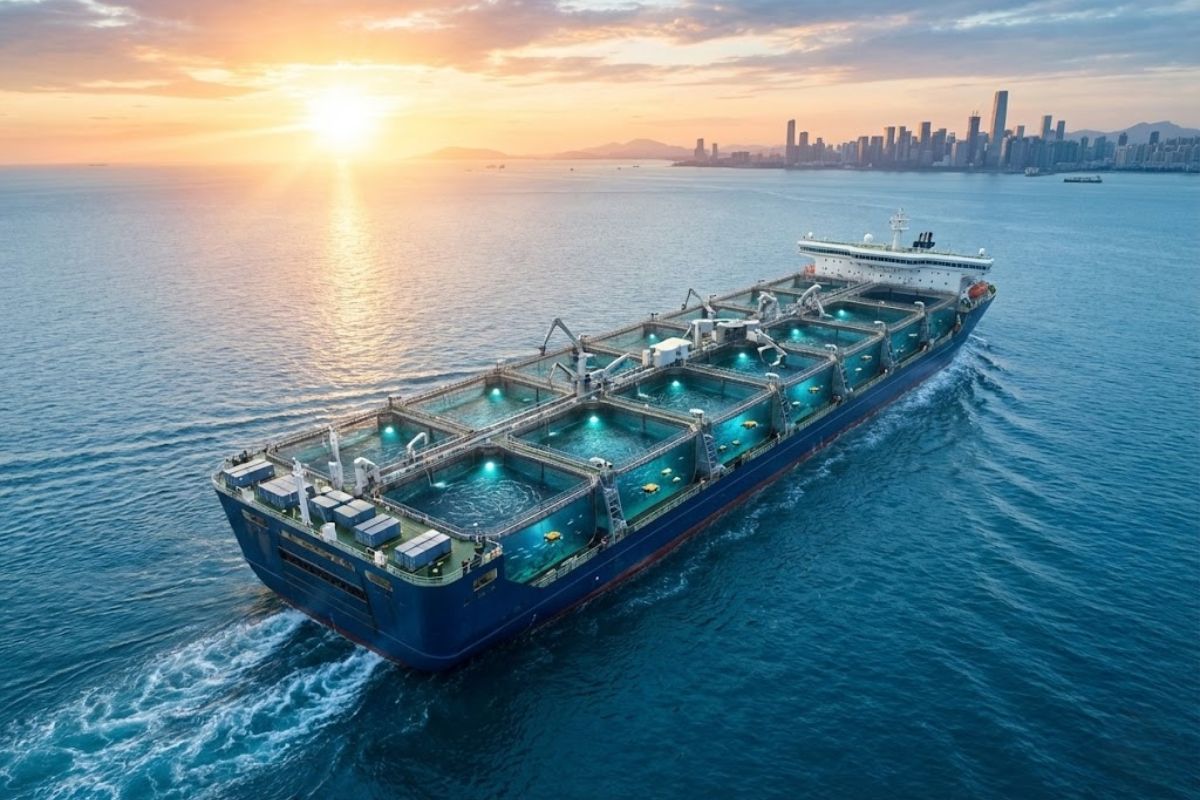


New Chinese Giant Fish Farm Transforms 150,000-Ton Ship into Mobile Aquaculture Platform, Uses Over 200 Cameras and 2,000 Sensors, Operates with Robots, Reduces Crew, Pursues Better Water and Delivers Fresh Fish in Under Fifteen Hours to Fish Markets in Coastal Cities and Inland Regions
On December 4, 2025, Chinese authorities released new details about the Guoxin 1 2-1, an intelligent deep-sea aquaculture ship that transforms a giant fish farm into a mobile unit capable of pursuing the best temperature, current, and water quality conditions. Captured in aerial drone images on April 17, 2025, at the port of Beihai in Qingdao, the 150,000-ton vessel now operates anchored in the waters of Zhoushan, Zhejiang province, as the first ship of its size dedicated to smart aquaculture offshore.
Launched in April 2025 and put immediately into testing, the Guoxin 1 2-1 received over 1 million juvenile yellow croaker in early May, and on November 20, recorded a single catch of over 46,000 adult fish, consolidating the giant fish farm as a stable industrial platform. With 15 standard commercial farming tanks, four circular exercise tanks, and 22 experimental tanks, totaling 96,000 cubic meters of water, the operation is conducted by just 35 crew members, of which only 16 are directly involved in aquaculture routines.
Intelligent Ship Transforms High Technology into Mobile Giant Fish Farm

The central concept of the Guoxin 1 2-1 is to operate as a mobile giant fish farm, moving to sea areas with the best combination of temperature, currents, and water quality.
-
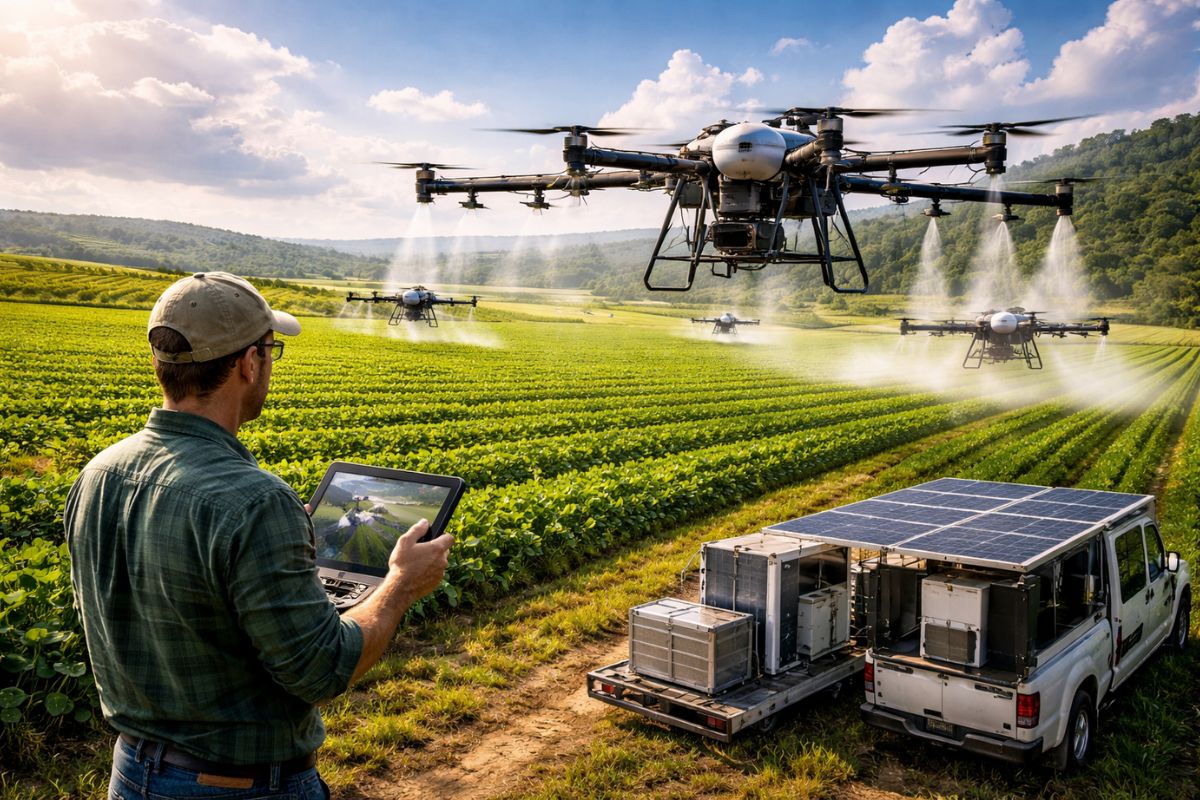
Alone, the producer applies 7,400 hectares with the T100 drone in an optimized structure, replaces the generator with a silent battery, and demonstrates how technology reduces costs, increases productivity, and even challenges the uniport in the field.
-
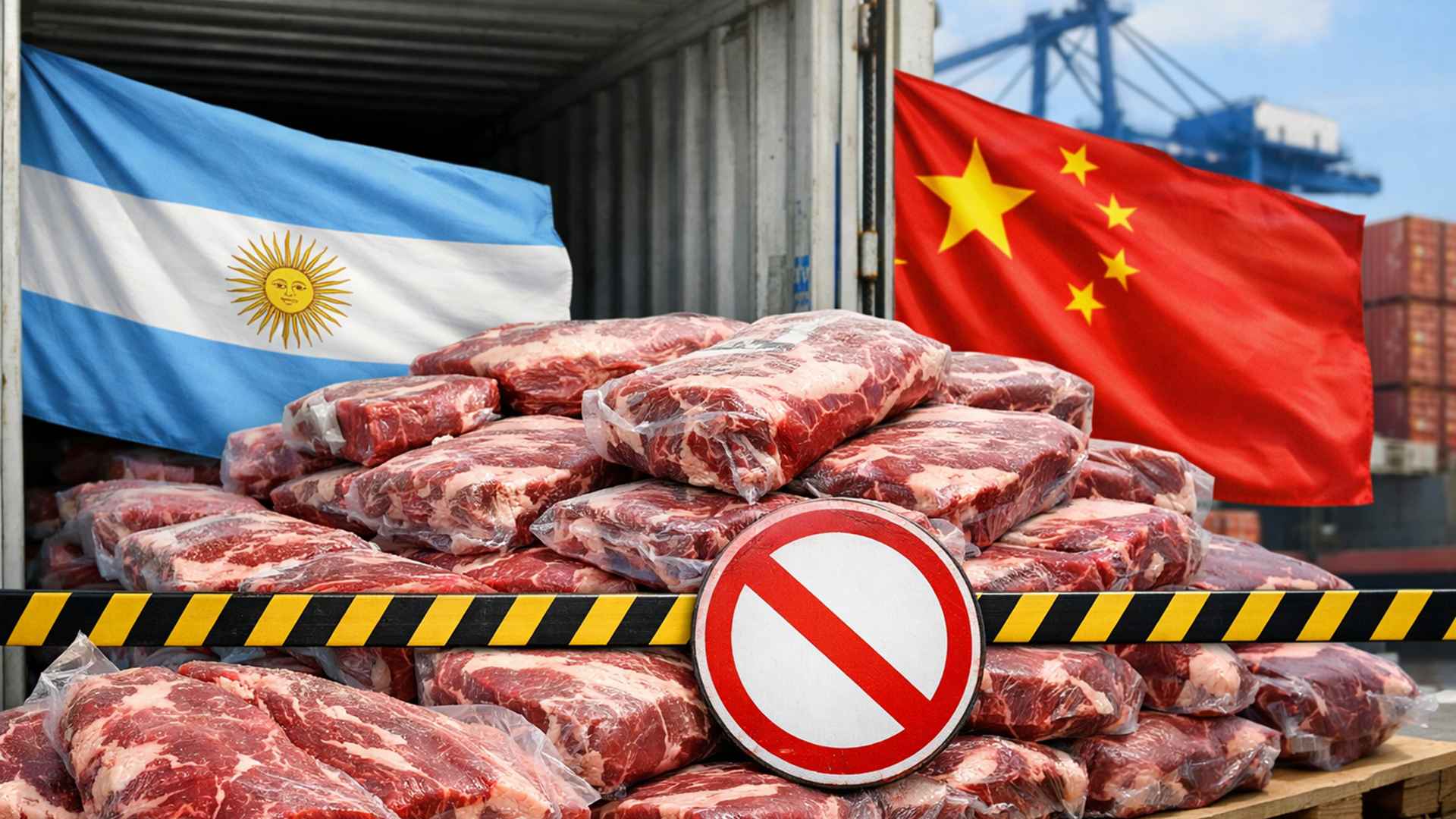
China banned the export of 22 tons of meat from Argentina.
-
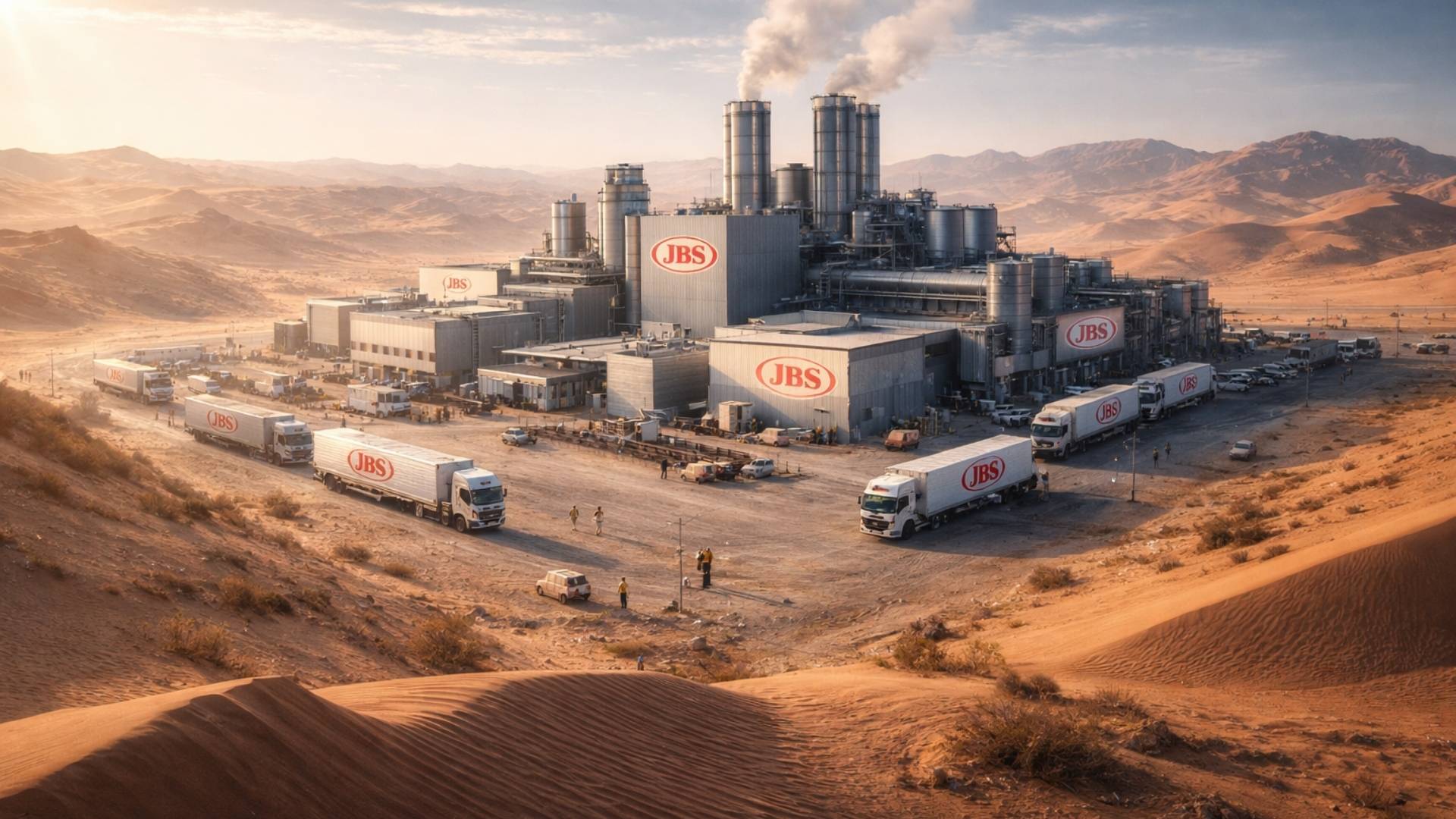
JBS, founded by the Batista brothers, continues to conquer the world: entrepreneurs built a ‘factory in the desert’ creating 3,000 jobs.
-
With only 1% of Brazil’s territory, Santa Catarina has built one of the most competitive industrial parks in the country, with 64,000 companies, nearly 1 million jobs, and a growth rate of 5.3% while the national industry is practically stagnant.

According to production director Sun Linlin, the logic is similar to that of nomadic shepherds seeking new water sources and pastures, but applied to large-scale marine aquaculture.
Instead of fixed tanks near the coast, the ship uses a system of mobile tanks that can be repositioned according to the season and environmental conditions.
Mobility allows for maintaining fish in a more suitable natural environment throughout the growth cycle, reducing thermal shocks, sudden fluctuations in oxygen, and impacts from coastal pollution.
This strategy, advocated by Sun as “always going where the water is better,” distances the giant fish farm from the typical uncertainties of shallow water and brings the model closer to an industrialized deep-sea aquaculture with seasonal and geographical flexibility.
The objective is to create a “blue barn” capable of adjusting routes and anchorage points according to the species being raised and the demands of Chinese markets.
How the Giant Fish Farm Uses Sensors, Cameras, and Automation
To sustain this mobility, the Guoxin 1 2-1 has been designed as a highly automated platform.
Over 200 cameras and 2,000 sensors form an intelligent network that continuously monitors the entire production cycle, tracking data such as water velocity, oxygen levels, temperature, and feed volume in each tank.
In the monitoring room, an electronic screen consolidates real-time readings and allows the technical team to adjust operational parameters without physically traversing all the tanks.
The farming tanks are equipped with an advanced environmental control system that keeps water in constant circulation, even in closed structures, promoting natural purification and greater fish activity.
Almost all main onboard operations are already performed by machines, from stocking with juveniles to feeding, harvesting, and initial processing.
The mechanization rate exceeds 90%, with automation levels 45% higher than those of the previous vessel Guoxin 1, the world’s first intelligent aquaculture unit with a capacity of 100,000 tons.
The intelligent system is also responsible for up to 30% of agricultural decisions, according to Sun, automatically adjusting feeding cycles, oxygen distribution, and water circulation parameters.
This level of automation helps to reduce labor costs in the giant fish farm by about 20%, freeing the technical team for supervision and data analysis tasks.
Automated Feeding and Operation with Few Crew Members
Despite the total volume of 96,000 cubic meters of water distributed across dozens of tanks, the ship operates with only 35 crew members.
Of these, 16 are directly involved in aquaculture operations, supported by automated feeding and feed movement systems.
An automated feeding system manages daily routines, which require between 1 and 1.5 tons of feed per tank.
With automatic loading, rail-guided carts, onboard storage silos, and scheduled distribution, just two employees can feed all the tanks on board each day, maintaining consistency in feed volumes and timing.
This operational arrangement reduces human exposure to repetitive and physically demanding activities while enhancing predictability in input consumption.
In practice, automation transforms the giant fish farm into a marine production line, where algorithms and sensors coordinate the flow of feed, oxygen, and water renewal within each tank.
Logistics to Deliver Fresh Fish in a Few Hours to Markets
The operational model of the Guoxin 1 2-1 was designed to integrate production and distribution, shortening the time between catch and delivery to the table.
Special feed formulas and intelligent software help elevate the quality of the final product, while dedicated logistics systems connect the giant fish farm directly to consumer markets.
According to those responsible, the current structure allows for the delivery of fresh fish to Chinese markets in as little as six hours for distances of up to 500 kilometers and in up to 15 hours for distances of up to 1,000 kilometers.
This means that platform ships can serve both coastal cities and more distant urban centers, keeping the product within competitive freshness windows.
After the initial processing onboard, the production is directed to different value chains, ranging from whole fresh fish to cut portions and pre-cooked meals.
The intention is to cater to both traditional markets and retail chains and convenience channels, using the same basic infrastructure for capture and processing of the giant fish farm.
Expansion of the Guoxin 1 Series and Impact on Chinese Aquaculture
The Guoxin 1 2-1 is described as just the beginning of a new generation of intelligent aquaculture ships.
Its sister ship, Guoxin 1 2-2, has already been launched with a focus on salmon, trout, and other high-value cold-water species, expanding the scope of the giant fish farm to species aimed at premium markets.
When the three ships of the Guoxin 1 series are fully operational, their combined annual production is expected to exceed 10,000 tons.
According to Sun, these ships free aquaculture from the uncertainties of the sea and allow for unprecedented seasonal and geographical flexibility, making it possible to raise typical southern species in northern waters and northern species in southern waters.
In the vision of the creators, industrialized offshore aquaculture increases efficiency in the use of natural resources and transforms the seafloor into a sustainable “blue barn,” provided that environmental standards and density limits are respected.
The bet is that the combination of intelligent ships, sensors, automation, and fast logistics will set the giant fish farm as a new standard for marine protein supply in China.
In your opinion, is this model of giant fish farm on an intelligent ship a sustainable way to ensure more fresh fish to markets, or does it increase dependence on technology and megaprojects at sea too much?









Aí vemos como o Brasil tem tudo, aqui não precisamos criar uma estrutura gigante e cara pra produzir alimentos. Peixes por exemplo, temos água limpa abundante doce e salgada em 90% do território. Só não dominamos a pesca pq o governo não incentiva e ainda atrapalha.
Eu gostaria de conhecer esse Projeto de Navio de Aquicultura Inteligente, parabéns China 👏👏👏💖
CRIAÇÃO DE PEIXES!
MARAVILHAS DO SÉCULO XXI – CHINA CRIA FAZENDA DE PEIXES GIGANTE – EM NAVIO INTELIGENTE! PARABÉNS A CHINA! E ENTÃO NÓS AQUI DO AGRO, NO BRASIL, PODEMOS E TEREMOS A OPORTUNIDADE DE PRODUZIR MILHÕES DE TONELADAS DE ALIMENTOS(RAÇÃO) ORGÃNICOS, E NATURAIS,PARA ALIMENTAR MILHÕES DE TONELADAS DESTES PEIXES!!! — (ENGENHEIRO AGRÔNOMO JOSÉ HELIODORO NETO.