





 Portuguese
  English
  Spanish
  3 min of reading
  9 comments


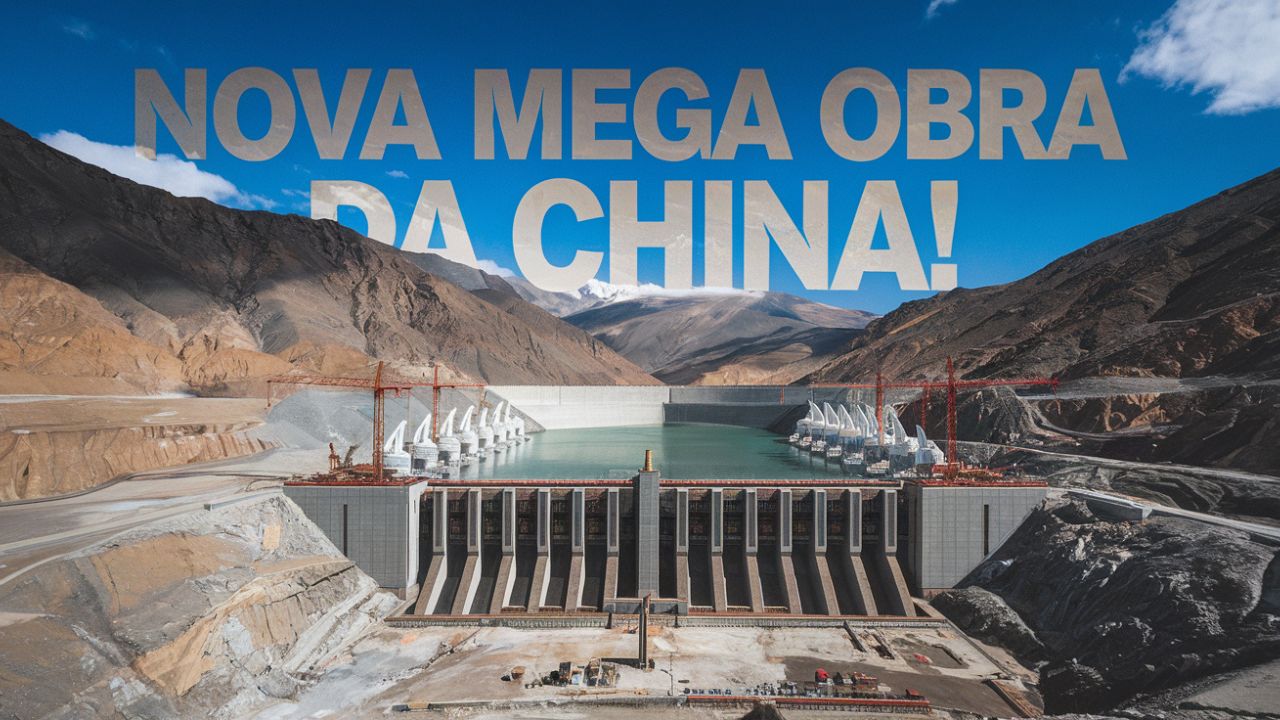


With a Capacity to Generate 300 Billion kWh Per Year, the Construction of the World’s Largest Hydroelectric Power Plant on the Yarlung Zangbo River Promises to Surpass the Three Gorges Dam, but Raises Environmental and Geopolitical Concerns in India and Bangladesh.
China is about to embark on a project as audacious as it is impressive: the construction of the world’s largest hydroelectric power plant. Located on the lower course of the Yarlung Zangbo River, in the Tibetan Plateau, this mega structure promises to generate an incredible 300 billion kilowatt-hours (kWh) of electricity per year. This is more than three times the capacity of the famous Three Gorges Dam. But what does this project mean for the world?
The Construction of a Giant on the Yarlung Zangbo River
The Yarlung Zangbo River, with its steep drops of 2,000 meters over just 50 kilometers, is a true gold mine for hydroelectric power. The new dam is expected to harness this natural force to achieve a historic milestone in renewable energy production, aligning with China’s goals of reaching carbon neutrality. Imagine the impact: a single dam generating enough electricity to power millions of homes.
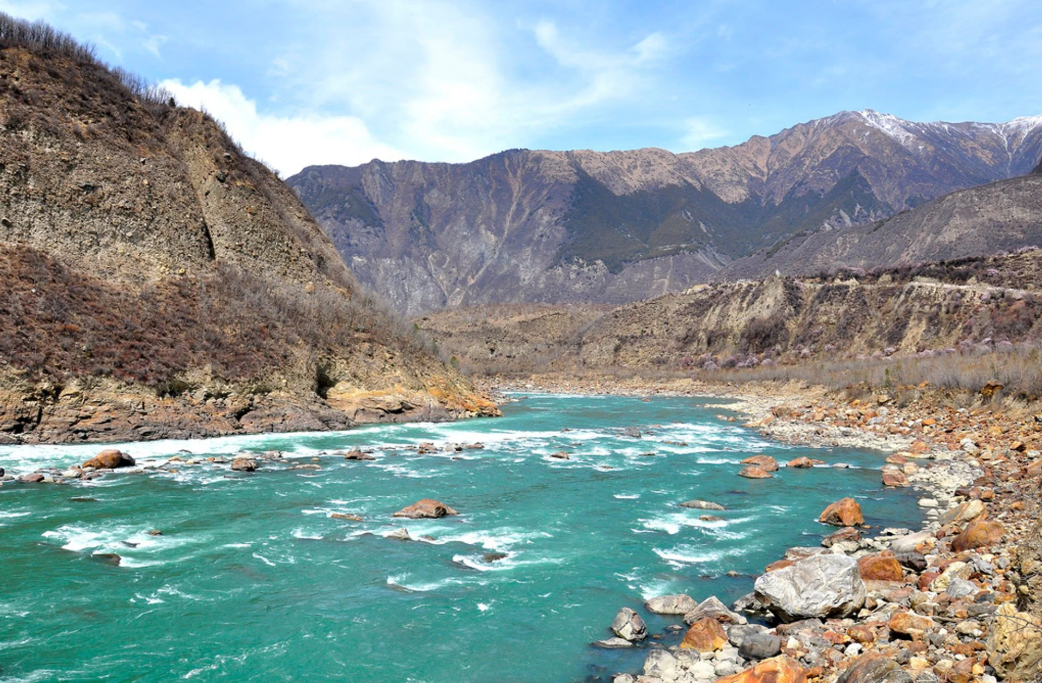
Building something of this magnitude in such a remote environment is no simple task. The rugged terrain and high altitude of Tibet present unique challenges. The estimated cost of the project, including resettlements and engineering, exceeds 254.2 billion yuan, far surpassing the expenses of the Three Gorges Dam.
-
New CCR concrete paving technology promises roads up to 3x more durable, less maintenance, and cost reduction in Brazil.
-
Made from recycled plastic, plastic wood is gaining space in the construction industry because it does not rot, resists moisture, and reduces maintenance costs over the years.

-
Florianópolis will receive a million-dollar BRT that will begin construction in 2026 with nearly 400 million in funding from the federal government and the Inter-American Development Bank, and the map already shows the routes for the exclusive bus corridors.

-
Without a blueprint, without an engineer, and using scrap from the dump, a father spends 15 years building an 18-room castle for his daughter, featuring tram tracks, 13 fireplaces, and over 700 m², which may now be demolished.


Benefits for China
From an economic standpoint, the hydroelectric power plant is expected to boost industries such as engineering and construction, as well as generate thousands of jobs in the Tibet region. The project also strengthens China’s position as a global leader in renewable energy, a crucial step in an increasingly sustainability-conscious world.
However, like any major project, there are consequences. India and Bangladesh fear changes in the flow of the Yarlung Zangbo River, which becomes the Brahmaputra River as it leaves Tibet. Changes in this flow could affect the ecology, water supply, and agriculture across millions of hectares. The dam, while promising, raises legitimate concerns among China’s neighbors.
Geopolitical Tension in South Asia
The construction of this dam is not just an engineering endeavor, but also a strategic move. Controlling the flow of the Brahmaputra gives China a significant advantage over downstream countries, especially India and Bangladesh, in a region already marked by political tensions.
Critics raise the question: how far should we go to promote development? While China claims that the environmental impact will be minimal, many argue that construction could disrupt the delicate balance of one of the world’s richest ecosystems.
Comparisons to the Three Gorges Dam
While the Three Gorges Dam is a global icon, the new dam in Tibet promises to overshadow it in every way. Its energy production capacity is more than three times greater, and the engineering challenges are equally impressive. It is proof that China continues to redefine what is possible in infrastructure projects.
The experience with the Three Gorges Dam also serves as a warning. Mass displacements and costs much higher than planned are examples of how large-scale projects can get out of control. Will the new hydroelectric power plant face the same challenges?
The construction of the world’s largest hydroelectric power plant in Tibet is a monumental feat, full of promises and challenges. As China positions itself as a global leader in renewable energy, questions about environmental and geopolitical impacts continue to loom. The future of sustainability may very well depend on how we balance innovation and preservation. Are we ready for that?









Parabéns para a China, onde não há políticos corruptos as obras saem do papel para a realidade!.
O mundo todo come e respira árvore
A China no caminho certo….Tínhamos que fazer umas dez usinas hidrelétricas no rio Amazonas….Exporta energia para os Estados Unidos…. ninguém come árvore 🌳 🌲….
Sério?! o problema é o excesso de árvores? Meio ambiente obviamente deve ser objeto de estudo por questão de civilidade, mas o principal para se ter hidroelétrica não é so um rio grande, é necessário queda d’água, desnível, entendeu?! E o Rio Amazonas no Brasil está quase todo no nível do mar
Vender energia para os EUA, como?!
Mudei para Sahara e não saia de lá!