





 Portuguese
  English
  Spanish
  4 min of reading
  0 comments



China advances with a strategic project that creates a new link between the interior and the ocean, facilitating freight transport, reducing logistical costs, and strengthening commercial integration with Southeast Asian countries.
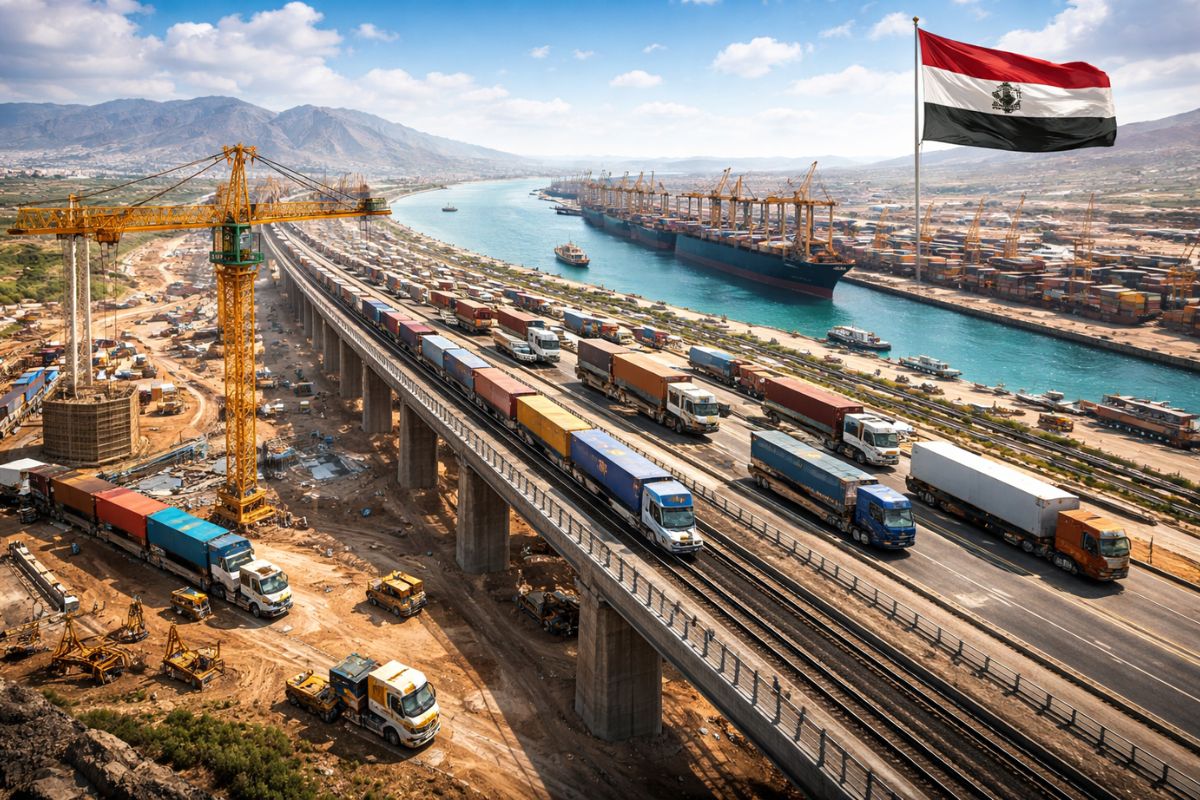
A large-scale infrastructure project is underway in southern China and promises to change the logic of internal and international transport. The country is building the Pinglu Canal, with 134 km in length, directly linking inland rivers to the sea.
The impact goes beyond engineering. The new route reduces distances, accelerates the flow of goods, and strengthens China’s position in Asian trade, especially with neighboring countries.
Canal creates direct link between interior and ocean
The project connects the city of Nanning, the capital of Guangxi region, to the Beibu Gulf, opening a new maritime outlet for the interior of the country.
-
New CCR concrete paving technology promises roads up to 3x more durable, less maintenance, and cost reduction in Brazil.

-
Made from recycled plastic, plastic wood is gaining space in the construction industry because it does not rot, resists moisture, and reduces maintenance costs over the years.

-
Florianópolis will receive a million-dollar BRT that will begin construction in 2026 with nearly 400 million in funding from the federal government and the Inter-American Development Bank, and the map already shows the routes for the exclusive bus corridors.
-
Without a blueprint, without an engineer, and using scrap from the dump, a father spends 15 years building an 18-room castle for his daughter, featuring tram tracks, 13 fireplaces, and over 700 m², which may now be demolished.


Today, a large part of the cargo needs to travel longer routes to traditional ports. With the canal, navigation becomes direct, shortening routes and simplifying logistics.

Structure includes locks, bridges, and system to overcome water levels
The project involves complex infrastructure. The canal will feature three large dual-channel lock systems, allowing for the continuous passage of vessels.
There are also plans for 27 bridges along the route and a system capable of overcoming a height difference of approximately 65 meters of water, ensuring navigability at different levels.
Additionally, the project has been designed to accommodate ships of up to 5,000 tons, significantly increasing river transport capacity.
Project integrates China’s strategic trade corridor
The construction is part of the New Western Land-Sea Corridor, an initiative aimed at integrating inland regions with global markets.
According to Xinhua, the Chinese state news agency with national and international coverage, the canal is considered an essential logistical hub to connect southwestern China to foreign trade more efficiently.

New route reduces distances by 560 km and cuts billions in costs
With the new link, vessels no longer depend on longer routes that pass through regions like Guangdong. The reduction reaches about 560 km.
This shortening has a direct impact on costs. Estimates indicate savings of over 5.2 billion yuan per year, resulting from reduced transport time and logistical consumption.
Canal strengthens trade relationship with Southeast Asia
The new infrastructure facilitates access for provinces like Guangxi, Guizhou, and Yunnan to maritime ports, enhancing economic integration.
The focus is on Southeast Asia. The region is already China’s main trading partner, with consistent growth in trade exchanges and increasing logistical dependence among countries.
Project advances and enters final phase of construction
The latest data indicates that the project has already reached about 90% of the planned investment, signaling an advanced phase of construction.
The canal is expected to be fully completed by the end of 2026, consolidating one of the largest river interventions in the country in centuries.
Infrastructure includes environmental measures along the route
The project also incorporates actions to reduce environmental impacts. Among them are the creation of 36 ecological conservation areas and the construction of a 480-meter fish channel.
These measures aim to preserve local fauna and maintain environmental balance along the new navigable route.
Canal can transform inland cities into logistics hubs
With the new link, cities like Nanning gain strategic relevance. The trend is the emergence of new industrial and logistics hubs along the canal.
The combination of access to the sea and efficient transport creates conditions to attract investments and expand regional production.
The construction of the Pinglu Canal demonstrates how China uses infrastructure to gain a competitive advantage. The reduction of costs and the shortening of routes change the flow of goods.
The project strengthens regional trade and expands Chinese influence in Asia, reorganizing logistical chains and impacting the economic dynamics of the surrounding area.









Seja o primeiro a reagir!