





 Portuguese
  English
  Spanish
  8 min of reading
  9 comments


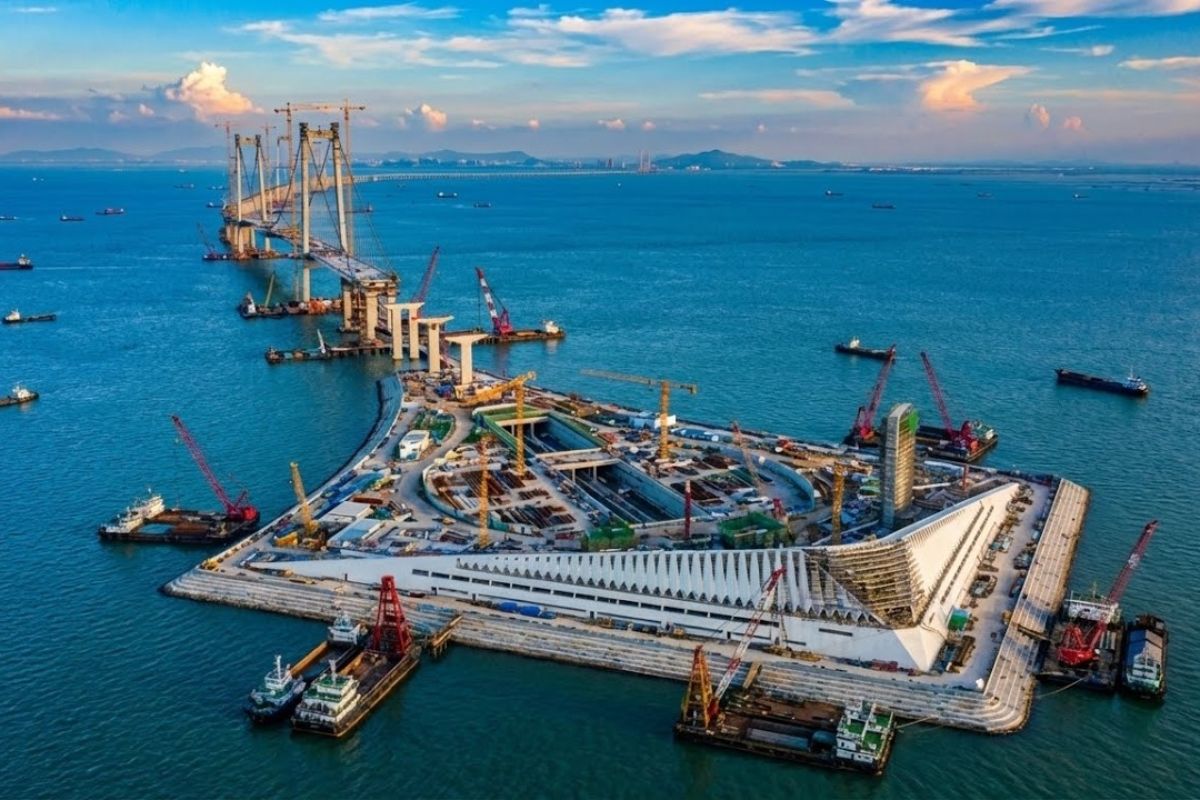


With a Budget of US$ 4.83 Billion, the Colossal Shenzhen Zhongshan Project Combines Artificial Islands Molded by Steel and Sand Cylinders, a Suspension Bridge with 270 m Towers, Stressed Sections, and a 6.8 km Immersed Tunnel with Eight Lanes, Inaugurated on June 30, 2024, in the Greater Bay Area.
The colossal project linking Shenzhen to Zhongshan was designed to overcome 24 kilometers of open sea in the heart of the Greater Bay Area, where unpredictable currents, wind, and maritime logistics turn any common project into a test of limits. The package, presented as an integrated system of bridges, artificial islands, and a submerged tunnel, was made possible with an investment of US$ 4.83 billion and gained an official opening date of June 30, 2024, promising to reduce a previously lengthy crossing to about 30 minutes.
What impresses about this colossal work is not an isolated record, but rather how the engineering was organized like a production line: creating land where there was none, manufacturing tunnel parts in a controlled environment, transporting them by sea, and installing everything with fittings that require extreme precision. It is a corridor designed to function continuously, with eight lanes in the submerged section, sensors, ventilation, and monitoring permanent, as if the infrastructure itself had a “nervous system” operating non-stop.
A Hybrid Route to Overcome 24 Kilometers of Open Sea

The colossal project was designed as a set of solutions, not as a single structure. Instead of relying solely on a long bridge or just a tunnel, the design combines what each type does best: elevated sections over the sea to maintain traffic fluidity, a controlled transition to dive under the water, and an immersed tunnel to cross the critical part of the route.
-
New CCR concrete paving technology promises roads up to 3x more durable, less maintenance, and cost reduction in Brazil.

-
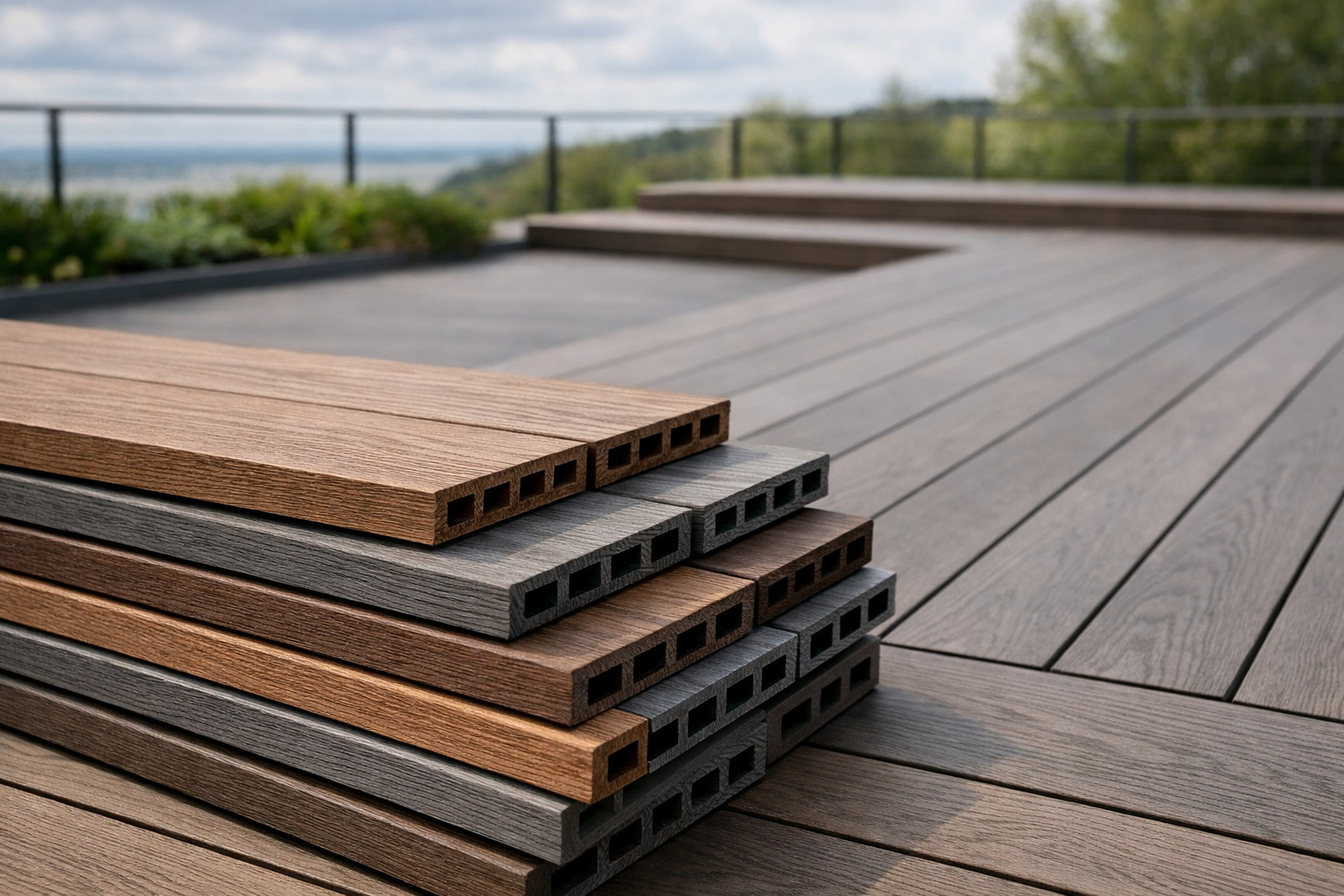
Made from recycled plastic, plastic wood is gaining space in the construction industry because it does not rot, resists moisture, and reduces maintenance costs over the years.
-
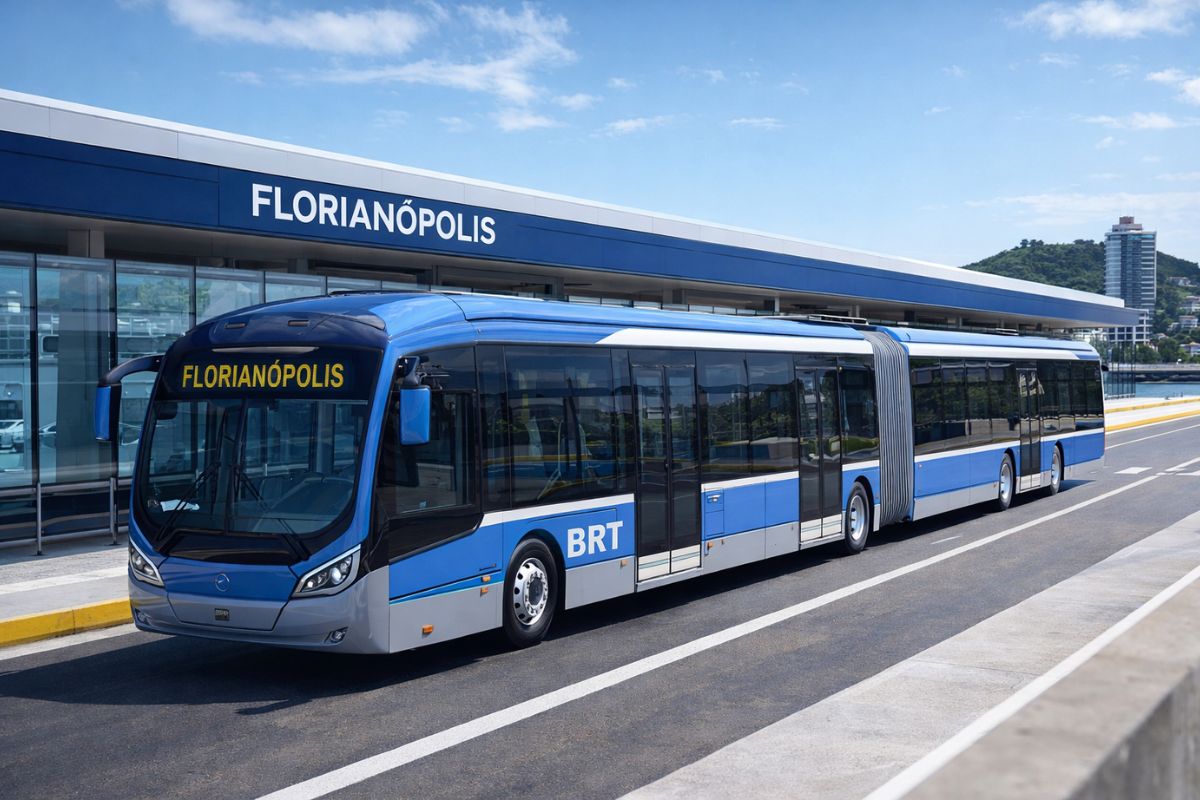
Florianópolis will receive a million-dollar BRT that will begin construction in 2026 with nearly 400 million in funding from the federal government and the Inter-American Development Bank, and the map already shows the routes for the exclusive bus corridors.
-
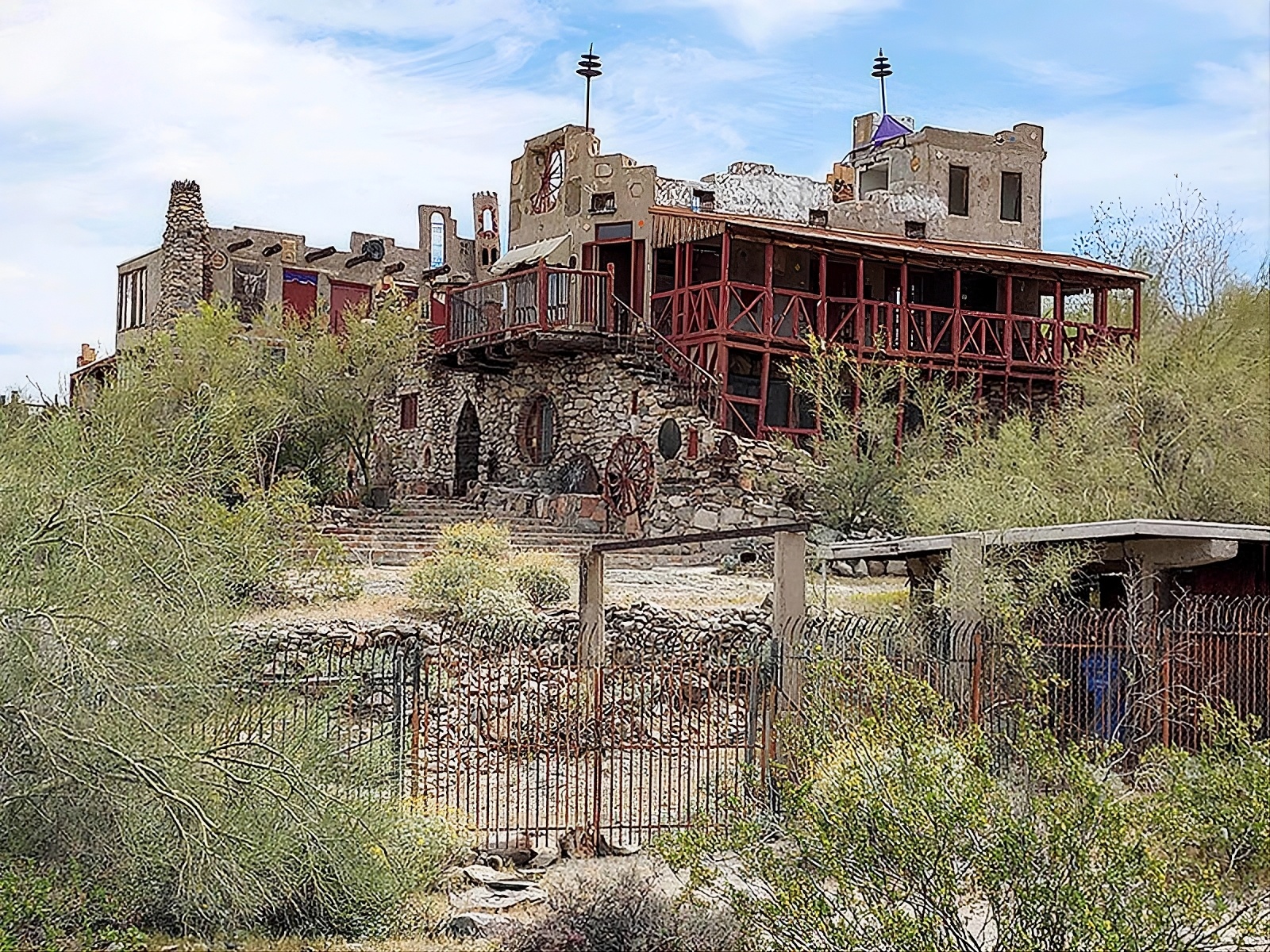
Without a blueprint, without an engineer, and using scrap from the dump, a father spends 15 years building an 18-room castle for his daughter, featuring tram tracks, 13 fireplaces, and over 700 m², which may now be demolished.

This design has a direct consequence: the connection ceases to be merely “a path” and becomes a crossing system, with points where engineering needs to deal with sudden changes in the environment.
The road exits the brightness and wind over the bridges and enters the subterranean operation, where the focus shifts to safety, ventilation, signaling, and incident control.
The colossal work was also treated as regional integration. The project’s narrative links the connection to the approach between Shenzhen’s technology and Zhongshan’s industrial potential, reinforcing that the gain is not only for drivers but also for the flow of people, services, and goods within the Greater Bay Area.
Artificial Islands: The Ground That Had to Be Born in the Ocean
Before any concrete for the bridge or tunnel, the colossal project faced a basic problem: there was no ground to support part of the system.
The solution began with the western artificial island, built using a method that creates a resilient perimeter almost immediately.
The outline of the island was defined with 57 giant steel cylinders, described as structures the size of basketball courts, prefabricated in factories and pushed to the seabed.
With this sealed “ring,” ships began to pump millions of cubic meters of sand to fill the core, making the terrain emerge and take on the shape of a kite.
Then came the less visible, but crucial stage for the colossal work: compacting and preparing the soil to withstand extreme events, such as typhoons and earthquakes.
The island shifts from being a temporary construction site to functioning as an operational and maintenance base. The project itself describes that, in the end, these islands were also softened with green areas, creating a more integrated appearance with the built environment.
The 6.8 km Submerged Tunnel: Manufacturing on Land to Assemble on the Seabed
The tunnel is the component that condenses the industrial logic of the colossal work. Instead of “born” in the sea, it was designed to be produced on firm land, in an environment where quality control and process repetition reduce risk.
The project describes the use of robots and human teams working together in assembling special rebar cages and using self-compacting concrete, with the aim of achieving maximum density and minimizing concrete placement failures.
The tunnel depends on a key point: it needs to be large and sturdy, but it also needs to float to be transported to the installation site.
This is where the Gina joints come in, presented as the sealing secret. They need to seal perfectly to withstand the ocean’s pressure and prevent any infiltration, even after transportation and installation.
The colossal work also describes the stage when, after curing, the dock is flooded and physics “takes control”: the segment begins to float, and the transportation operation can begin.
The movement is treated as a critical maneuver, where a mistake could damage the tube or compromise the concrete.
Controlled Sinking and Sealing: The Stage Where Millimeters Matter
With the segment reaching the launch zone, the phase considered the most delicate of the colossal work begins: the sinking.
A descending procedure centimeter by centimeter, using specialized equipment, until the segment reaches the prepared bed at the bottom.
This bed is not improvised. It is described as a pre-placed gravel bed, leveled by an automated ship to ensure the base is ready to receive the structure stably.
Next, hydraulic jacks pull the new segment against the previous one, compressing the rubber joint to create a dried seal.
There is a detail that reveals the human dimension of the colossal work: after the union and seal, workers open the internal doors and begin to walk inside the tunnel, already under the ocean, dry and safe. This procedure was repeated 32 times, forming the 6.8 km of submerged highway.
The tunnel is also described as the widest in the world in this format, with eight lanes, which increases complexity: more area, more systems, more control points, and greater demand for continuous ventilation and lighting.
Giant Bridges: From Foundations on the Seabed to 270 m Towers
While the tunnel is organized as manufacturing and underwater assembly, the bridges carry the vertical spectacle of the colossal work. On the western side, the Lingyang Bridge is described as the highest maritime suspension bridge in the world within the set, and its challenge begins below the waterline.
The foundation piles had to penetrate deep into the rocky seabed to support large dimension towers.
To build the tower base, the project describes a typical operation of maritime works, but always impressive: installing a huge steel cofferdam, pumping the water out and creating a dry work space in the middle of the sea.
In this artificial “void,” the footing was concreted, described as a concrete block the size of a football field.
From there, the towers began to rise with climbing hydraulic forms, advancing 6 m at a time, with workers facing strong winds and heights. The cited point is 270 m, where precision becomes absolute because that is where the main cables will support the load.
The colossal work details the sequence of cable installation: it starts with a pilot rope, then a temporary walkway, until the main cables, made of thousands of high-strength steel wires grouped and compressed by machines in a compact cylinder, are turned.
These cables are the structural heart of the suspension bridge, designed to hold the traffic and structure weight for an extended period.
Fabricated Deck, Lifting at Sea, and Special Asphalt
The deck also follows the industrial logic of the colossal work. Instead of being cast on site, it was fabricated as large metal elements.
The project describes box-shaped steel beams produced on the coast, with an aerodynamic shape to handle typhoon winds without instability.
Then, each segment, weighing thousands of tons, was transported on barges to the assembly point.
The lifting phase is presented as a high-demand ballet: strand jacks descend from the main cables, grab the deck, and elevate everything inch by inch until perfect alignment. Guide pins lock the pieces, and the final union occurs with welding, transforming isolated segments into a continuous span.
In another section, the Zhongshan Bridge uses a different design, in a stressed system, with cables anchored directly to the towers forming a fan pattern. This segment is important as it transitions to the point where the bridge “dives” and meets the tunnel, guided by a concrete ramp designed for smooth driving.
With the structure completed, the pavement finish becomes part of the performance. The colossal work describes the use of epoxy asphalt, flexible enough to follow the movements of a steel bridge but tough enough for trucks. In the tunnel, there appears the fire-resistant asphalt, reinforcing the focus on operational safety.
A Corridor That Thinks: Sensors, Ventilation, Lighting, and Rigorous Inspection
The colossal work does not end with concrete and steel. It begins to exist as a monitored system. The project describes the installation of the “nervous system”: thousands of lights and sensors, intelligent lighting to reduce driver fatigue in the submerged passage, and ventilation as a vital component.
In the tunnel, large jet fans were installed to maintain a constant flow of fresh air.
Walls received enamel-coated steel panels, described as durable and easy to clean. High-strength barriers and elements that allow expansion and contraction with temperature variations appear as part of the durability package. To withstand typhoons, the colossal work describes the installation of dampers that absorb wind energy.
Before the opening, a process of rigorous final inspection, including checking screws, welds, and sensors, as well as a test with dozens of trucks loaded positioned in the span to validate the support capacity. The bridge, according to the description, flexed exactly as predicted in the calculations.
There is also the invisible side of control: welds scanned with ultrasound to search for microcracks, complete cleaning of the corridor before inauguration, and the use of digital twins and drone mapping to keep the project on track with millimetric precision. The message is clear: the colossal work was built to be measured all the time.
What Changes in the Greater Bay Area with the Colossal Work
Once opened, the colossal work acts as a “structural shortcut” within the bay. The crossing, which “once took hours,” is now presented as reduced to about 30 minutes, and the slogan “from 2 hours to 16 minutes” appears as a symbol of distance and time compression.
For logistics, the project’s narrative points to gains in predictability: goods flow faster, routes become more direct, and the corridor turns into a backbone for regional integration.
For the population, the effect is daily: commutes become simpler, opportunities begin to “fit” on the other side of the bay, and the very route turns into a landmark, with the illuminated structure resembling a ribbon of light over the sea.
The artificial islands gain a continuous role as maintenance bases and points of interest, and a smart center monitors vehicle flow and corridor conditions 24 hours a day, 7 days a week. Maintenance is not occasional; it is permanent because the marine environment does not “forgive” negligence, and the colossal work needs to withstand time, wind, and salt.
In the end, what this crossing highlights is a way of building infrastructure like an industry: manufacturing, moving, assembling, testing, monitoring, and maintaining, without losing the pace. It is 24 kilometers that function as a showcase of method, not just as a road.
Do you think a colossal project like this improves the real-life quality of the region or serves more as a demonstration of power and ambition in engineering?









Y todo eso con 4,83 millones de dólares…
Los chinos sí que saben 😆😆😆
Read again please $4.83 Billion
4 millones de dólares????
Acaso no hay un editor que se de cuenta desde el título que es una mentira??????
Leonardo , cuatro mil ochocientos millones de dólares!!
When you realize it reads
“Billion” 😬🫣
Ambas cosas, es muy importante ser el primero y además el porque una nación puede y esta preparada.