





 Portuguese
  English
  Spanish
  3 min of reading
  0 comments


China Attacks Again! Get to Know the World’s Largest Energy Storage Plant and How It Is Changing the Rules of the Global Energy Game!
China is already the world’s largest hydroelectric power powerhouse, but now its main focus is energy storage. The country is expanding its pumped storage capacity to reach 80 GW by 2027.
In August 2023, the world’s largest pumped storage plant came online in northern China. And in September of the same year, construction began on the second largest plant in the world, located in eastern China.

The New Storage Capacity for Renewable Energy
In addition to being a global leader in the construction of new hydroelectric plants, China is also expanding its renewable capacity. In 2023 alone, the country installed 6.7 GW of renewable capacity in its reservoirs. However, the goal is even more ambitious: to achieve a total hydroelectric capacity of 120 GW by 2030.
However, the most important thing is not just energy generation. China has vast capacity for solar and wind energy, which makes storing excess renewable energy a priority. In 2023, the country installed 6.2 GW of pumped storage capacity, and it is expected to exceed that mark by the end of the year.
The Largest Pumped Storage Plant in the World
The latest and largest pumped storage plant in the world is located in Fengning, in the Hebei province, north of Beijing. Operated by China’s state grid, construction took 11 years to complete, finishing in August 2023.
This plant has a gigantic capacity: 3.6 GW, divided into two phases of 1,800 MW each. Each phase has six reversible pump-turbine units, each with a capacity of 300 MW.
-
Renewable energy advances over protected areas in Brazil, and a survey by the Energy Transition Observatory reveals silent impacts that challenge environmental conservation and pressure sensitive traditional territories.

-
Rio Grande do Sul accelerates energy transition: State invests in renewable technologies and consolidates decarbonization strategies and pathways to attract billions in new industrial investments.

-
With 160,000 m² of collectors, an area larger than 20 football fields, Silkeborg, in Denmark, hosts a solar thermal plant that heats 19,500 homes and could become the largest solar heating plant in the world.

-
A study reveals the expansion of renewable energy procurement in Brazil and shows how companies are taking advantage of opportunities to reduce expenses, ensure energy efficiency, and strengthen strategic environmental commitments.

Construction of the Second Largest Plant in the World
China continues to advance rapidly. On September 8, 2023, the groundbreaking for the second largest pumped storage plant in the world was held in the city of Jiande, Zhejiang province, in eastern China.
With a budget of US$ 1.76 billion and a planned capacity of 2.4 GW, it will be the largest clean energy project of GCL, China’s second largest solar power company. The plant will have six reversible turbines, each with a capacity of 400 MW, with the expectation of generating 2.52 TWh of electricity annually starting in 2030.
How Pumped Storage Works
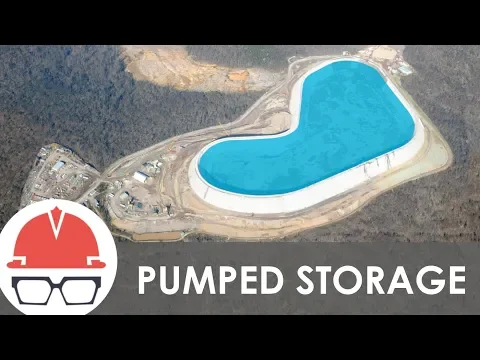
Pumped storage is often described as transforming reservoirs into giant batteries, but instead of moving electrons, these plants move water from a lower reservoir to a higher one, using physics to store energy.
When there is low electricity demand, water is pumped to the upper reservoir, utilizing the surplus from solar and wind energy production. During energy demand peaks, water is released back to the lower reservoir, generating electricity as it passes through the turbines.
The Growing Demand for Energy Storage
China is the world’s largest battery manufacturer and leads in installing storage capacity in batteries each year. However, energy consumption in the country is constantly growing.
This explains the need to also utilize its hydroelectric reservoirs to compensate for the lack of flexibility in the power grid, which relies on renewable sources like solar and wind. While these sources meet demand on sunny days and windy days, China still heavily depends on coal during periods of low renewable production.








-

Uma pessoa reagiu a isso.