





 Português
  Inglês
  Espanhol
  3 min de leitura
  0 comentários


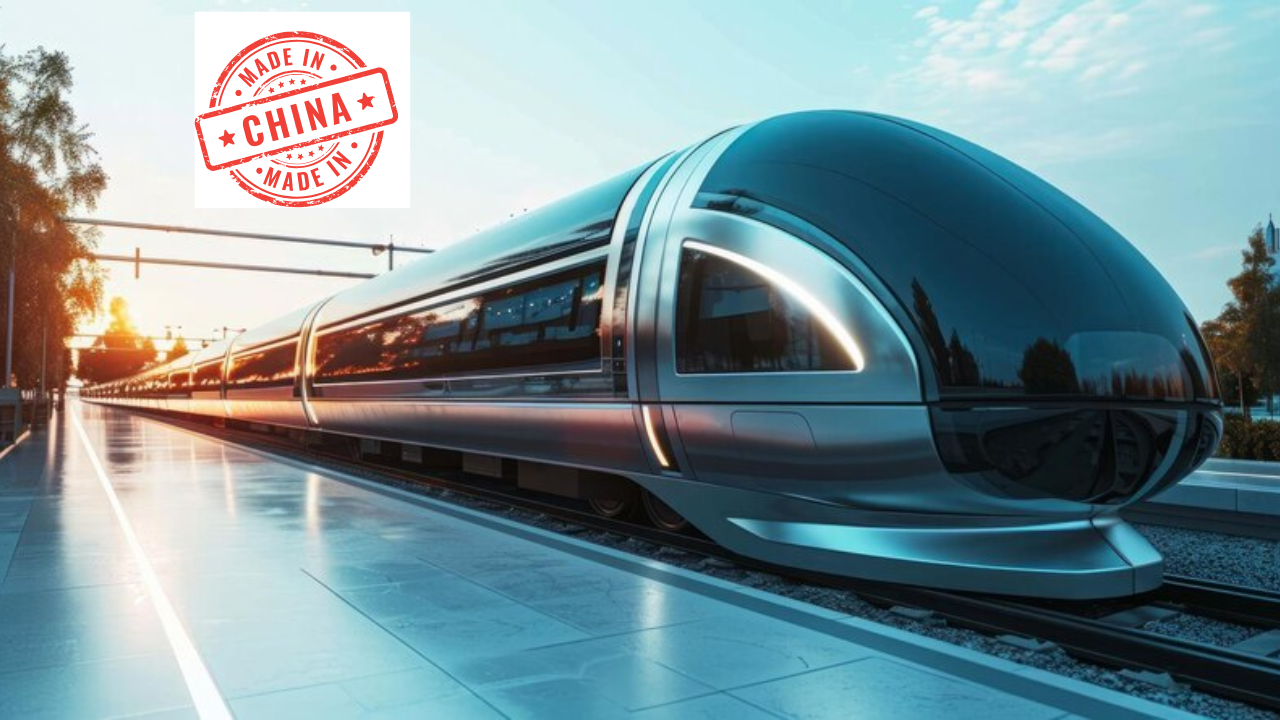
With The Launch Of The Autonomous Train ART, China Presents An Innovative Solution For Urban Transportation Without The Need For Tracks.
The China takes an important step in transportation innovation by launching the Autonomous Rail Rapid Transit (ART), the world’s first autonomous train that does not require tracks. This autonomous train, developed by CRRC Corporation, represents a new approach to public transport, utilizing advanced technology to operate autonomously. With this initiative, China reaffirms its commitment to modernization and efficiency in its transportation systems, seeking solutions to meet increasing urban demands.
How The Autonomous Train Works
Unlike traditional trains that rely on tracks, the autonomous ART train uses rubber tires and follows paths defined by a remote control system.
This innovative technology allows the autonomous train to operate on common roads alongside other vehicles, increasing the flexibility of urban transportation.
-
OMODA & JAECOO grows in Europe in 2026 with an integrated strategy of sales, innovation, local production, and technological advancement in the United Kingdom, Italy, and Spain.

-
OMODA & JAECOO expands after-sales service in Brazil with competitive maintenance, a 7-year warranty, and high availability of parts for technological SUVs.

-
OMODA & JAECOO appoints Alessandra Souza as executive marketing director in Brazil and accelerates brand expansion with a focus on innovation, networking, and hybrid portfolio.

-
Jaecoo 7 with super hybrid SHS system exceeds 1,200 km of combined range with a 1.5 turbo engine, high-density battery, and intelligent energy management.


The operation without the need for a driver is a feature that simplifies the transportation system, making it more efficient in areas with heavy traffic flow.
To ensure safety, the autonomous train is equipped with an integrated system for detecting pedestrians and obstacles.
This means that the autonomous train can identify risky situations and make quick decisions, increasing safety for all who use the roads.
This detection and response capability is essential for the safe operation of the autonomous train, especially in urban environments where interaction with other vehicles and pedestrians is constant.
Advantages For Urban Mobility In China
With a speed that can reach 70 kilometers per hour, China’s autonomous train presents an effective solution to tackle the challenges of congestion in large cities.
By operating in urban and suburban areas, the autonomous train can help revitalize traffic-congested spaces.
The ability to operate on common roads without the need for physical tracks means that the autonomous train can be implemented quickly, without the complications and high costs associated with traditional railway infrastructure construction.
Furthermore, the autonomous train has the potential to become a sustainable option, as it could be electrified in the future.
This feature may contribute to the reduction of polluting gas emissions, aligning with global sustainability and environmental protection goals.
The transition to a more eco-friendly transportation system is one of the main objectives of Chinese authorities, who seek to reduce dependence on fossil fuels and minimize the environmental impact of transportation.
Global Interest In China’s Technology
The success of the autonomous ART train in China has caught the attention of other countries that are considering investing in this technology.
Nations such as Zimbabwe, Australia, and Qatar have already expressed interest in adopting this transportation model.
The vehicle’s application could transform urban mobility in different parts of the world, offering solutions adaptable to local needs.
This trend of international interest shows that autonomous train technology is not just a regional innovation, but rather a proposal that may have a significant global impact.
The Future Of Transportation With Innovations
Besides China’s automobile, other innovations are being developed globally.
One example is the Hyperloop in Europe, which utilizes magnetic levitation technology to transport trains at high speeds in vacuum tubes.
This technology promises to further revolutionize transportation, offering fast and secure options.
These innovations, including China’s vehicle, represent a significant advancement in how people move, contributing to more efficient, safe, and sustainable transportation.










Seja o primeiro a reagir!