





 Portuguese
  English
  Spanish
  5 min of reading
  0 comments


China Celebrates 50,000 Km Milestone in High-Speed Trains With New Xi’an Yan’an Route at 350 Km/h, Reducing Travel Time to 68 Minutes and Boosting a Mega Transportation Project That Integrates Railways, Highways, Ports, Airports, and Digital Innovation by 2025 With Records of Passengers and National Cargo
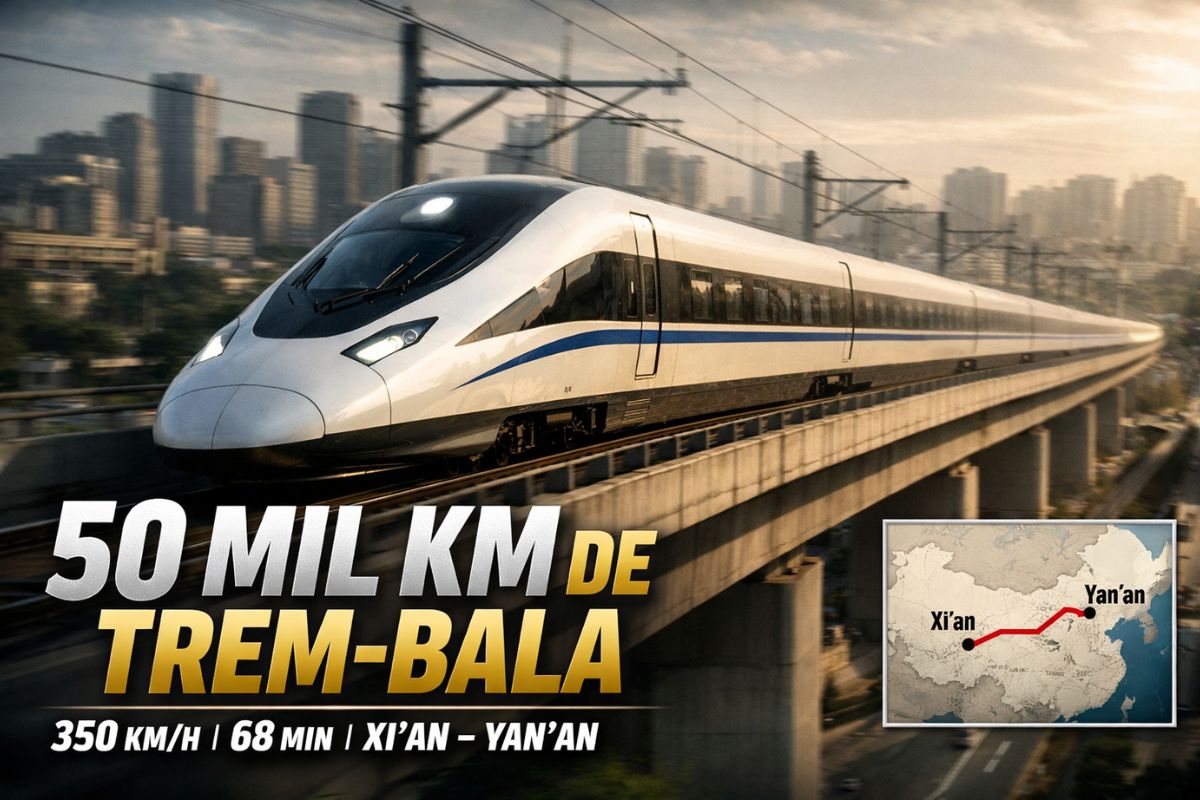
The China took another step in the race for rail this Friday, 26, by inaugurating a new high-speed train corridor between Xi’an and Yan’an in Shaanxi Province. With the opening of the line designed to operate at speeds up to 350 km/h, the Chinese network of high-speed trains has reached around 50,000 kilometers in operation, according to state-owned China Railway and public media CCTV. The 299-kilometer stretch can be covered in just 68 minutes, shortening journeys that previously took much more than 1 hour.
On Tuesday, 23, the Information Office of the State Council of China presented in Beijing the annual report of the transport sector in 2025, detailing how the high-speed railway network has expanded by 32 percent since 2020 and is integrated into a broader package of construction projects, which includes expressways, waterways, airports, urban rail systems, and an aggressive plan for digitalization and use of artificial intelligence throughout the mobility system.
China’s High-Speed Network Exceeds 50,000 Kilometers
With the new connection between Xi’an and Yan’an, the China’s high-speed train network reaches about 50,000 kilometers of operational lines.
-
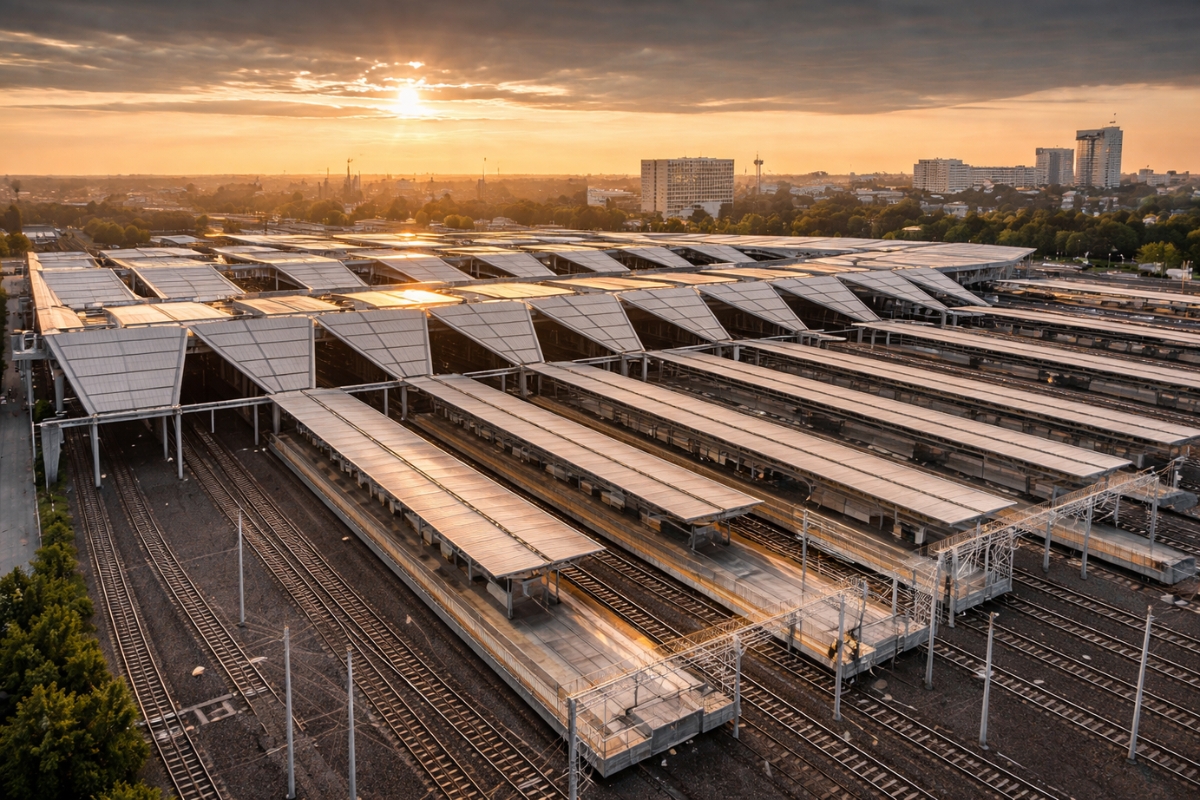
In A European City, The Country’s Largest Railway Junction Was Modernized Without Closing Its Doors, Kept Trains Running During Years Of Construction, Now Serves Up To 60,000 Passengers Per Day, And Installed Solar Panels That Generate About 30% Of Its Energy
-
Famous Brazilian Railway May Become a Parking Lot

-
The Country of “Punctual As a Train” Admits It Has Lost Control: High-Speed Trains Delay, Stop, Disappear from the Map and Turn 6-Hour Trips into 10, While Deutsche Bahn Promises Restructuring in 2026 But Faces 19th Century Infrastructure, Staff Shortages and Sections Closed for Months

-
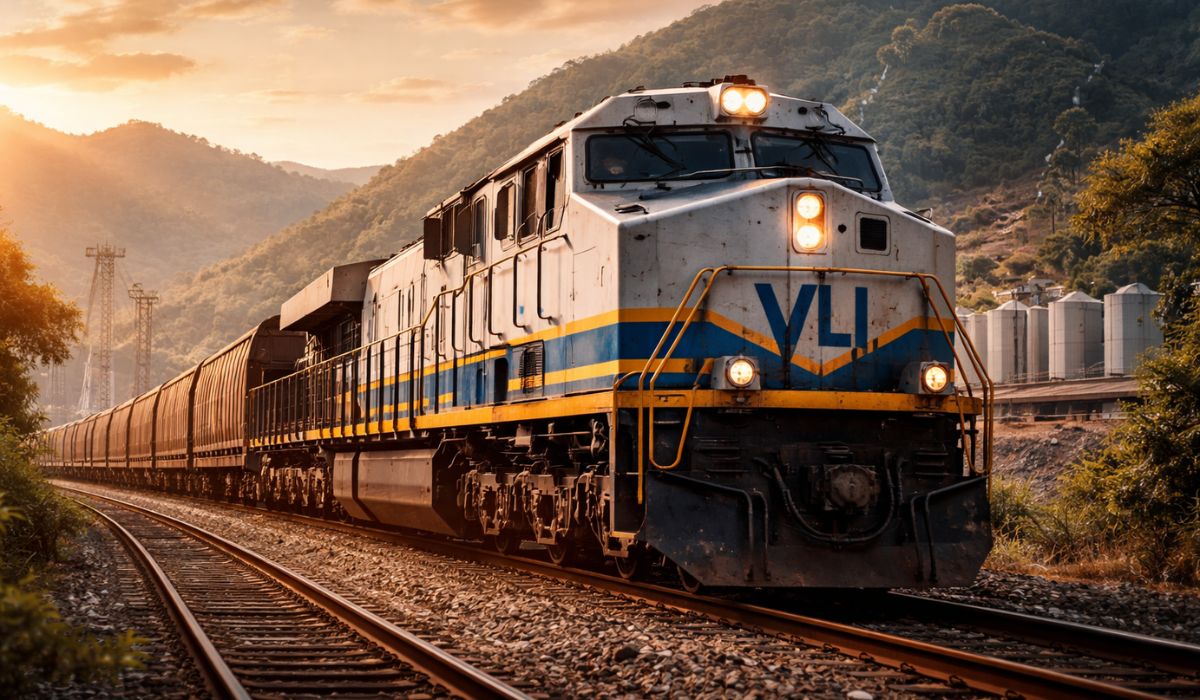
With an Investment of R$ 700 Million in One of the Country’s Main Rail Networks, VLI Reinforces Infrastructure, Receives 8 New Locomotives, and Expands the Corridor Connecting 7 States, Boosting Jobs and the Transportation of Grains, Ore, and Oil Products to the Port of Santos
According to China Railway, this represents an expansion of 32 percent compared to 2020, solidifying the country as a reference in large-scale railway projects.
The Xi’an Yan’an line was designed for trains that can run at 350 km/h, a standard that China has been adopting in its most modern corridors.
In the new stretch, the 299 kilometers can be traveled in 68 minutes, which significantly reduces travel time within Shaanxi Province and strengthens the integration between industrial centers, tourist regions, and service hubs.
Xi’an Yan’an Shortens Trips and Reorganizes the Shaanxi Region
The route between Xi’an, one of the main historical and technological centers of China, and Yan’an, a symbolic city in the country’s political history, is presented by the government as a strategic piece to redistribute flows of passengers and goods in the region.
With the high-speed train, journeys that previously took long hours on roads are now concentrated on a high-standard railway axis.
The expectation is that the line will relieve highways, encourage regional tourism, strengthen local production chains, and further connect the interior to the national network of China’s high-speed trains.
Trillion Investments in Railways, Highways, and Waterways by 2025
In the report presented in Beijing, the Deputy Minister of Transport, Li Yang, stated that the economic operation of the transport sector remained stable throughout the year, with gradual advances in key indicators.
The official projection indicates that investment in fixed assets in the sector will exceed RMB 3.6 trillion by the end of 2025.
Within this package, China plans to add around 2,000 kilometers of high-speed railways, approximately 8,000 kilometers of expressways, and nearly 900 kilometers of high-standard waterways.
Additionally, five new civil transportation airports have already received certification, increasing domestic and international air connection capacity.
Surge in Passengers, Cargo, and Foreign Trade
The report shows that the volume of interregional passenger movements exceeded 66 billion throughout the year, while commercial freight transport surpassed 58 billion tons.
Both indicators recorded annual growth close to 3.5 percent, signaling strong and stable demand.
Foreign trade also helped to boost the sector. Container movements at China’s ports grew about 9.6 percent, international air freight transport advanced 20 percent, and the volume of express deliveries increased approximately 13.5 percent.
These numbers reinforce the country’s role as a global logistics hub while the China’s high-speed train network shortens timeframes on internal routes.
Holidays, Mass Travel, and Historic Records
The service delivery capacity of the transport sector has also been expanded. During the Spring Festival, one of the largest travel periods on the planet, the transport system ensured the movement of about 9 billion people.
During the National Day and the Mid-Autumn Festival holidays, the number of trips reached 2.4 billion, according to the government report.
Both volumes are described as historic records for these periods and help to explain why China continues to expand high-speed trains, highways, and airports at an accelerated pace.
Urban Transport: Subways, Trains, and Priority for the Elderly
In urban transport, 54 Chinese cities already have operational metro and urban train systems, totaling more than 11,000 kilometers of lines.
The daily average exceeds 90 million passengers, reinforcing the significance of rail mobility in major Chinese metropolises.
Another highlight is the integration between airports and railways. According to the government, the railway integration rate at hub airports reached 83.3 percent, facilitating connections between flights and trains in high-demand corridors.
To cater to the elderly population, around 1,450 specific bus lines and over 11,000 on-demand bus lines have been implemented in major cities, focusing on accessibility and inclusion.
Artificial Intelligence, Digital Highways, and the Advancement of the C919
In the technological field, the Ministry of Transport has progressed in the digitalization of China’s mobility infrastructure.
The government published guidelines for the Artificial Intelligence + Transport initiative and began building a large integrated transport model, which promises to support decisions in logistics, route planning, and real-time traffic management.
Approximately 1,700 kilometers of roads and more than 2,200 road and waterway facilities have undergone digital transformation, incorporating sensors, advanced monitoring, and intelligent management systems.
While high-speed rails gain recognition, the C919 commercial aircraft also emerges as a symbol of Chinese technological ambition: the aircraft has already surpassed 3 million safely transported passengers, according to the official report.
With a network that combines 50,000 kilometers of high-speed rail, new highways, ports, airports, and artificial intelligence projects, the China signals that it intends to maintain an edge in the global race for logistics efficiency and territorial integration.
In your opinion, should China’s strategy of heavily investing in high-speed rail be copied by other countries, or should the focus be on other types of transport?










-

Uma pessoa reagiu a isso.