





 Portuguese
  English
  Spanish
  4 min of reading
  0 comments


Beijing Tightens Licensing And Pressures Global Supply Chains
On October 9, 2025, the Ministry of Commerce of China (MOFCOM) announced new export rules. These rules require special licenses for products containing more than 0.1% of rare earth elements from Chinese sources or manufactured with Chinese technology. The measure, which will take effect on December 1, 2025, expands Beijing’s control over critical elements used in electronics, electric vehicles, and defense.
Additionally, five new elements were added to the control list — holmium, erbium, thulium, europium, and ytterbium — bringing the total to 12 types of rare earths under direct regulation. The MOFCOM Notice No. 61 also established an extraterritorial rule, similar to the Foreign Direct Product Rule in the United States. This regulation states that products made outside of China, but utilizing Chinese inputs, will also need authorization. Thus, Beijing reinforces its strategic power over the global supply chain and consolidates its influence in the high-tech materials sector.
International Reactions And Trade Escalation
In immediate response, President Donald Trump announced additional tariffs of 100% on Chinese products. He also imposed restrictions on the export of U.S. software, seeking to balance the trade dispute. However, Beijing maintained a firm stance and responded quickly. The Chinese Ministry of Commerce stated that the measure does not represent a total ban, but rather the exercise of a sovereign right.
Meanwhile, analysts warn that behind the apparent tariff war lies a contest for technological and industrial power. Dean Ball, former adviser to the White House, stated that the new policy grants China “the ability to exclude any country from the modern economy.” Meanwhile, Michael Froman, president of the Council on Foreign Relations, highlighted that “the U.S. may restrict chips today, but China can complicate the manufacturing of tomorrow’s technologies.”
On the other hand, Robin Brooks, an economist at the Brookings Institution, pointed out that the increase in restrictions could be an attempt to escalate tensions with the U.S.. According to him, this comes after the decline in Chinese export profits and reflects a strategy of widespread economic pressure.
ARTICLE CONTINUES BELOWSee also
If the USA were to go to war with Brazil, Washington’s greatest fear would not be the attack itself, but facing a vast territory, prolonged resistance, and a costly, chaotic, and unpredictable occupation.

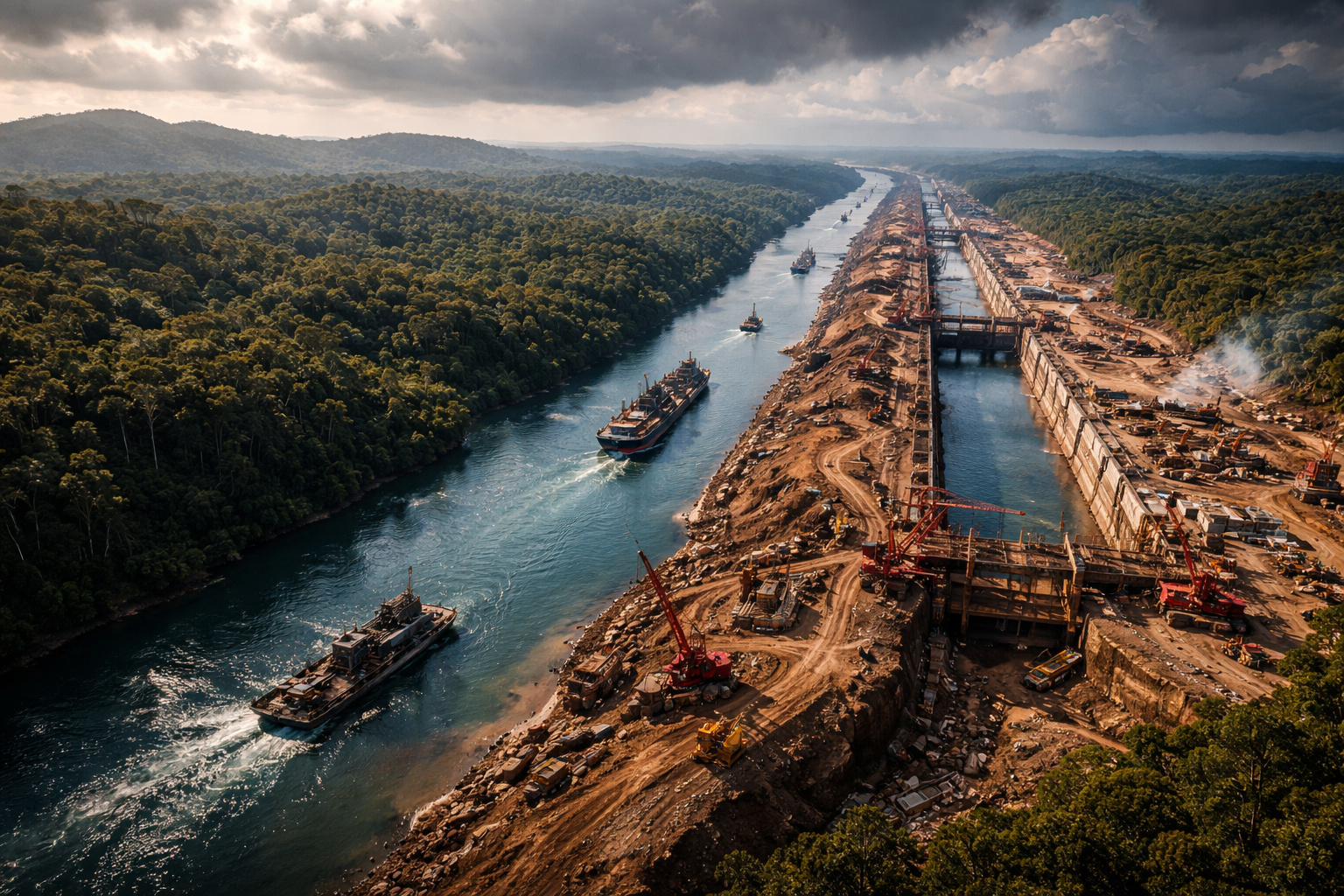
In 2013, Nicaragua sold the concession for a canal to rival Panama to a Chinese billionaire who lost 85% of his fortune, disappeared, and was declared bankrupt. Now the project resurfaces with a new route, a new Chinese partner, and a cost of $64.5 billion.
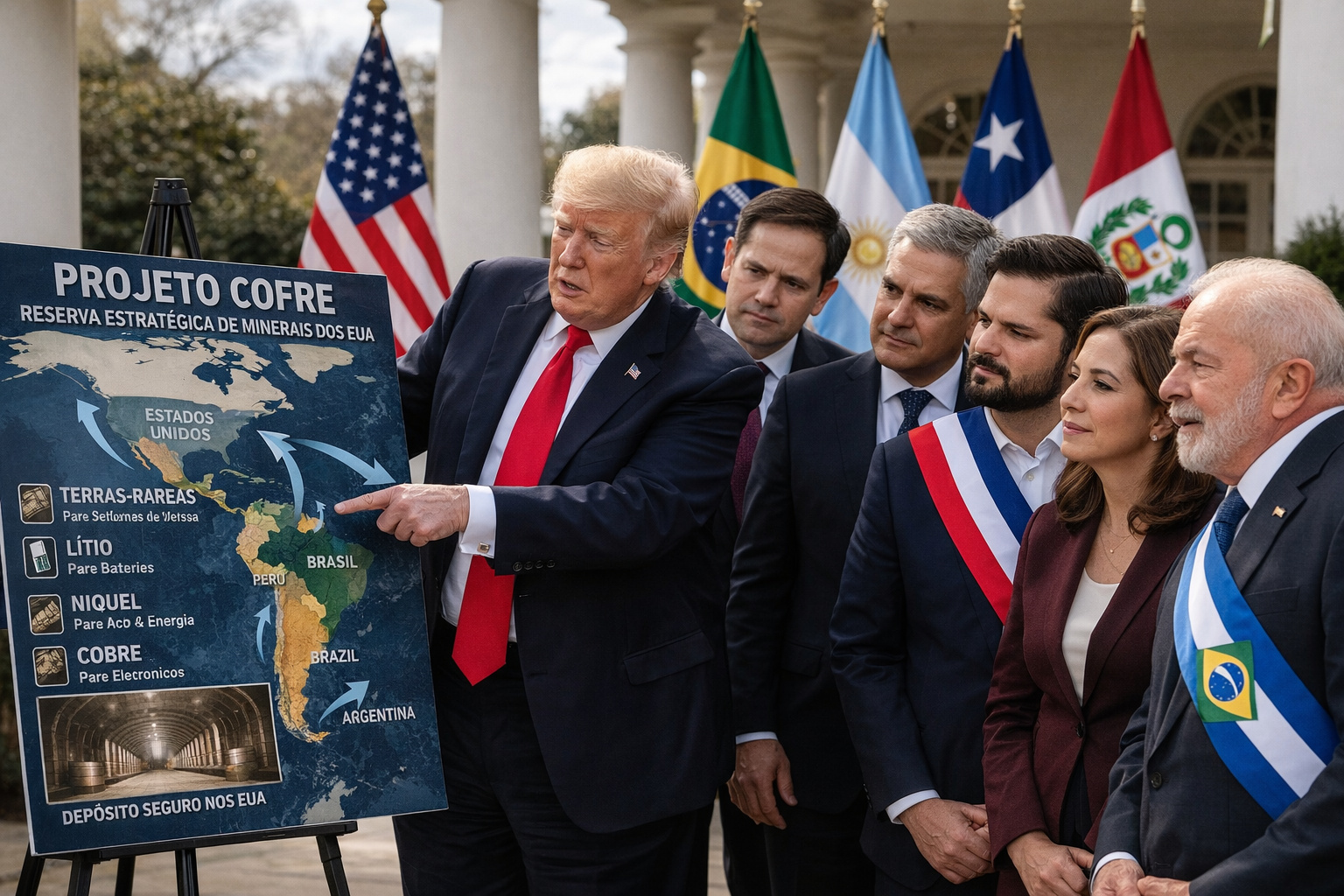
The USA announces a mysterious billion-dollar vault project to store critical minerals, but what intrigues experts is not just the plan itself, but why Latin America, including Brazil, has entered the center of this global dispute against China.
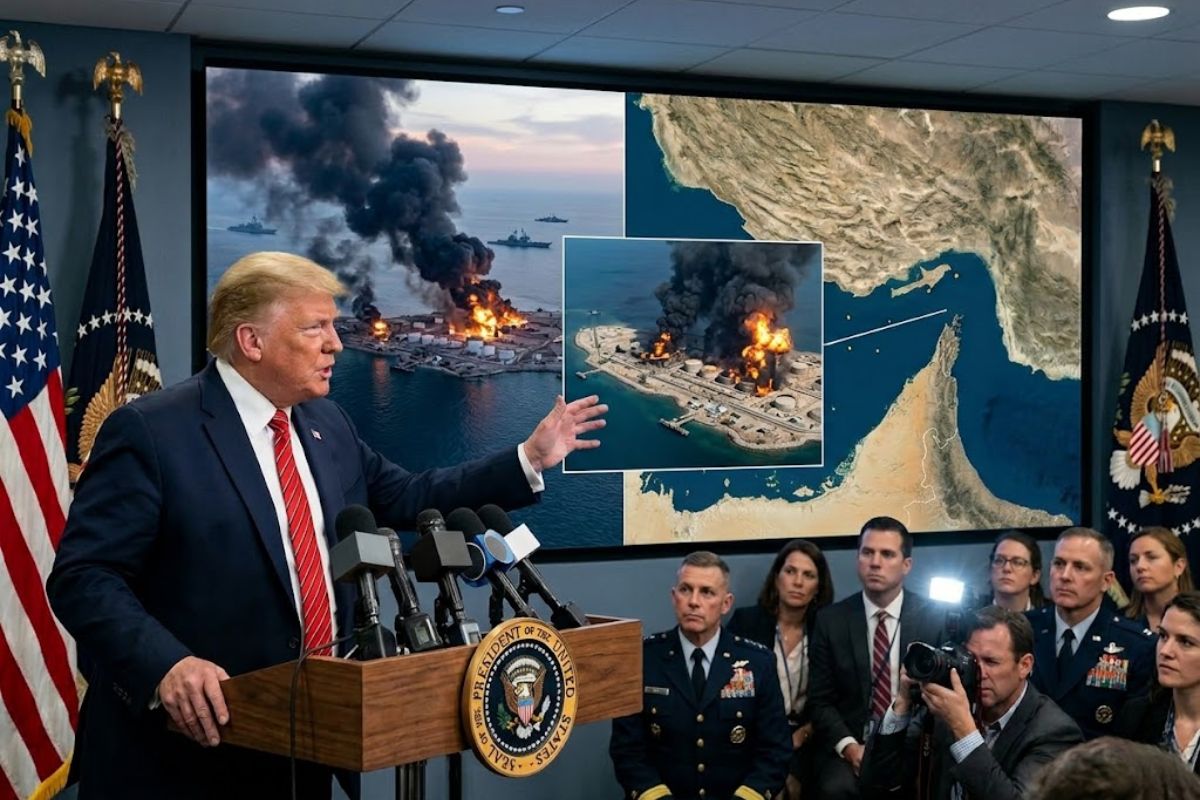
Trump Announces Bombing of U.S. Military Targets on Iranian Island Responsible for About 90% of Iran’s Oil Exports, Warns of Further Attacks if Navigation in Strategic Strait of Hormuz Is Threatened
Global Impacts And Technological Vulnerability
China accounts for over 90% of global rare earth processing and dominates the production of permanent magnets, essential for electric cars, wind turbines, smartphones, and defense systems. Thus, the world faces serious supply shortages, according to the Washington Post.
In September 2025, Chinese exports of magnets fell by 31%, signaling that the effects of the restrictions have already begun. To lessen dependence on Beijing, the European Union announced, on October 14, 2025, a strategic partnership with the United States. The goal is to diversify suppliers, stimulate domestic production, and develop new supply routes, as reported by Reuters.
Moreover, various sectors — especially automotive and technology — are already observing increased production costs. This rise is due to the increase in raw material prices and the risk of disruptions in supply chains.

Alternative Paths And The Race For Independence
As China strengthens its position, Western countries seek viable alternatives. In the United States, the company MP Materials began production of neodymium and praseodymium in 2025, essential elements for high-performance magnets. The goal is to reduce dependence on China and enhance national technological security.
Experts say that the challenge lies not only in access to mines, but also in refining and advanced manufacturing of these materials, stages still dominated by Beijing. According to the Center for Strategic and International Studies (CSIS), the intermediate links in the supply chain are the most vulnerable to geopolitical manipulation. Therefore, the current scenario reinforces the need for urgent investments in new production chains, focusing on sustainability, innovation, and economic resilience.
The Future of The Technological Dispute
Despite the tensions, experts believe that China’s dominance over rare earths represents both a strategic risk and a global opportunity. As stated by Dean Ball, now a member of the Foundation for American Innovation, “if our economies depend on these raw materials, the world needs to act quickly.”
He added that it will be essential to build self-sufficient alternatives and promote international cooperation. Therefore, as Beijing tightens its policies, pressure grows on Western nations. These countries need to redefine their value chains, ensure technological autonomy, and avoid a structural dependence that could hinder the future of the global economy.










Seja o primeiro a reagir!