





 Portuguese
  English
  Spanish
  4 min of reading
  1 comment


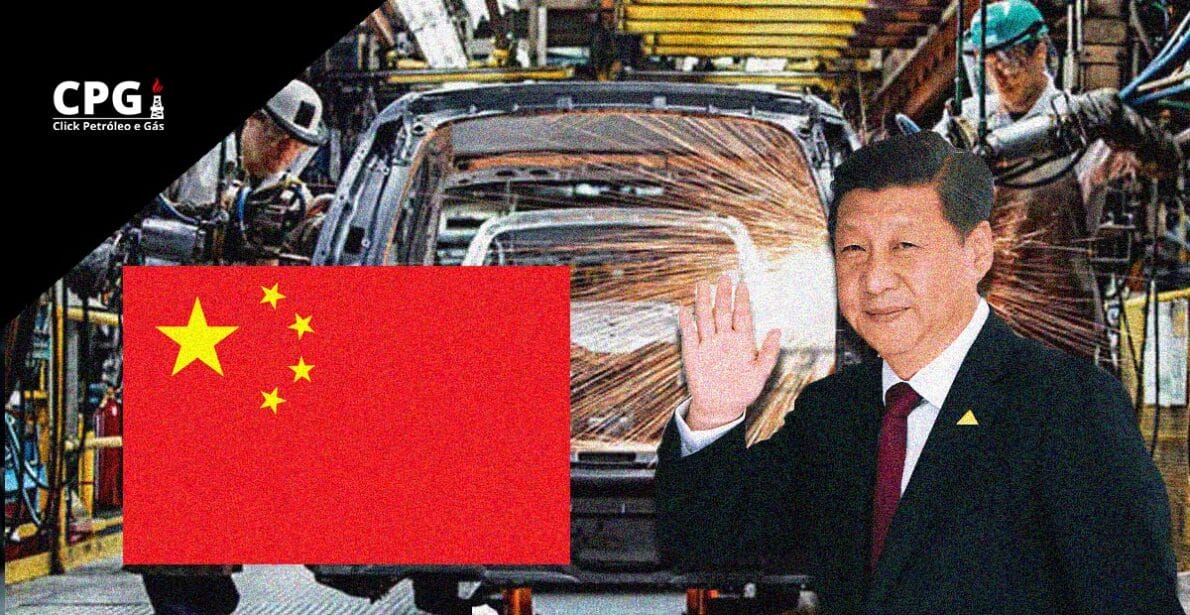

Get Ready for a Transformation That Is Revolutionizing the Global Automotive Market, with Direct Impacts in Brazil. China, Once Seen as a Mere Follower of Traditional Powers, Is Now Leading the Race in the Electric Car Market.
With impressive technological advances and bold strategies, the Asian giant is redefining the rules of the game, leaving established brands on alert. But what does this rise mean for the future of the Brazilian automotive industry?
Today, China is not just manufacturing cars; it is dominating the electric vehicle market, becoming the world’s largest producer and consumer.
According to the YouTube channel Elementar, the Asian giant has not only surpassed the old sector powers, like the USA and Germany, but has also become an unquestionable protagonist in the global automotive industry.
-
China accelerates global science and may surpass the United States in 2 years with increased public investment, continuous growth, and direct impact on the global technological competition.

-
Scientific studies indicate that drought may be strengthening a much greater silent threat: more resistant superbugs.

-
A new Brazilian shopping center worth R$ 400 million will be built in an area equivalent to more than 4 football fields, featuring 90 stores, 5 cinemas, a supermarket, a college, and parking for 1,700 cars, potentially generating 3,000 jobs.

-
Man builds functional 5-meter submarine in his garage using gas cylinders, PVC pipes, and a refrigerator motor, and navigates with the vessel on a lake in Colombia.


By 2024, China is already exporting more cars than any other country, an impressive feat for a nation that, in the 1950s and 1960s, was still trying to modernize its automotive industry. But how did this nation, once seen as merely a technology replicator, reach the top of the global automotive pyramid? Let’s dive into this fascinating story.
From “Copy and Paste” to Innovation: The Step-by-Step of Chinese Evolution
In the 1950s, the Chinese government, under the Maoist regime, took the first steps to modernize its automotive industry.
The First Automotive Factory in China (FAW) was established in 1953, with Soviet support, marking the beginning of a journey that would combine learning with indigenous innovation.
China’s technology transfer strategy involved partnering with foreign companies. Between the 1970s and 1980s, collaboration with American and German manufacturers, such as Volkswagen, brought innovations that would shape the foundation of what we see today in the Chinese market.
Strategic Partnerships and the “50:50 Rule”
In 1984, Shanghai Volkswagen was created, and the launch of the VW Santana in 1985 transformed the model into one of the best-selling cars in China until 2012.
The famous “50/50 rule”, in effect since 1994, required foreign manufacturers to partner with local companies to operate in the country, limiting foreign ownership to 50% of the shares. This rule was repealed only in 2022, allowing foreign companies to have majority shareholders.
Bet on Electric Vehicles: A Visionary Strategy
The shift to electric vehicles began to gain momentum in 2007, when Wan Gang, a former Audi engineer and then Minister of Science and Technology of China, decided to heavily invest in this sector.
According to the aforementioned channel, he was not only one of the first to test the Tesla Roadster but also boosted the development of the electric industry in China by supporting companies like BYD and Geely, pioneers in battery research and electric technology.
The Chinese policy of subsidies and tax incentives played a crucial role, enabling the country to not only develop new technologies but also to become a leader in battery production, overcoming challenges imposed by patents and intellectual property.
Global Impact and the Trade War with the USA
China quickly became the largest exporter of automobiles, especially electric ones, which generated trade tensions with the United States.
The USA responded by imposing tariffs of up to 100% on Chinese electric vehicles, an attempt to curb China’s growing influence in the global market.
This trade war not only created instability in global financial markets but also emphasized the need for economic diversification.
In times of uncertainty, many investors seek strategies such as the partial dollarization of their assets to protect themselves from regional risks, especially in Brazil.
Presence in Brazil: The Expansion of Brands from China
The Chinese presence in the Brazilian automotive market cannot be ignored. In 2023, Chinese brands represented more than 5% of vehicles sold in Brazil and 35% of electric vehicle imports.
This exponential growth is only expected to increase, with optimistic forecasts indicating a 60% rise in electric vehicle sales in Brazil in 2024.

The Future of Electric Vehicles in Brazil and around the World
Between April 1 and 14, 2024, sales of electric and hybrid vehicles in China surpassed 50% of all car sales, according to the channel Elementar.
This movement not only drastically reduces CO₂ emissions but also represents a significant advancement in the fight against pollution.
In the United States, tax incentives and environmental regulations have accelerated the adoption of electric vehicles, with companies like Tesla and Waymo leading the development of autonomous vehicles.
However, in Brazil, the transition faces specific challenges, such as the lack of adequate charging infrastructure and the need for more robust government policies on sustainability and innovation.
The growing demand for electric vehicles can be a golden opportunity to boost the Brazilian economy, attract foreign investments, and foster technological innovation.
However, Brazil still needs to overcome considerable challenges to keep up with this revolution and harness the full economic potential that electric vehicles offer.
What Does the Future Hold for Brazil in the Era of Electric Cars?
As China consolidates its position as a global leader in the automotive market, Brazil faces a crucial crossroads. The rapid expansion of Chinese brands in the country presents both challenges and opportunities.
The question remains: Will Brazil be able to adapt to this new reality and become relevant in the era of electric vehicles, or will it remain on the sidelines of this global revolution?
Leave your opinion in the comments: How do you think China’s growing presence will impact the Brazilian automotive market in the coming years?






Todas as revoluções industriais o EUA foram protagonista, agora nesta época de transição não acreditaram que as baterias criariam um ambiente revolucionário, imagine o Brasil.