





 Portuguese
  English
  Spanish
  4 min of reading
  0 comments


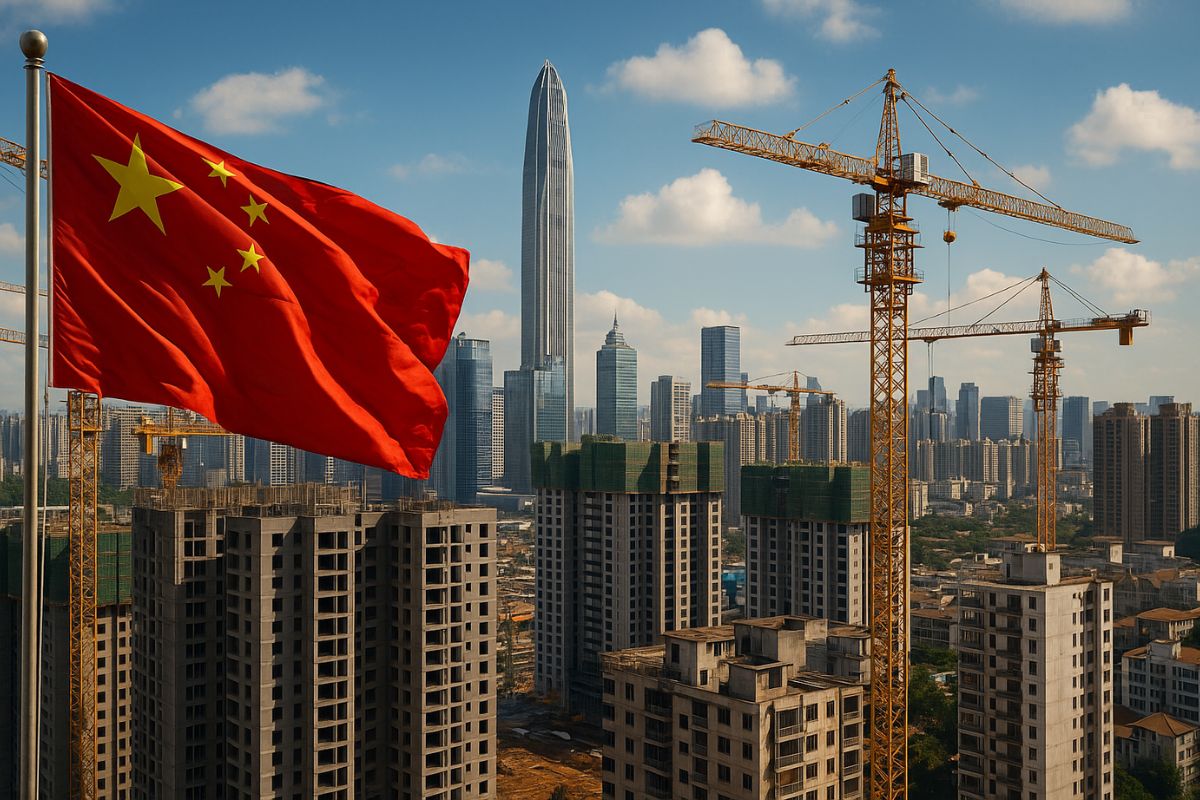
From Shenzhen (From 30 Thousand to 12 Million) to “Ghost Cities,” China Builds Cities in Less Than a Decade—a Feat That Comes at a Cost in Sinking Land and Environmental Risks.
China Builds Cities in Less Than a Decade: the speed of Chinese urbanization has become a symbol of centralized planning, abundant capital, and standardized engineering. The result is metropolises built at an industrial pace, capable of rearranging production, employment, and logistics chains in just a few years.
But the same engine driving expansion also casts shadows. Ghost cities, real estate imbalances, and growing environmental impacts such as land subsidence in major centers expose the limits of a model that prioritizes scale and speed.
How China Builds So Fast
The starting point is institutional. With urban land ownership in the hands of the State, central and local governments can consolidate areas, issue permits, and attract capital without the typical delays of fragmented markets.
-
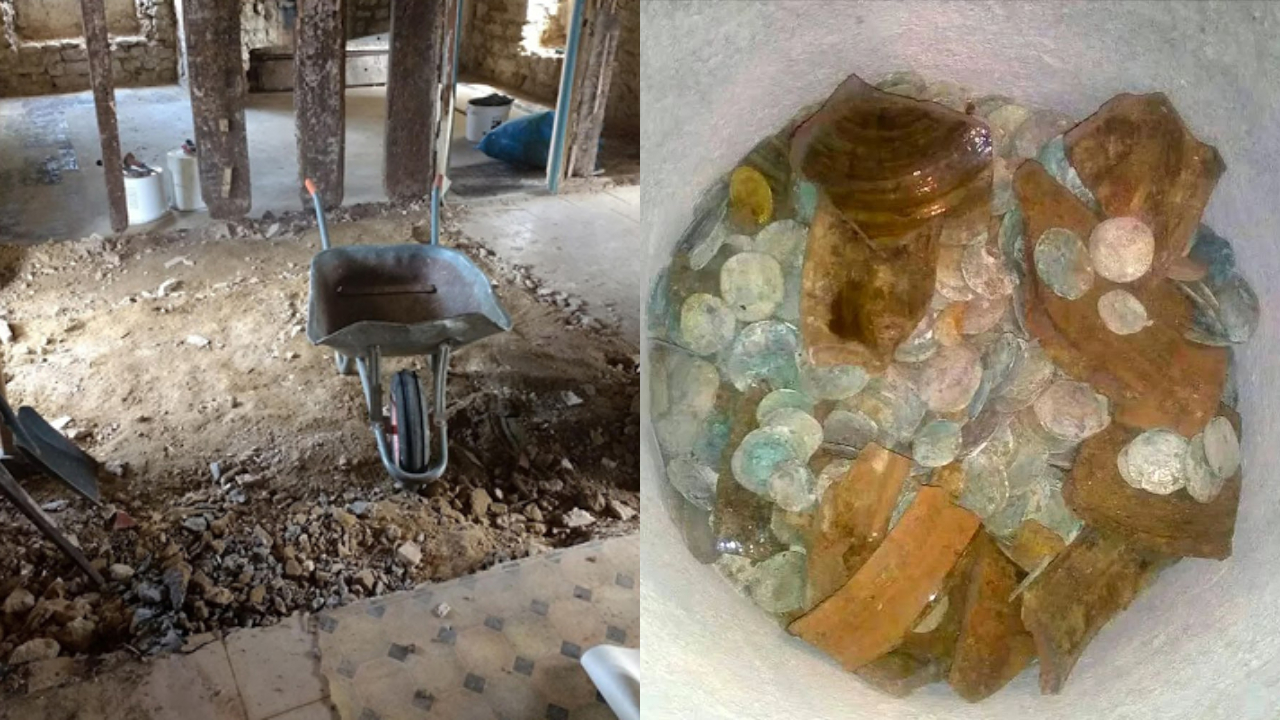
A couple buys an old chalet, breaks the kitchen floor for renovation, and finds over a thousand coins of gold and silver hidden since the English Civil War over 4 centuries ago.
-
Rigid bags with their days numbered: new trend prioritizes comfort in 2026.

-
YouTuber creates an excavator equipped with a giant 4.5-meter sword to challenge his brother to a rematch, and the invention quickly goes viral on social media.

-
The U.S. Army surprises the world by presenting the UH-60MX Black Hawk helicopter capable of flying without pilots, controlled by a tablet, featuring the MATRIX system, smart sensors, and full autonomy in real combat and rescue missions.


This mechanism reduces friction, shortens timelines, and aligns projects with macroeconomic goals.
On-site, productivity comes from construction industrialization: prefabrication and modular assembly allow for residential complexes, hospitals, and infrastructure to be built in weeks, not years.
Add to this a massive workforce and coordinated public procurement of steel, cement, and equipment, and the schedule accelerates.
Tax incentives and investment targets complete the tripod. Building fuels GDP, drives industrial chains, and attracts manufacturing and services to new urban hubs.
The cycle reinforces itself: more city attracts more activity, which justifies more construction.
Emblematic Cases: From Boom to Ghost Cities
Shenzhen is the emblem. From a village of around 30,000 inhabitants in the late 1970s to a metropolis of over 12 million, the city exemplifies how special economic zones, port logistics, and technology can accelerate urbanization.
It has become a showcase for innovation, manufacturing, and finance, with execution times counted in just a few five-year plans.
On the other end is Ordos Kangbashi, designed to accommodate one million people and marked by urban voids—ready condominiums, low occupancy, sparse commerce.
This mismatch arises when real estate supply outpaces jobs and services, generating the label of “ghost city” and immobilized capital.
New planned centralities, like Xiong’an, seek to correct the course: smart city design, green guidelines, and cutting-edge infrastructure.
Still, the challenge is to align physical schedules with the actual attraction of residents and companies, avoiding repeating the formula of “build first, populate later.”
The Environmental Cost: Sinking Land and Water Pressure
Speed comes at a price underground. The weight of meganeighborhoods, towers, and infrastructure, coupled with groundwater extraction, is associated with land subsidence in several metropolises, increasing the risk of flooding and heat islands.
In dense plains, millimeters per year turn into centimeters in a decade, and the bill comes via drainage, road maintenance, and insurance.
In addition to aquifer depletion, soil sealing and suppression of natural areas compress urban resilience.
“Sponge city” programs have emerged as a response, but the scale of the accumulated liabilities demands retrofitting of drainage, retention parks, and water reuse on an industrial level.
Social Impacts and the “Showcase” Effect
The migration from the countryside to the city drives consumption and productivity, but also pressures public services when demographic expansion does not keep pace with the supply of schools, health services, and transportation.
In projects where housing arrives before jobs, expensive commuting patterns and underutilized neighborhoods appear.
There are also distributive frictions: urban renewal can displace communities and micro-entrepreneurs if compensations and relocations are not well-calibrated.
Without economic vitality and social fabric, new blocks remain lifeless; infrastructure exists, but the city does not “happen.”
The Political Economy of Brick: When the Engine Is Stuck
Building has become, for years, a shortcut to growth targets. But when effective demand does not materialize into local income and jobs, empty stocks accumulate, and the balance sheets of real estate agents stress out.
It is the difference between a city as a productive platform and a city as a financial asset.
China Builds Cities in Less Than a Decade when financing, land, and schedules align.
Keeping them alive for decades requires another engineering: productive diversification, service density, efficient mobility, and affordable housing.
This shift from quantity to quality defines the next phase.
Urban Technology: From Design to Daily Life
Smart grids, sensors, light rail transit, and traffic management help “operate” the city in real time. But technology is a means: without governance and open data, it becomes an expensive solution with little impact.
The gain lies in transportation-oriented planning, walkable blocks, mixed-use, and the redevelopment of vacant lots.
To contain ghost cities, the path is to phase projects with occupancy targets, foster job centers before residential peaks, and attract education and healthcare as anchors.
Affordable rental policies and instruments for capturing value added balance the urban account—less speculation, more lived city.
China Builds Cities in Less Than a Decade like no other country with efficiency that impresses and inspires.
The challenge is to transform speed into sustainability, avoiding occupancy gaps and cumulative environmental risks.
Do you see this model as a reference or a warning? Prioritize speed or qualified occupancy? And, if it depended on you, what would come first: jobs, housing, or transportation? Leave your opinion in the comments; we want to hear from those who design, invest, build, and live the city in practice.









-

Uma pessoa reagiu a isso.