





 Portuguese
  English
  Spanish
  4 min of reading
  3 comments


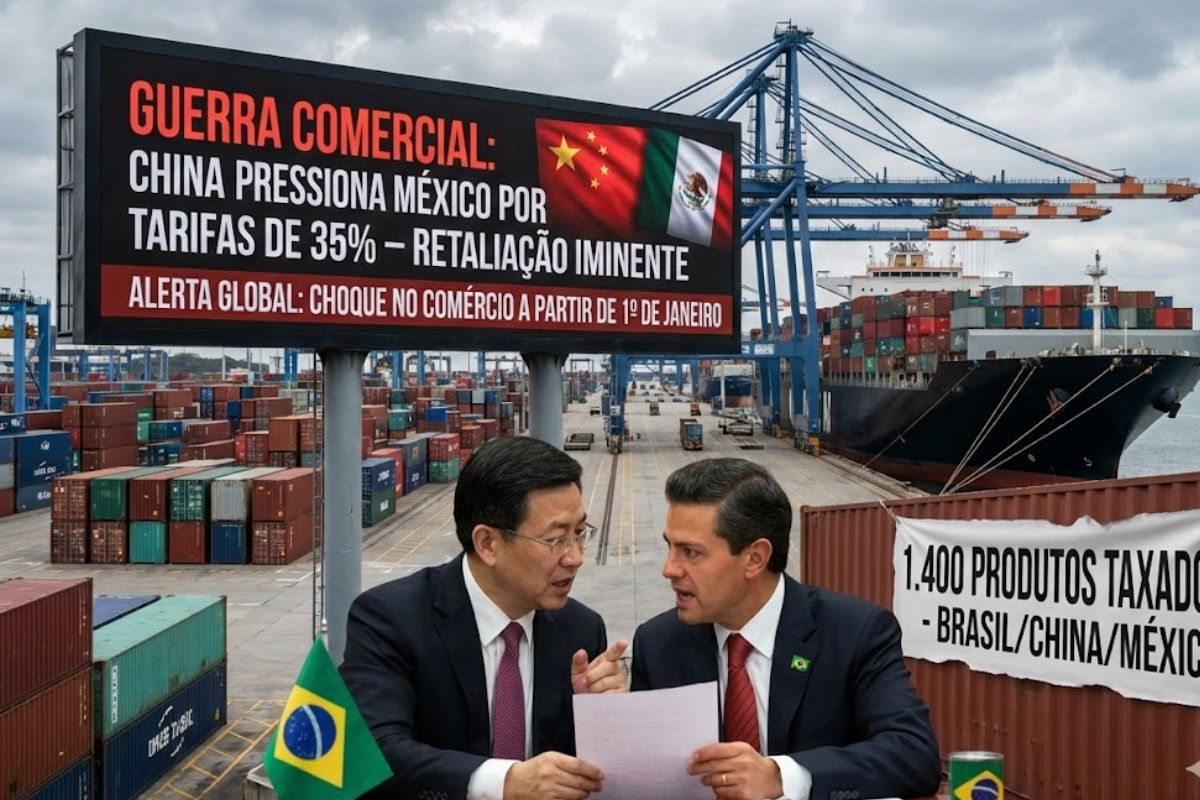


China Pressures Mexico After Congress Approves, on December 10, Tariffs of at Least 35% on 1,400 Products from 12 Countries, Including Brazil, Promises Investigation and Retaliation and Raises Alert About New Shocks in Global Trade Starting January 1, If the Tariff Package Is Not Reviewed.
In Beijing, China Raised Its Tone and Accused Mexico of Adopting “Unilateral and Protectionist” Tariffs, in response to the Mexican Congress’s decision made on Wednesday, the 10th, to raise import taxes on a wide range of products coming from countries that do not have free trade agreements with the Latin American country.
According to the Chinese Ministry of Commerce, the increase of at least 35% in tariffs on 1,400 items from 12 countries, including Brazil, mainly affects Chinese exports, is set to take effect on January 1 and could Reconfigure Trade Routes Amid a Dispute Between the United States, Mexico, and China.
Tariffs of At Least 35% Target 1,400 Products from 12 Countries
Under the package approved on Wednesday, the 10th, the Mexican Congress authorized raising import tariffs by at least 35% on 1,400 products from 12 countries, a group that includes Brazil, China, and other important trading partners. In practice, the target is economies without free trade agreements with Mexico.
-
A new Brazilian shopping center worth R$ 400 million will be built in an area equivalent to more than 4 football fields, featuring 90 stores, 5 cinemas, a supermarket, a college, and parking for 1,700 cars, potentially generating 3,000 jobs.

-
Larger than entire cities in Brazil: BYD is building a 4.6 km² complex in Bahia with a capacity for 600,000 vehicles per year, but the discovery of 163 workers in conditions analogous to slavery has shaken the entire project.

-
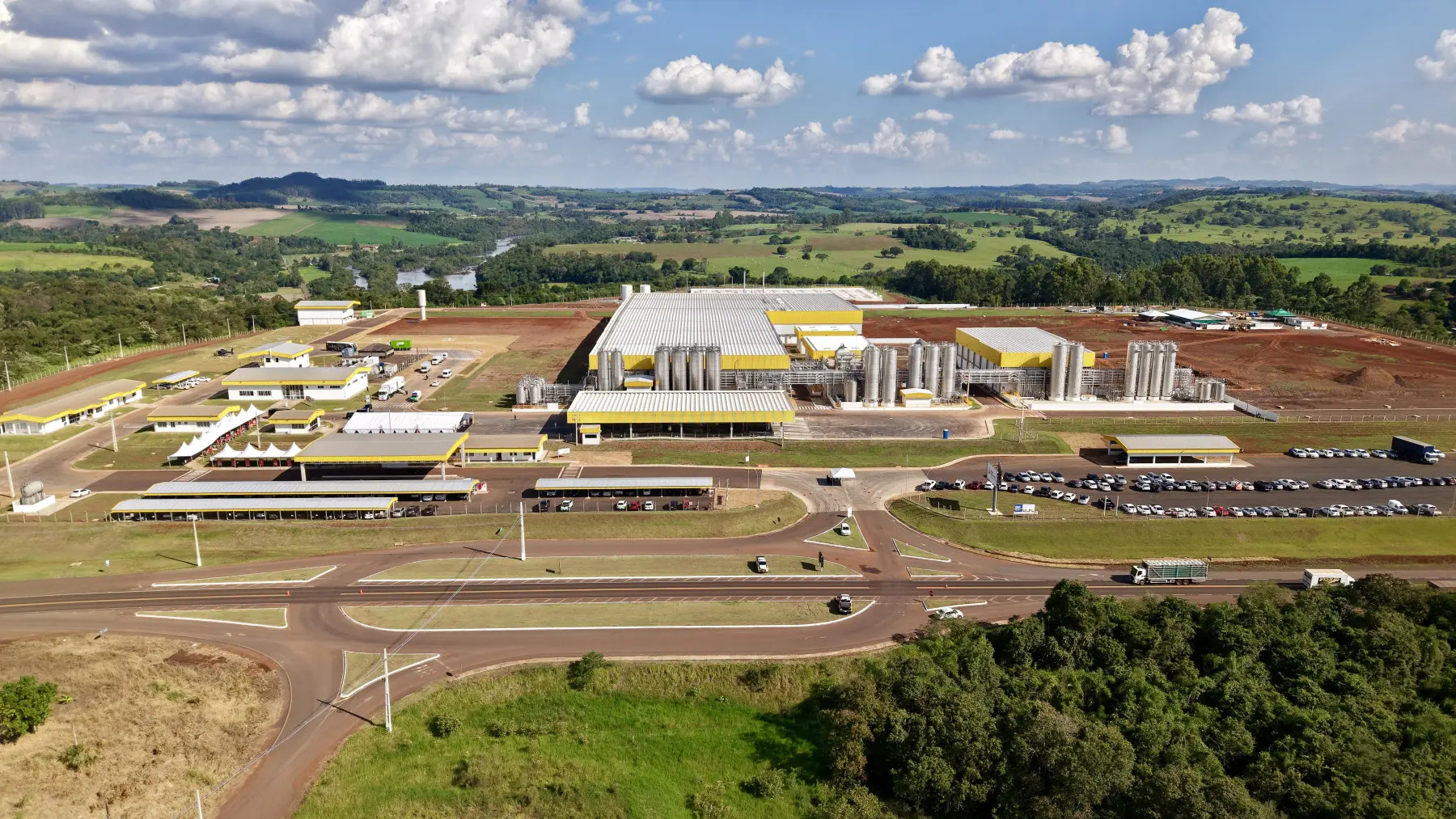
With an investment of R$ 612 million, a capacity to process 1.2 million liters of milk per day, Piracanjuba inaugurates a mega cheese factory that increases national production, reduces dependence on imports, and repositions Brazil on the global dairy map.
-
Brazilian city gains industrial hub for 85 companies that is equivalent to 55 football fields.


The expectation is that the new tariffs will take effect starting January 1. Although the final text was less severe than the government’s initial announcement, China asserts that the changes still “Harm the National Interests” of the country, mainly because they impact its exports more severely and affect chains where Chinese companies have been using Mexican territory as a platform for manufacturing and re-exportation.
Initial Proposal Aimed to Strengthen Mexican Industry and Reduce Dependence on Asia
The reaction from China comes amid an investigation opened by Beijing in September regarding possible trade and investment barriers imposed by Mexico.
This inquiry was launched after the Mexican government signaled it would raise tariffs for countries without free trade agreements, directly targeting Asian economies.
According to the Mexican Ministry of Economy, the initial proposal aimed at strengthening local industries and replacing imports from Asia could affect around 52 billion dollars in purchases.
At the time, the Minister of Economy, Marcelo Ebrard, stated that many of these products already paid import taxes, and the strategy would be to bring them to the ceiling allowed by the World Trade Organization within existing regulatory margins.
For China, however, the combination of higher tariffs, ongoing investigation, and focus on Asian countries represents a Structural Hardening of Mexico, which goes beyond ad-hoc sectoral protection measures and threatens predictability for foreign investors.
Chinese Investments in Mexico Increase, but Generate Tension with the U.S.
In recent years, Chinese Investments in Mexico Have Increased and Expanded Bilateral Trade, with companies from the Asian country setting up industrial operations in Mexican territory to take advantage of proximity to the American market and the access provided by the agreement between the United States, Mexico, and Canada.
At the same time, the flood of exports from China is seen, within Mexico itself, as a risk to the attempt to turn the country into a high-value-added manufacturing hub.
The Surge of Chinese Products Pressures Sectors Attempting to Move Up the Production Chain, in areas such as automotive, electronics, and industrial equipment, fueling the perception of unfair competition among Mexican entrepreneurs.
This movement also intersects with Washington’s policy. According to the Chinese ministry’s text, the Pressure from Donald Trump’s Administration for a Tougher Stance from Mexico on China Influences Mexican Decisions, in a scenario where the commercial rivalry between the two giants shapes regional rules and agreements.
Beijing had already warned Mexico to reconsider the increases and even threatened retaliation before the final approval of the tariff package.
USMCA, Global Alert, and Final Appeal from Beijing to Mexico
According to the evaluation of the Chinese Ministry of Commerce, the Tariff Adjustments Could Be Used by Mexico for the Next Review of the United States-Mexico-Canada Agreement (USMCA), scheduled for after the renegotiation set for 2026.
Still, the agency maintains that no regional agreement should be built at the expense of global trade or to the detriment of the “Legitimate Interests” of a specific partner, such as China itself.
This week, the U.S. trade representative, Jamieson Greer, reinforced that the USMCA could gain a new configuration after the renegotiation in 2026, which increases the perception that Mexico and China Are, in Fact, at the Center of a Broader Dispute for Space in Global Value Chains.
In this context, tariff decisions against Asian exporters gain geopolitical interpretation, not just economic.
The Chinese Ministry of Commerce claims to value ties with Mexico and hopes the country will work with Beijing to resolve differences and deepen cooperation.
The Official Note Appeals for Mexico to “Take These Concerns Seriously and Proceed with Caution”, signaling that the door for dialogue remains open, but under close scrutiny.
Mexico maintains free trade agreements with more than 50 countries, including Japan.
Among partners without treaties, China Emerges as One of the Largest Exporters to the Mexican Market, Alongside South Korea and India, making the effect of the tariff package even more sensitive for Beijing.
In light of this clash between Mexican industry protection and China’s firm reaction, In Your Opinion, Should Mexico Maintain the Tariffs to Defend Its Economy or Yield to Chinese Pressure and the Risk of New Tensions in Global Trade?








México deve se manter firme sim!!!
Na minha opinião não deve. E na minha cabeça é como se o México fosse um **** dos Estados Unidos por estar fazendo algo que me coloca uma dúvida sobre a soberania dela.
Mas penso que talvez isso fosse, de certa maneira, como um catalisador para o Brasil, já que isso pode fazer com que a China procure parceiros mais confiáveis na América.
O Ocidente deixa claro que quer fazer Cartel para proteger empresários de preços altos na indústria , são gananciosos por altos lucros .
Porque porquê não fazem como a China ? Diminui lucros e aumento na produção com todo mundo ganhando menos , mas com mais trabalho para todos com equiparação salarial .
O problema é que a ganância do Capitalismo escravagista não suporta ver um empregado ter um padrão de vida nivelado com os seus senhores, isso já vem do século 19 kkkk