





 Portuguese
  English
  Spanish
  5 min of reading
  0 comments


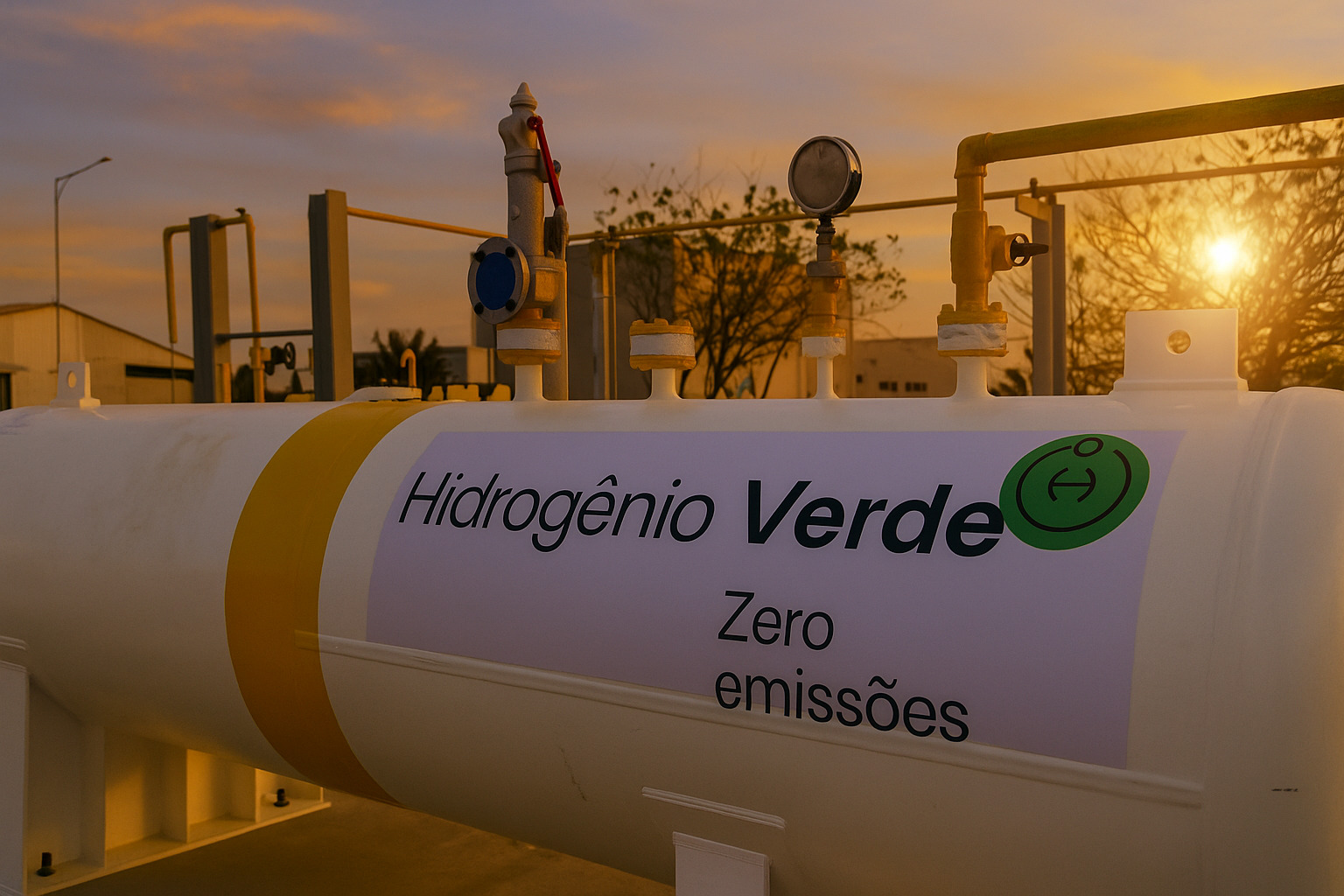
China Advances in Energy Transition by Opening the Largest Green Hydrogen and Ammonia Factory, with Initial Production of 320,000 Tons per Year and a Goal of 5 Million.
In recent years, the search for cleaner and more sustainable energy sources has gained traction worldwide. As the impacts of climate change intensify, there is also increasing pressure for countries and companies to invest in alternatives that reduce carbon emissions.
In this context, two elements emerge as promising and strategic solutions: green hydrogen and ammonia.
For this reason, China, which already holds a prominent position in various technological and industrial fields, has taken a crucial step. In Chifeng, the largest factory in the world dedicated to the production of green hydrogen and ammonia has started operations.
-
Renewable energy advances over protected areas in Brazil, and a survey by the Energy Transition Observatory reveals silent impacts that challenge environmental conservation and pressure sensitive traditional territories.

-
Rio Grande do Sul accelerates energy transition: State invests in renewable technologies and consolidates decarbonization strategies and pathways to attract billions in new industrial investments.

-
With 160,000 m² of collectors, an area larger than 20 football fields, Silkeborg, in Denmark, hosts a solar thermal plant that heats 19,500 homes and could become the largest solar heating plant in the world.

-
A study reveals the expansion of renewable energy procurement in Brazil and shows how companies are taking advantage of opportunities to reduce expenses, ensure energy efficiency, and strengthen strategic environmental commitments.


The company responsible for the project, Envision Energy, officially began its activities in July 2025. Thus, the country reinforces its leadership in the transition to a cleaner energy matrix.
Green Hydrogen and Ammonia: What Are They and Why Are They So Important?
First and foremost, it is essential to understand what makes green hydrogen and ammonia so relevant. Hydrogen is the most abundant element in the universe, however, it is rarely available in isolation in nature.
To use it as a source of energy, it must be extracted from substances such as water or natural gas. Although the cheapest method involves the use of natural gas — the so-called grey hydrogen — it releases large amounts of carbon dioxide.
On the other hand, the green hydrogen is produced through the electrolysis of water, using only renewable energy, such as solar and wind. Therefore, this process does not generate emissions, making it a key component in combating global warming.
Green ammonia, on the other hand, is obtained by combining this clean hydrogen with nitrogen from the air. As a result, we have a compound that serves both as fuel and as an industrial raw material.
Additionally, both hydrogen and ammonia act as energy carriers. This means they store and transport energy efficiently, including between countries.
Thus, these technologies help to overcome one of the main challenges of renewable energy: intermittency and the difficulty of storage on a large scale.
Furthermore, ammonia has considerable logistical advantages. It is easier to transport, liquefy, and store than pure hydrogen.
For this reason, several countries are already using ammonia as a means to export clean energy. In many cases, it can be used directly in adapted engines or converted back into hydrogen, depending on the need.
The Megaproject of Envision Energy in Chifeng
In the case of Envision Energy, the company not only bet on technology — it also delivered results. In its first phase, the estimated annual production reaches 320,000 tons.
However, the expansion plan is even bolder: to reach 5 million tons per year by 2028. In this way, the project establishes itself as a global reference in energy innovation.
Since the start of construction in April 2023, progress has been impressive. In March 2024, the factory began its first tests, still on a small scale.
Shortly after, in July 2025, the operation officially began — two months ahead of schedule. This shows, therefore, China’s commitment to sustainable innovation.
Historically, China has stood out as one of the largest CO₂ emitters in the world, mainly due to its rapid industrialization. Nevertheless, the country has shown growing efforts to reduce its environmental footprint.
Since the Paris Agreement, signed in 2015, the Chinese government has begun to establish more ambitious climate goals. Projects like the one in Chifeng evidence this commitment.
100% Clean Structure and Direct Environmental Impact
To enable this megaproject, the government and Envision Energy invested over 40 billion yuan (approximately 5.6 billion dollars). With this investment, the facility was designed to operate entirely off the conventional power grid.
In other words, it utilizes 1.43 gigawatts of solar and wind energy, along with 680 megawatt-hours of storage, which ensures continuous operation without overloading the local system.
As a direct result, an estimated reduction of 9.12 million tons of CO₂ per year is expected. This equates to removing more than two million vehicles from the roads annually. Therefore, the environmental gains are significant.
Additionally, the factory will produce green methanol and sustainable aviation fuel (SAF). These derivatives are vital for decarbonizing hard-to-abate sectors, such as air and maritime transport.
Another highlight involves the socioeconomic impacts. Large projects like this generate skilled jobs, promote innovation, and strengthen the regional economy.
Engineers, technicians, and scientists find new opportunities in sectors with high demand for specialized knowledge.
A Global Movement for Clean Energy
Even though green hydrogen and ammonia are not recent inventions, their importance has grown with the urgency of the climate crisis. Ammonia already has established applications in agriculture, while hydrogen is common in industry.
However, with renewable and emission-free production, these substances gain a central role in the new energy economy.
Globally, several countries are also accelerating their projects. Australia, for example, plans to begin construction in 2026 of a plant capable of producing up to 9 million tons of green hydrogen and ammonia per year.
Similarly, nations such as Germany, Japan, the United States, and Saudi Arabia are integrating similar initiatives into their energy transition plans.
Therefore, the race for dominance in the production of green hydrogen and ammonia represents a strategic milestone. Whoever leads this new industry could redefine their geopolitical position in the global energy landscape.
That is because, unlike oil, these sources offer cleaner and more stable energy.
Chinese Leadership in the New Energy Revolution
Considering all these advances, China does not just want to participate in the transition — it aims to lead it. By inaugurating the largest factory in the world in this sector, the country sends a clear message: it is ready to lead the clean and sustainable energy revolution.
With its industrial experience, investment capacity, and strategic vision, China expands its presence as a global reference in renewable energy.
If this pace continues, the Chifeng project could serve as a model for the entire world.










Seja o primeiro a reagir!