





 Portuguese
  English
  Spanish
  5 min of reading
  0 comments


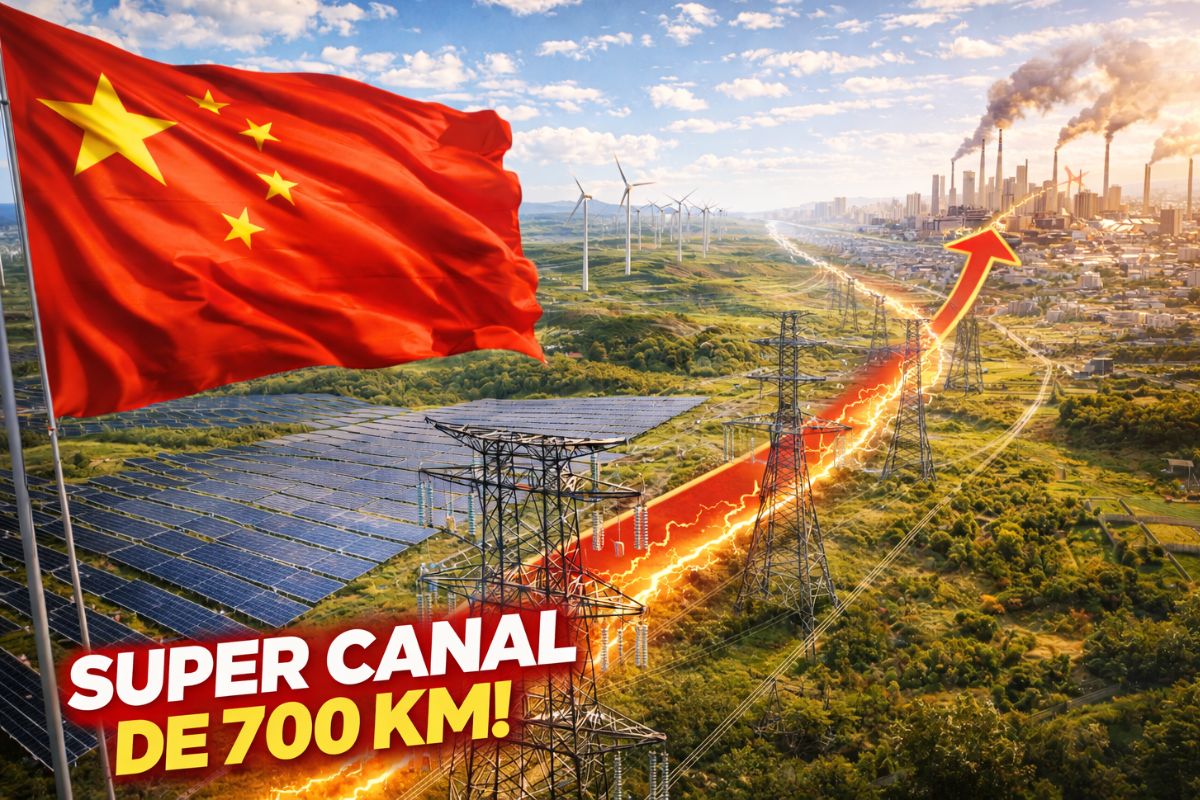
China Invests US$ 17.2 Billion in First 700 km UHV Line That Will Carry Renewable Energy from Inner Mongolia Deserts to Beijing, Tianjin, and Hebei, Accelerating the Country’s Largest Green Transition.
When China invests US$ 17.2 billion in a single transmission project, it is not just another piece of infrastructure. It is about a superhighway of clean energy spanning 700 kilometers, designed to connect the vast wind and solar farms of Inner Mongolia to the major industrial centers in the north of the country, such as Beijing, Tianjin, and Hebei province. With direct current transmission capabilities of 8 million kilowatts and expected to be operational by 2027, this UHV line is designed to function as a true green artery of the Chinese power grid.
At the same time, the project symbolizes China’s long-term strategy to correct a historical imbalance: renewable energy resources are concentrated in the sparsely populated west, while intense consumption is concentrated in the industrialized east.
The new UHV line in Inner Mongolia is the first in the region specifically designed to take advantage of the massive wind and solar energy bases built in sandy areas, desert, and Gobi, consolidating the region as a strategic frontier for China’s energy transition.
-
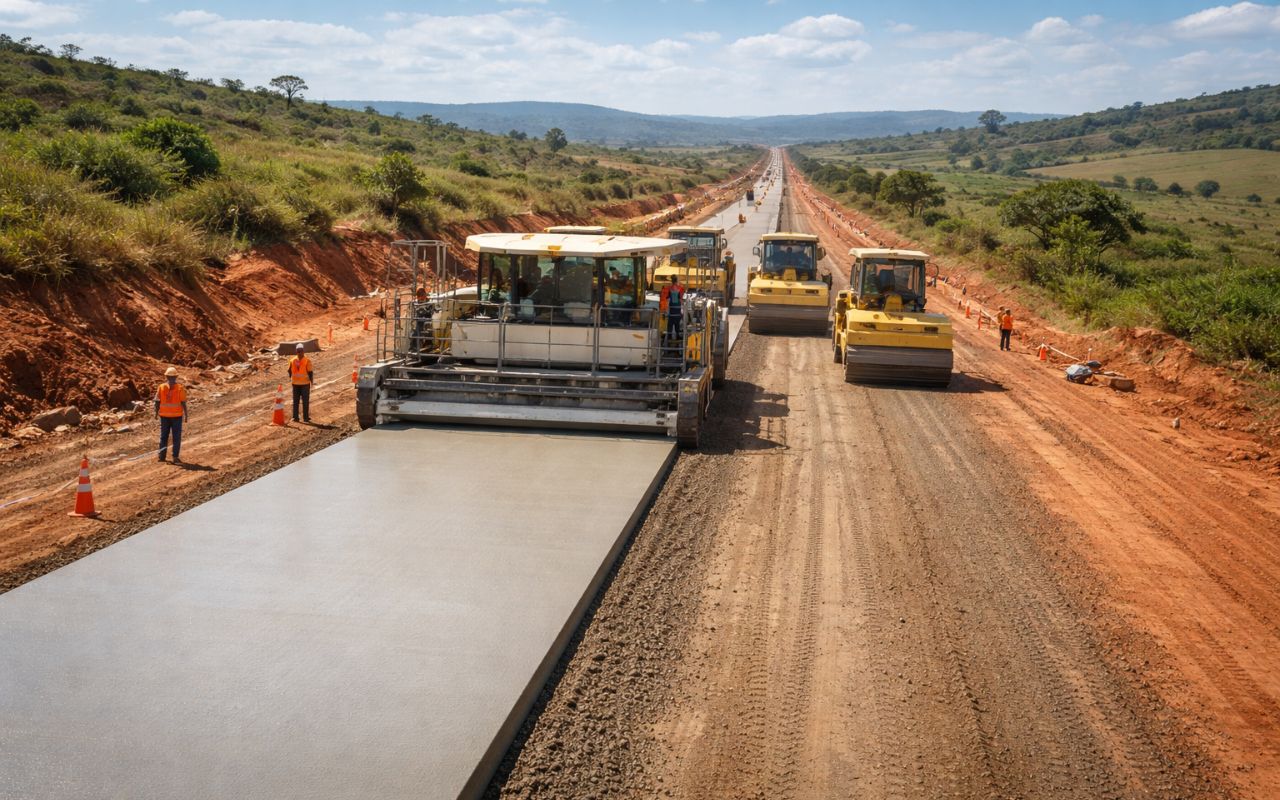
New CCR concrete paving technology promises roads up to 3x more durable, less maintenance, and cost reduction in Brazil.
-
Made from recycled plastic, plastic wood is gaining space in the construction industry because it does not rot, resists moisture, and reduces maintenance costs over the years.

-
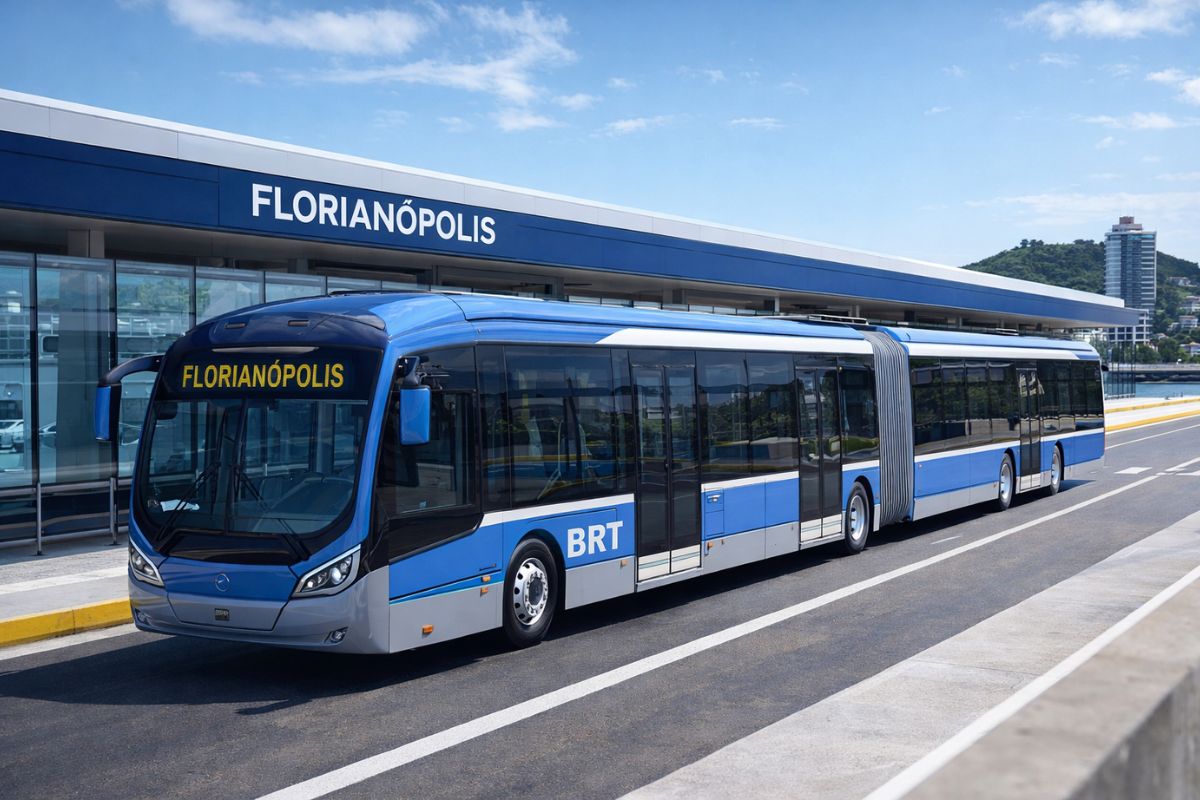
Florianópolis will receive a million-dollar BRT that will begin construction in 2026 with nearly 400 million in funding from the federal government and the Inter-American Development Bank, and the map already shows the routes for the exclusive bus corridors.
-
Without a blueprint, without an engineer, and using scrap from the dump, a father spends 15 years building an 18-room castle for his daughter, featuring tram tracks, 13 fireplaces, and over 700 m², which may now be demolished.

What Is the 700 km UHV Superhighway
At the heart of this movement is the ultra-high voltage transmission line, or UHV, stretching approximately 700 kilometers with a transmission capacity of 8 million kilowatts.
In practice, it is a superhighway of energy capable of transporting large blocks of clean electricity over long distances with reduced losses, something essential in a country of continental dimensions.
According to the State Grid, the operator of the system, the project was designed to integrate 12 gigawatts of wind and solar capacity in Inner Mongolia.
This means that much of the energy generated in remote areas, previously limited by transmission bottlenecks, can be efficiently delivered to the large consumer centers in northern China.
It is here that the concept of a UHV superhighway materializes: a high-capacity infrastructure that connects, in a straight line, renewable production and intensive consumption.
How the US$ 17.2 Billion Investment Fits into China’s Green Transition
Within the national strategy, China’s investment of US$ 17.2 billion in this specific project is not an isolated move. The country is channeling massive capital into ultra-high voltage networks with the aim of building a kind of green electrical backbone.
This backbone optimizes the allocation of energy resources on a national scale, prioritizing clean energy whenever possible.
The new UHV line in Inner Mongolia is described as a key piece in building a superhighway with total export capacity exceeding 50 gigawatts.
In practical terms, this represents a leap in China’s ability to gradually replace intensive coal consumption with electricity from renewable sources without compromising the supply security of the north’s industrial chains.
The goal is to maximize the use of wind and solar energy from the west to power factories and cities in the east.
From Inner Mongolia to Hebei: Correcting the Energy Map
Experts highlight that the project’s anchor point in Hebei is strategic. The region is part of the industrial and urban core of northern China, along with Beijing and Tianjin, and ranks among the areas with the highest electricity demand in the country.
Delivering large blocks of clean energy directly to these centers helps reduce dependence on coal-fired power plants and reconfigures the regional energy matrix map.
Inner Mongolia, in turn, has established itself as the main base for energy and strategic resources in China.
With abundant wind and sunshine, the region has become the vanguard of China’s energy transition, precisely because it serves as a geographic bridge between resource availability in the west and concentrated demand in the east.
Since the first UHV line began operations in 2016, the region has been building a network of export corridors that reposition its role in the national economy.
An UHV Network That Has Already Changed China’s Electrical System
The new investment relies on an infrastructure that has undergone profound transformation in recent years. According to the research institute of the State Grid, China installed 42 ultra-high voltage transmission lines by the end of last year, forming a highly resilient network backbone.
This UHV mesh is credited with elevating the Chinese electrical grid to a globally sophisticated level in terms of stability and operational reliability.
Since the first UHV line in Inner Mongolia started operating in 2016, the region’s high-voltage network has transmitted over 830 billion kilowatt-hours, of which 116.5 billion kWh corresponds directly to clean energy.
These numbers demonstrate that the UHV superhighway concept is no longer just a promise: it is effectively transporting large volumes of renewable electricity over long distances, reducing waste and geographically rebalancing consumption.
Why the New Project Is Considered a Game Changer
Even though China invests US$ 17.2 billion in various types of infrastructure, this UHV project has a particular symbolic and strategic weight.
It represents the combination of three vectors that define the new phase of the country’s energy transition: scale, efficiency, and national integration. Scale, because it is a project that integrates 12 gigawatts of renewable capacity into a single corridor.
Efficiency, because UHV technology is designed to minimize losses over long distances. Integration, because it connects directly a resource frontier to a densely demanding industrial core.
For engineers and network planners, this type of project also consolidates a technological standard. Continuous improvements in equipment, lines, and control systems establish new international benchmarks for stable high-voltage operation, reinforcing energy security and the resilience of the Chinese electrical system.
In other words, each new UHV line not only transports energy but also strengthens the entire technical and institutional framework supporting the country’s green transition.
What to Expect by 2027
With the timeline expecting operation by 2027, the 700-kilometer superhighway should become, in the coming years, one of the clearest symbols of how China invests US$ 17.2 billion in projects that combine economic growth and decarbonization.
When fully loaded, it should ensure a robust supply of clean electricity to northern China, contribute to reducing intensive coal consumption, and consolidate Inner Mongolia as the epicenter of the country’s large renewable bases.
At the same time, the project is likely to influence future decisions regarding industrial location, the expansion of wind and solar parks, and network modernization.
As new UHV corridors are connected, the planning logic shifts from regional to truly national, with the network acting as a flexible mesh that optimally directs electricity as production and demand vary.
What do you think, is energy superhighways like this the most efficient way to accelerate the green transition in continental-sized countries?








-

-

-

-

8 pessoas reagiram a isso.